

Elizabeth Rata Dame Honour Sparks Education Backlash

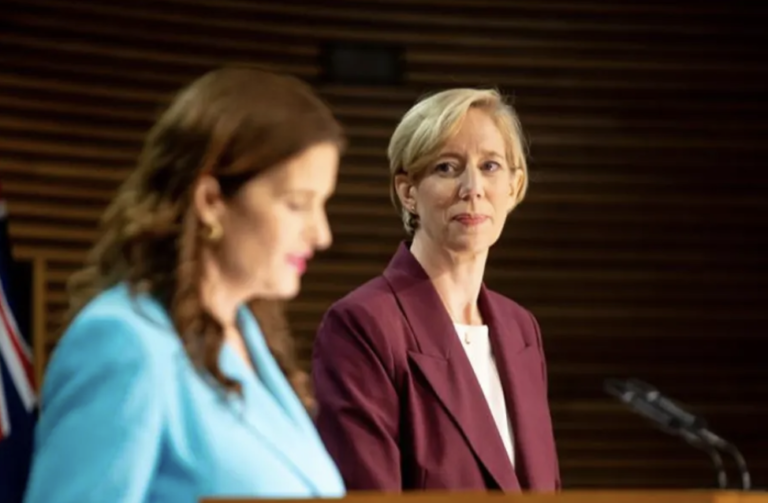
Elizabeth Rata’s dame honour is being celebrated by the Government as recognition for services to education, but critics see something far more political: a reward for the ideological project now reshaping curriculum, mātauranga Māori and the meaning of knowledge in New Zealand classrooms.
How many times do Erica Stanford and the Government have to make a mockery of the education system before people open their eyes? Sadly the answer appears to be that the majority of people never open their eyes, going through life half asleep. On the other hand, to be fair, far too many people are so focused on the struggle to get through their lives and don’t have the energy to lift their heads and look around. When housing, feeding, and clothing their families is a daily slog, who can blame people for this?
This weekend’s announcement of the awarding of a damehood to Professor Elizabeth Rata is surely taking the piss. Awarding this to an academic whose avowed goal is to ‘recolonise New Zealand’, removing all traces of all the moves made in the past century to try to mitigate the harm caused to Māori by the European colonisation of this country, is surely making the Government’s agenda so very blatant. We shouldn’t, of course, be surprised at this, as Paul Goldsmith and many others are making it very clear. Rata’s dream of a a Eurocentric vision of New Zealand education is shared by far too many, and we mustn’t forget that Rata, along with many people in this Government, have clear links to the The New Zealand Initiative and behind that, the Atlas Network.
Did you vote for this takeover of New Zealand, to meet a foreign agenda?
Elizabeth Rata’s dame honour is part of a wider education agenda
Coming back to education, I also see that Massey University Emeritus Professor James Chapman, who was also involved with Stanford’s advisory committee, was awarded a knighthood. I have no issue with that, I’ve worked with him and he’s a good bloke, even if I professionally disagreed with him about some of his reading research.
As I’ve written previously, Stanford has to be given credit for the way she has driven education change, even if this is educationally unsound, and the downstream effects will be become apparent in the next five to ten years, as evidence is accumulated to show that the promised education miracles have been nothing but smoke in the wind.
The rushed development and implementation of the new curriculum is a case in point. Recently renowned education researcher Rosemary Hipkins (her son is very well known…) published an article on Aotearoa Educators Collective Substack outlining her concerns about some aspects of the curriculum.
Three curriculum concerns and a strategy
‘In this post I briefly outline three areas of curriculum that are currently concerning me. My examples are from science education because that’s where my expertise lies, but the concerns are likely to be relevant to other learning areas, with a change of details. All three concerns relate to aspects of knowledge — that thing that we tend to take for granted as the foundation of the curriculum. I then suggest a strategy that might contribute to advancing curriculum design while also helping address these three areas of concern.
A new curriculum, based on old knowledge
I’m worried about the narrowness in the Year 12 and 13 Biology curricula. The biological sciences have recently exploded with new knowledge yet there is very little in these new curriculum specifications that I could not have taught when I began teaching in the early 1970’s.’
This concern has been expressed by many educators, the nature of the knowledge that has been selected for the knowledge-based curriculum. Contrary to the exponents of this curriculum, knowledge is not fixed in time, is always subject to modification as new discoveries come to light. All it takes is an Einstein to look at things in a different way and all the current paradigms fall apart. Teaching children outdated knowledge, as Hipkins writes, means that they are behind right from the start.
‘The narrow focus and traditional compartmentalisation of topics reinforce linear cause-and-effect narratives that are a hallmark of classical 20th century science. Meanwhile science itself has been evolving rapidly and often dramatically. Why would we want to teach only the dry bones when young people would surely be more engaged by the plethora of fascinating and challenging topics just waiting to be explored?’
The contrast here is between a didactic teacher-led instruction of ‘facts’ (colloquially called ‘chalk and talk’) where students just have knowledge poured down their throats, and classroom programmes where students are guided in exploring topics and learning for themselves (the operative word in that sentence is ‘guided’). Once the aim of the New Zealand Curriculum was to develop students as lifelong learners, able to pursue their learning well after leaving the formal education system. That, however, is deemed undesirable by the right, after all who wants a population who can think for themselves?
Hipkins addresses this in her next paragraph.
‘Equipping learners to navigate disinformation
Conceptual understandings are not the only thing that has changed rapidly during this century. So have the social conditions we all experience, compliments of social media. Disinformation abounds! My recent book explores how and why young people might need different sorts of encounters with knowledge to develop the capabilities they will need to more safely navigate the wilds of social media and AI. While the new curriculum specifies a lot of detailed content to learn, I don’t think it does enough to help learners develop an understanding of the grounds on which knowledge claims rest. No-one wants to encourage young people to question everything to the extent that they think one knowledge claim is as good as any other (i.e. relativist thinking) but on the other hand we can’t afford to continue with established patterns of uncritical acceptance either.’
The next section stands alone.
‘Walking back the bicultural elements in the curriculum
In the recent past, considerable effort was invested in designing a more bicultural curriculum. One example was the idea of ‘mana ōrite’ in the NCEA change package, which was defined as ‘equal status for mātauranga Māori’. Another example was the original Te Mātaiaho framework for the refreshed curriculum. Arguably, there was not enough clarity about what these efforts were intended to achieve, and for whose benefit. Understanding the potential contribution of mātauranga Māori to the learning of all our young people requires new ways of thinking about where different knowledges come from, and what makes them fit for purpose in some contexts, but not necessarily others.’
What counts as knowledge in New Zealand classrooms?
Hipkins then explores the nature of knowledge, expanding on the points I made above.
‘Introducing the idea of knowledge systems
All three of these concerns are complex. As I see it, a key problem is that we don’t often focus on the phenomenon of knowledge per se.
- How do we know what we know?
- Where does knowledge come from?
- On what grounds is some knowledge considered more trustworthy than other knowledge?
- Who is able to say what knowledge is trustworthy?
- Why do people have different views about how the world should be understood?
- Who gets to arbitrate when people disagree about the answers to these questions?’
These are philosophically deep questions, and surely need to be addressed before mandating a ‘knowledge rich curriculum’. Have you seen any signs that this has been done?
‘However, when you are immersed in a specific knowledge system it can be invisible to you. What we know and think and do just ‘is’. This is especially true when we think about our first language as a knowledge system. It’s not until you learn another language that you begin to be aware that there are quite different ways of organising what we know, and how we know.’
But this is exactly what Rata, Stanford, and others want, a knowledge system based on western European values.
‘What’s missing from the revised curriculum, and could help address the concerns I have outlined, is any sense that Eurocentric disciplines are not the only types of knowledge systems that have legitimacy and value. Indigenous people tend to think very differently about how the world ‘is’ and this is reflected in the way their knowledge systems are organised. Mātauranga Māori is one example but there are many others. As just one example of an important difference, traditional science thinking positions humans outside the natural world, looking in ‘objectively’. By contrast, indigenous people tend to see humans as immersed within the natural world, in dynamic relationships to all the other things in that world. Understanding this difference is important if we aspire to have all our young people learn to live more sustainably on our planet.’
The point here is that there is no absolute ‘right knowledge’, to be well educated people need to be mindful of other traditions and values. But that runs head on into Rata’s desire to base an education system on 19th century English schooling. Let’s all learn Latin.
‘Local knowledge systems have some features of the formal disciplines and some features of indigenous knowledge systems. As the name suggests they evolve over time amongst people who have deep and sustained local knowledge of a specific area. Place-based learning has a focus on sharing the practical wisdom that is a hallmark of such systems.’
This is where all the racists start to lose their cool, finding it intolerable to accept that other knowledge systems have value. I predict we will see evidence of this in the comments.
Hipkins concludes:
‘But this doesn’t mean slipping into relativist ‘anything goes’ uncritical acceptance of knowledge claims. Rather it involves the complete opposite— being vigilant, thinking critically about where knowledge claims are coming from, and why they might (or might not) be trusted. (Epistemic vigilance is another helpful concept.) Building awareness of different knowledge systems, and how they can contribute to the richness of what young people learn about the world, and about themselves, can help build epistemic awareness. In turn, such awareness lays an important foundation for ongoing epistemic vigilance and epistemic humility’.
But we are told our children are failing and so drastic change is necessary. The failing started when neoliberal education policies were introduced in 1990 and these gathered speed during the previous National led Government’s focus on national standards to ‘raise achievement.’ Spoiler – they had the opposite effect and I am confident in predicting the same outcome for Stanford’s agenda.
I agree about the change for drastic change, it’s just that the change needs to be going in the opposite direction, based on the research of educators such as Rosemary Hipkins, and not on the ideological agenda of the Atlas Network and their acolytes.




The reintroduction of rigour in the curriculum was essential and nowhere does it say that this replaces teaching students how to learn, to develop creativity, and to be curiosity driven. The new curriculum would also of course address latest science, but the basics must come first.
The increasingly dismal NZ PISA stats underline why change was needed. You cannot create a fully educated person when students emerge from school barely literate and innumerate. In my own experience we had to introduce remedial maths and physics courses for students with NCEA Level 3 university entrance qualifications in order for them to be able to tackle Stage 1 University Engineering courses.
I agree with students being exposed to different knowledge systems, so long as they are distinguishing fact from belief. And, sure, introduce students to matauranga Maori, but it is not equivalent to science and cannot be an alternative to a modern science education The decolonisation movement seems to want a mediocre equal-outcomes system inwardly focused on New Zealand and Te Ao Maori, a sure way to leave our students less well prepared to work in an international world.
First World human beings must behave like so. We must learn how to function as One. Then once that framework’s achieved, we can be as individual as we like.
We must vote. We must share in, then benefit from, sovereign wealth. We must ask of Multi- Billionaires and multi-millionaires. How and why?
My personal religious belief is in Nature. Nature, is, in my mind, our God. Not some simple minded human construct of a God which gave children bone cancer and still hasn’t gone “Whoopsie daisy, Soz. Here’s the cure. ”
I bet you. If I was someone famous, handsome, influential, dynamic and charismatic my words above would be carved in to marble then placed on a mountaintop. But because I’m none of those things, like all normal people, my words mean nothing and things like the trump, netenyaho, putin, etc are left to do what they do. Indeed they’re encouraged to do what they do. To bomb, kill, poison and slaughter and then when the smoke’s cleared they give themselves money and medals to elevate their stature.
Things are a bit fucked aren’t they really.
I still have Eric Hoffer’s book The True Believer somewhere. It’s funny, he became an adjunct professor at a university without any qualifications as far as I know. Guarantee he wouldn’t get anywhere today. An auto didact. And to some extent an all-round weird guy – but a thinker.
Lets give Rata a Damehood so the mupets think we have given a Maori one .This ladyis no more Maori than snow white .
I get it and I agree with it because it makes sense. The problem is we failed to implement it in a way that enabled our young people to accept the practice and discipline of self learning and knowledge discovery. The result at the bottom is declining standards in the basics and people getting frustrated that too many emerge out of the system who can’t read or write. I suspect the lack of resources did the most harm and now the blow back will turn back the clock. What a shame!