Is our justice system too underfunded to fix?

Is our justice system too underfunded to fix? Because once you start rationing jury trials based on cost, you’re no longer talking about efficiency — you’re talking about whether justice itself is becoming a user-pays service in New Zealand.
Jury trial reforms risk putting a price on justice – David Harvey
For centuries, the jury trial has stood as one of the cornerstones of the Anglo-American legal tradition, a mechanism by which ordinary citizens, not the state, determine whether one of their own is guilty of a crime.
Now, New Zealand is quietly considering reforms that critics say could fundamentally erode that right, in the name of clearing court backlogs.
The proposals, currently at the consultation stage, are relatively modest in appearance.
But beneath the bureaucratic language of “timeliness” and “efficiency” lies a question of profound constitutional significance: should access to trial by jury be rationed on the basis of cost?
David Harvey argues that an open justice system within a liberal progressive democracy is a fundamental core function of the state and not one open to cost cutting.
I agree.
When justice becomes a budget line item
The Government is opting for cost cutting which will see Jury trials reserved for crimes above a certain threshold which would stop the justice process being one decided by a community of your peers and one that is instead decided by the State.
This would be the next erosion of confidence in the justice system.
And it’s not just that:
- The length of time for a trial is corrosive.
- The cost of Family Court is corrosive.
- The costs for victims to attend and participate in the process is corrosive.
- The lack of support for victims is corrosive.
- The lack of legal aid options for the accused is corrosive.
- And the lack of checks and balances to ensure miscarriages of justice don’t occur
How many wrongful convictions does it take?
After 37 years, the justice system has just delivered one of its most damning admissions yet.
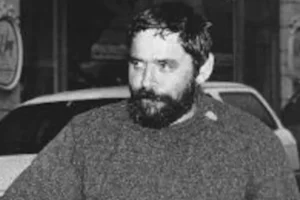
The David Tamihere case has been recently overturned by the Supreme Court of New Zealand, with findings that the original trial relied in part on evidence “concocted to secure convictions”.
That’s not a technicality — that’s a collapse of confidence in how justice was done.
I’ve watched this case over the years and huge parts of it never seemed legitimate or fair.
The use of prison narks to manufacture testimony never sat well with me and always looked like an enormous corruption of process rather than legitimate evidence.
When the body of Sven Urban Höglin was found so far away from the Police version of events, it made the case against Tamihere a farce that demanded a retrial.
Based on what we currently have in front of us with this case and the recent miscarriages of justice cases of Peter Ellis, David Dougherty, Teina Pora, David Lyttle, Mauha Fawcett and Alan Hall you get a terrible feeling that Police are not following the evidence in a case, but are merely rounding up the most vulnerable suspects and bullying confessions out of them or twisting the evidence to fit the crime.
That’s my honest assessment of what has happened here to Tamihere. Police were desperate — and the Supreme Court has now made clear the case against Tamihere was fundamentally flawed.
Every single time the NZ Police get caught framing people for crimes, they tell us they won’t ever frame people for crimes ever again.
And yet we’re told to trust the system every time.
The most egregious recent example was the unbelievable Stephen Stone case!
Stephen Stone acquitted after 25 years in jail for murder of Deane Fuller-Sandys
I challenge any Kiwi to read the Stephen Stone case and not come to the immediate conclusion that the New Zealand cops framed these people for a crime they didn’t commit!
Stephen Stone, Gail Maney, Colin Maney and Mark Henriksen were framed by the Police!
Stephen Stone was released after spending 25 years behind bars for a crime that increasingly looks like it was based on nothing more than the NZ Police threatening four witnesses into making false statements on which 4 people were sent to prison…
A man who has spent 25 years in prison for the murder of west Auckland tyre-fitter Deane Fuller-Sandys has been granted bail.Stephen Stone was imprisoned in 1999 for the murder, as well as the rape and murder of Leah Stephens.Earlier this month, Stone’s conviction was quashed by the Court of Appeal, alongside those of Gail Maney, Colin Maney and Mark Henriksen.The court ordered a retrial for Stone.