

The NZ neoliberal experiment is melting down as enormity of energy crisis and climate dawns

The economic model that has governed New Zealand for the last 40 years is colliding headfirst with climate change, energy shocks, housing stagnation and geopolitical instability — and the cracks are now impossible to hide.
Remember.
This is the 10th week of a three day war that Trump has already won eight times. He has blocked the block with a blockade and declared victory every third evening.
According to Marco Rubio, America attacked Iran because Israel was going to attack Iran, which would have meant Iran would have attacked America which is not a legal defence in any way, shape or form.
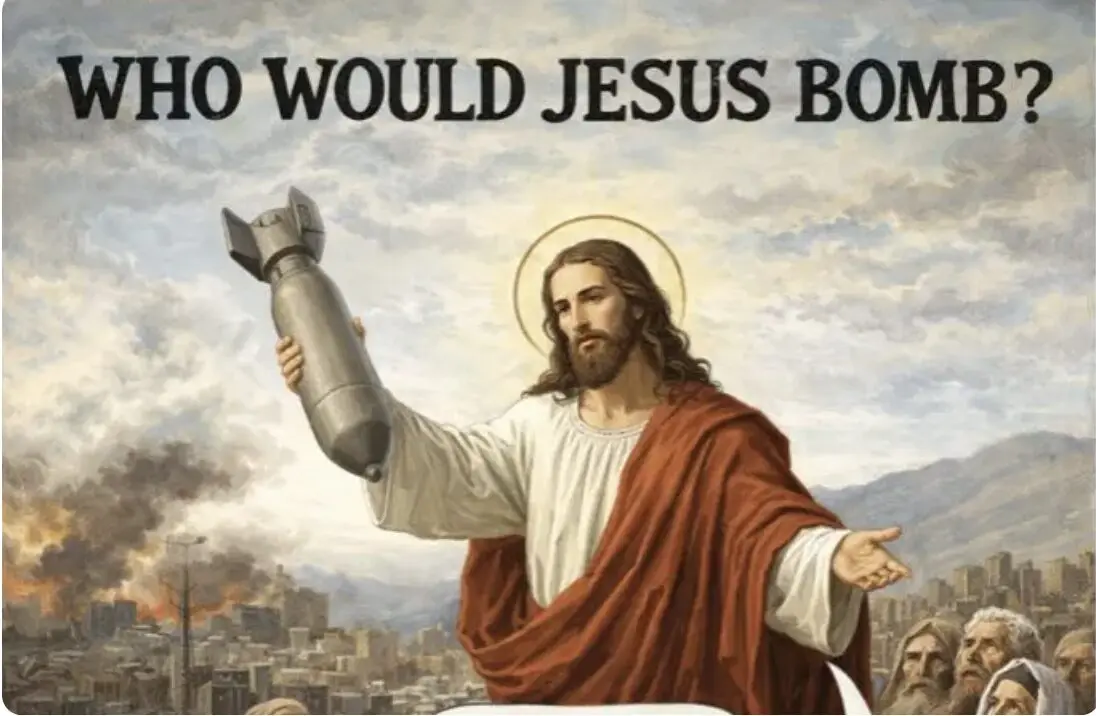
He has threatened war crimes and promised genocide as if they are legitimate negotiation positions and his white christian nationalist, raw meat eating Secretary of War, Pete Hegseth recently quoted the Pulp Fiction Bible Quote at a Pentagon Prayer Breakfast for military families.
After obliterating the nuclear weapons last year, Trump has threatened nuclear weapons against the nuclear weapons that Iran aren’t building.
All of this, our Prime Minister wanted to support and join in on.
The Interislander last week doubled its fuel surcharge; Maersk added a 27% surcharge for all NZ routes and the Singapore PM warns of ‘six months of pain’ to NZ on petrol prices – the reality of this energy crisis is finally starting to be appreciated and that has enormous implications for the economy and the election.
The energy crisis is exposing how fragile NZ’s economy really is
A tiny dip in the national unemployment rate is masking a much uglier reality underneath: rising joblessness among young people and worsening unemployment across New Zealand’s biggest cities as economic pressures deepen.
New Zealand’s social cohesion isn’t collapsing by accident — it’s the result of decades of economic design colliding with population pressure and a cost-of-living crisis that is pushing people to breaking point.
Neoliberal free market capitalism…
Financial stress is fraying New Zealand’s social fabric as trust and unity fall, new report claims
A new report is warning New Zealanders the “country’s social fabric is fraying on almost every measure”, amid growing isolation, financial stress and institutional distrust.
Findings from the Helen Clark Foundation’s second annual Social Cohesion in New Zealand report were “both frightening and hopeful”, economist and report co-author Shamubeel Eaqub said.
“New Zealand still has strong foundations, but there are growing cracks in how people experience fairness, opportunity and connection,” Eaqub said.
“Financial stress is the dominant driver.”
Surveying nearly 3,000 Kiwis, the annual report measures the “social glue” binding New Zealand society together and compares changes between years.
NZME
…plus lazy mass immigration policies…
New Zealand has its head in the sand about how to manage dramatic changes to its population: fewer births, fewer workers, an emptying of rural centres and, within a few years, more Asians than New Zealand Europeans in Auckland.
That’s according to Sir Peter Gluckman and emeritus professor Paul Spoonley, who spoke exclusively to the Herald about their new report People, Place and Prosperity: The Case for a Population Strategy.
“New Zealand now faces a pivotal decision regarding our demographic trajectory,” the report, released today by the Koi Tū Centre for Informed Futures, says.
“The colliding trends of slowing population growth and a reliance on immigration to drive workforce and population growth, an ageing population requiring more public services and growing ethnic diversity present both opportunities and challenges.”
Those opportunities include making the most of the skills, innovation and creativity that such diversity can offer, but this can be undermined by political populism appealing to xenophobic tendencies, the paper warns.
NZME
…equals a collapse in NZ’s social cohesion…
Why social cohesion in New Zealand is breaking down
Does hard work make you better off? More New Zealanders aren’t convinced
Trust in government dropped from 42% to 39%. The share of people who believed that hard work would lead to a better life fell seven points to 45%.
“Interesting people who are currently prosperous are not really sure that hard work in and of itself is enough. There’s a broadening acceptance, a fear, that just working hard is not enough – there are other structural barriers we need to work on,” he told RNZ’s Nine to Noon.
Attitudes to immigration were also becoming more negative.
Eaqub said there were three key groups of New Zealanders. 30% could be counted as connected with high levels of belonging, institutional trust and acceptance.
Another 41% were ambivalent – this was often older homeowners, retirees and centre-right voters.
Another 28% were alienated, and often engaged in protest and online political activity. Almost half of Māori and Pasifika respondents fall into this group, as do nearly half of Green voters and seven in 10 NZ First voters.
“We have three very different New Zealand’s living alongside each other,” Eaqub said. “Financial stress, political allegiance, institutional distrust, and social isolation are reinforcing each other, producing a population that is frustrated and disconnecting from the conventional institutions we rely on for collective decision-making.”
He said the research showed financial stress was the single biggest driver of low social cohesion.
“People struggling to make ends meet are significantly less likely to feel connected, trust institutions, or participate in community life. At the same time, loneliness and isolation are rising. “Isolation doesn’t mean people disengage entirely,” he said.
RNZ
New Zealand’s economic model is broken. After 40 years of neoliberal free market capitalism, the country is facing crumbling infrastructure, climate shocks, housing stagnation and an economy built on speculation rather than resilience.
The tsunami of inflation Trump’s illegal war with Iran will generate is going to swamp any green shoots of recovery and the rotten hollowed out neoliberal user-pays model of Broken Old Zealand Inc is going to viciously whiplash our economy again…
Iran conflict could sink the economic recovery … and Christopher Luxon – Liam Dann
NZ Herald
…Since Roger-nomics, the hollowing out of NZ for corporate interest has accelerated with corporate lobbyists now influencing every sector of the media…

…the single problem with NZ is we haven’t reformed away from the failed 1980s neoliberal free market capitalism experiment!
The failed 40 year neoliberal experiment has mutated us into Broken Old Zealand Inc where oligopoly, duopoly and monopoly gets to run the country for their private wealth, not the common good.
Thomas Coughlan: Infrastructure Commission asks Labour and National to do something unpopular
THE FACTS:
- An Infrastructure Commission report warns more money needs to be spent on maintaining infrastructure.
- It also calls for restoring the principle of user-pays to network infrastructure such as roads.
- In 2018, a Labour-era transport plan proposed spending more on maintenance and was met with backlash.
Parliament today lays all this out.
Too much money is being spent on transport, not enough on hospitals; too much money is being spent on what it literally describes as “new and shiny” and not enough is being spent on looking after what we already have; roads no longer fund themselves, relying on money from the core Crown budget, and too many projects are hurried for presumably political purposes, causing their costs to inflate rapidly.
Everyone agrees with this. Bishop seems to be rolling the pitch for a strategic climb down from some of the roads of national significance, and Labour, burnt by the Ardern-Hipkins Government’s infatuation with mega-projects that never got built, seems poised to run on a more modest platform this election.
NZ Herald
The economic model that hollowed out New Zealand
It seems to me that there is an economic reality about NZ that Labour and National are refusing to acknowledge.
NZ has always been three enormous and sparsely populated Islands that have always relied on the State to be the 40% foundation stone. The free market dynamics of competition don’t work well when the population density is low. The State is the egalitarian backbone of this country, the Right want to gut it and hand the organs over to their rich mates.
Bernard Hickey explains the fundamental problem, we can’t just keep selling each other more expensive houses built upon mass immigration and pretend that is economic growth any more…
- In my view, the data on retail spending, jobs, real incomes and housing equity are increasing the chances the ‘green shoots’ of better business confidence and manufacturing don’t convert into voters ‘feeling’ the economic recovery enough to emphatically award the Government a second term in our housing-market-with-bits-tacked-on.
- In my view, that’s because forecasters and Treasury haven’t taken into account how important a stagnant housing market and lower real incomes after food, power and rent costs are for household spending and business investment.
- The bottom line: An economy powered for 30 years by leveraged and tax-free house price inflation can’t handle the truth that another trebling of prices isn’t possible again. That’s because interest rates can’t fall again by nine percentage points, household debt can’t treble again relative to disposable incomes, and employment growth from a 15 percentage point increase in workforce participation can’t be repeated in an ageing population.
…exactly, the one trick property speculation pony that has powered the last 30 years of ‘economic growth’ has had a stroke and is off to the glue factory.
Catastrophic Climate Change, geopolitical trade tensions and the hollowing out of public infrastructure to cheap management teams who milk monopoly rentals while the asset deteriorates.
I’m not asking for socialism from the NZ Left, I’m just looking for basic regulated capitalism!
The 30/30/30 neoliberal debt straightjacket is designed to ensure the public never get fully funded public services.
How on earth can more user-pays mythology be the answer when it’s the cause of the current malaise!
Adopting more user-pays to solve our problems is like using cancer to cure syphilis.
- We need new ideas.
- We need to consider new taxes aimed at the wealthy and the speculative.
- We need to remove the tax yoke from the working and middle classes and put them on the wealthy.
- We need to consider Sovereign Credit as a means to fund new infrastructure.
- We need to resource our Communities and make them resilient.
- We need way more artists.
- We need sustainability.
- We need to defend our economic zone.
- We need to be 100% electrified and 100% sustainable.
- We need a pharmaceutical industry.
- We need a data centre industry.
- We need a drone industry.
- We need to produce things here rather than be a raw material producer.
- We need way more native forests.
- We need way less pine forests.
- We need a new inshore shipping network.
- We need more rail.
- We need more food security via a third state backed supermarket.
- We need less trucks.
- We need less cows.
- We need more wool production.
- We need local investment in R&D.
- We need research into tidal electrical generation.
- We need more democracy.
- We need universal migrant labour unions.
- We need universal student union memberships.
- We need a Māori Parliament.
- We need Tenant Unions at retirement villages.
- We need Pensioner Unions.
- We need Unions.
- We need post-growth capitalism.
Now you might argue that none of this is necessary.
You would be wrong.
While the NZ Right cling to the claim that climate change is just a socialist hoax, the latest research shows us that climate change is actually speeding up…
Humanity heating planet faster than ever before, study finds
Researchers identify sharp rise to about 0.35ºC every decade, after excluding natural fluctuations such as El Niño
Climate change is about to break the neoliberal model completely
…that’s right.
Catastrophic climate change is speeding up and getting more intense.
The disconnect between news stories on the extreme weather events we are seeing and their connection with the global warming future we are locked into thanks to human pollution continuing to warm the planet beyond tipping points that once breached can’t return from – is a chasm.
The reality vs our weaponised apathy.
The distance between what is actually happening in an age of consequences vs deliberate ignorance.
Human pollution since the steam age has spiralled global temperatures beyond points that the biosphere can come back from.
We are seeing the reality of that in real time.
In 1980, the time between billion dollar climate destruction events was three months.
It’s now 18 days.
In NZ we are hit by a storm every eight days!
There is a point where the next destructive weather event strikes before you can rebuild from the last one.
We are meeting an Age of Consequences with a culture of wilful blindness.
These heatwaves are going to become the normal background of an ever warming planet, Climate Change is here and now, the ramifications of our denial only exacerbates the damage.
The realities of that changes everything and will become impossible to gloss over.
Change is coming to us whether we want it or not.
The failed neoliberal experiment of the last 40 years has ill prepared us for the realities of today.
The political spectrum will shatter once the sleepy hobbits of muddle NuZilind realise what is happening.
We need a revolution at the ballot box.




Crickey, a lot covered in the posting. In regard to energy creation and consumption the fact of the matter is the world now relies on fossil fuels, hydrocarbons, and has done since illumination was revolutionized by kerosene, since the combustion engine, since power /electricity now underpins industrial processes. Add to that the plastics and fertilizers linked to hydrocarbons and the reliance is even greater – with a myriad of implications. Science knows this. Share markets know this. Governments know this. Not everyone on the street knows it but a good few do. And of course many of these are in denial. Too much vested interest. Too much at stake.
I get it. Understanding the gravity of the situation is one thing, finding a solution even harder. Renewables is of course a good start but really only a drop in the ocean. A good thing that oil is no longer burned simply to generate electricity- well, in some countries that is so, although natural gas is still widely used.
Demand for power/ energy/ elecriticy increasingly grows and renewables cannot fill the need. EVs and solar panels go only so far to solving the problem. Nuclear? The lessons of the past have for once made humans very cautious.
Then there is distrubtion and cost of energy. Who has access, who pays and how much? Another problem to grapple with. The situation in NZ is diabolical and governments of all hues seem unwilling to face the issues. Perhaps the model is now just too complicated to grapple with, short of social revolution. The same could be said of the wider economic model. Nothing short of a paradigm change and social revolution. Incremental change – fiddling around the edges – may buy some change but how much time do we have. I mean humanity. Although the science predicts the fallout with not be the same everywhere. That said, we’ve seen from the Hormuz crisis that one intervention in the system has implications for everyone locked into the system.
But not only the generation, disribution and cost of energy are implicated. Shifts in agricultural models are harder to implement, despite the green shoots we often see in Country Calender. Fonterra, Monsanto and the like are not changing their practices any time soon.
I probably won’t live to see any real changes. Not unless it all goes belly up in the next few decades and we begin to live in the dystopian futures that many have written about. And even that may be some time coming, hardly perceptable in the slow motion of time.
Agree Martin but would add we need a Windfall tax when companies make Windfall profits at most people expence .For example oil companies are making record profits from increasing fuel cost .Or banks or Supermarkets that keep increasing fees or retail prices of the nessitatiies of life while making record profits