

Inter-Generation Collaboration, Not Age-Based Warfare Needed To Defeat Neoliberal Scourge
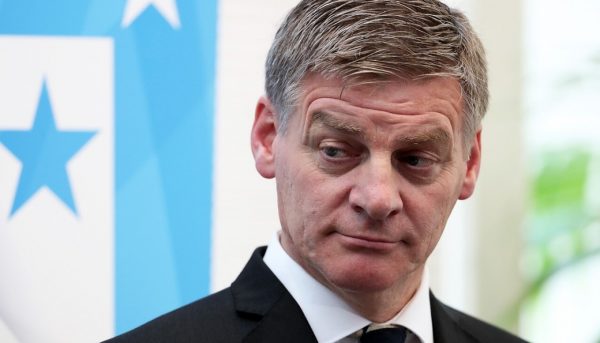
Earlier this week, several minorly amazing things happened. National decided to breach its nine-year commitment to leave the retirement age untampered with; Labour found itself with an MP in a leadership position whom the public actually seem to like; and I caught myself red-handed agreeing with David Seymour.
Having done a quick spot-check just to ensure that his (and my) home electorate of Epsom hadn’t frozen over, I then moseyed my way over to social media to see what everybody else thought of the week’s startling events – and in particular, the proposed increase to the pension age.
The reaction was sadly, somewhat predictable. And by this, I don’t mean that a clear majority of the people I interact with were opposed to the age going up (because that vocal disapproval is anything BUT sad!).
Instead, I refer to this regrettable new trend of boldly declaring that any policy-set perceived to favour the older (‘Boomer’ and ‘Greatest’) generations in our society is somehow a manifestation of “Intergenerational Warfare”. Forget “Class Struggle” … this is now the apparent Dialectic Du Jour of the modern, trendy lefty.
Now this is not to say that English’s recently announced pension policy is fair or equitable. By allowing the (presumably more National-voting) older generations of today to retire at 65, yet ripping the rug out from under the Gen-Xers, Ys, and Millenials who’ll be looking to retire at or after the decade in which the policy actually comes into effect, National is cynically stating that they’re quite prepared to engage in some SERIOUSLY unrighteous policy-making. Particularly given they effectively intend on making us pay for the costs of a 65 retirement age which we younger folk will never, most likely, benefit from. [That’s the part I agree with David Seymour on, in case you were wondering]
But is this “Intergenerational Warfare”, as some have suggested? I think not. That would imply that there is a broad mass of ‘Boomer’ and ‘Greatest Generation’ members out there enthusiastically cheering on the idea that they’re somehow “winning” by continually impoverishing and short-changing their children and grandchildren.
Instead, what’s happened is the neoliberal ideologues who actually run our economy are making bad decisions. Bad decisions, to be sure, which fairly deliberately mainly negatively effect those whom they perceive as least likely to be able to effectively fight back against them.
And yes, it’s certainly true that a goodly number of the National Party Caucus who are presently pushing this change are, themselves, Baby Boomers. Just as was a fairly large proportion of the 2014 Labour Caucus who did likewise at the last Election. But this is tempered by the number of out-and-out Quisling young people (predominantly Young Nats), who seem to be looking forward with licking lips to being amongst the first New Zealanders to have to compulsorily work into their late-60s. It simply doesn’t seem to be adequate to state that all those in favour of this present policy are older New Zealanders – still less, that all those opposed are young people. Indeed, with New Zealand First leading the charge against the policy, to attempt to assert so would be blatantly counterfactual.
Let’s be clear about this. There IS a fault-line within New Zealand Politics that is presently screwing over young people. But it’s NOT a consciously Older-Versus-Younger one. After all, the trends I’m talking about seriously deleterious affect older New Zealanders, too! If they’re not already well up the property ladder, pensioners on fixed incomes do only marginally better than beneficiaries and probably worse than minimum-wage earning young people when it comes to navigating our new, dilapidated extra-neoliberal public services; and they’re much less employable, in some respects, than either of these other demographics.
Instead, the ‘fault-line’ is between those in a position to effect policy, and those locked outside of the system. Between those who’re able to benefit from the way our economy is structured, and those whose ongoing prosperity or survival seems continually undermined by same.
And that suggests that this calculated insistence upon casting X governmental policy decision as yet another battle in a war of Old against Young is classic “Divide And Rule” tactics from those in power. Because if we’re really busy exerting all of our energy into blaming each other (on EITHER side of the age-divide), then we far more easily lose sight of the REAL forces and factions ACTUALLY to blame.
It probably feels good for the disenfranchised of all ages to lob insults and sketch stereotypes of people a few decades apart from them chronologically. To blame parts of the housing crisis on smashed avocado toast or gerontocratic greed, for instance. This does not make it accurate. It also doesn’t actually help us to solve the problems being talked about.
What is needed is co-operation rather than conflict between generations with a view to stopping this monstrous neoliberal ideology once and for all. This does not mean ignoring the fact that particular manifestations of pernicious policy such as the proposed pension package are more unequal for some age-groups than others. But it does involve setting aside some differences of opinion – and the inevitable associated recriminations – in favour of pursuing shared advocacy for genuine solutions.
Once upon a time, as a much younger man at university, I was introduced to the idea of “cross-class co-operation” in a Marxist context. The idea there was that the challenges inherent in attempting to overthrow (or, at the very least, reform) the excesses of capitalism were of such magnitude that the working class by itself was unlikely to be able to achieve this. Which would thus necessitate the strategic co-operation with other classes in society in order to attempt to bring about meaningful change.
I am not making the case for some sort of Marxian insurrection here in New Zealand by drawing upon that point of theory.
But it does seem, when so much energy is taken up by young activists objectifying our older forebears into The Enemy, that there is something productive to be had in remembering that working WITH our parents and grandparents may, in fact, be the superior way to go about making our situation better.
For all of us.
Certainly, if we wish to be cynical about this, the National Government have already resoundingly demonstrated that they have precious little interest in actually engaging with the perspectives or the votes of younger New Zealanders. Yet they’re evidently potently paranoid about the possibility of losing support from the Older Generations (hence, presumably, their decision to defer raising the Age of Entitlement until persons thinking about retirement today are already WELL on their way to dotage).
Part of the answer to our present circumstance, therefore, does obviously lie with attempting to turn younger New Zealanders into the sort of high-turnout voting demographic which can make or break elections. But this is longer term thinking. In the short and medium term, the way to start the beat-back upon Neoliberalism is to foster inter-generational co-operation against it. Rather than, as some are wont to do, give in to the temptation to blame our forebears for policy-sets and governments which they may very well have played very little role in empowering. (It’s worthwhile to remember that our parents’ generation are also the ones responsible for the MMP system which we enjoy today, delivered as the fairly direct result of their cohort’s attempted fightback against the disempowering and ultimately unrepresentative FPP system which gave us first Rogernomics, and then Ruthanasia)
In any case, as noted above – much of the present Parliamentary-Political opposition to this raise in the retirement age for younger people is being driven by older New Zealanders (supplemented and assisted by many of the younger Parliamentarians). This represents a great example of the interests and advocacy of the two generational groups coming together in order to oppose Neoliberalism.
Long may it continue.




Good call Curwen, although there’s one thing I want to take issue with:
“Part of the answer to our present circumstance, therefore, does obviously lie with attempting to turn younger New Zealanders into the sort of high-turnout voting demographic which can make or break elections.”
I don’t think it’s realistic or desirable to think that today’s digitally empowered youth are going to become passive voters any more than it is to think they are going to start watching the TV news. If we want younger people to get involved in democratic activity in Aotearoa, we need to pitch them something more exciting than turning up once every 3 years to choose between two sets of temporary dictators. We need to be talking about forms of democratic participation that go on all year round, and allow people them to inject their knowledge, ideas, and passions into the political process.
It’s deep democracy, not political consumerism, that has the potential to get younger people involved in politics. Once they’re involved and informed, and they feel like their input can have real impact, they’re more likely to make the effort to vote in elections of any kind. But this is just the cherry on the top, not the whole cake.
NZ Superannuation was only established in its universal form in 1979 by Muldoon’s government.
The previous old age pension was means tested.
To say the Baby Boomers voted for National and carried them to power to enable NZ Super neglects the enormous numbers of older voters at the time. Many of the older non-Boomer generation were National voters and were at odds with the younger voters.
Many of those in their Twenties at the time did not vote for National. They couldn’t stand the crusty old bastards.
Many twenty year olds in the 1970s were not fixated on superannuation that would not be claimed for another 35 to 40 years.
Australia has a means test which allows for a family home and about $540,000 in other assets after which the superannuation abates. If we follow Australia in so many things why can’t we work around some sort of means testing with a progressive abatement?
I also see the current high immigration as a threat to NZ Super. With such a short qualifying time I can see immigrants and extended family creating a heavy load on funding.
10 years is quite a short time to contribute to what could easily be 25 years of Super payouts. Many Boomers have been assisting Super payments to recipients for 25 years plus since the scheme was established, and paying social security tax for 10 to 15 years before that.
Australia has its qualification set at 25 years which is not uncommon with other countries.
Any OE years worked in Australia have the Super paid to NZ to subsidise the NZ Super for the years when the superannuitant was not contributing to the NZ tax base.
This reciprocal agreement may not be valid with many of the new immigrant home countries. This also adds to the load on the NZ Super funding.
Why is NZ so generous with its qualifying time? Just as we do with tourists and ACC claims, we pay out willingly to those who have not contributed fairly to the ongoing scheme.
The old age pension at 60 was income tested.
You could retire from you job at 60 and get the pension, It was called “The Old Age pension”
At 65 you could draw a pension no matter what your income was.
All working to 67 is utter rubbish.
Where are the jobs.
Robbing Peter to pay Paul seems to be National’s new policy…..
Except we are one country and all taxpayers. We are really only robbing Peter to pay Peter.
I don’t think Millenials would see it that way, JL073.
Be they allowed to retire at 65 or 67 the millennials will still need to pay enough tax to fund the super payments.
Incorrect jlo73. Total expentiture equals total income: http://www.investopedia.com/terms/e/expenditure-method.asp
Ur religious mutterings is not a very good way of funding super.
To fund super properly, or or government for that matter, you will have 1st gain command of FIRE (Finance, Insurance, real estate)
The level of salute bestowed upon you is not properly executed
I agree that raising the age to 67 is unfair on millennials.
I agree that National should have continued Cullen fund contributions.
I agree the age cutoff is implemented too steeply.
I agree that some people’s jobs mean they struggle to get to 65.
But the reality is there will be more retired people per worker in the future. People are living longer. We can address it sooner or later, fairly or unfairly but something needs to be done.
National having a look at the sustainability of Superannuation 6 months out from an election in pretty brace and should be celebrated, not critisised. Other parties should step up with their solutions, rather than beating National with a stick.
And someone needs to price up the health costs of the aging population. The health budget is a huge part of this debate.
So once again the baby boomers get full super at 65, while the millenials wait an extra 2 years? Gosh, what’s wrong with that picture??
By the way, how much did Bill English pay for his university tuition? Near-fucking-zero, that’s how much.
Thank you Curwen. It is of course the globalists who are pushing this agenda, regardless of the fact that jobs are disappearing to the 3rd world or are being done by machines. It is an assault on humanity.
100% Phil bang on there.
A nuanced piece, thank you. But I still have concern about the bottom-line, and knowing that several other countries that have age pensions have moved, or incrementally will be moving, to age 67; and of course, people are, and will be, living so much longer. It will have to be paid for; NZ is no different. Although the idea of a 2% tax on everyone, to fund super, is not a bad idea.
So many wise words there , Curwen,… time and again you drove the nail home.
It is the exact antithesis to neo liberalism – unity – that will defeat it.
I get a bit frustrated when I see commentators advocating yet more division. Especially those from the center left. It plays straight into the ugly ideology of the neo liberal . They thrive on division , in fact ,- their agenda rely’s on it to succeed.
To rebuild this society , and to reject neo liberalism wholesale , – we need a govt by created by the overwhelming unanimous vote.
And to do that ?… we need in tandem with vigorous cross party united front campaigning – a reeducating of just what neo liberalism is , its negative effects on a society and the destructive effects it has had on New Zealand society in particular.
We also need a viable alternative.
And I cannot think of a more viable working system than such as the Scandinavian country’s use currently.
Social Democracy and a Keynesian based economy.
THERE ARE ALTERNATIVES !!!
And I can tell you right now – there are far more wealthy Scandinavians than there are New Zealanders per head of population… and that DESPITE a workable welfare state.
In fact they currently have many of the things this country had prior to the 1984 Roger Douglas years of Treason.
Therefore now more than ever before ,… we need unity and cross generational cooperation to dethrone the neo liberal liars and wretches. And if this general election ousts this current pack of anti sovereignty globalists… the importance of unity will become even much MORE important post election than pre election as massive undertakings will be needed to be done to restore this nation to its true and rightful heritage – that being of the public of New Zealand.
100% WILD KATIPO.
We see a emerging strategy between Labour and the opposition parties so we want to see NZ First in there as NZ First has many good policies that support us kiwi’s.
Hallelujah!!!
nice to hear some common sense…sadly though for many of the (hopeful) players reasons of self interest, both personally financial and political (and I don’t mean “boomer” self interest) this line of thought is likely to be lost in the noise as that “intergenerational warfare” line gathers pace…..classic divide and rule.
In the short and medium term, the way to start the beat-back upon Neoliberalism is to foster inter-generational co-operation against it.
Hear hear!