
The farce of Labour Day and what NZ Unions must do next at their 20th Biennial Conference
Labour Day has become a tragic farce.
Labour Day became a national holiday in New Zealand in 1899. It was to commemorate and celebrate the rise of worker powers and how the earliest Pakeha settlers coming to New Zealand fought to create a fair balance of power between the boss and the worker.
Samuel Duncan Parnell came to New Zealand on the ship Duke of Roxburgh in 1839. He was a carpenter who was deeply impacted by the arguments of the day that people should be allowed 8 hours sleep, 8 hours to live their lives and 8 hours to the boss to work. He refused to join his Union in England because they refused to make an 8 hour working day a priority.
Once in New Zealand, Parnell refused to work for anyone who wouldn’t accept his 8 hour working rule and actively went and met new workers coming off the ships arriving in NZ to tell them of the 8 hour working culture he was trying to create.
The bosses tried to resist and tried to force workers to work later, but it became standard working hours in NZ after workers began simply walking off the job if a boss tried to force longer hours.
Fast forward to the NZ working environment of today and we see that Parnell would weep at how workers have been beaten into neo-feudalism. Many workers are over worked and many others are under worked. Many have a precarious working arrangement and have zero job security while health and safety in this country remains one of the worst in the developed would.
There have already been 63 deaths last year and the shadow of the Pike River Mine disaster hangs over industrial relations.
The Right wings war on Unions in NZ have successfully crushed most into irrelevance and this has happened while worker rights and safety has gone backwards.
The New Zealand Council of Trade Unions Te Kauae Kaimahi will hold its 20th Biennial Conference next week, 29-30 October, at Te Papa Tongarewa, Wellington and for the first time since Helen Kelly’s death, the NZ Union movement has direction.
Instead of lawfare to progress Worker rights, they have had to learn that Mega Strikes are the only force left to them when facing a Right Wing Government this extreme.
That’s the reality Union Members and Union Leaders have had to comprehend when facing a Government led by ACT Party lunatics who have no interest in good faith relationships with Unions.
They are here to destroy Worker Rights, not protect them.
This Government represents a full scale attack on public services, and the Unions and their menbers need to understand that they are NOT on the streets simply demanding their interests, they are on the streets fighting for an egalitarian NZ whose infrastructure is built upon those well funded public services.
They are fighting for a NZ that stand for the many, not the few!
They are fighting for a NZ that is not led by right wing astro turf organisations!
They are fighting for a NZ beyond the thrall of corporations, speculators and polluters!
They are fighting for OUR NZ and they need to be ready to step up that battle in the election year because this fight IS political, cultural and economic!
Judith, Luxon, Simeon, Erica all cry out the Unions are being political OF COURSE THEY ARE!
They are the last line of defence for a public service that has been neutered and robbed and underfunded as a political decision.
This idea that Unions aren’t supposed rot be political is a noose put on us by the Right as they actively engage in political hit jobs.
Stand at the 20th Biennial Conference!
Stand up for the values of Labour Day!
Stand for an egalitarian NZ!
There is no negotiating with this…
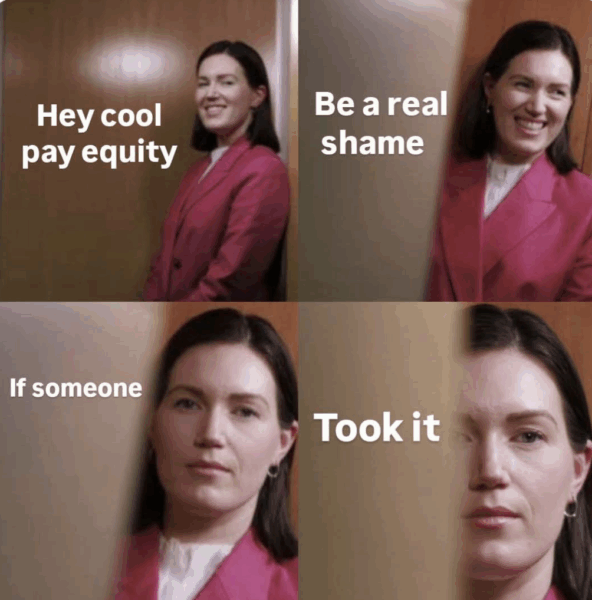
…and when they tell you they don’t have the money to properly fund our Public Service, remember this…
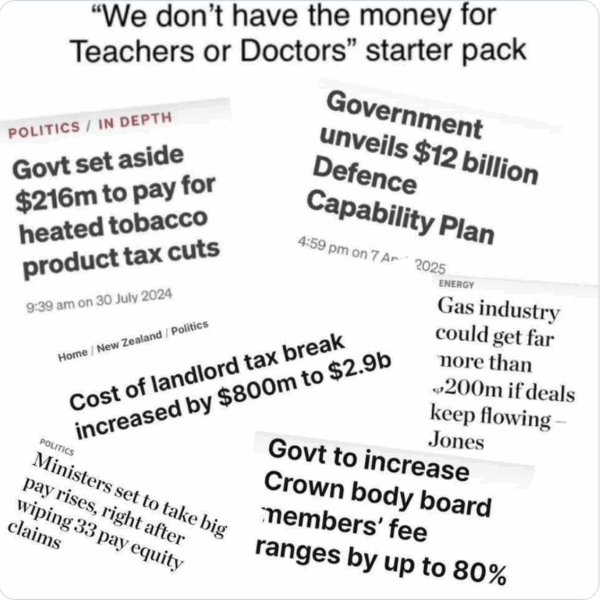
…and remember this…
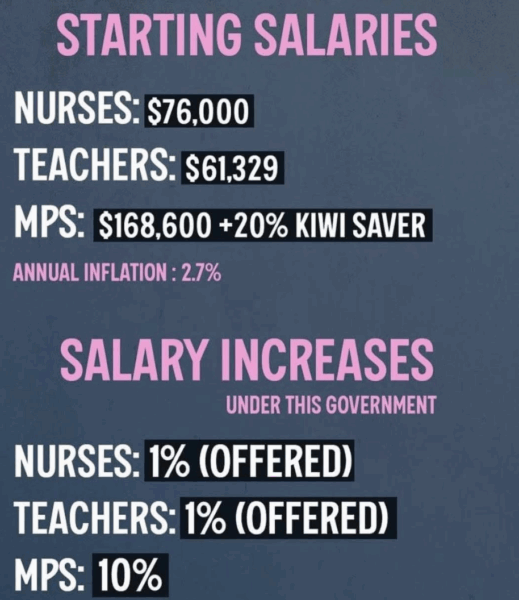
…stand and make Helen Kelly proud!
Increasingly having independent opinion in a mainstream media environment which mostly echo one another has become more important than ever, so if you value having an independent voice – please donate here.


There’s no such thing as “too many holidays”, mate. It’s like saying, “too much ice cream” or “too much sex”. Unless you’re some sort of puritan masochist, you should be taking all the holidays you can get with a big old smile on your face.
COSATU the Confederation Of South African Trade Unions played a major role in the defeat of the apartheid regime in South Africa. Founded in 1985 on the principle of “an injury to one is an injury to all,” its goals extended beyond factory floor issues to include the complete political and social transformation of South Africa.
Political campaign: COSATU used massive industrial actions to exert pressure on the government to unban the ANC and release poltical prisoners. The 1987 National Mine Workers’ strike, which saw hundreds of thousands of miners strike, was an iconic example of the federation’s power.
Industrial Campaign: In the late 1980s, COSATU launched a campaign to advocate for decent wages for all workers, which often led to industrial action.
Yesterday, Francesca Albanese was in South Africa, where she gave a speech in which congratulated South Africa for taking Israel to the World Court for committing genocide in Gaza. Albanese said the ‘Global South’, is misnamed, from now on we must call it the ‘Global Majority’. Albanese called on international trade unions to take a stand against the genocide in Gaza.
Francesca Albanese @
….history is pressing upon us. And standing on this sacred soil at the roots of mother Africa, a continent so rich, so nurturing despite centuries on violence inflicted upon it. It feels deeply symbolic. South Africa and Palestine share deep historic ties forged in the fires of resistance to colonial rule and the quest for liberation.
The indomitable spirit of the South African people who overcame centuries of European colonialism dismantling the criminal system of apartheid continues to resonate far beyond these shore inspiring all believe in the possibility of justice…..
…..We have to mobilize unions, coordinate with global solidarity movements, demand divestments from universities and institutions that are engaged with the Israeli occupation, apartheid, and genocide. And as Dr. Naledi Pandor once said, if the workers worldwide struck for a month, the genocidal assault on Gaza would stop immediately.
(In my opinion: If they struck for a day, the genocidal assault on Gaza would be over. That is the power of working people in unions)
Oct 26, 2025
Francesca Albanese Sends SHOCKWAVES Across the Globe in a HISTORIC Speech in South Africa!
https://www.youtube.com/watch?v=g3w_jECrvvA
The Italian Trade Unions have shown what is possible forcing the right wing Italian government to send an Italian navy warship to provide a partial military escort for the Freedom Flotilla to break the Illegal Israeli siege of Gaza.
The Making of Italy’s Pro-Palestine General Strike
ByTasnima Uddin
When Italy’s dockworkers organized a strike in solidarity with Palestine on October 3, they showed that solidarity and internationalism are still alive in the Italian labor movement.
“From this moment, we call every worker, every citizen, every democratic and solidarity organization to block everything: production, logistics, transport, school, services as a sign of protest against the war crimes committed by Israel and against the complicity of Western governments, including Italy, which continue to provide weapons and political support to the Zionist regime.” — Unione Sindacale di Base (USB) statement.
n October 3, 2025, more than two million workers and young people took to the streets of Italy in a historic general strike for Palestine — the largest protest of its kind in the country’s history. Under the slogan “Blocchiamo Tutto” (“Let’s Block Everything”), demonstrations swept across more than eighty cities. Ports in Livorno, Naples, Salerno, and Genoa were shut down; railways and highways were disrupted; schools, universities, and workplaces were closed as students, teachers, and workers walked out. In Rome, a one-million-strong demonstration followed the nationwide strike……
I am old enough to remember a time when New Zealand unions did such things.
https://thespinoff.co.nz/atea/23-09-2025/the-forgotten-union-green-ban-that-defended-bastion-point
….in New Zealand during the 1970s, unions banned trade with Chile (to protest the Pinochet dictatorship) and France (to protest French nuclear testing in the South Pacific).
Green bans were an innovative progression from black bans. They were ecological political stoppages pioneered in 1970 by Australian construction workers’ unions.
In Aotearoa, greens bans were also trailblazing – they were indigenous adaptations of the Australian practice. They were placed to support Māori concerns over their alienated land and fishing grounds in the late 1970s.
The most significant green ban in New Zealand was at Takaparawhau/Bastion Point Auckland in 1977–78.
A belligerent National government, led by prime minister Robert Muldoon, had decided to develop Takaparawhau – which was then a large grassland area owned by the state above a headland – into a luxury private housing area.
The Ngāti Whātua iwi and supporters then occupied or repossessed their land, and unions placed a green ban in support.
The green ban was placed before the occupation began to stop bulldozers rolling in. It occurred after ŌMCAG requested that the Auckland Trades Council ban any work on the site.
The acting Auckland Trades Counci president Dave Clarke (of the Te Paatu tribe and the Seamen’s Union) agreed to it, and the green ban was later confirmed by the full Auckland Trades Counci executive…..
With the Auckland Trades Council Green Ban in place no earthmoving company could get their workers to work on the subdivision of Bastion Pt. And even after the eviction of Ngati Whatua and their supporters by the police and army, the trade union Green Ban still held and eventually the Muldoon government had to abandon their plans to sub divide the land.
In the first case of its kind, the incoming Labour government of David Lange empowered the Waitangi Tribnunal with extra powers to return the disputed land at Bastion Pt. to Ngati Whatua ownership.
As well as trade union green bans and trade bans on fascist ruled Chili, the New Zealand trade unions banned all nuclear ship visits.
I can remembering the first example of this. The USS Haddo a nuclear powered submarine was challenged on the Waitemata by the Peace squadron, who were harried and pursued by NZ navy and police boats and navy helicopters deliberately useing the down wash of their rotor blades to capsize small boats, a number of which they managed to sink, only luck and life jackets prevented drownings.
On shore protesters reached the gates gathered in the Bledisloe staff car park leafletting and talking to the wharfies as they parked their cars and entered the wharf gates for their shift. Not long after they all streamed out the gates wearing their white work overalls, and held and impromptue stop work meeting, where they voted to strike. The strikes against nuclear ships spread to Wellington. The last nuclear armed warship to visit New Zealand was the USS Texas which was met with a general strike in Wellington. The strike was so successful that US ambassador complained in the media that his staff refused to make him a cup of tea. I am sure that he recovered from that hardship. But no nuclear armed or powered ships ever visited again. In 1987 the Lange Labour government formalised this state of affairs with the Nuclear Free Act.
But the same Labour government passed legislation to make political strikes illegal. In exchange the unions were for the first time ever given the legal right to strike in a narrow window at the end of a collective contract, but only for economic terms and conditions. (technically all industrial action was illegal before that, but widely ignored).
Most union leaderships were comfortable with the trade off, and also with the new so called ‘partnership model’ of unionism. But the end of militant trade unionism of the type we witness in Italy, has not been as effective in protecting wages and conditions of New Zealand workers as the earlier militant union model.
“We,” being the politicians not we the people.
Let’s also remember nz was the first country to bring in a form of Minimum wage in 1895 .
All politcis is pressure.
The tiny minority of rich people apply their political pressure on the government with money and the influence money buys. And the swipecards to the Beehive that the big business lobbyists have, that gives them access to our MPs not available to the public.
The vast majority of working people don’t have money, or influence, or swipcards to the Beehive. Outside our workplaces we are individualised and atomised. Only in our workplaces are we powerful.
We need to exercise that power and influence again.
This motivates me completely
*chinese
Parnell 2.0 would be meeting chinsese carpenters at Mangere airport and letting them know working 12hrs 7days a week is not the kiwi way or the way to integrate with NZ society.
Really! I reckon arbour day or environment day ought to be a public holiday so we can all go clean up a creek plant a tree and have a picnic.
Beautiful message shared
‘This idea that Unions aren’t supposed to be political is a noose put on us by the Right as they actively engage in political hit jobs.’
‘Politics (from Ancient Greek πολιτικά (politiká) ‘affairs of the cities’) is the set of activities that are associated with making decisions in groups, or other forms of power relations among individuals, such as the distribution of status or resources.’
(A Greek English lexicon, Henry George Liddell, Robert Scott)
‘Making decisions in groups’ = Union meetings. ‘Power Relations between individuals’ = wage playing employers versus wage receiving employees ‘Distribution of status or resources’ = demand for living wages and decent working conditions.
Of course it is political and so it fucking well should be.
RESTORE STATE SOCIALISM IN AOTEAROA! DEATH TO CAPITALISM!
“Bring out the banners once again,
You union women, union men,
That all around may plainly see
The power of our unity.”
Those last two captions need to be on billboards 3 months leading up to the next election. MP’s 20 % KiwiSaver, get the fuck out of here! How is that palatable when No boats Willis has cut government KiwiSaver contributions? I f that is not the height of hypocrisy, what is?
We are seeing, not a cosmetic cost cutting exercise, but the systematic gross underfunding of every key public service, with a view to destroying it. There is no fat left, except in Treasury, and between the ears of Willis & Bishop.
What the public need is a kernel around which to form a movement that will thrust neoliberals out of every public situation that allows them to misdirect public money, and reclaims public property and the attendant responsibilities of our communities and state.
I expect violence – the thieves who are ruining NZ feel very entitled.
“This idea that Unions aren’t supposed rot be political is a noose put on us by the Right as they actively engage in political hit jobs.” Martyn Bradbury
‘Don’t make it political’ is an ACT Party mantra.
What the ACT Party really mean when they say don’t make it political, is don’t make it democratic.
Ever since their founding, ACT have always recited this mantra everytime at anything they don’t like. And they don’t like unions.
What the ACT Party mean when they say don’t make it political, is let their tiny cabal of increasingly monstrous billionaire backers run the show.
The time to call Taihoa has arrived.