
Nael Barghouti: Courageous words from an unbreakable spirit

This article draws extensively on the words of Nael Barghouti, a Palestinian political prisoner imprisoned for more than four decades. His testimony offers a rare insight into resistance, endurance, and the moral cost of prolonged occupation.
This post is much longer than usual and also different, because it quotes extensively from a courageous Palestinian leader imprisoned for much longer than the legendary Nelson Mandela.
Such was the impact on me of his insights following his release that I judged it best to let him speak as much as possible in his own articulate and harsh experience-driven words. I simply could not do justice to this unbreakable Mandela-like figure otherwise.
These insights should be absorbed by the New Zealand government in shifting from its policy of condoning Israel’s genocidal occupation of Gaza to sanctioning the rogue state.
Introduction by way of a garden in Gaza
Taqwa Ahmed al-Wawi is a writer, poet and editor living in the midst of the ‘ethnic cleansing by genocide’ of Gaza that still continues today. The so-called ceasefire of Donald Trump has simply slowed down somewhat the rate of genocide.
 Taqwa Ahmed al-Wawi writes about growing a garden as a form of resistance against genocide in Gaza
On 16 January the Guardian Weekly published her short moving opinion piece: Growing a garden amidst genocide a courageous and unbreakable spirit.
She describes the persistent and hardworking efforts of her Palestinian family members and friends to grow a vegetable garden in this untenable environment. Taqwa Ahmed al-Wawi concluded with the following words:
Despite the harsh conditions, lack of water and constant danger, each plant managed to grow, offering us food and a sense of achievement amid devastation.
Potatoes soon followed. We harvested them and, boiled or fried, they became a meal made even richer by their origin. We drank fresh mint tea. Arugula and ain jarada added sharp, peppery notes to our salads.
Today, as scarcity gnaws and violence rages, even during a supposed ceasefire, the garden is still breathing life. It is a mix of longtime residents – the fig, orange, lemon and olive trees – and our new crops. In a land ravaged by genocide, it persists – leaf by leaf, root by root. It is a chronicle of endurance and quiet rebellion.
This is an example of the quiet courage of people possessing an unbreakable spirit in the midst of a genocide unimaginable for us living in the distant safety of Aotearoa New Zealand.
The unbreakable spirit of a Palestinian leader
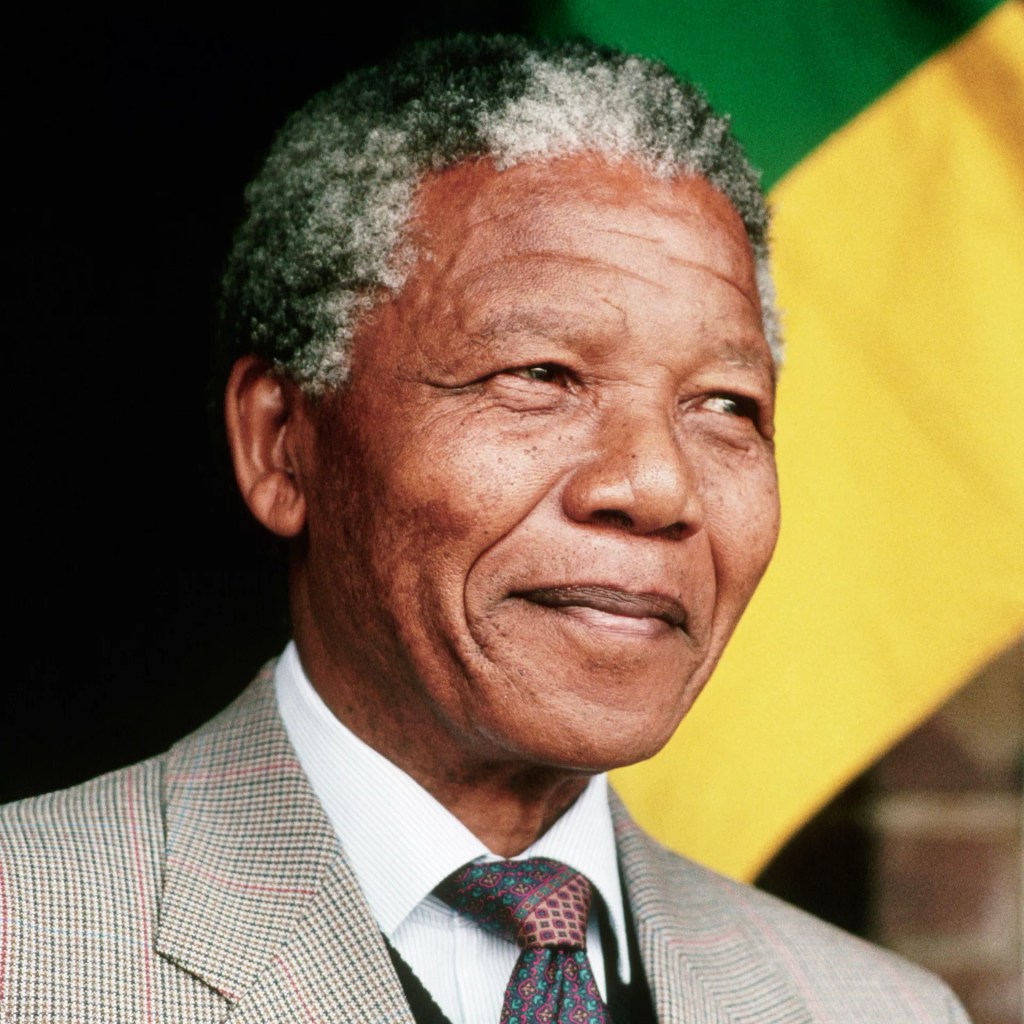 Nelson Mandela would be considered antisemitic by Israel Zionists because he publicly stated that Palestinians suffered worse under Israel’s apartheid system compared with non-whites under South Africa’s apartheid system
 Courageous and unbreakable spirits are also evident in individual leaders. South Africa’s Nelson Mandela was imprisoned for 27 years (1964-1990) is the most famous example. For me another standout example, in quite different circumstances, is Cuban-Argentinian revolutionary Che Guevara.
Another courageous and unbreakable spirit was discussed on the reader-funded progressive values based independent news outlet, Drop Site News (19 January): The unbreakable Nael Barghouti.
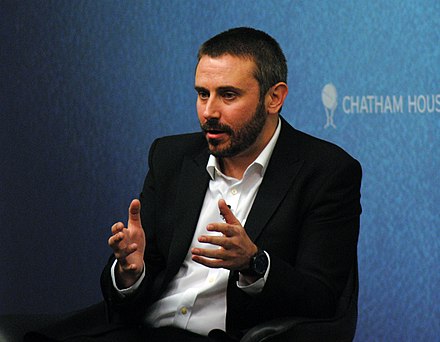 Activist, author and investigative journalist Jeremy Scahill
The authors are Jeremy Scahill and Jawa Ahmad, co-founder and Middle East research fellow respectively of Drop Site News. This is a daily online publication that I highly recommend subscribing to (paid or unpaid).
Their subject is Nael Barghouti, a 68-year-old Palestinian from the occupied West Bank who spent more than four decades in Israeli captivity (34 years consecutive) before his release through a prisoner exchange deal signed between Hamas and Israel in January 2025.
Unrecognised hostages
As a condition of his release, Nael Barghouti was forced to go into exile and was deported to Egypt.
Currently there are an estimated approximately 9,300 Palestinians currently held in Israeli captivity.
Nearly half of them have not been charged or brought to trial. Additionally, there are an unknown number of Palestinians held in military camps run by the Israeli army.
Together these Palestinians are effectively hostages but the mainstream media and complicit governments refuse to acknowledge the legitimacy of this label. It is only permissible to call those Israelis captured in the October 2023 attack hostages.
Fighting for Palestinian liberation
Scahill and Ahmad quote Nael Barghouti in his own words from an interview about his fight for Palestinian liberation:
We deserve a state under the sun. I never lost hope, and I never will. I have been optimistic from the very first day I began my struggle. In prison, I was optimistic that I would be free one day. And, even if I were to die in prison, I would remain content, because those who come after me will continue the path, because they are convinced that we are in the right.
 Nael Barghouti speaking at a Palestine conference in Istanbul, November 2025
Without any prior warning, a prisoner is detained with no charge—a 15 year old [boy], or a woman. Malicious arrest—arrest simply to send a lesson to entire generations. They are received with beatings, bone‑breaking, and the spread of infectious diseases.
We are not seekers of blood or wars, but we will accept nothing other than defending ourselves and our rights. Why is it forbidden for Palestinians to live like any other people—to leave when they wish, return when they wish, go to the sea when they wish?
Personally, I have seen the sea only once, in a prison transport vehicle, and when I was released. The sea is thirty kilometres (18 miles) from my village—why?
Why are olive trees hundreds of years old uprooted? Why do settlers go to villages to uproot trees, attack people, and kill their animals? Why does the occupation prevent the families of released prisoners from leaving to meet them?
How it all began
The 1967 Arab-Israeli war started by Israel led to its decades-long occupation of the Palestinian West Bank. It also led to the politicisation of Nael Barghouti.
The then 10-year old boy witnessed Israeli forces invade his family’s West Bank village of Kobar. This traumatic experience kick-started his anti-occupation actions joining other youth in throwing stones and writing graffiti on walls.
Reflecting on this Barghouti told Drop Site News that:
We come from a family that rejects the occupation. We lived in a simple village, but it was one that hosted refugees from [the Nakba in] 1948. We knew that these refugees had land, homes, and property, and that overnight they became poor people waiting for the United Nations to grant them some aid.
What we witnessed of the crimes of the occupation and its soldiers, and the humiliations, instilled in us a refusal to accept this occupation. From a very young age, since 1967, I saw my father being humiliated by soldiers while I was still a child—him being beaten in front of me by patrols.
 A young Nael Barghouti in 1978 (Drop Site News)
In 1977 Barghouti was arrested for the first time and spent three months in jail. The following year he received a life sentence of at least 18 years after being accused of being involved with the killing of a former Israeli paratrooper.
Again in his words (his father was also detained):
I was tortured in front of my father, and my father was tortured in front of me. They threatened to arrest my mother, and later they did arrest her. We entered prison unjustly, were sentenced unjustly, and were assaulted unjustly.
We will not submit, and we will not be ashamed that we resisted—we will not disown our actions. Those who must disown their crimes are the leaders of the Zionist occupation.
The Palestinian people have been fighting for more than a hundred years. This is not tied to Hamas, Fatah, or any other organisation. Every phase will have its own names and labels until the goals of the Palestinian people are achieved: return and self‑determination. This is a point that no Palestinian will ever abandon.
We entered prison and resisted the occupation, and we are not ashamed of that. It is the right of the Palestinian people—and of any people under occupation—to resist. The American people resisted British injustice. How did Ireland gain its freedom? Through the use of all forms of resistance.
Imprisonment
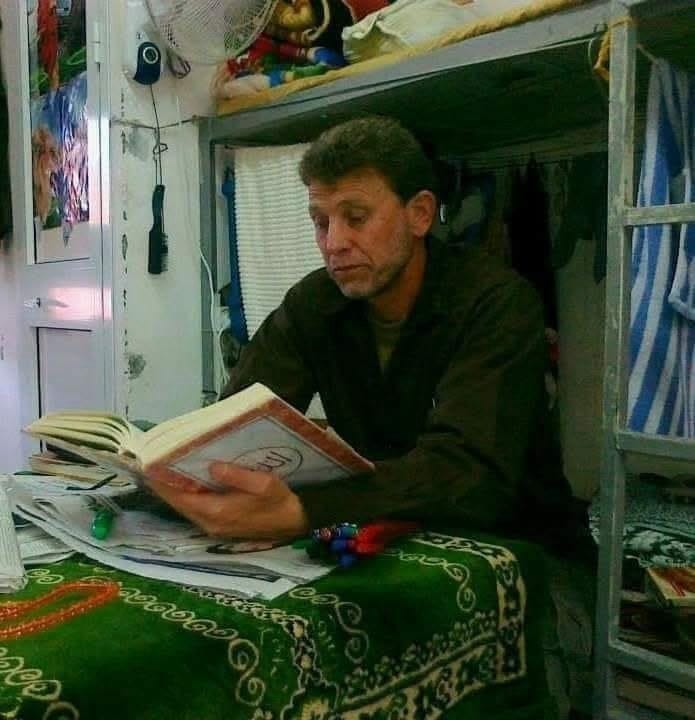 Nael Barghouti in prison (undated)
In prison Barghouti earned a reputation as a leader, organiser, and political thinker. Over the years he became known as the ‘Dean of the Palestinian Prisoners’ and the ‘Father of Light’. The ‘Dean/Father’ comments:
We Palestinian prisoners entered prison at a time when the torture was the same as the torture that exists today. We carried out multiple [hunger] strikes with the support of our people. Sometimes the occupation wanted calm from us so that the Palestinian people would not rise up, so through our strikes, we achieved certain gains: the pen, the paper, the notebook, the book, and bedding—the blanket.
Everything inside the prisons was achieved through our [hunger] strikes. Our organisation was disciplined because we are political prisoners: we do not accept living the life of a criminal prisoner.
Short ‘respite’
Barghouti was released in 2011, as part of a prisoner exchange deal between Israel and Hamas fighters, and returned to his West Bank village where he both farmed and enrolled at a local university.
Nelson Mandela once said that he went into prison a man and came out a myth. Barghouti described his experience with these words: “I am being welcomed not as a person, but as an idea, a symbol for Palestinians.”
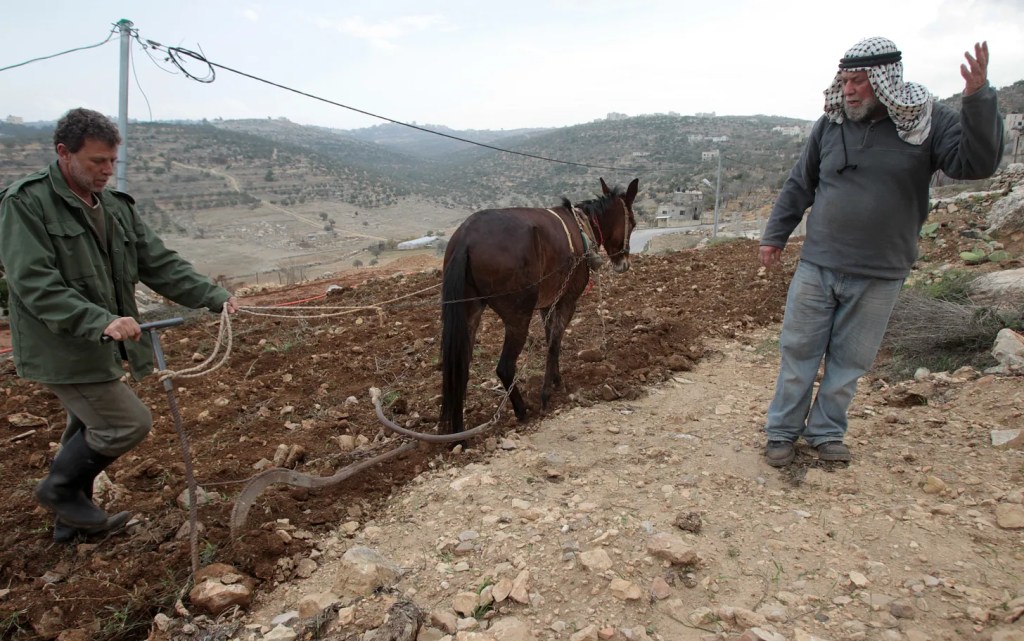 Nael Barghouti with brother Omar farming on West Bank, 2013 (Getty Images)
However, in 2014 he was again imprisoned to resume his life sentence on the dubious claim of violating the terms of his release.
The claim was that he violated the terms by giving a speech at a university and rumours that he was considering accepting a ministerial post in a possible unity government between Fatah and Hamas.
7 October 2023
Commenting on the Hamas-led attacks in Israel on 7 October 2023 Nael Barghouti noted:
Honestly, I felt the same feeling that the Israelis felt in 1967—how within six hours the Arab air force was destroyed and Arab land was occupied. [The Israelis] felt happiness and arrogance. I did not feel arrogance. Despite our limited and simple capabilities and [living] under siege—we don’t have F‑16s, we don’t have Patriot missiles—this arrogant army, which goes to Yemen and bombs Yemen, bombs Iraq, bombs Iran, was confronted by simple people coming out of the siege saying, ‘Enough’.
Yes, we took pride in it—yes. Even though we wish that this Flood had never had to happen—that we had already been free and had no need for such battles. But, tomorrow, there will be another flood, and another, until this occupation and this injustice come to an end.
He added that soon after these attacks Israeli prison guards began to intensify their abuse and torture of Palestinian prisoners including himself:
Israeli policy against prisoners used every method of repression: beatings, humiliation, dogs, tear gas, stun grenades, and starvation. I personally lost 22 kilograms (48 pounds) in weight. I was deliberately poisoned more than three times—myself and those living with me in the same section.
It was intentional poisoning—some of the guards put substances in the food, and everyone who ate it suffered from diarrhoea, and we received no medication. Those who contracted contagious diseases like scabies were taken to rooms with healthy prisoners so the disease would spread, and it spread intentionally and systematically. This demonstrates a fascist mindset.
Our hands, legs, and ribs were broken, but our spirits and our will were not broken. Dogs fitted with iron collars were used against me more than once: they were given orders. My shoulders were broken. My blood covered my back—from iron shackles, from plastic restraints. Hunger. Cold—for two full months I walked barefoot in the cold. Barefoot.
The clothes I was wearing—the guards all called me ‘homeless.’ I believe there are photographs they took—they boasted about it. The food—they would kick it with their feet, spit on it, spit into the food. These are things that happened.
Post-Release
Since his release in February 2025, Barghouti has used his time advocating for the freedom of other prisoners, demanding that families of those forced into exile be allowed to reunite, and promoting the cause of Palestinian liberation.
Meanwhile Israel unnecessarily and cruelly denied his wife exit papers to join him in Egypt. Blocking access to released prisoners by their loved ones is unconscionable routine Israeli practice.
In Barghouti’s own words:
Why, at this moment, are the families of Palestinian prisoners who were released under an agreement prevented from meeting their children? Why is this happening? Why are the wives, sons, and daughters of detainees prevented from joining their children in visits? Why?
All prisoners who have been [exiled]—their families are punished by being forbidden to meet them.”
Further:
There are dozens, even hundreds, of Palestinian victims to this day in numbered graves and in secret prisons, and the Red Cross is not allowed to see them. They trade in bodies, and this goes against everything that is human.
These prisoners, and dozens like them, are heroes of the Palestinian people. But if these prisoners were to be tried under a fair legal system, they would not—and could not—have received the sentences they were given. I challenge international law: if it truly wants to resolve the issue of Palestinian detainees, it must review all their cases.
And there is more:
Today, my sister—my own sister—is in prison. Why? Because she spoke with me on the phone. “Can you imagine? She is taken under an administrative law dating back to the period of British occupation. My sister is [imprisoned] simply because she spoke with her brother. What justice is this?”
Barghouti next observes argues in the context of escalating Israeli abuse and torture and threats to begin executions:
They have left the prisoners’ file as a fuse for future confrontations. Release them, and I believe the region could enjoy a long period of calm. [These prisoners] are an inseparable part of the Palestinian struggle. Keep them imprisoned, and you will drive many generations, and the children of future generations, to struggle for their liberation, and the cycle will continue unchanged.
Stupidity is one of God’s soldiers deployed upon the minds of these criminals—it will ultimately contribute to the end of this entity. Part of their stupidity, animosity, and criminality will contribute to their downfall in front of the people of the world, not only in the eyes of our people.
A striking metaphor for Palestinian liberation
Jeremy Scahill and Jawa Ahmad describe ‘life’ as striking metaphor for the entire Palestinian struggle for liberation in their revealing Drop Site News article.
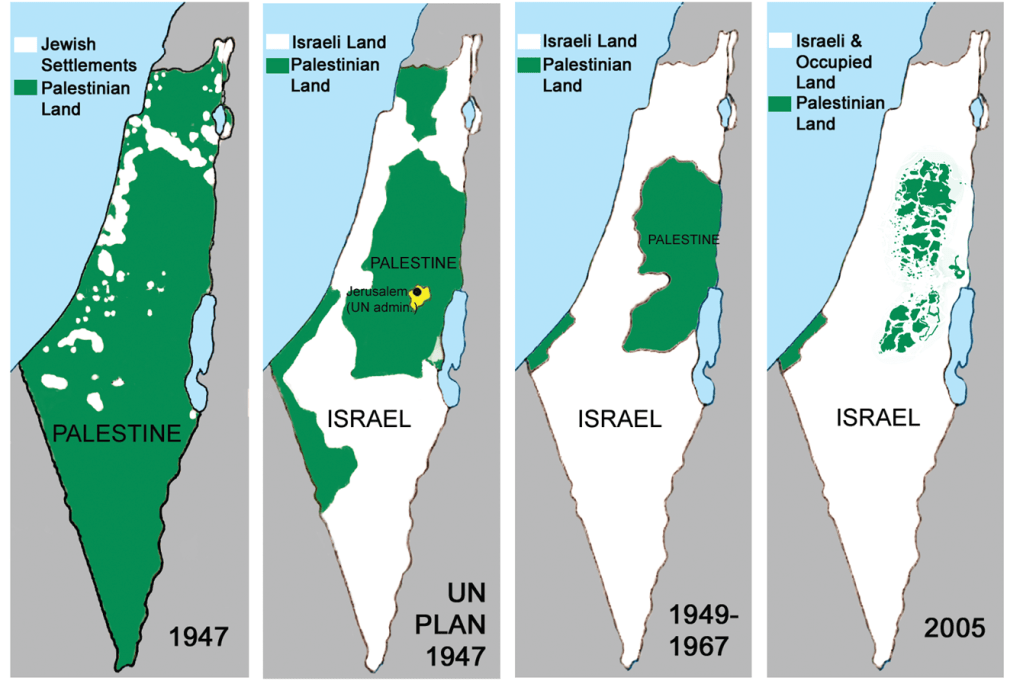 Loss of Palestinian land since 1947
As Nael Barghouti puts it:
We endured beatings and humiliation, but our spirit and our will were not broken, and will never be broken by any torture. We endured because we were people of conviction. Even when we were prevented from praying, and forbidden from practicing our religious rituals, we prayed in secret—just as Christians once prayed in secret under the Byzantine and Roman empires when they were persecuted.
We held onto hope, we remain hopeful, and we will continue to hope. The jailer will never defeat us, no matter what methods he uses, because we are people of a just cause.
We deserve a state under the sun—a state with scientists, poets, writers, and artists, no less than any other country in the world.
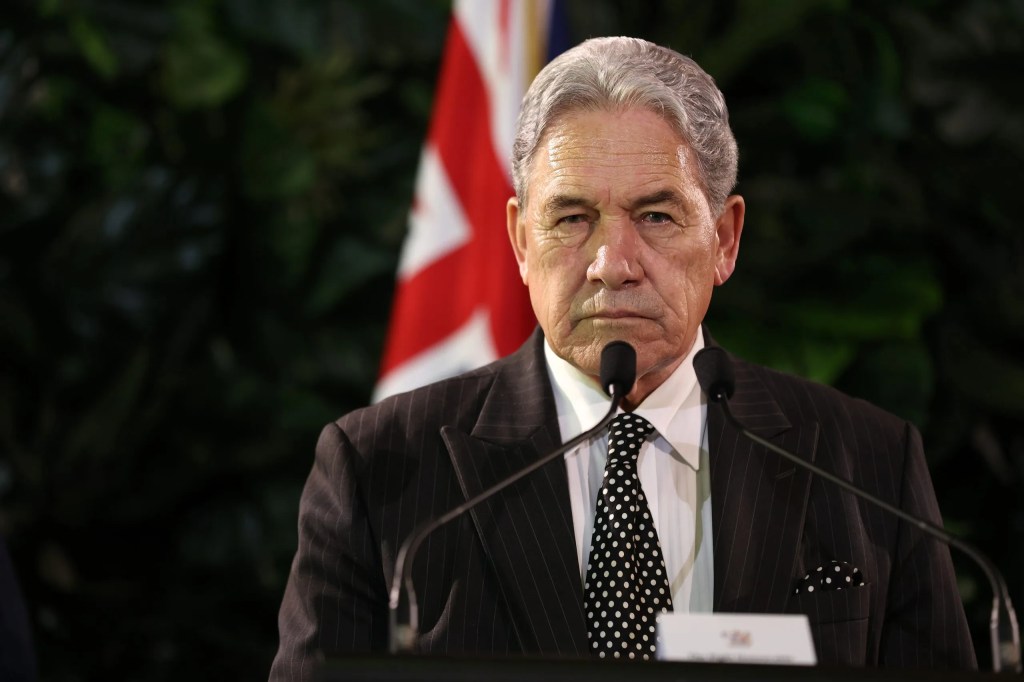 Time for Foreign Minister Winston Peters and his government to step up and do the right thing: support the oppressed, not their oppressors
Nelson Mandela was able to make a massive contribution to the future of his country and internationally after 27 years in prison.
It is not difficult to imagine what a Palestinian leader of similar unbreakable courage and spirit, such as Nael Barghouti, might also achieve even after 45 years in prison.
Time for New Zealand to act
This is what the New Zealand government should be supporting – the leaders of the oppressed, not the leaders of the oppressors.
Ian Powell was Executive Director of the Association of Salaried Medical Specialists, the professional union representing senior doctors and dentists in New Zealand, for over 30 years, until December 2019. He is now a health systems, labour market, and political commentator living in the small river estuary community of Otaihanga (the place by the tide). First published at Political Bytes


Human history is a litany of conquest, colonisation and displacement of peoples. The Jews and the Arabs are no different. Singling out the Jews today for doing the same as most everybody else in all history is hugely hypocritical. After all the Jews were there first. Hopefully Trump will get some form of agreed resolution that stops them killing each other
Wrong; while it isn’t the Jews were not there first. Both Jews and Arabs were in Palestine pretty much from the beginning.
Heart breaking. And fuck winston peters. When are people going to begin to understand that peters is a Machiavellian liar, but worse, a lawyer, and it’s no coincidence that he’s still there, after all these years after the greed fest free for all the privateers enjoyed as they divvied up our taxes paid resources to create their private wealth. Sound familiar?
While it is self evident that the actions of Israel are wrong they would not have been able to continue acting this way without the support of many worldwide. A major reason for people supporting Israel is that they believe that they are a spiritually significant nation and that prophecy depends on their existence. Obviously this is wrong and some Christians are beginning to understand that worshiping a God who is described as love and supporting a nation that has only evil intentions for the Palestinians is not compatible although that also increases the risk of Jews being condemned for their race instead of considering their actions. While it is ancient history now a major reason that early Christians started worshiping on Sunday was to distinguish themself from the Jews so it would not surprise me to see the same sort of logic being used as groups like the Heritage Foundation in the USA seek to have Sunday laws introduced. I do not support that as any combination of church and state always results in a loss of freedom and persecution.