

Fertiliser causes social injustices in Western Sahara and environmental injustices here
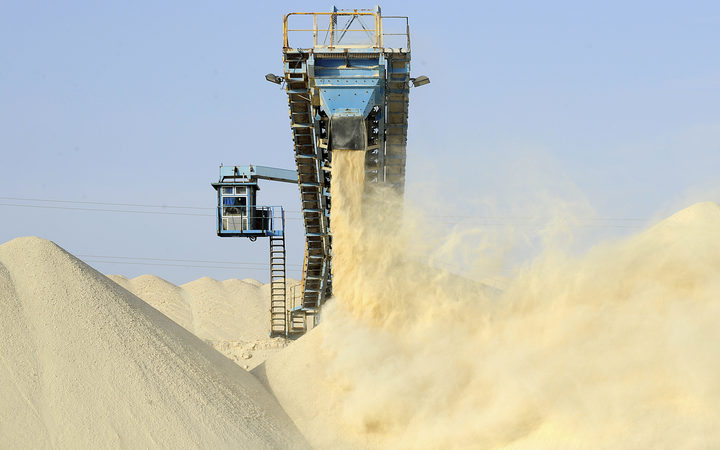
New Zealand farmers are out of step. As a developed agricultural nation selling our produce and our brand to the world, our companies should be among those showing social responsibility in refusing to buy rock phosphate fertiliser from Moroccan occupied Western Sahara.
Some of the biggest previous importers of Western Saharan phosphate have withdrawn their trade because the Moroccan controlled supply has failed due diligence tests. Companies from Australia, Lithuania (the world’s hitherto second biggest importer), Scandinavia and the US have all stopped buying stolen Western Saharan rock phosphate.
That leaves NZ farmer fertiliser co-operatives Ravensdown and Ballance AgriNutrients among only nine companies worldwide who continue to support Morocco’s illegal occupation through purchase of rock phosphate. This means New Zealand farmers are complicit in exploiting the resources of the local Saharawis, condoning both the occupation of land, the appropriation of their resources, and injustices inflicted upon them.
New Zealand’s intensive agriculture requires intensive fertiliser, to be successful. A 2010 figure estimated that NZ used one million tonnes of phosphate per annum and we’re highly dependent on imported rock phosphate to sustain the industry. But New Zealand agriculture has long come at the cost of indigenous communities and their self-determination – observe Nauru.
Ravensdown and Ballance are the (only) two member companies of the Fertiliser Association of New Zealand and supply 98% of all fertiliser used in New Zealand, a $2billion market share. The Association says they’re ‘aware of the territorial dispute in the non-self-governing territory of the Western Sahara’; An invasion, followed by illegal occupation for 40 years and human rights violations as established by the International Court of Justice and the European Court. But the Association says ‘that’s no reason not to use rock phosphate from the area’. Federated Farmers say ‘NZ needs the phosphate, and the price is likely to go up if the Western Sahara supply was taken off the market”. The Ravensdown Chief Executive links access to Western Sahara phosphate with social stability, warning ‘if it wasn’t available, then globally we could have social unrest, because we wouldn’t be able to produce the food we need’.
Morocco and Western Sahara produce three quarters of the world’s phosphate exports, and phosphate is essential for plant growth. The implication is that because global, and New Zealand agriculture in particular, is dependent on international phosphate trade from a few sites, including Western Sahara, we should accept current oppression as collateral damage. It’s the price we pay for our meat and milk.
And even though the Fertiliser Association say their trade isn’t in disregard of the interests and wishes of the local population, that’s not what the Polisario say – and they should know. The Polisario are the exiled representative body and liberation front of the oppressed Saharawis. The Saharawis are the only people in Africa who haven’t been decolonised, according to Michael Dobson, a Global Politics Doctoral Student. Their country is segregated by ‘the Berm’ a 1500km series of walls, into Morocco-occupied Western Sahara, and the area controlled by the Polisario (mostly ‘economically ‘useless’, heavily mined and almost uninhabited’). Between 90,000-120,000 Saharawis are concentrated in refugee camps in Algeria, facing food insecurity while we live in a land of milk and cheese produced at their expense.
400,000 tonnes of phosphate from Western Sahara are imported into New Zealand every year. The recent seizure of a bulk carrier shipment of phosphate intended for Ballance AgriNutrient’s customers which is 8% of New Zealand’s annual demand, and worth $5million, puts the wholesale price per tonne at just $94.
Chatham Rock Phosphate who unsuccessfully applied to the Environmental Protection Authority to mine the resource from the deep seabed off the Chatham Rise, claim that the seizure of the Western Saharan phosphate shows their application ‘was right all along”. That application was declined because of its potential adverse effects on the marine environment.
Ravensdown says Moroccan phosphate is better than others because of its lower cadmium and other toxic element content. Everyone with an interest in the continued exploitation of Western Saharan phosphate, wants it to continue. However, the Saharawi people and their democratically elected governors in the Polisario should be the ones to determine that future for themselves. A long-promised referendum on self-rule, and an end to Morocco’s illegal territorial occupation might well improve conditions for peace and security, and therefore trade, of this precious resource.
Rock phosphate takes between 10-15 million years to form. There’s no synthetic alternative. About 1.5million tonnes are exported from Western Sahara each year. It’s an agricultural white gold. And since at least the 1960s, we’ve been applying it on New Zealand hills, valleys and soils, from where it runs into our lakes and rivers, like there’s no tomorrow.
Unfortunately, as with many agricultural inputs, phosphate is undervalued economically, socially and environmentally. It’s clear that farmers and their fertiliser interests, don’t want to face up to the humanitarian implications of rock phosphate imports from Western Sahara. But this isn’t just an input problem in some far away country that no-one’s really heard of much. It’s an output problem for the New Zealand environment.
Phosphate leaching from farmland makes a significant detrimental impact on aquatic receiving environments. Eutrophication of rivers and streams is a direct consequence of nutrient overload, and this significantly due to agricultural runoff. 34% of imported phosphate is used on dairy farms and in the Waikato region, dairying alone, accounts for 42% of phosphate entering waterways from 22% of the land area. Dairy farming in four Rotorua lake catchments is estimated to leach more than 4 tonnes of phosphate per annum. We waste too much of the nutrients we depend on, with long term harmful effects.
It’s not rock phosphate from the Chatham Rise that we need as an alternative to Western Saharan supplies. We need a different agricultural model that doesn’t demand intensive fertiliser inputs that come with a human rights abuse price tag. We need agriculture that doesn’t reduce ecosystems to monocultures, and that doesn’t choke our rivers and streams to death with wasted fertiliser resource.
We need a model that avoids, and rectifies the polluted, toxic legacies of nutrient overload to date, for the sake of future generations.
Federated Farmers, the Fertiliser Association, and their constituent parts continue to inflict self-interested, market driven externalities on communities and the environment both here and in Western Sahara. As usual, social and environmental injustices are linked. Just as our milk and cheese and meat are linked to nutrient pollution in our waterways, so are they all linked to oppression in Western Sahara.





Yes it is mined illegally.
Yes the army, and other security, agencies treat Sahrawi badly.
To the slave labour point. That’s not the case. The jobs at Phosboucraa/OCP are kept for Moroccan settlers. Sahrawi are, to a huge degree from employment at the extraction businesses.
More detail on the extent of Moroccan plundering of Western Sahara.
http://www.wsrw.org/ma105x3825
You are ridiculous with such a comment, you are just looking for excuses not to change, like most people. Minimising fossil fuel use is the first step, e.g. by using buses, thus using Diesel or other fuels more efficiently, but you just ridicule that, which discredits the point you are trying to make when you talk about a needed ‘transition’.
How is your carbon footprint?
Then frame the discussion on those points.
Creating a faux-argument that critics of the carbon-economy should retreat to caves and wear animal skins is unhelpful and suggests you have no constructive alternative.
Because as we abandoned asbestos, DDT, chloroflourocarbons, etc, the days of the carbon-based economy is numbered. Either that, or we continue to foul our own planet.
Just antoher conflict that the rest of the world mostly ignores. Morocco’s control of Western Sahara is another blight on humanity.
Have there been any UN resolutions on this at all.
Surely we need to stop using phosphate anyway. Organic farming never uses this un-natural product.
We tried to put in a compostable toilet in our new house in christchurch this waas not permitted because ‘if we sell it the next owner won’t know how to look after it’. Compostable toilets are the way of the future, this is dumb.
FYI
http://www.securitycouncilreport.org/western-sahara/
We need alternative energy, alternative resource use, a focus on developing, building and using things more longer term, to avoid waste and pollution.
We can live without plastic bags, without plastic packaging, without much of what people use every day, by simply going for reused packaging, conservative use of containers and what else can be re-used (using it longer), we can get around with less energy wastage, we have bodies that move, we can walk, cycle and use buses, trains, no problem.
There is NO need to continue the buy and turf away lifestyle, the drive to every corner shop lifestyle, the use of home appliances in too wasteful manners.
As a transition is needed, it would be foolish to tell people to suddenly stop using everything, e.g. a computer, as we can plan for a better future where such things can be used with less fossil fuel energy and resources.
I bus, walk and am anti consumerist, in summer grow own veges, have a very low carbon print, how “good” is your carbon print, David?
That’s patently ridiculous, David. The complex technological society can no longer be resolved with papyrus manuscripts, mules, and candle-light. Technological problems and 21st century complexity demand solutions using precisely those tools.
But really, your real agenda to to engage in blame-shifting to try to trivialise the problems at hand. Not very useful, I’m afraid.
So you say we should rely on a finite resource, that took hundreds of millions of years to form, and while doing so continue polluting the atmosphere to degrees, it will radically change the climate, potentially making much of the planet become inhospitable for human living?
50 degrees Celsius to become more normal in the Gulf states, the Middle East and places like Central Australia soon, is that what we should just accept as a consequence?
“home drilled ethical oil”, how does that look like, David??? Does it emit less or no CO2 and other gases?
We need fewer people…
We need less junk…
we need to stop shoving the load onto other beings and the land and waters…
And it would be more than helpful if we helped the people exporting their land and wealth to find alternatives before they hit the road to Libya, probable slavery, or death in the Mediterranean.
(We stop buying – and then what? It’s been bloody and cruel so far in the places we left to ‘self-government’.)
Or shall we step back, making excuses as we guilt-trip to the rear?
By the way – could we start closer to home – on Nauru? Or don’t we talk to strip-mined penal colonies nowadays?
We will have to learn how to grow food without fertilizer which is not only possible but better in every way except feeding the parasitic corporations pushing poisoning of our land for short term profit.
We have the knowledge and examples to follow.
Farming for profit means growing what will grow well in an area not trying to grow stuff than has high dependence on Non Renewable resources and in the case of fertilizer which comes with a toxic consequence to the soil and our water.
The least damaging irrigation is natural rainfall. Again plants need to be suited to the situation. It is costly and usually damaging in the long term to change the situation to suit a plant that will not survive without those changes.
We ALL produce fertiliser every day, we go to the toilet, so there is a source of natural fertiliser, that can be processed to use it commercially and efficiently, it may not match the phosphate and some other fertilisers for immediate and intense effects, but it is part of the natural cycle of food production, consumption and disposal of the faeces etc..
Problem is the consumption occurs in centralised places, where little or no food production occurs. In traditional farming I observed how manure from cattle was taken to the fields to fertilise new crops, including grass, to grow better.
The challenge is how to do this without too much nitrate and other leakage ending up in our water streams and lakes.
Yes yes yes now I’m getting somewhat tired of this line of accusation. We are all complicit. Not just farmers but all of us. Farming is a balance sheet exercise that holds no moral judgment for the individual farmer. Same if you are a trady you don’t ask who made the widget you installed where and if any crimes were committed. Nor I doubt that the bloggers here use technology that comes at a very real cost to workers and environment.
Yes we need to ask the questions. Next ask how we stop this and what as a consequence we are prepared to do and pay?
That leaves NZ farmer fertiliser co-operatives Ravensdown and Ballance AgriNutrients among only nine companies worldwide who continue to support Morocco’s illegal occupation through purchase of rock phosphate.””
Let me guess, it may not only be preferable to other sources on the stated reasons, it may perhaps also be cheaper, I suspect, as the Moroccans sell it in disregard of international principles.
And it is a finite resource, phospate that is, so here we go again, finite resources being used to produce dairy and other agricultural products on borrowed time, catering for a world population that is also not sustainable, should we stop using fossil fuel energy tomorrow.
We are continuing to dig our own grave, humanity lives on borrowed time, as long as it exploits finite resources that took millions or hundreds of millions of years to be created.
But as usual, our MSM does not give a damned rat’s arse about this and other important matters, they continue to feed us with one sides “news” and trivia day in and out.
100%