
MUST READ: Why the Price of Oil is a Class Concern
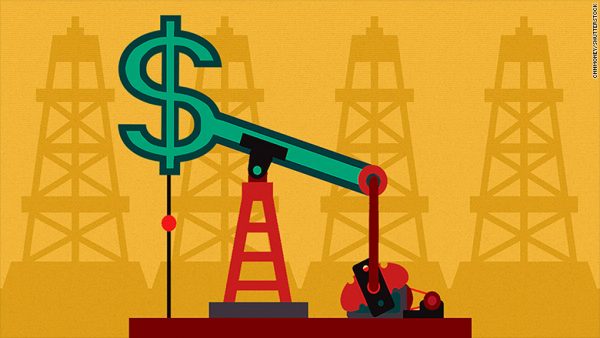
Modern life has most of us over a barrel. An oil barrel. The price of oil is a fundamental force in shaping our quality of life and how much take home pay is left for other needs and wants. This has all hit home in the last few weeks as the price of fuel at the petrol pump has reached its highest ever.
International refined commodity prices have gone up 19% since March, putting increasing pressure on domestic budgets. Oil dominates New Zealand’s energy supply, meeting 44% of our energy needs, with 36% of that going into transport industry. But that pressure is applied as an unequal burden, and hits the poor, more than the wealthy, so fuel prices are a class concern.
The effects of oil wars and oil destruction are a subset of impacts from humans’ insatiable energy needs. Lasting air pollution and climate change from coal energy, the near extinction of whales for their oil, epochal effects from Chernobyl and Fukushima, and wars and despoliation in oil lands and seas from the Niger delta, to Alaska and the Gulf of Mexico, and to Iraq and Iran, are the consequences of industrialisation and economic development fuelled by unsustainable energy demands. Access to and the cost of energy is a force of capitalism that effects global politics in the Middle East as well as the quality of life of people in Mangere.
US President Donald Trump’s latest cage shaking foreign policy masquerade regarding Iran has added to geopolitical instability and oil security concerns, bumping up the price for crude oil. A strong global economy stimulates energy demand. Wholesale price pressure is contributing to Brent crude oil reaching its highest price since 2014. The New Zealand dollar has dropped to its lowest value since 2014 so our money buys us less, meaning at the pump we’re paying more. And evidence of fuel company price gaming shows we’re paying more than we need to as suppliers try to force regional price increases among their competitors.
Not even a year ago, Brent crude was $US45 a barrel. After Trump’s random ‘tough’ call on Iran, oil prices hit more than $US70 a barrel. Economists at Morgan Stanley Investment Bank suggest it might reach $US130 a barrel by 2020. New Zealand, like the US, Japan, the UK and France, is a high income energy importer; we have some of the highest oil consumption per capita in the OECD, but we’re behind most OECD countries in terms of our energy innovation compared with GDP. That means we’re more dependant and more vulnerable to oil price increases than other comparable countries.
Ken Shirley, Chief Executive of the Road Transport Forum, looks into a crystal ball and suggests the price of petrol could reach $3 a litre here in New Zealand within the next six to twelve months. And because oil is an essential element of many consumer goods, other commodity prices are also likely to rise. It will impact on personal and public transport costs, and construction. We’ll potentially face higher inflation and interest rates. In Auckland from July 1, we’ll also be paying an extra 11.5c a litre in a regional fuel tax, with another 9-12c national fuel tax phased in over the next four years to cover transport infrastructure spending needs.
National Party leader Simon Bridges says the Government is ‘piling on more taxes’ such as the regional fuel tax, while it’s ‘awash with cash’, maintaining a budget surplus. Current taxes are about 66c per litre, and another 25c a litre is proposed through the next four years. The AA says the Government should be cutting fuel taxes by up to 10c a litre, but given Auckland’s transport needs,
Liam Dann in the Herald, suggests the regional fuel tax is the right idea, just at the wrong time.
The AA says there’s plenty of competition in the NZ fuel industry. People refer to the ‘Gull effect’; Gull can offer cheap fuel because they’re unstaffed and their stations are located in (allegedly) poorer areas where ground rentals are low. This is supposed to drive fuel costs down among competitors. But this isn’t perfect competition. An internal email from BP revealed price leveraging. Rather than reacting to low sales in Otaki by lowering prices there, BP’s sales strategy was to increase prices at its service stations elsewhere on the Kapiti Coast expecting its competitors to do the same. More generally, low ‘competitive’ prices in Auckland and the North Island, have been offset by higher prices in the South.
We’re told fuel price increases are the sign of a healthy economy, and that higher prices generate more GST which means more money for the government to invest in education, housing and transport. High prices are a good incentive to use public transport, to walk and ride. Delivering the Auckland Transport Alignment Project’s (unnecessarily) grand plan including light rail as far as Kumeu and the airport depends on the regional fuel tax. In Auckland, the regional fuel tax will replace the Interim Transport Levy, so ratepayers, will be better off.
But expensive fuel impacts poorer people worst, and enshrines class disparities globally and here at home. Overseas, high oil prices fuel wars. For leading exporter Saudi Arabia, every extra oil dollar means more money available for military supplies. High prices are likely to drive renewed investment in environmentally negative fracking and shale gas extraction in the US.
The AA and motoring writers advise us how we can save fuel. Minimise journeys, make sure your tyres are inflated, go easy on the gas. We can commit the greatest act of anarchy avoiding the corrupt fuel transport market, by walking or riding a bike. Reduce your household’s fuel costs by getting rid of a car or two.
Media commentators suggest that New Zealanders have got used to the cheap oil of the last decade, so the current and future price increases will be felt hard. But that interpretation overlooks the contribution of energy costs to the thousands of people in poverty, including the working poor, for whom energy prices have to just be absorbed already.
Those with low to middle incomes, with mortgages, children and debt will be worst hit by further fuel price increases. These are often the same communities who live further from work, facing time and cash expenses, and earn less, and who contribute a greater proportion of their wages to transport expenses than wealthier citizens. They’re less likely to have their transport costs covered by their employers, and are less able to switch to energy efficient cars or walk or ride to work. The most affected kiwis don’t have the option to buy an electric vehicle, or to reduce travel demand. Most often they are at the mercy of income disparity, public transport inequity, with few alternatives to the car.
Most of their earnings already go on meeting energy and living costs.
In response to apparent problems with the market, the Minister of Energy and Resources, Megan Woods, has ordered an inquiry into fuel prices. She rightly identifies a problem with the transfer of wealth from the consumer to fuel producers, worth millions of dollars. Kris Faafoi, Minister of Commerce and Consumer Affairs, has asked the Commerce Commission to investigate what would be required to understand how fuel markets are functioning, and the Ministers said they hope to develop legislation by the end of the year to allow the Commission to look into importer margins, to see what regulatory interventions might be possible if required, to improve competition.
The AA criticises this approach, suggesting the government is slamming fuel companies while applying extra, regressive fuel taxes. Commentators observe that the Government is imposing additional, inequitable tax burdens on the communities it most claims to represent, while relieving the Auckland landed class of the property-tax based Interim Transport Levy.
Minister Woods is right though. The core imperative of the fuel industry is to make a profit from its fuel sales, and that entails the transfer of wealth from the public to huge multi-national companies complicit in environmental destruction and social and economic chaos around the world. But we’re fossil fuel addicts and it’s hard to imagine society without it, even though it’s an inequitable and unequal distribution of costs and benefits. No amount of pumping up the tyres or driving slowly and efficiently will change the fundamentally unjust nature of the structural arrangements that keep the poor poorer with energy costs a key part of that injustice.


That’s because we didn’t follow through on Muldoon’s think Big plan of becoming energy independent and now we’re paying for that short-sightedness.
National and their business partners are renowned for telling us that we don pay too much taxes and then underfunding our essential government services to give tax cuts to the rich.
That’s because our governments planned on everyone owning cars and the price of oil staying $10.barrel or less.
In other words, they built for cars rather than economically building better public transport.
Which is one of the reasons why a person’s transport to and from work should be paid by the business hiring them.
If they’re having to look into it it’s because the competition isn’t doing what it’s supposed to which is to drop profits down to zero.
It’s not as if governments have not been warned:
‘The End of Cheap Oil’
http://www.oilcrisis.com/campbell/EndOfCheapOil.pdf
Published in 1998 and provided to the Clark government.
‘Hirsch Report’
https://en.wikipedia.org/wiki/Hirsch_report
Published in 2005 and provided to the Clark government.
‘End of Suburbia’
https://www.youtube.com/watch?v=Q3uvzcY2Xug
Produced around the same time and provided to the Clark government.
Other governments around the world were provided with the same information. And they also did nothing, other than make the predicament worse by promoting oil consumption.
So, now we are witnessing the complete failure of both the Clark government and the Key government to address the second most crucial issue of the age (the other being Abrupt Climate Change and planetary meltdown brought on by excessive use of fossil fuels, of course). Plus we are witnessing the complete failure of the Adern government to take appropriate action on either of the crucial issues of the age.
The rich are well behind these oil prices they don’t give a hoot cause they can well afford them. Even if they went up to $3 they will still drive the range rover…
Fiat currencies are in a race to the bottom.
With all of the above, what is your solution then?
Lamenting high oil prices is in my view long out of fashion, we should be celebrating oil becoming less affordable. It should serve as an incentive to move away from that fossil fuel, as in reality our economy and most consumers are addicted to its use.
But dreaming of electric cars, still going to be manufactured by using fossil fuels, and still having batteries that only last a few years, and having to be recharged with electricity, that will not solve much either.
Energy will be the biggest challenge of the future, before water accessibility and affordability, and before arable land degeneration, leaving less and less fertile land to grow anything.
All scientific discoveries and inventions will so far only mean a massive investment is needed, much of the new high tech will not be affordable for most, and will thus only serve the minority of humanity, a privileged part of the populations.
Using algae or land crown plants to produce some forms of oils or gases or whatsoever to power machines, power plants and so will reduce land and sea usable for agriculture and fisheries.
Where for a start are the massive wind generator farms needed all over New Zealand, where are the hundreds of thousands of solar paneled roofs, where are the investments even in New Zealand, where we have still some potential to generate more electricity and other energy?
I see too little too late, getting rid of one way plastic bags is a very tiny step to become more sustainable.
I still see humanity head to the abyss, a major crisis, where hundreds of millions will be forced to migrate, and hundreds of millions will also face death due to starvation, wars and other calamities.
Yes any reading on the matter points to great calamity, probably having effect before the end of this century. The latest is the global warming created by the meteor that slammed into the earth in Mexico and brought about the demise of the dinosaur. Only now they think that it was the release of carbon, equal to what has already now occurred in our lifetime that killed them off, not the actual crash itself or the subsequent global winter that followed, but the heating of the atmosphere by 5 degrees due to the release of carbon the impact caused. It took 100,000 years to revert back to ‘normal’. So, it is too late to reverse the impact on the world of what has already been released. The temp will rise and the waters will come.
It should be noted that the Regional Fuel Tax could have been implemented ten years ago thanks to the ARC and the Labour government of the time, and applied during the last decade of comparatively cheap oil, if it hadn’t been canceled by the National Government upon their election.
if interest rates rise that will be a good thing
good thing yes i agree it will crash the housing marker and sharemarket to boot…
Thank you for this in depth analysis of the various and complex strings to this rope around our necks, fossil fuel. The solution, will be painful, however it plays out in the short and long term. In the short term the government will have to compensate the working or non working poor for the extra expense at the pump by increasing other benefits, such as accommodation, which they have already done in April, reducing medical costs for those on a community services card and other allowances the poor are entitled to that will help with basic living costs. And what about electricity bills? What can be done about that cost for struggling households? I believe taking gst off fruit and vegetables should be done immediately as these are outrageously expensive.
On another topic completely, but I would like to bring it up as I know you have ardent environmentalist concerns, why has NZ recently dropped the Conservation and Management Measure to protect vulnerable marine ecosystems from bottom trawling to the South Pacific Regional Fisheries Management Organisation? Why has this apparently environmentally forward government caved in to the fishing lobby, who have threatened to litigate if protections go ahead. Thus was reported in the May 24 Rodney Times by Andrea Vance, this us a small local paper but I haven’t read anything about this anywhere else.
For decades politicians have encouraged the squandering of oil and other resources. And even now, with peak conventional oil clearly in the rear vision window (2007 to 2011) and peak global extraction (fracking, deep-water, tar sands etc. ) mighty close -after which there will be an absolute decline- they STILL promote the consumption of oil and other rapidly declining resources.
With planetary overheating clearly the major issue of the times, politicians still totally ignore it (or pretend they are doing something about it whilst promoting increased energy consumption).
Yes, higher energy prices do impact more on the poor than the rich. And there is no way out of this predicament within the framework of the current economic system, which is essentially driven by banks and out-of-touch economists.
The absurdity of current economic arrangements is almost beyond description, but essentially industrial societies like NZ have fostered (and continue to foster) arrangements predicated on burning something known to be finite and about to go into decline.
Dr M King Hubbert (Shell’s top US oil geologist) first warned about the peaking of US extraction it in 1956, and was ridiculed. In 1971 he was proven right. He later warned that a global peak would occur; his timing was not quite right but the concept was.
We live in a society in which scientific evidence has no place, and all major policy is based on unsubstantiated opinion.
This sums up the oil predicament perfectly:
https://www.youtube.com/watch?v=Ulxe1ie-vEY
High oil prices makes rail frieght now far more economically responsible as we know truck truck is heavily subsidised by road subsidies as 66% of the repairs of the roads are covered by private car/van users while only 43% is paid by commercial truck users even thiough the facts show, US road authorities studies show us that just one truck wears the road ‘pavement’ out 10,000 times faster than one car does but do not pay their fair share of the wear of our roads that cars do.
It’s all part of Agenda 21.
It will get worse.