
The fantasy world of Megan Woods
If you read or listen to Housing Minister Megan Woods it’s easy to be assured the government has been working wonders with state housing and housing for low-income tenants and families.
Here are a few quotes from her recently:
“We are on track to fix the housing crisis”
“It has been a key priority for us to fix the housing crisis we inherited, and we are making traction”
“Since we were elected, this government has added another 10,328 public homes, as well as more than 3922 transitional homes to the public housing system”
“Rebuilding the ability of the public housing sector to deliver these homes reflects a deep commitment to righting the wrongs of National’s approach to social housing. If National had built public housing at the same rate we are, there would be nearly 23,000 new state houses, accounting for 94 per cent of those on the current waiting list”
The facts tell a different story.
The most important statistic is the number of people on the state house waiting list. The most recently available stats are in the graph here.
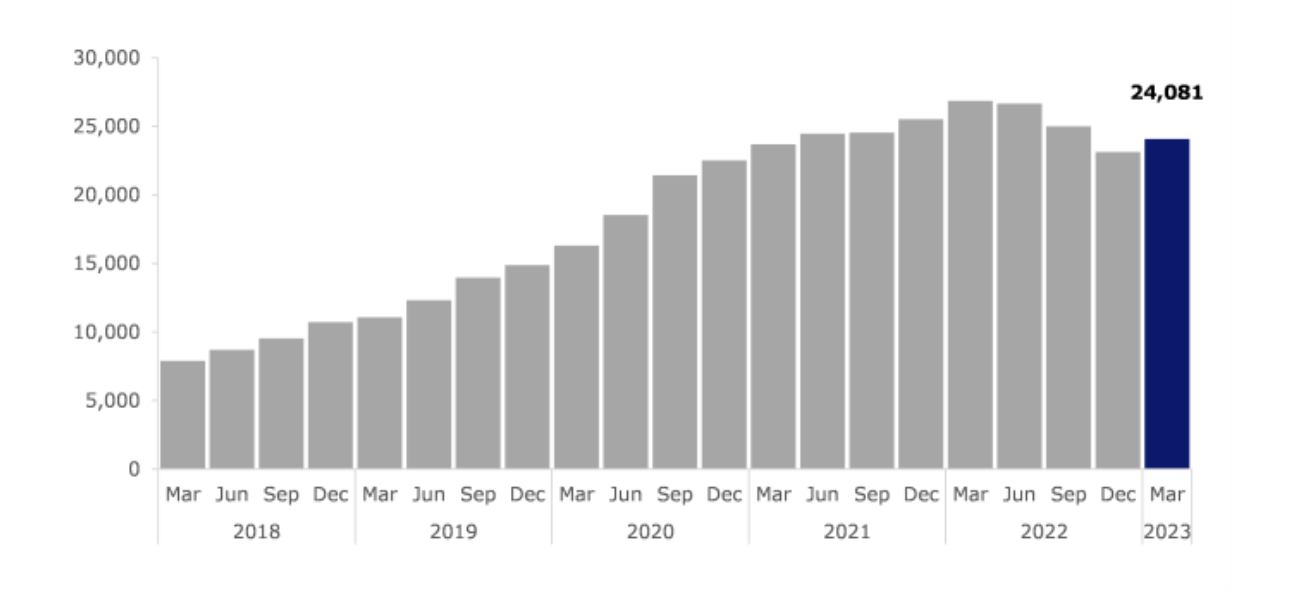
When Labour came to power in late 2017 there were just over 5,000 on the state house waiting list – now there are 24,081.
The second most important statistic is the net increase in state houses over the same period. It is a paltry 2,502 (from 60,035 to 62,538) – for a waiting list of 24,081.
If this is what a “key priority” looks like to Megan Woods then it is at best delusional.
Taking the increase in housing provided by community housing providers as well as Kainga Ora gives a net increase of 9,729 homes (from 64,049 to 74,778) and this matches the government’s policy to approve only an additional 1800 IRRS (Income Related Rental Subsidies) each year. This key economic constraint has not changed since Labour was elected in 2017.
The other houses Minister Woods talks about to get to her magical figures are existing houses and motels which have been contracted to the government as “emergency or temporary” housing.
However whichever way you look at it the cruel fact is the problem is getting larger under this Labour government. People with “serious and persistent housing need” are continuing to increase while the government magics up figures from a fantasy world to tell us – there is no issue here – “we are on track to fix the housing crisis”.
The real problem is that Labour is still wedded to neo-liberalism which says the problem can be solved by “the market”. So Labour is determined to keep state houses at just 3.6% of total housing stock (In 1990 it was 5.5%) This strangling state house numbers means demand in the private sector continues to go up and so that rents for middle class landlords can continue to rise – and Labour hopes these landlords will continue to vote Labour – the landlord’s government.
But the market can’t solve the problem, it hasn’t and it won’t.
Of all the failures of this government, housing is by far the most serious because it goes to the heart of social stability for the increasing mass of New Zealanders and their families who exist on low-incomes.


For what it is worth, motels are better than nothing.
I would rather live in a motel than in a car.
That said, they arent really suitable for anything other than single people, couples or families with more than 2 children.
People living in cars up 400% under Labour so you are voting for more of the same millsy.
Interesting logic.
If there are rising incomes and a rising supply of single detached family homes, the lot size and the floor space will eventually rise to the same level as suburban homes in the wealthiest countries. This trend existed in various markets prior to 2008. People will choose the best that they can afford. Larger apartments in tall high-rises could be another way to increase supply also.
And given the underpopulation problem, encouraging large families by solving the overcrowding crisis (and lowering rents) is exactly what law-makers should be trying to do.
National have a track record for selling the most state houses they also got rid of many of the blocks of flats in the ghetto like areas, they also helped to create (I know I lived in one) and National built private homes worth hundreds of thousands of dollars (for who?). National should have left an area for those now in motels also a policy they created. Now we have hundreds in motels hard to house as nobody wants them, but they have to go somewhere.
National have a track record for selling the most state houses they also got rid of many of the blocks of flats in the ghetto like areas, they also helped to create (I know I lived in one) and National built private homes worth hundreds of thousands of dollars (for who?). National should have left an area for those now in motels also a policy they created. Now we have hundreds in motels hard to house as nobody wants them, but they have to go somewhere.
A net migration to NZ of 50,000 this year probably equates to a demand of another 10,000 dwellings which means the government will need to solve this supply problem as well.
My observation is that many Kainga Ora and Community Housing Trust houses are really well built, and often attractive. The sad thing is that Kainga Ora have to sell some of the section their units are being built on to “pay” for some of the development.
The challenge is to take land out of the mix of costs for housing for those who are currently missing out. The major holders of land in NZ are Central and Local Government, Iwi and the Churches. A model to copy is what Ricky Houton and his Trust did in Kaitaia. Nobody can ever own the land on which their houses are built. It stays with the Trust. Land owners could keep the land on their Balance Sheets and hand it over to a secondary market at a pepper corn rental. The housing development could offer land to people according to their kaupapa (their chosen client group) and people then only have to find the costs of the building. If people move on the house remains with the Trust which could offer then the CPI for what they have repaid and the house could then remain for the Trust to sell it to another family at an affordable price.
I raised this with Megan Woods recently at a function (the worst time to discuss something) and her response was that Treasury do not agree with this. My question is did the boffins in Treasury agree with the original Labour Government with what they were proposing with State Houses?
My final question would be who runs the Country? Treasury or the elected Government? I’m not blaming Megan. She raised a very real issue of the power of Treasury, which is deeply wedded in Neo-liberal dogma.
Megan simply lies then – or do her advisers tell her how to lie, what to say to make it look like they have provided more houses than they have.
Treasury do not run the country nor do any of the ministries, politicians need to fight back and insist on things they want just as David Parker did with his ministry when the amount of superphosphate that farmers can used became a bill – not with the help of the ministry who did not want it – and ECAN theoretically in our region is supposed to be monitoring it. Sadly so far they have given warnings, nobody has been charged to my knowledge for using excess…..
Many of the ministries and their right wing toadies are just waiting for a change in government.
Ricky Houghton’s trust is neo liberalism to the core. I wouldnt touch that with a bargepole.
Simple answer is: More state housing, and bring back family benefit capitalisation and 3% housing corp mortgages. All these silly little schemes that the likes of Houghton used to to run make it more complicated then it needs to be.
Is that the same fantasy world National are in when they say our farmers are best placed to decide about.
reducing their emissions.
It is somewhat unfair to quote a “paltry” figure of 2500 As being the sum total of the governments efforts when the actual figure is much greater; assuming of course difference reflects houses relinquished as being not fit for purpose.
A net increase of 2500 state houses is paltry. That what it is and it is paltry.
The workers party yeah right!
The housing stock in general is garbage. Even the new homes are too small, too expensive, ugly and poor quality. The older ones aren’t much better. They look inferior even by 1970s standards.
The working people don’t earn enough to afford any more than this. Yes, (legal) government corruption is preventing adequate supply, but this won’t improve the quality. The general backwardness of the economy since the 1990s needs to be turned around, combined with restoration of workers’ rights and true full employment — only then will incomes be high enough to sustain a truly modern housing stock.
Disagree that houses are too small. There should be a range of sizes. The average family size is smaller and yet we are fixated with large houses with several lounges etc that take up more space on sections, with more paved areas, increased stormwater run-off, less areas for play or vegetable gardens, require more heating etc. How is that good if we have a climate crisis. The issue is more to do with providing a range of right-sized houses to need, built efficiently, sustainably, with good insulation and materials that are durable and fit-for-purpose. The government should be able to use its purchasing power to get good discounts on building materials and break the monopolies and price-gouging but seems unable or unwilling to do so.
Good points… I would add that as the last administration allowed a flood of immigration, mainly into Auckland, without building the infrastructure required for what amounted to nearly half a million people in Auckland alone… This means, of course, that “high density housing” has now become Aucklands only option, so smaller houses and apartments, even dormitory buildings will be the only choices for those who aren’t filthy rich… Oh, I should say that the Key government did do some infrastructure work… Too bad it amounted to wasting two years playing politics over the Waterview tunnel before just doing what the Clarke government already had ready to start with as the 2008 election approached.. That’s “infrastructure work” isn’t it? And, as a bonus, we got to watch the whole news media go from shitting on the tunnel project, to praising the tories for building it exactly as the previous admin had organised it… That kind of contortionism deserves a spot on one of those Simon Cowells “got talent” series…