
Plastic Pollution by Manufactured Consent
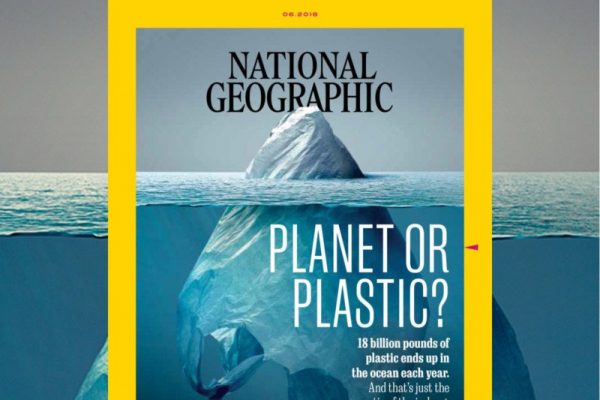
Supermarkets and retail outlets have moved an inch toward addressing the hundreds of millions of plastic bags usually in a one-way journey to the landfill, by phasing out single-use check out carry bags at various outlets.
But the pervasiveness of plastic in our lives and in the environment show both market failure, and government failure, to adequately deal with the forces of production creating pollution problems way bigger than free bags at the till.
Even Bangladesh banned single use check out bags, as long ago as 2002, and this week Al Qaeda-linked terrorist group al-Shabaab also banned single use plastic bags ‘because of their threat to people and wildlife’. Al-Shabaab also banned humanitarian organisations, satellite dishes, music and cinemas, so may view plastic carry bags as ‘just another western decadence’.
They might not be wrong. Check out carry bags are estimated to have a useful life of 20 minutes (though this ignores that they’re often reused, even if only as bin liners). If you listened to some of the people objecting to the supermarket plastic bag phase outs, you’d think it was the end of western civilisation.
Supermarkets are claiming the moral high ground, and say they’re listening to their market audience who want the bags banned. Most peoples’ concerns are based on the fact that check out bags use non-renewable raw resources (oil by-products), they’re disposable, and that when they end up in the environment, they have profound negative impacts. WWF estimates 100,000 whales, seals and turtles die every year from ingesting and being entrapped by plastic bags. Reports say there are about 150 million tonnes of plastic in the oceans and that the day will come when there’s more plastic in the oceans than fish.
The release of plastic bags into the environment is only a part of the problem, though a representative one. All those plastics and their short lived but deemed essential convenience reflects how aggressively our consumption habits and preferences are determined by industrial production and marketing methods, and how incremental and conservative are public, governmental and market-based responses in this instance, in the face of the onslaught of plastic rubbish.
Let’s not celebrate the ‘banning’ of some plastic carry bags in some supermarkets when the government has been slow to commit to regulating their manufacture and distribution, thus leaving the market to lead their use and control. Let’s not celebrate too much, the ban which replaces ubiquitous, free Low Density Polyethelene (LDPE) plastic bags with slightly heavier duty plastic bags you have to pay for. Let’s not be beguiled into thinking we have scored a victory against the throwaway culture when almost every other thing we buy is made of or packaged in other plastics that will never break down or degrade. Every single plastic thing ever made, still exists in some form or another. Let’s not celebrate the minor compromise of convenience (our sacrifice!), when there’s still enough rubbish in the ocean to choke whales and turtles and other sea life for epochs to come. Let’s not celebrate retail concessions when megalithic supermarket chains manufacture our consent to surplus packaging by offering little alternative choice, and fundamentally shape our preferences and purchaser options.
The plastic bag ‘ban’, isn’t a ban at all, and check out bags are just the tip of the iceberg when it comes to our polluted planet. In proposing check out bag changes, retailers and supermarkets continue to show that they have all the power.





Manufacturing needs to also pay for the cleanup of the vast plastic ocean that is increasing. It is not just plastics its also fabric, almost even worse is fleece fibers, so folks only buy wool. Every time you wash a fleece item it releases millions of unbiodegradable micro fibres into the environment, the waterways and then eventually back into you.
Let’s adopt the highly successful world conquering German model – make manufacturers responsible for the entire waste creation process.
https://earth911.com/earth-watch/trash-planet-germany/
Best blog for years my dear freind Countryboy, 100% favulous ineed, gratfully recieved for sure.
Thanks for the ‘reality check’
It was a very welcome addition.
It is so good to see you are still on this ‘fucked’ planet with us all, welome back to the ‘dark side of the moon.’ – Lyrics; Pink Floyd.
And – “ground control to Major Tom”
https://www.youtube.com/watch?v=8LVC9eW9Q4E&index=5&list=PLABFFB2F5C56AAB63&t=0s
I find that in the local supermarket, the packing assistants put meat in one bag, fruit in another & use yet another for e.g., bread & etc.. I usually say put everything into one bag (I buy for myself only).
As the plastic bags mount up, I take them to the local op shop & the volunteers always welcome them. So much is packaged in plastic, IMO, the 1st packagers should pay for its disposal, Most often, the end purchaser gets lumbered with every cost.
What’s the real price of getting rid of plastic packaging?
This is my response to it.
The problems isn’t plastics per sé but the fact that we don’t do proper collection and recycling of them.
You may have a point. I was pleased to see this article in the ODT on the weekend about a company in Oamaru that proposes to recycle plastic into building materials, using a particular Russian technology. Given the vast amounts we are now accumulating, with China having declined to accept any more plastic for recycling, this is an exercise surely to be applauded.
http://www.odt.co.nz/regions/north-otago/plastic-bricks-could-cut-waste-mountain
Good article Christine,
When I placed a verbal submission to the Zero Carbon roadshow panel two weeks ago I spoke about the widespread emmissions of tyre particulates as they are made from plastic ingredients also and are cancer causing annd are now found on the icecaps carried accooss the oceans also to cause the ice caps to melt due to the black carbon attracting heat from the sun.
The climate change panel was astounded at this and confessed they had not considered that synthetic tyres were even a hazard!!!!
Any chemical engineer will know that synthetic tyres are made from a solutiion of all types of ingredients that contain plastics, so we need now to add tyre use to the list of toxic chemicals that are destroying our environment. -Synthetic rubber (SBR – styreneised polyisobutylene)
http://rcaforum.org.nz/sites/public_files/documents/stormwateremissionfactors.pdf
Based upon the available data, Table 4.14 provides a summary of median or selected concentration data for key organic compounds in tyres.
To provide more suitable data to assess emissions of organic contaminants from this source additional information and refinement of data is required as identified above in Section 4.4.2 and below in Section 4.4.4. Table 4.14 – Summary of concentrations of selected organic compounds in tyres for use in calculating emission loads (all concentrations mg/kg). Compound Median tyre concentration COPC Benzothiazole 44.7* Pyrene 42.6* Polycyclic aromatic hydrocarbons 226.1** Chlorinated organics 5.3** Others n-Alkanes 18842** n-Alkanoic acids 12197** n-Alkenoic acids 1279** Substituted benzaldehydes 7.8** Benzoic acids 74.8** Polycyclic aromatic ketones and quinones 0.45** Pentacyclic triterpanes 684** Benzaldehydes 19.04** Natural resins 9513** Regular steranes 74.2** Amide (4-phenylbenzamine) 12.9** Note: * From Gadd & Kennedy (2000); ** from Rogge et al. (1993).
The composition of tyres is dominated by organic compounds, with a wide variety of compounds used in the manufacture of tyres.
Table 4.6: – General composition of tyres. Main element Use Example compounds Content Polymer base Structure Natural rubber (polyisoprene) Synthetic rubber (SBR – styreneised polyisobutylene) 30% (ratio between 60:40 and 70:30 synthetic: natural rubber) Carbon black Reinforcement, provides stiffness, strength and hardness. Carbon black of various particle sizes 30 Hydrocarbon oil Processing aid/softening agent Paraffinic, naphthenic or aromatic oil 10-15 Resins Processing aids Aromatic hydrocarbon polymer Thermoplastic phenol-novolac resin 0 – 7% Antidegradants Anitoxidants and antiozonants Paraffin wax Quinolines Phenyldiamines 1 – 1.5% Cure activators Assist in curing Zinc oxide/stearic acid mix 2.0 – 2.5% Cure agent Assist in curing Elemental sulphur 1.0 – 1.5% Accelerators Promote curing Complex amines Sulphonamides Thiazoles 1.5% Retarders Slow the curing rate Acids or phthalates 0.1% Bonding agent Improve bond strength between tyre and steel/cord belt Resorcinol resin Bracing Steel (sometimes coated in brass)
There have been a number of studies investigating the inorganic composition of vehicle tyres, including a major study by Environment Agency in the UK (Environment Agency 1998). This study reports the presence of major elements such as calcium (calcium oxide used as a desiccant), magnesium (magnesium oxide used as an accelerant), silica and phosphates (used in fillers and plasticisers).
All plastic manufacturers should be paying a pollution tax.