
GUEST BLOG: Ian Powell – It started with a quip and ended with corporation culture
Hot Chocolate’s ‘It Started with a Kiss’, first released in 1982, is a sweet romantic tune which reached Number 5 in the United Kingdom charts: Hot Chocolate: It started with a kiss.
If ‘kiss’ was replaced with ‘quip’ the last chorus would be:
It started with a quip
Never thought it would come to this
It started with a quip, oh
Never thought it would come to this
“Operating in secrecy”
Minus the romance, starting with a quip leads on to a mainstream media heading for an article that Minister of Health Andrew Little and Prime Minister Jacinda Ardern did not want to see: New health authority accused of ‘operating in secret’ over closed-door meetings. It was the heading for an article by Stuff senior health reporter Rachel Thomas (31 August).
Adding to the political anguish was the fact that this article was front page on Wellington’s DomPost: Te Whatu Ora (Health NZ) accused of operating in secrecy.

Rob Campbell defended media and public meeting exclusion
The article reported worries and fears from patient advocates that their voices would “be silenced in Aotearoa New Zealand’s newly restructured more centralised health system.
The catalyst was the defence by Chairperson Rob Campbell’s defence of the two-month old Te Whatu Ora’s (Health New Zealand – HNZ) decision to keep the media and public out of its board meetings.
This contrasts with the now abolished district health boards’ (DHBs) practice of having board meeting public sessions (there were also private sessions largely for confidential and commercially sensitive matters).
The quip in context
Thomas was following on from an interview with a Radio New Zealand interview with Campbell by Guyon Espiner two days earlier on Morning Report: No providing “occupational therapy for journalists”.
Essentially Campbell’s argument was that Te Whatu Ora was a crown entity quite different from the DHBs which it replaced and, unlike them, was not required by legislation to have public sessions at board meetings.
Further, there was nothing unusual for a crown entity to have private sessions only for board members. An unconvincing argument in my view.

Morning Report: what a quip it revealed
But the punchline came with his comment towards the end of the interview when he quipped that Te Whatu Ora was not about providing “…occupational therapy for journalists.” Campbell is an intelligent and charming personality with a dry but clever sense of witty quips.
In a different context, his quip might have been interpreted as funny. But not in this context. Transparency is critical for the credibility of health systems; both perceived and real threats to transparency raise alarm bells among the public and many of those working in the system.
The lesson for Campbell is beware of the quick quip; it can bite you in the bum. But I had better be careful or words like throwing stones and glass houses might come to mind.
The quip raises the wider issue of leadership culture. Already, after only two months, Health New Zealand has earned the descriptor of behaving and looking like a corporation. This is the worst image it could have.
Rob Campbell’s pre-quip defence in the Morning Report interview is where the greater scrutiny should be. Te Whatu Ora is a crown entity but so were DHBs. He argued that his crown entity’s approach was the same as other existing entities. This is a weak comparison.
DHBs were responsible for the healthcare of geographically defined populations. They prepared reports to their governing boards on how they were doing this. The media and interested organisations and people could access the agenda for these meetings which meant they could also access the reports listed on the agenda.
In my three decades working for the Association of Salaried Medical Specialists I was impressed with the way in which many journalists used this material to research good public interest stories.
But early signs to date suggest that either less is being written or less is being required to be reported to Campbell’s board. This has the immediate effect of reducing transparency.
The controversy is described well by political commentator Bryce Edwards in a piece published by his Democracy Project (31 August): Government must make healthcare transparent again.
Corporation culture
For me the controversy is wider, however, than the points discussed above. The description of Health New Zealand as a corporation is concerningly apt with a certain unfortunate resonance with the National government’s health restructuring of the 1990s.
At that time healthcare was, in effect, treated as a commodity in a competitive market while disingenuously pretending it was still a public good. Public hospitals were covered by the Commerce and Companies Acts, and required to compete against each other and the private sector. Media and the public were excluded from the meetings of their governing boards.
Helen Clark’s Labour-led government (1999-2008) repealed all of that with a well-managed smooth restructuring that included the creation of DHBs. The system remained substantially unchanged under the National-led government that followed (2008-17).
An ABC of health systems
Not so with Jacinda Ardern’s Labour government. The Pae Ora Act, replacing DHBs with Te Whatu Ora, is not a return to the 1990s treating of health as a commodity in an artificially created market. But it has consciously created an environment in which its body responsible for funding, planning and the provision of healthcare looks, smells and behaves like a corporation.
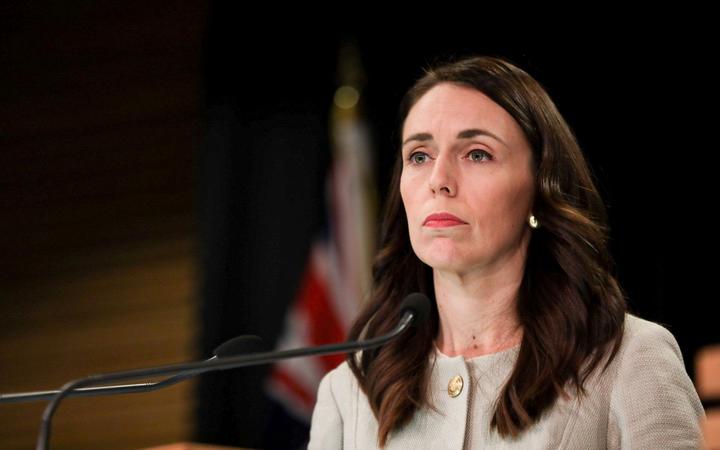
Jacinda Ardern’s government legislatively enabled a corporation-like culture for Te Whatu Ora
Rob Campbell was correct when he said that while the legislation that created DHBs required their board meetings to have public sessions (and all that flowed from that), the legislation that created his replacement organisation did not.
This was not an accident; it was deliberate. It was an important part of the new health system culture the Government chose to introduce.
Campbell and his Te Whatu Ora board are not the cause of the controversy. His quip simply gave it more exposure than otherwise might have been the case. The simple fact is that the more that health systems are centralised, the more their transparency is reduced. Then, the more transparency is reduced, the more accountability is reduced.
A universal health system suffers under a corporation culture. Te Whatu Ora is not like other crown entities. It is responsible for a health system that at some point in their lives all New Zealanders will depend on. These same New Zealanders fund it. It requires a culture of greater, not lesser, public transparency and accountability.
This is an ABC of universal health systems.
Ian Powell was Executive Director of the Association of Salaried Medical Specialists, the professional union representing senior doctors and dentists in New Zealand, for over 30 years, until December 2019. He is now a health systems, labour market, and political commentator living in the small river estuary community of Otaihanga (the place by the tide). First published at Otaihanga Second Opinion


I believe that Prime Minister Ardern has not told anyone the anguish she has faced over successive issues from the health sector since first she was elected into power in 2017.
To my way of thinking, the nurses’ strike exposed the excesses of greed in the sector. Not because the nurses wanted more pay than they deserved. It was the timing of it. Demand for health services was at a record high due to the effects of the coronavirus pandemic. Moreover, the nurses knew that their pay demands would spur others in their sector and in associated careers to expect pay increases.
The Prime Minister has remained brave and bold in the face of it all, fully aware that these widespread pay increases will contribute to ongoing inflationary issues.
To combat this, the government decided to lower petrol prices and, subsequently, food prices although the supermarkets are now being crafty and as a result many stores throughout the country are now being redesigned and restocked with repackaged items and shiny new marketing campaigns are emerging as the owners aren’t wanting diminished profit margins.
If the Prime Minister hadn’t had the support of one Minister in particular during the nurses’ strike, Grant Robertson, she may well have resigned. Grant Robertson has more experience than the Prime Minister and took the strike less seriously than she did.
The New Zealand economy and its potential issues of course continue to weigh heavily on the mind of Jacinda Ardern and a part of this picture comes from the public sector, as usual, and the workers’ pay expectations.
Is it possible that Te Whatu Ora don’t want the public in the room during board meetings is because it’d show a group drumming their fingers, and going hmmm? while the reps of the non DHB’s run around screaming, fire in their hair, asking for help – or at least direction.?
Now that “Health Department” is a corporate rather than a democratic organisation the next time the electoral pendulum swings right it will be sold to private interests and loaded up with debt. The private interests will siphon billions while running it into the ground then some government a decade hence will bail it out and take ownership. And then the public private ownership cycle will repeat again.
Joseph Could be right, but thinking of it as a cycle, wishful thinking I think!
Well damn said Ian.
This situation you describe is exactly what I predicted would happen.
The Wellington Bureaucrats won .
Jacinda didn’t want a repeat of the CDHB v’s the Wellington Bureaucrats .
Classic. The accusation of “operating in secrecy” comes from a former DHB board member. Of course there is no chance of that person having an axe to grind perhaps.
I think Fiona Tolich is more on the money in terms of it being “early days”. That’s the same person who had to go to the Human Rights Commission over SMA treatments or lack thereof. Just because we have gone away from the ridiculous situation of 20 separate executive boards doesn’t mean there isn’t loads more work to do for our health system in general.
Remember this situation has developed over multiple governments.
All of which under funded health one way or another.
Lets face it our % of funding for medicines is around 5% or just under and has been as low as 2.9% of the health budget.
The average is 10% and up to 16% of the Health budget in countries of around 5 too 11 million people .
It is time middle class New Zealand woke up we have an Americanised semi privatised health system introduced by stealth through blatant underfunding.
This new corporatism model is not a good look if the public are excluded.
Agree it has been an issue for a long time. Also agree the public can’t be excluded, but this has literally just started. You can’t tell me the illusion of healthcare being somehow more democratic under the DHB model was actually working. Was it public feedback and consultation that willingly gave us a post code lottery for treatment or the likes of Whangarei and Middlemore Hospitals falling to pieces?
Ironically the one pot of healthcare spending that actually gets analysed to death by health economists at PHARMAC, is ridiculously underfunded. That lack of funding for new medicines has certainly encouraged the growth of private centres which make a fortune in areas such as oncology. Why do think an overseas private equity fund brought out a group that has five treatment centres in the North Island. Thats in addition to groups buying private imaging and diagnostics businesses. It’s big money and nothing to do with “big bad pharma”, which a lot people seem to erroneously conclude.
Hold your quips Wheel. Don’t start undermining the critic, look at the question, the critique. Treat it as an early indication of concern, not just a reaction by a dropped official ‘with an axe to grind’. I think more will come – keep a watching brief!
Geoff+Lye
Those are interesting figures/thoughts. Particularly – It is time middle class New Zealand woke up we have an Americanised semi privatised health system introduced by stealth through blatant underfunding.
Reactionary Bratwurst has a point. It is wise if we are leery of embracing any new system of an over-arching type that Labour summons up by rubbing the flanks of one of the Big Four service firms.
The Big Four is the nickname used to refer collectively to the four largest professional services networks in the world, consisting of the global accounting networks Deloitte, Ernst & Young (EY), KPMG, and PricewaterhouseCoopers (PwC).
https://en.wikipedia.org/wiki/Big_Four_accounting_firms
Greywarbler I don’t think you need to employ one of “the big four” to work out that 20 executive boards to serve a country our size is ridiculous. There are plenty of stakeholders that have pointed out the issues with this approach that are patient, and not politically, driven.
That’s not to support a lack of transparency at all but I think the whole democracy argument is being seriously overblown in terms of its impact as to how we got here. As Geoff points out the state of our healthcare system has been years, and successive governments in the making. I think that shows the whole apparent “openness “ was not very effective.
What should transparency for Health NZ look like now, relative to other crown entities, I am not so sure. If the last 20 odd years has taught us anything we need more than transparency. Actual interest and engagement is needed.
I would like to know what enterprises in NZ have not had the influence of the Big 4 in the background? They are doing the woqrk of government under contract.
I think that you have been underwhelmed by the local board members. But all screened from public eye is another thing. What about the meetings being transmitted to those who want to keep an ear open?