
GUEST BLOG: Bryan Bruce – We can solve huge problems if we want to.
Right now the New Horizons Space Probe is 6.4 Billion Km from Earth and sending back data to NASA and last October the Japanese landed a small robot on a asteroid hurtling through Space 300 KM away.
Those are amazing achievements.
So you might think with our incredible brain power we might be able to solve some difficult problems at home… like the 2.1 Billion people in the world don’t have a decent toilet and 800 million don’t have access to clean water
We also only have about 10 years left to do take action on Climate Change before our planet reaches the point of no return and life will become brutal for our children and our children’s children.
I don’t have a clever answer for why we choose to solve some huge problems and not others. I know it has a lot to do with where choose to spend our money and this is where governments come in as agencies charged with spending publicly raised funds in the public good.
Private enterprise doesn’t do that. Private enterprise only acts in the interests of its share holders.
Which is one of the reasons I have always been an advocate of progressive economics and people focused governement.
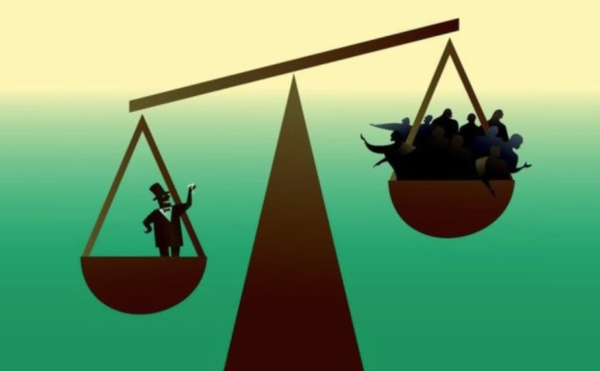
We don’t have that at the moment . We still have a neoliberal government that panders to the rich in the hope that the wealth will trickle down to improve the lives of the poor.
It’s just bunkum and those of you who know my work will not be suprised that in 2019 I will continue to call out neoliberal economics, with its coporate welfare and its deternination to run up budget surpluses, when so many of us struggle to make ends met and have no place to call our own
Facing up to Big Public issues is what drove my desire to start New Zealand Public Television and get it to the stage where writers,directors and producers who want to leave the world better than they found it can apply to it to get their projects funded by NZ On Air.
You can find NZPTV here:
www.nzptv.org.nz
It’s free. You don’t have to sign in anymore if you don’t want to but please consider becoming a friend of New Zealand Public Television because Knowledge is Power . We don’t have to accept inequality and the way things are . Together we can make a difference.
KIa Kaha
Bryan Bruce is one of NZs most respected documentary makers and public intellectuals who has tirelessly exposed NZs neoliberal economic settings as the main cause for social issues.


Excellent article as always Bryan.
Delighted to see you contributing to TDB.
Applause and encouragement…
Don’t ya just love CGI!
Are you sure this is not the “greedy” planning out their final solution… to escape earth when it becomes too brutal.
Why else waste money in that direction when there is so much needing attention at home!
Not many places where the Greedies can escape to, Onwatch. In fact, there’s nowhere to go.
Mars is pretty damn hostile; freezing cold; near-vacuum thin air; no free-running water; and a constant barrage of radiation and solar particles raining down on the little red planet.
Antarctica would be vastly more habitable.
And Antarctica has gravity that humans have evolved in and cannot live without for long.
There is no escape mate. Planet earth is not interested how much you have in your Swiss bank account. The rich will perish along with the poor.
And good luck with the Moon, Mars, or any of the other planets and moons in our Solar System. They will NOT support you and won’t recognise your VisaCard or Krugerrands. You are as royally fucked as the rest of us.
The neo-liberal ethic fails to learn from history; we are all still alive on this planet after tens of thousands of years because of humanity’s instinct to work together for the common good. If you deny the common good and the community you are on the road to extinction.
Goodbye…
Of course it is – in my view it is all nuts, feed the planet, house the planet, sort out the damage done by humans to the planet – imagine if all those resources were put to this use. Imagine if all the dosh for those dam planes we are buying went into feeding and assisting the dispossessed in this land of plenty.
So, technically, the stock market only effects individuals with stock directly. But the indirect costs of a bad stock market effect those struggling against poverty far more than the wealthy. A bad stock market, one without much capital, is one that is unwilling to take risk, which means products become more expensive and monopolies arise as potential competitors find the profit/risk ratio to be too poor to compete. So if the domestic stock market receives a shock, prices increase, which is mostly absorbed by those closest to the poverty line because necessary commodities are more impacted than luxuries. It also reduces competition, making prices stay stagnant. And that’s the basic stuff.
More complicatedly, international trade weighs in. If the U.S. domestic economy raises tariffs it sets off retaliatory responses, the U.S. labor becomes undervalued, and the goods produced count for less, because the indirect overhead jacks up the apparent price. Which in turn lowers international trade with us, in NZ, making our economy worse as the NZ government receives less taxes.
Something else to consider is international corporations currently incorporated in the U.S., normally Delaware, being incorporated in a different country, which could further lessen tax revenue, but I don’t know enough about the international tax code, U.S.’s domestic and foreign tax code and it’s relation to international corporations to say.
This becomes even more complicated when CEO pay comes into play. Most big time ones effectively set their own pay, bonus, and golden parachute and there is little regulation to stop it. If the economy is hammered hard enough, it is completely plausible that those 1% the reforms wold seek to draw from would recover through that.
For further, and better, explanations I recommend Thomas Piketty as an economist author that talks about how labour and capital relate to one another.