
GUEST BLOG: Ian Powell – Free Speech – the ethics of conviction and the ethics of responsibility

On 25 September Kwame Anthony Appiah, who teaches philosophy and law at New York University, had a paywalled article titled ‘Watch What You Say’ published by the New York Review of Books.
It is a fascinating read on his review of two books on free speech within an historical and contemporary perspective.
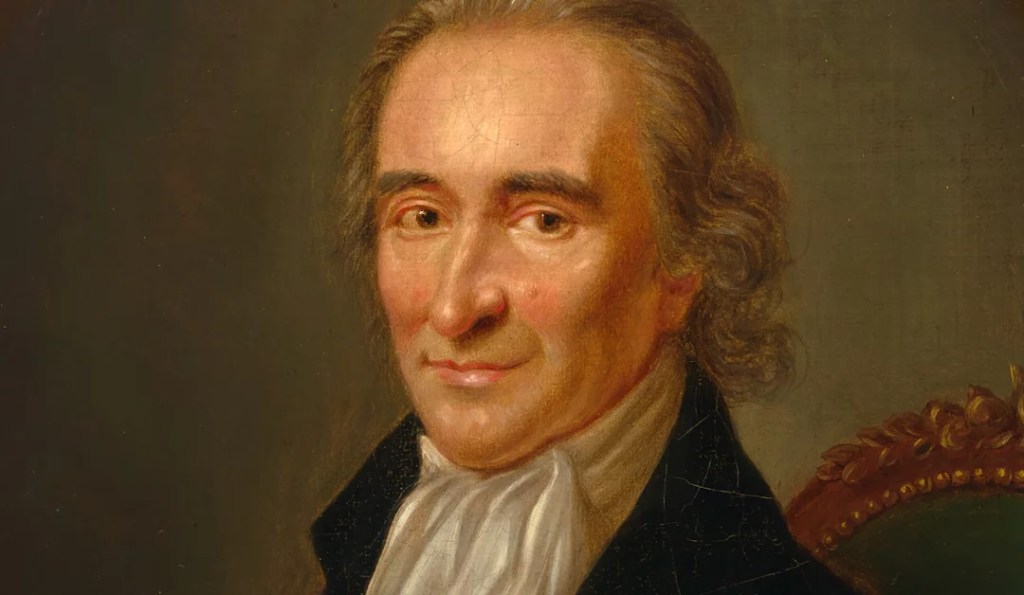
Thomas Paine’s right to free speech suppressed in late 18th century England
It begins with the successful government legal actions seeking to ban the sale of books by English-American revolutionary Thomas Paine’s in the late 18th century in England.
The reviewer culminates with contemporary considerations which include debates over the First Amendment to the American constitution.
Two different ethics principles
Towards the end of his long article Appiah refers to the distinction between the ethics of conviction, which call on one to uphold their principles, and the ethics of responsibility, which require one to answer for the consequences of their actions in expressing these convictions.

Max Weber thought that ethics of responsibility trumped ethics of conviction in politics
This distinction was made by Max Weber (1864-1920), a German intellectual who was one of the central figures involved in the development of sociology and the wider social sciences.
In the context of politics he concluded that the ethics of responsibility were more important.
A local experience
At a lower much less significant level of politics I had an opinion piece published in a local Kāpiti Coast online publication KC News (1 December) critical of the Government’s announcement of its intention to abolish regional councils: Regional councils abolition.
I included a reference to a Kāpiti Coast District Council appointed senior manager publicly applauding the decision while her elected Mayor was publicly critical.
On the assumption (perhaps generous) that the former was speaking from conviction, it highlighted the connection of this ethic with the responsibility ethic.

A Kāpiti Coast debate
My opinion piece was posted on Facebook leading to two interesting conflicting responses.
Sean Rush (a rightwing former Wellington city councillor) argued free speech (and by implication conviction) while prominent local resident of more progressive politics Blanch Charles argued from the perspective of responsibility.
In Rush’s words:
Even staff are entitled to express their opinions. Or is it just opinions that you disagree with that are objectionable? …. she has a right to free speech though, right? She is able to voice an opinion even when it differs from a politician’s?
In Charles’ words:
She has a right in her private Iife but not when she speaks from her KCDC position. (I worked in the parliamentary precinct – in non-political positions in Ministers’ offices under both National & Labour governments – for a couple of years, and periodically for a further couple of years after that. I had my personal political views but it would have been sheer stupidity on my part, and likely deserving of censure or worse, had I spoken out publicly).
This woman was either unwise or arrogant to have spouted her mouth off publicly.
Moving to a higher level
Some political leaders are described as ‘conviction politicians’. A case in point is former British Conservative Party prime minister Margret Thatcher.

Margaret Thatcher was a strong conviction driven politician without regard to the consequences of her actions
Her strongly ideological conviction was to comprehensively extend the role of the ‘not-so-free market’ into economic and social life, including in the provision of public goods such as healthcare, education and transport.
It became known as neo-liberalism (I have discussed neo-liberalism in a previous Political Bytes post (17 January 2021): Neo-liberalism a misunderstood ideology.
As an aside, when asked what her greatest achievement was, Thatcher responded “Tony Blair.” She was probably right.
In other words, not only did she convert her own Conservative Party to neo-liberalism, she also, through Blair, converted the Labour Party to it even though the latter was less of a conviction driven politician. In fact, Blair took neo-liberalism further in the health system than Thatcher did.
However, while the consequences of neo-liberalism were beneficial for the ‘few’, they were devastating for the ‘many’.
In summary, this devastation was much increased impoverishment and all the terrible social and economic consequences that inevitably followed and whose legacy continues today.
And in Aotearoa New Zealand
Roger Douglas and Ruth Richardson were the finance ministers of the Labour government of the 1980s and the National government of the early 1990s respectively.
They were also ideological twins fully committed to introducing and entrenching neo-liberalism into the economic and social fabric of Aotearoa New Zealand.
Douglas began it under what was called ‘Rogernomics’ while Richardson extended and entrenched it with what was called ‘Ruthanasia’.
Both were adherents to the ethics of conviction but neither gave any regard to the ethics of responsibility.
As with the United Kingdom the impact in New Zealand was devastating – increased and entrenched impoverishment and the awful consequences that inevitably followed including poor housing, homeliness and rising acute health demand. Again, this legacy remains with us today.
Ethics of responsibility can strengthen free speech and ethics of responsibility
Free speech is critical to the functioning of a genuine democracy. Unfortunately the advocacy of free speech in New Zealand is compromised and constrained by the narrowly focussed rightwing agenda that drives the so-called ‘Free Speech Council’.
Genuine free speech is critical for the functioning of a democratic society. This includes as a prerequisite for those that advocate the ethics of conviction.
While Max Weber appears to be counterposing the respective ethics of conviction and responsibility, they can be complementary and mutually reinforcing.
If free speech driven by the ethics of conviction gives little or no regard to the ethics of responsibility then it is the kind of free speech that one has when one isn’t having genuine free speech.
But if the advocacy of ethics convictions is balanced by the ethics of responsibility, then genuine free speech is strengthened and empowered.
Ian Powell was Executive Director of the Association of Salaried Medical Specialists, the professional union representing senior doctors and dentists in New Zealand, for over 30 years, until December 2019. He is now a health systems, labour market, and political commentator living in the small river estuary community of Otaihanga (the place by the tide). First published at Political Bytes



The NZ Free Speech Union has actively and consistently stood against the banning of gang patches. https://www.fsu.nz/blog/new-law-to-ban-gang-patches-a-dangerous-move-for-new-zealand
I said muted response. There wasn’t the total panic/letter writing campaign/screaming that occurred when a couple of neo-Nazis were refused entry into NZ. That went on for weeks, I heard one – repeat one free-speech union comment on radio NZ and that was it. They might have been more, but I feel somehow that if it had been the same as the Lauren Southern and Stefan Molyneux brouhaha I think I would have heard about it.
Conservative and for that matter libertarian free speech advocates, tend to sidestep just a little when free speech isn’t conservative or libertarian. The response to the banning of gang patches for instance, drew a very muted response from the free-speech union or whatever it calls itself. They should really be up in arms about the restrictions on free speech happening in the UK and the US at the moment, not to mention those semi-autocratic democracies in Eastern Europe and the Indian subcontinent. If we take perhaps the most egregious example in a democracy, the banning of support for Palestine action in the UK should be generating howls outrage. But pretty much crickets.
https://www.nzherald.co.nz/nz/auckland/brian-tamaki-linked-group-confronts-sikh-parade-in-south-auckland/QUWANMPQ6FDMRBVVXNJXTMZ2EA/
Even the lord hates in mysterious ways.
Time to make Destiny Church a business and tax the fuckers to oblivion or at least credit Tamaki the same rights as the Black power and mongrel mob.
I’m sure if Jesus was real Tamaki would have been stoned to death by now.
If Jesus was real, Tamaki would have stoned HIM to death. FTFY.
The world turned to shit in regard to free speech when Trump became president. His hate speech exemplified by his plaques of past presidents and the hatred he has shows a new world norm . He then shuts down( literally)anyone that disagrees with him by way of legal preceding or personal attacks, much like Seymour and to a lesser extent Winston.
The world has changed because of right wing hatred.
To add Trump is the epitome of histrionic personality disorder mixed in with narcissistic personality disorder and why he wont attack Putin because Putin is a clone personality.