
Our collective pledge to Comrade Efeso
Tēnā koe, Mr Speaker. Mai i ngā hau o Ōtāhuhu-nui-a-Rangi, o Maungarei, o Motukaroa; mai i ngā awa o Hikuwaru, o Tāmaki e rere ki te Waitematā, kei te Mānukanuka-o-Hoturoa, ko Kaiwhare, ko Taramainuku kua tau, kua tau ki ngā whenua o Ngāti Toa Rangatira, o Taranaki Whānui ki Te Ūpoko o Te Ika. Tēnā anō tātou.
[From the winds of Ōtāhuhu, of Mount Wellington, of Hamlin’s Hill; from the rivers of Hikuwaru, of Tāmaki flowing to the Waitematā, to the Mānukau Harbour; Kaiwhare and Taramainuku have arrived, have arrived to the lands of Ngāti Toa Rangatira, of Taranaki Whānui in the Wellington region. Greetings to us all].
It is an indescribable feeling to stand up and address this House. As a son of Samoan immigrants who made the mighty Ōtara 274 – Southside hard – their home, I am well aware of the giants whose shoulders I stand on and the masters whose feet I learnt at. The courage, foresight, entrepreneurial spirit, and hope of our ancestors who journeyed thousands of years ago through the vast waters of Te Moana-nui-a-Kiwa brings me here today.
My parents arrived in New Zealand in the early 1960s, told that this was the land of milk and honey. Dad started off as a taxi driver with South Auckland Taxis, and Mum on the factory floor at New Zealand Forest Products in Penrose. We lived in a four-bedroom State house on Preston Road in Ōtara, and I attended local schools: East Tāmaki Primary, Ferguson Intermediate, and the great Tangaroa College. We’re forever grateful for the State house that was our home for around 20 years, and the quality public education we received from our local State schools.
I did try my hand for a short period at a decile 10 school outside of Ōtara, but that experiment lasted only two weeks. It was during the time in the late 1980s when families from poorer areas were being discouraged from going to local schools because they weren’t considered up to scratch. I’m glad we changed course and decided to high school it in Ōtara, where the motto of our school was “Waiho i te tokā tu Moana” – “Steadfast like a rock in the sea”.
Later, at university, I went on to write my Master’s dissertation on brown flight, critiquing the Picot reforms that have wreaked havoc on our public schooling system. That period was also a challenging time for my family because we were being told by our teachers to stop speaking Samoan at home and only to speak English. My parents didn’t want us to fail at school, so we were allowed to speak English at home, and over time we stopped speaking Samoan altogether. In the end, I lost my language. I struggled, I was embarrassed, and I felt incomplete. Even speaking to you in Samoan this evening gives me major tremors.
There’s a saying in Samoan, “E le tu fa’amauga se tagata” – no one stands alone, no one succeeds alone – and, for me, no one suffers alone. Over the past years, with the support of my family and friends, I’ve taken to trying to converse again in Samoan, reading more texts in Samoan, praying in Samoan, and sending our youngest to a local Samoan early childhood centre. Our beautiful language, Gagana Samoa, has returned to our home and is helping to overcome the inadequacy that had taken root in my soul.
As I speak this evening, I’m mindful of the many young people who are navigating these at times treacherous and unsettled waters in life, filled with so much potential, energy, and hope, yet too often misunderstood. In my time as a youth worker in South Auckland, I’ve spoken with hundreds of young people with massive dreams for the future. We need youth workers, we need social workers, and we need mentors to walk alongside our young people, and, yes, we want our youth to be responsible and caring and considerate. So it’s our job in this House to resource the people and organisations who will model the behaviour to them that we expect, but who also won’t give up on them and won’t come with a saviour mentality.
Many of our societal challenges are driven by poverty. We can achieve greater social cohesion and lift our sense of belonging by addressing poverty. I’ve been honoured to run youth mentoring programmes for nearly 25 years – that’s about how old I am – and to this day I mentor young people. When we undertook and published research on youth gangs some years ago, the youth we spoke to had the solutions and just needed the means to make it happen. Too many of our young people are filling our prisons, and it is wasted human potential. Give them the tools, the resources, and the means to make a meaningful contribution to the world, and they will. I was at a conference recently about the threats to democracy and an attendee spoke about their work in developing nations and used the familiar retort, “You can’t eat democracy.” And I couldn’t agree more. This House, this centre of democracy, needs to do more to engage our people, all of our people, so that they can see this House is not just relevant but an essential part of their lives.
The greatest challenge facing our generation is climate change. The Pacific Islands nations are among the most vulnerable to climate change in the world. The world’s continued reliance on fossil fuels, loss of coral reefs, rising sea levels, and increasing severe weather patterns means that our extended whānau in the Pacific are in immediate danger. We, as a collective, must do all we can to do as we say out south – “flip the script”. Truth is, those who’ve done the least to create this predicament are being the hardest hit. Our challenges, whether ecological, geopolitical, or cultural, are diverse, but we’re bonded by the inextricable ties we have to our lands and our oceans. We’ve inherited philosophies, knowledge systems, and profound ecological wisdom that holds the answers and drives our collective resilience – from West Papua to Hawai’i. Our fight for a climate-resilient, nuclear-free and independent Pacific remains as strong as ever. We are not drowning; we are fighting.
I haven’t come to Parliament to learn – learning happens as a matter of course through reflection. I’ve come to this House to help. Helping is a deliberate act. I’m here to help this Government govern for all of New Zealand, and I’m here to open the door, enabling our communities to connect better with this House. During the election campaign, I spoke to people frustrated about their lot in life, scared for their and their children’s futures, and feeling their dreams were slipping away. The people I spoke to expect the Government to do more and move faster. And I know that there are some in this House who believe Government is not the answer to these challenges and that less Government is better. But here’s the thing: the Government cannot be a bystander to people suffering confusion and disenfranchisement. New Zealand must close the divide between those who have and those who have not, because the reality for my community is that those who have more money often wield more power, more health, more housing, more justice, more access, more canopy cover, more lobbyists with swipe cards, and more time. And the opposite is true for those who have fewer resources.
It’s hard to be poor, it’s expensive to be poor, and moreover, public discourse is making it socially unacceptable to be poor. Whether it’s bashing on beneficiaries, dragging our feet towards a living wage, throwing shade on school breakfast programmes, or restricting people’s ability to collectively bargain for fairer working conditions, we must do better to lift aspirations and the lived realities of all our people. To that end, I want to say to this House with complete surety that the neoliberal experiment of the 1980s has failed. The economics of creating unemployment to manage inflation is farcical when domestic inflation in New Zealand has been driven by big corporates making excessive profits. It’s time to draw a line in the sand, and alongside my colleagues here in Te Pāti Kākāriki, we’ve come as the pallbearers of neoliberalism, to bury these shallow, insufferable ideas once and for all. And this, sir, is our act of love.
Paolo Freire, in his seminal work Pedagogy of the Oppressed, said love is an act of courage, not fear; love is a commitment to others. No matter where the oppressed are found, the act of love is a commitment to their cause, the cause of liberation. The most recent election campaign left many in our Māori communities bruised and targeted for the perceived privileges supposedly bestowed upon them. Shared governance is a rich concept about how we include those who’ve been excluded for far too long in the work of this House and the democratic institutions that are fundamental to our collective wellbeing. We are Tangata Tiriti and we have nothing to fear. As a New Zealand-born Samoan living in South Auckland, I’ve experienced, written about, and spoken about racism in this country. I’ve also been on a well-publicised journey in understanding the needs and views of our rainbow communities, and I have a long way to go. And my message to whānau who often experience the sharp end of discrimination – disabled, ethnic, rainbow, brown, seniors, and neurodiverse – is thank you for trusting us with the responsibility of facilitating a new discussion on how we move forward together and make possible what was once deemed impossible.
The American civil rights activist James Baldwin said, “Not everything that is faced can be changed, but nothing can be changed until it is faced”. We commit to working across this House as a nation and with each other irrespective of our postcode, income bracket, skin colour, or level of qualification attained. But, in order for that work, we must come with humility, the desire to listen, and dare I say it, maybe speaking last. If I was to inspire anyone by getting to this House and my work over the next three years, I hope that it’s the square pegs, the misfits, the forgotten, the unloved, the invisible – it’s the dreamers who want more, expect more, are impatient for change, and have this uncanny ability to stretch us further.
…And to the coolest people in the Greens – dare I say it, the South Auckland branch of the Greens – and the Pasifika Lived Experience Network, thank you. Te Pāti Kākāriki, my friends, my colleagues, who opened the door to me and warmly welcomed me into your whānau, thank you. To all our family and friends who’ve made the journey to Wellington and are here in the gallery this evening, thank you. Finally, to my family:
To my dad, Tauiliili Sio, and my brother Thomas, who are both watching from Heaven, and my mum, Lotomau Collins, who is here in the gallery, thank you all. To the most amazing woman in my life, with whom I’d like to wish a belated “Happy Valentine’s” – to my beautiful wife Fia, Kaperiela, and Asalemo, I love you. Kaperiela and Asalemo: a quick reminder that I will be your Valentine’s for ever, because in true Samoan fashion, you can’t get married till you’re 50!
My favourite part of the mass on Sunday is when our parish priests will rise and say the mass has ended – it’s about that time that I start to think about what we’re going to be having for lunch! But our priest continues, now with his arms outstretched, and he will close with this charge to the congregation: “Go now in peace to love and serve the Lord.” Mr Speaker, it is with that spirit, the spirit of peace and love and service, with which my extended family who are here today come to this House. Nō reira, tēnā koutou, tēnā koutou, tēnā rā tātou katoa.
We should all mourn.
We should shout at the sky for the cruelty of it.
We should cry out to an unblinking God in our grief.
We’ve lost a splendid and unique leader whose passing is made so much more heavy because of the real change he could have wrought.
We should weep.
Fes was one of my longest friendships, it was a 30 year privilege.
Our collective loss is nothing compared to his beloved Fia and his treasured daughters.
The rawness of when he spoke of the toll of racism used against him in the Auckland Mayoralty campaign weighs heavily with his passing.
He wad the strength to speak painful truths and we lacked the courage to follow him.
He passed away at a charity event. He literally died the way he lived, in humble service to the people.
You can’t lead the people, unless you love the people, and Fes loved the People.
We all owe him a collective pledge to redouble our efforts, to be brave like Fes and to step up for the vulnerable who he always put first.
His give-a-little fund for his daughters is here.
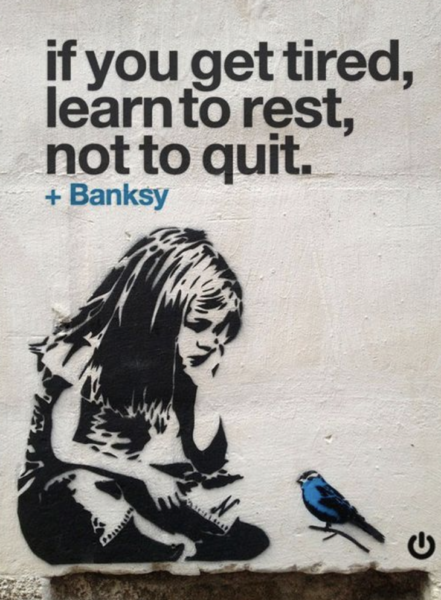





As a nation we have lost so much with Efeso’s untimely death, his many insights identified in this maiden speech to the house spells out so clearly he what he stood for. The sad irony is that those values are rejected by the government. Yes Martyn “We all owe him a collective pledge to redouble our efforts, to be brave like Fes and to step up for the vulnerable who he always put first.”
To his family, thank you for sharing this truly great man with us.
Incredible speech, thanks so much for posting it. I was so happy he got into parliament and heartbroken when he died and I never met him. However you didn’t need to meet him to know what an exceptional and great person he was and that he would do much for all New Zealand. I understand the shock people felt when JFK died because that’s how it felt when Efeso died. I feel that the Labour party held him back and I really resent them even more for that in addition to how they failed to fully use the mandate given to them (bitterly this is also the taunt Luxon threw their way.)
In Efeso’s speech you can see why he left Labour for the Greens and thank god he did… “It’s time to draw a line in the sand, and alongside my colllegues in Ti Pati Kakariki we’ve come as pallbearers of neoliberalism, it’s time to bury these shallow, insufferable ideas once and for all. And this, sir is our act of love.” And this Mr Chippy is why Efeso left Labour and joined the Greens because Labour failed him and us badly, not because he didn’t have ‘tribal loyalty’.
Together with Ti Pati Kakariki let’s make his vow come true. His choice of words have a sense of premonition to them so we must be so very thankful that although he wasn’t in Parliament for long he was there long enough to inspire us all in a way that no others have ever done in such a fatal short time. Arohanui to all who knew him and to his family, and to our better future that he envisioned and illuminated so beautifully in his first and last speech that says it all.
Shades of Harry Holland on Taupiri. May it have the same effect.
Tim hazeldine would have All US Bennie’s on student rates of $300 a week or a ubi.