
What happens when China can reproduce our milk powder? Oh this happens.
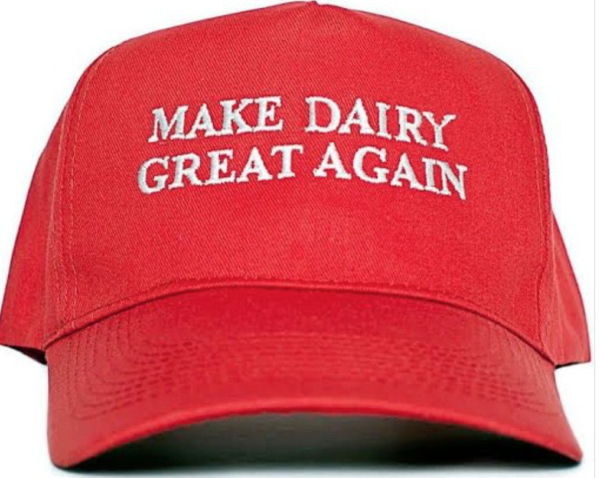
Aside from the environmental degradation, one of the fears of Dairy Intensification for China was always what happens when China can simply reproduce that same basic bargain bin milk powder product at an even cheaper price than we can.
Well, we are about to find out…
China’s Plan to Boost Baby Formula Output Hits Foreign Suppliers
A2 Milk Co. led stock market losses of $875 million among infant-formula providers in Australia and New Zealand after China unveiled a plan to boost local output and reduce reliance on imports.
Under the new program, China aims to exceed 60% self-sufficiency for baby formula and improve the quality of domestic brands in its $27 billion infant-formula industry. Authorities are seeking to bolster consumer confidence following a deadly milk scandal in 2008.
…if your KiwiSaver is looking a lot lighter today it’s because every NZ company connected with shipping basic bargain bin milk powder just got the bejesus kicked out of them.
For years we’ve warned about exporting base product with no value add, well here comes the I told you so Express.
So Dairy Intensification as part of Key’s pump & dump economic legacy not only robbed us of water and damaged the quality of our water while contributing to climate crisis gases, it also left an enormous level of debt to pay for that intensification which the industry will be left in the lurch for as our main export market moves to produce their own basic bargain bin milk powder.
The Climate Crisis demands we radically shift from dairy but we don’t, so the bottom of the market falling out of the entire industry may well be the impetus for change.


The over-specialization makes us precarious, and the precariousness keeps us dependent on the same banks that induced the over-specialization.
How do you impoverish a nation?
Make that nation dependent upon trade with other nations in such a way so as to discourage its own economic development.
This is what NZ has done and we’re about to find out just how badly its going to affect us.
There’s a simple reason why every developed nation started with serious protectionism first and then went the ‘free-trade’ route. It encouraged development of their own economies from their own resources. Once they’d developed their own economies they then demanded to sell their surplus to the rest of the world without giving the rest of the world the time to develop their own economies.
Thing is, the rest of the world kept developing anyway even though their development had been slowed. Now that the rest of the world is catching up the developed nations no longer have anywhere to export to.
A world of free-trade has no trade.
We didn’t sell our milk and butter to China in the free trade deals we sold our farms, our IP, our supply chain and our freedom of speech.
We already import more than we export and what we export is increasingly negative things like profits from overseas shareholders owning NZ assets.
The OIA is a joke! The whole point of it was protect NZ strategic assets, but nope they are just another pointless bureaucracy adding costs and doing the opposite of what they are supposed to be doing.
Like our dysfunctional immigration that now means that our per capita spend for health and other social services is dropping like a stone, (per capita public health spending will decline from over $3,700 per person in 2020 to just over $3000 per person in 2023. Similar figures apply to education and the payment of welfare benefits.)
It is even worse than that, when you consider that much of the money earmarked is also going to capital expenditure, aka building more hospitals and schools (for stratospheric demand) while reducing the costs in real terms of the care for every person in this country. .
It seems crazy to import in hundreds of thousands of workers and fake students to compete against our own working poor for jobs and housing, creating massive social costs and harm here.
If international students want to come, lets have those that are actually doing a real degree and not cheating and not working here while they do it!
Our poor policies are creating social harm such as the $44k working poor worker in NZ whose family of 6 now lives in 1 bedroom hotel and does not qualify for a state house. https://www.rnz.co.nz/national/programmes/checkpoint/audio/2018698261/working-poor-the-long-excruciating-wait-for-a-state-house
Likewise people who are new to NZ but don’t speak the language and have contempt for NZ laws and are forcing Kiwis out of business by undercutting them, and they get a free ride to residency and citizenship here. https://courtnews.co.nz/2019/01/30/tax-bill-ballooning-to-1-3m/ https://www.nzherald.co.nz/nz/news/article.cfm?c_id=1&objectid=12171615
It is become increasingly obvious that some of the new residents are plundering NZ while causing massive social harm and our officials do nothing, let alone halt immigration until they can 100% stop the situation.
Our decreasing social spending per person on health and education is because we are getting hundreds of thousands of low paid or zero income people who can use NZ social services while contributing next to nothing or for ridiculously short qualifying periods.
Even when caught and deported the criminals are allowed back a couple of years later aka Joanna Harrison or just come back under a new name like the Malaysian scandal of tradies operating here for cash.
‘Diversify’ and we have been talking a lot about this but we need to walk our talk now it is time to deliver
In cases like these where an industry is facing liquidation. In these cases the beauty of the markets to magically come up with solutions is wonderful to me.