
Waatea News Column: I don’t believe the majority of those arguing about OT fully appreciate how deliberate and horrifically brutal this policy of taking children truly is
I don’t believe the majority of those arguing about OT fully appreciate how deliberate and horrifically brutal this policy of taking children truly is
I want to pay respect to Waatea Radio and The Hui who have been highlighting the obscenity of the new uplift policy for years, there’s an irony that the issue only hits the mainstream headlines once a white middle class news network picks it up.
If your contribution to the breath taking abuse of child uplifts by Oranga Tamariki is “But it’s not racist” – perhaps you should sit this one out. Maori have been complaining about losing their children to the State since the 1940s – this damaging child theft policy isn’t new.
I don’t believe the majority of those arguing about Oranga Tamariki fully appreciate how deliberate and horrifically brutal this policy of taking children truly is. I have been arguing since 2016 that the new Ministry of Vulnerable Children settings would create a new stolen generation – because the changes were specifically set to uplift children with very few checks and balances.
Minister Sepuloni only signed off on strengthening independent oversight of these uplifts in August of last year, 2 years after they were implemented. Parents of children taken face secret evidence, aren’t eligible for legal aid and can have automatic uplifts if they’ve had previous run ins with the Ministry.
CYFS always had a bad history of taking children, but it was the last resort of a poorly funded agency whose primary focus was on strengthening the whanau so children were safe, the Ministry for Vulnerable Children however was streamlined and focused on removing children as quickly and as easily as possible with almost no respect for the parents rights whatsoever.
This fanatical position to take children on minimal evidence has been allowed to occur because previous child deaths have angered the public into agreeing with draconian uplift laws, but have we been deceived by the media over those previous child deaths?
Dame Tariana Turia makes the point that, “In the last few years since 1993, we have had 83 non-Māori children killed, we have had 17 Māori children die”, we don’t get wall to wall news media coverage when white babies die, we do when the children are brown. We get all the terrible details, all the awful behaviour, all the unspoken judgments about Māori and that leads people to accepting anything that will prevent those deaths, even if it is a terrible over reach by the State.
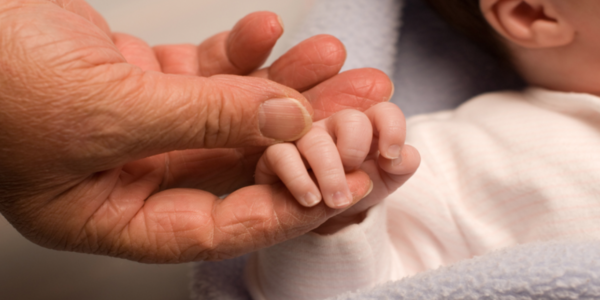
We’ve allowed a dreadful piece of policy to be accepted that steals new born infants from the arms of a mother. It is sick and unacceptable in a progressive liberal democracy and watching the Government run like frightened lambs as the criticism has built is a woeful and gutless response.
Is this the politics of kindness Jacinda?
First published on Waatea News.



The historical trend is for the state to assume greater responsibility for the care and nurturing of children, and for the powers and authority of parents to diminish.
Compulsory state education, which we now take for granted, was a revolutionary move in its time. The “anti-smacking law”, by which the state directed the methods of child discipline to be used by parents, was another significant development.
The uplifting of children by Oranga Tamariki continues this trend and just so long as one accepts the assumption that the state, rather than the family is the institution which epitomizes the social good, a case can be made that it is in the interests of the uplifted children.
There are however problems. State involvement in the raising of children comes at a cost. Education for a start. Then financial provision for solo parents and for the care of vulnerable children.
The state therefore is constantly seeking to reduce its financial cost, while retaining a degree of effectiveness and control over the raising of children in society.
Uplift is based on the simple calculation that each detected case of infanticide or serious physical harm to a child is an enormous expense to the state agencies of police, courts, corrections and CYF. It is cost effective to uplift ten infants from their parents in order to avoid one serious harm incident to a child left in its family.
So it comes down to the question of which is the better institution for raising children, the state or the family? In a society with a benevolent state and well grounded families it would not be such a harsh choice, and parents would win by default.
But in society where the state is beholden to the interests of global capital, and where many families have ended up disrupted, demoralized and dysfunctional all we can say with certainty is that children will continue to suffer.
Ever met a racist social worker?
https://www.youtube.com/watch?v=qk2-BmT9AfE
https://www.youtube.com/watch?v=GOlVRHsVzE4
Yeah, well. On the one hand at risk children rely on the laws of the land to protect them when they can not protect themselves. So there is an over reliance on laws. We rely on them far to much because the agencies that manage those laws on behalf of the at risk children are bullshitting. I just have to site the Nesroom story where the family was told numerous times that one thing was going to happen only for the lie to be revealed at the most inconvenient times. If removing children is absolutely nesseceray then no one has to lie to the family or a judge like that. Anyone who has the conviction to remove children dosnt have to lie because it’s a most important job. Nah, these people running the place have lost it. The minister really has to clean all the bad out.
Is it better for a child to remain with abusive parents and be at risk of a range of negative life outcomes (e.g. physical, emotional and psychological abuse) so that a child remains connected to that family OR is it better to remove children (yes and babies if need be) and place them in loving and supportive home environment where they can flourish and grow? I admit that removing babies from their Mum’s in hospital is not cool, but this action would only be taken if the Mum has had other children removed and had not made any demonstrable effort to change and improve as a parent to ensure the safety their offspring. Oranga Tamariki would always seek to support whanau care for their children, but sometimes (for a range of reasons) this is not enough for the whanau to make the needed changes that would ensure safety so then removal is needed. Even when removed the whanau, hapu and iwi need to be engaged to try and place the baby or child as close to the biological family as possible – but this is far from a complete process at this time.
When you analyse the idea of babies being removed from their mothers in isolation it is a dispicable action but there is always a lot of history and previous actions taken that have been unsuccessful before an uplift is approved by a family court judge – remember Oranga Tamariki do not operate in isolation neither to allocated social workers – uplift decisions are rigourously debated before being operationalised (unless the child is in imminent danger).
Just who are the “we” in … “We’ve allowed a dreadful piece of policy to be accepted that steals new born infants from the arms of a mother”.
Where are the Iwi leaders?
Why did the Maori Party sit in Parliament and not make the plight of their own children known?
Why is Winston Peters and others who claim Maori lineage silent on this issue.
Where has the Maori gone as a Nation?
Children should be in care as a last resort.
The taking of children must be stopped now.
Didn’t child uplifts begin after the outcry because a number of babies were injured or killed after people *tried* to warn social agencies about the risk? They aren’t taking kids from people randomly selected from the phone book. They know who these people are.
Are we going to go around this loop again? If there has been some abuse of power, fine, sort it out. But there are people out there who are a danger to their kids. That’s very real.