
‘Trexit’ and why Danyl McLauchlan is one of our best political commentators
I don’t want to get a subscription to The Listener because fuck The Listener.
It went to shit the day Finlay Macdonald left as Editor.
But I have to get a subscription because it is featuring the best political columnist in NZ, Danyl McLauchlan.
In a recent column he created ‘Trexit’ a play on ‘Brexit’ and the manner in which ‘Brexit’ became a deeper movement of identity.
The Democracy Project looked at McLauchlan’s argument a couple of weeks ago…
“Trexit”? Is New Zealand facing its own Treaty-based version of the populist Brexit revolt? The Listener’s political columnist Danyl McLauchlanthin
McLauchlan lays out how New Zealand’s zeitgeist issue of Treaty polarisation parallels what happened in the UK where the media and a bipartisan agreement to keep an issue out of public debate eventually bubbled up: “In the 1980s and 90s, as the Treaty of Waitangi evolved as a foundational constitutional document, Labour and National reached an informal agreement that interpreting it was a role for the courts rather than Parliament. It would not be defined by politicians and it certainly wouldn’t be up for debate during election campaigns or referendums. This consensus held for more than 30 years: treaty settlements progressed across multiple changes of government, usage of te reo became widespread, acknowledgement of treaty principles became routine within public and private organisations and anger towards these things was restricted to the radical fringes. The politics of the treaty lay largely undisturbed, treasure half-buried on the ocean floor – occasionally grasped at by Winston Peters, briefly fumbled with by Don Brash – until now, when it’s been seized and held aloft by Seymour.”
And Seymour – and the seemingly growing proportion of the public that wants a say on state policies on race relations – might end up winning, against the odds: “Seymour doesn’t need traditional media to talk to the public: he’s launching websites and churning out digital content, reaching a large constituency of voters sympathetic to his argument: that the modern interpretation of the treaty is turning the country into an ethnostate with different rights for different races. He’s winning the debate by default because National and Labour still think it’s possible to rule the entire topic out of bounds. Luxon didn’t mention Seymour’s bill in his Waitangi speech: all he could offer on the topic of the treaty was that National would honour it, whatever that means. Labour keeps calling Seymour a bigot and a racist, the same rhetorical tactic that lost the argument against Trump, Brexit and Australia’s Voice vote last year.”
…there are similarities here between ‘Brexit’ and ‘Trexit’ that are worth exploring but I also think there are enormous differences as well that create far more radical outcomes than Brexit.
Brexit exploded the way it did as Working Class Labour voters who had been left behind by opening up the domestic economy to Europe were confronted online as racist by younger urban London Labour activists and the aggrieved Working Class Labour voters said, ‘Fuck you’ and voted Brexit.
The manipulation of that anger by Cambridge Analytics gave Brexit campaigners insights into the subjective fears and hates which were then pushed hard on their social media platforms.
Bad faith right wing agents manipulated Brexit into an immigration issue while the Billionaire class who didn’t want European constraints on their power, wealth and privilege bankrolled the whole venture.
McLauchlan is right in identifying Seymour and Farage gaining notoriety by saying what shouldn’t be said out loud, but that sense of the taboo is where the comparison starts and ends.
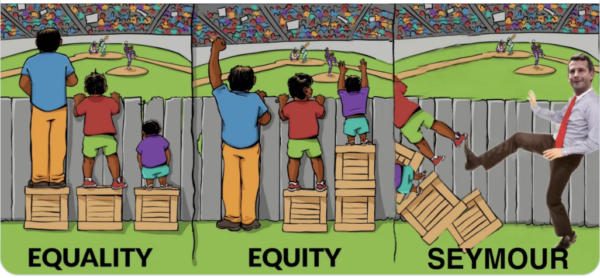
In the NZ context, Seymour has manipulated a weak Luxon into undertaking this attack on the Treaty Principles while pretending this isn’t an attack on the Treaty.
By removing the framework for the State’s obligation to work with Māori, which is what Seymour wants, it would end any obligation to work with Māori.
This isn’t about one person one vote democracy or overblown fears of an ethnostate, this is a calculated attempt to attack the Treaty and kill it off.
This is different to a majority decision on whether the UK should stay inside or outside the EU, this is about a domestic audience turning an the indigenous minority and blaming majoritarianism should decide the rights if the minority.
ACT wants a binding referendum against the interests of the minority over an issue the majority don’t even understand!
ACT’s Treaty Referendum Bill is dangerous and disingenuous…
1. All citizens of New Zealand have the same political rights and duties
2. All political authority comes from the people by democratic means including universal suffrage, regular and free elections with a secret ballot
3. New Zealand is a multi-ethnic liberal democracy where discrimination based on ethnicity is illegal
…The Bill sounds good until you realise what it actually means…
Lord Cooke’s ruling in 1987 was an attempt to create a framework that gave the Treaty meaning. He ruled, “the Treaty created an enduring relationship of a fiduciary nature akin to a partnership, each party accepting a positive duty to act in good faith, fairly, reasonably and honourably towards the other”, and this has been the framework for co-operation for almost 4 decades.
…passing ACT’s Bill would remove that obligation to work with Māori making the Treaty meaningless.
This is a direct attack on the Treaty and the very value of our Democracy
This whole argument that “we the people didn’t have a say in Lord Cooke’s 1987 ruling” utterly misunderstands the nature of our democracy and is the intellectual equivalent of being a book burner demanding to run the library!
We have a representative democracy, not a participatory democracy.
We elect people and pay them well and resource them with the best advice to make the best decisions, if you don’t like them you kick them out of office once every 3 years.
Demanding a say in issues requiring deep wisdom, experience and technical skill like Constitutional Law and vaccines is like letting children design airplanes FFS!
Let’s be very clear, what the right are arguing for here with this Treaty Principles Referendum Bill is not Democracy, but Majoritarianism.
The benchmark for morality under Majoritarianism is that 51% can vote to kill the other 49%.
Great if you are in the 51%, not so great if you are in the 49%.
A democracy worth its name understands the power structures within society and provides a democracy that actually represents the wider interests of everyone.
What ACT are doing here is stripping away Māori political rights by strangling off any obligation to work with Māori. It makes the Treaty redundant so attempts to pretend this doesn’t impact the Treaty is just a deception.
Majoritarianism is not democracy, it’s authoritarian.
Democracy uses the State to build people up, Majoritarianism demands the State punish those the Majority despise.
We need to fight for our Democracy and not the empty legitimacy of Majoritarianism.
Just because you have the numbers to do it, doesn’t make it right or just or clever or worthy of us.
It’s counter productive culture war revenge fantasies implemented for nothing more than political plunder.
David’s argument that ACT stand for tino rangatiratanga is so misplaced I wonder if David has ever met any Māori…
The Treaty: We don’t believe Treaty of Waitangi is a partnership between races – David Seymour
Over the past decade, no party has shown more courage in standing up for the freedoms of New Zealanders than Act.
There’s been the freedom of parents to choose a school that suits their children, charter schools. Our party has stood for the legal rights of licensed firearm owners, freedom of speech, the freedom of vulnerable people suffering at the end of their life to choose assisted dying, and the freedom of people to go about their business in the face of heavy-handed Covid measures.
Now in Government, we continue to stand up for New Zealanders’ rights. We are reintroducing choice in education, beating back the thickets of red tape and regulation so deadly to innovation and development, and ensuring Oranga Tamariki has the rights of each vulnerable child as its unconditional focus, among other initiatives.
In these and other examples, Act stands for the mana of the individual, the right to live life as you choose so long as you are not harming others. Put another way, Act has championed tino rangatiratanga, or self-determination.
…at a time when the Mining Industry and Trans National Corporations want to buy up NZ land and the privatisation thugs are looking to rob us blind, we need more safeguards to our sovereignty than David Seymour’s limp and brittle definition of tino rangatiratanga.
All he is doing here is reducing the concept of tino rangatiratanga into the shallow individualism of the Western tradition.
Individualism über alles is a petty trade in for what Māori already have.
David wants to downgrade Māori from citizens to consumers.
Māori communalism is as close to Kiwi socialism as we are going to get! David’s attempt to reduce tino rangatiratanga into individualism misses the Māori values where sharing and communalism is central.
All David is doing is forcing a Western Philosophical definition of the self onto Māori and then telling them to accept it!
How does replacing Māori communalism for a shallow western definition of the individual, justify dumping the Treaty Principles?
If anything, wouldn’t further atomisation of Māori culture help fray the unity and allow ACT to legislate it away?
Māori tino rangatiratanga is the sovereignty of the people, not the self interest of the individual, if this is all ACT is rolling up to Waitangi with as a justification for their race baiting referendum, good luck.
ACT’s Treaty Referendum Bill is dangerous and disingenuous.
What McLauchlan misses is that a majority referendum on minority rights are fundamentally against the values of a democracy. That context is what utterly condemns Trexit.
Increasingly having independent opinion in a mainstream media environment which mostly echo one another has become more important than ever, so if you value having an independent voice – please donate here.
If you can’t contribute but want to help, please always feel free to share our blogs on social media.





But I have to get a subscription because it is featuring the best political columnist in NZ, Danyl McLauchlan.
In 2023 Voyager Awards he is one of five to get an award for short-form Feature Writer of the Year.
I think one aspect of importance is the role that ideologically influenced thinktanks feed stuff into the discourse separate from official political or anecdotally notable entities throwing stones into the pond that ripple and then settle.
https://www.chathamhouse.org/2018/11/history-think-tanks-12-things-you-should-know
There has been remarkable growth in the number of think-tanks over the past century. In the 1920s, there were a handful. In the 1950s, there were a hundred or so mainly clustered in Western cities. Now, there are over 7,800 located across the world. A series of anniversaries marking the centenaries for some of the original institutions in the United States and the United Kingdom, coinciding with increasing turbulence in international affairs, makes this an apt time to review their role in the 21st century.
Here are 12 things you should know about their history and what lies for them ahead.
1. In the West, think-tanks were born out of three things.
The decline in the power of the British empire and the rise of the United States.
The failures in policymaking ahead of the First World War.
The post-war spread of national self-determination and the weakening of colonial systems of government around the world…
12. In 2018, think-tanks are facing three challenges in an increasingly crowded — and competitive — environment.
First, technology has radically altered the way policy is made.
Second, the failure of successive governments in Washington and across Europe to adapt their economies to globalization — that they themselves championed — has led to a popular backlash against the elite-led policymaking with which think-tanks have been associated with.
Third, the growing amount of funding being targeted towards think-tanks, alongside new demands for transparency in their funding, risk compromising their credibility.
Think-tanks are facing these challenges at the same moment when they are needed to help the world confront a profound turbulence in international affairs. So what do they need to do in order to stay relevant in the 21st century? Read the full article in International Affairs or watch the video to find out more.
And behind it all is stripping away the last protection we have of being sued by overseas corporations if we breach the conditions of the TPPA (I forget it’s current iteration).Treaty considerations exempt us from being taken to court if we for instance , as Shaw has suggested , terminate a project funded by foreign finance, if it breaches those considerations, or our Paris commitments, or environmental protections.Mike Smith’s case is incredibly important.
Well, thats my understanding, very clunkily expressed.
God help NZ if see nothing gets this through