
There is a far better solution for NZ media than the Department of Internal Affairs ‘Ministry of Truth’
The extraordinary over reach the DIA have launched with their ‘Ministry of Truth’ proposal is not only an egregious abuse of power, it’s also stupid and there’s a better way to do it!
The issue is that the Ministry of Truth wants to compel Networks to all agree to editorial safety standards with ‘safety’ plan in place for vulnerable people.
Let me give you an example of how this would impact a Political News Commentary Blog like TDB.
Under the current regime I have obligations around not posting things at certain times as per the instructions of the Electoral Commission, I have to obey defamation law and if a mean comment is posted and it is hurtful I might have to have a Netsafe contact me and threaten me to take it down or else.
Under this new regime, the Ministry of Truth compels a regulation that requires ‘safety’ plans for ‘vulnerable’ people (as defined by the Ministry of Truth).
If a person complains about your content, you are required to show the Ministry your ‘Safety’ plan and if that ‘Safety’ plan is not good enough to deal with the lived experience of the vulnerable people who you have offended, you are in trouble.
It seems the vulnerable people will determine that.
If my safety plan is not robust enough, I don’t have one or if it doesn’t end up pacifying the vulnerable person, I get fined.
This is sold as a means to protect vulnerable people, it will immediately become a weaponised process that will inspire a billion new fights.
The total surprise of the entire Media Industry at the scope of what the DIA have been secretly cooking up here is merely the stunned response of the magnitude of this Ministry of Truth, expect a backlash roar from the media industry when they fully comprehend the sheer scale and scope of what the DIA are trying to build here.
What we should be looking at, rather than a Ministry of Truth, is actual fourth estate journalism that consumers can trust, not a weaponised complaints procedure that will immediately become exploited by partisan activists masquerading is consumer safety.
What we need is a total rethink on public money spent on journalism. Currently it is handed out via a deeply invested NZ on Air who give their mates money to produce angry feminist mommy blogger podcasts no on watches.
The problem with the current model is that it is NZ on Air mates funding other NZ on Air mates to form an echo bunker of elite opinion that never has to dirty itself with reality.
All that is being generated by the current funding model is The Spin-off sharing their content with RNZ/Stuff/TVNZ etc etc etc. An endless social engineering campaign that promotes diversity over white cis male facts.
What we need is NZ on Air ‘Read between the Flags’ Kiwi journalism
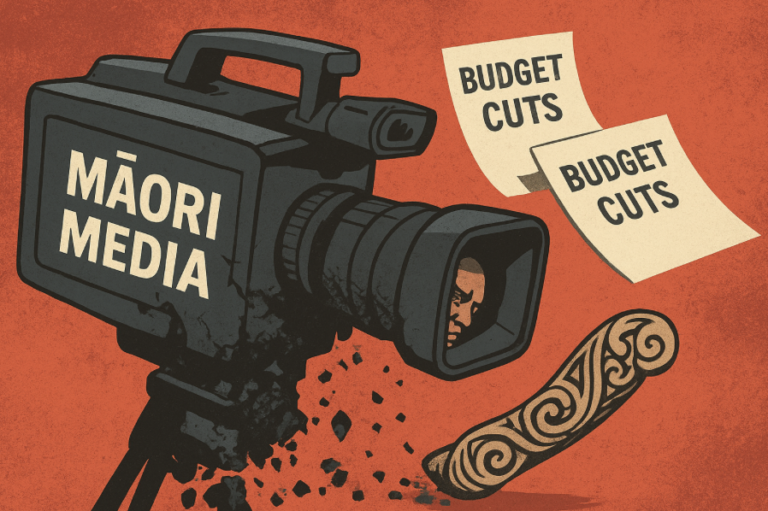
In a world of disinformation, we need journalism we can trust. We all get the ‘swim between the flag’ model of surf life saving, NZ on Air should be given extra funding for ‘Read between the flags’ Kiwi Journalism. This money is to ensure plurality of voice for independent media, Māori media, specific communities, news blogs and mainstream news media who become eligible if they agree to a set of Journalistic Principles.
These Journalistic Principles are fact checking stories, attempting to get comment and providing right of replies, protecting sources and attempts to hear the other side of the story.
If you do agree and sign up and can show a body of work that proves your journalism, you are entitled to funding and must have a Kiwi Journalism flag on your site to show you are obliged to follow the Journalistic Principles Code of conduct.
You would have an awareness campaign to urge NZers to ‘read between the flags’ for trusted information.
You can’t control the narrative by simply censoring it the way the Disinformation Project wants, and a ‘read between the flags’ campaign alongside a journalism fund would ensure Kiwis knew that whatever they were reading is at least base line journalistic standards rather than so much of the bullshit opinion masquerading as journalism.
We need to adapt our funding model if we want to have a media that can change to the realities of disinformation and misinformation while championing the importance of the values of journalism.
All NZ on Air funded journalism is now is an extension of elite opinion echo bunkers that only reinforces the privilege rather than challenges it.
What we are instead getting is an Orwellian Wellington Woke Bureaucratic Panzer that will crush anyone who the partisan activists turn it against.
We don’t need a Ministry of truth, we need better funded Fourth Estate Journalism funded by the State with a clear set of journalistic standards and a public campaign warning Kiwis to ‘read within the flags’.
We need smarter ideas, not a Ministry of Truth.
Increasingly having independent opinion in a mainstream media environment which mostly echo one another has become more important than ever, so if you value having an independent voice – please donate here.
If you can’t contribute but want to help, please always feel free to share our blogs on social media


The biggest problem I see with the Safe Online Services and Media Platforms proposal is that the Regulator will consist of a board of people appointed by the government. The board will be a “single centralised independent regulator” that “runs the system” (p24).
The focus is on major platforms that must comply with the codes developed by ‘industry’ in collaboration with the Regulator.
I see plenty of problems there for the Regulator and the ‘codes’ to be biased towards both the government appointees to the board, and the ‘industry’ influence on developing the codes.
eg our Human Rights Commission is headed by Paul Hunt, who was appointed by Andrew Little. Hunt is biased towards gender ID ideology and does not agree with the gender critical position.
The Safe Online Services… proposal acknowledges women experience a lot of misogynistic abuse on social media. However, our govt, public services, HRC etc claim a ‘woman’ is anyone who IDs as a woman. The proposal claims the regulator will somehow negotiate such conflicting rights. Such a conflict would be between claims by the gender ideologists, and those of gender critical women.
I have no confidence that the Safe Online & Media Platforms Regulator Board will be truly independent, especially considering the clause that says,
“Content is considered harmful where the experience of content causes loss or damage to rights, property, or physical, social, emotional, and mental wellbeing.” (p18) Who will judge what is harmful to “social, emotional, and mental wellbeing”? And how will they do that?
Misogyny isn’t a problem in the west. Men have created the safest most prosperous nations on earth. Men do all the maintenance and repair work on infrastructure like the internet so woman can spend three days on social media telling everyone how difficult life is and how oppressed they are while having sexual relationships with multiple people at the same time.
It’s help your cause of you could give some examples if you could give some examples of woman experiencing “misogyny” online.
[Sigh]. And do you have anything tom say about the main point of my comment about government appointing people to the Regulator Board?
BTW, you over-estimate how much work men do on the infrastructure of the Internet etc. Of course there has been a history of men dominating technical industries, even though a woman was the first coder. And the male dominated IT techie industry has hardly created an admirable and safe social media environment – especially not for women.
However, the percentage of women techies in IT though proportionally around a bit above 20% currently is growing, and expected to grow further. The proportion of women working for large technology companies is a bit above 30%.
https://www2.deloitte.com/us/en/insights/industry/technology/technology-media-and-telecom-predictions/2022/statistics-show-women-in-technology-are-facing-new-headwinds.html
NB: part of the reason given for women finding it tougher in IT work than men is that they do a far greater proportion of household chores and caring for dependents when not at work than their male colleagues.
Are National voters ‘vulnerable people’?
This isn’t about ”vulnerable people”. That’s just the cover for another political power grab. I can’t remember a time when the poor were more vulnerable.
As part of an investment in real journalism, it would be great if journalists were incentivized to undertake actual research that involved primary sources, (not just rehashing what other media are saying), and also talking to real people – all the time.
And information – not telling people what to think.
Echo-chamber PMC bullshit must end. It is not journalism to just talk to people you consider friends, or ”experts” (nowadays the same damn people in their narrow bubble of supercilious smugness).
What we have now is nothing like journalism. Journalism used to be called the fourth estate of democracy. Democracy can’t function if the people are not equipped with the information they need to participate in it. And to function, democracy requires the participation of the people.
Politicians are supposed to be servants of the people. We should be extremely concerned by all attempts at narrowing the information we can access, and instead, telling us what to think.
We’re all trans woman of colour
This is a reheated version of the Disinformation Governance Board. That had nothing to do with ‘vulnerable people’, but instead simply branded any inconvenient dissent as “foreign disinformation” from “Russia, China, and Iran”.(Remember Russiagate?)
If the government actually cared about the press being full of low quality information, it would be smashing apart the absolute monopolies which exist in every single daily newspaper market. The T.V. networks (including O.T.T.) would also be broken up (there isn’t a single independent local affiliate!).
That is already related 500.k tender for the disinformation project
Hopefully it will be a while before they can enact the ministry of wrong think – at the moment the Labour ministers are busy forming an orderly queue in front of the privileges committee.
Doesn’t it seem, ever so slightly, that we need a ministry to hold politicians to account instead?