
Atlas Network in New Zealand: Influence, Think Tanks, and the Regulatory Standards Bill

New Zealand politics doesn’t happen in a vacuum. Ideas, frameworks, and policy templates move through global networks — often long before voters see the final legislation. Critics argue the Atlas Network represents one such ecosystem. Whether that influence is direct, indirect, or ideological, it deserves sunlight.
A Free-Market Project Behind Today’s Policy Push
We need to be clear about something. There is a coherent ideological project underway in New Zealand politics — one that prioritises market solutions, property rights, deregulation and limits on collective state power. Internationally, that project has often been associated with networks of free-market think tanks, including the Atlas Network. Critics argue that similar ideas are now shaping major policy proposals under the National/ACT/NZF Government. That connection deserves scrutiny.
What International Critics Say About the Atlas Network
George Monbiot of The Guardian has previously described the Atlas Network and its affiliates as part of a coordinated international movement promoting free-market orthodoxy.
He wrote:
“Many refuse to divulge who funds them, but as information has trickled out we have discovered that the Atlas Network itself and many of its members have taken money from funding networks set up by the Koch brothers and other rightwing billionaires, and from oil, coal and tobacco companies…”
Monbiot’s argument is that such networks operate as policy incubators — shaping public debate long before legislation appears.
Whether one agrees with his characterisation or not, the central point is this: transnational think tank networks can influence political discourse.
That influence should be examined openly.
The Regulatory Standards Bill: The Real Prize?
The Atlas Network threatened The Daily Blog late last year and the deplorable backdown by TVNZ by allowing them a bullshit right of reply on the last episode of Q+A was TVNZ Journalism at its most spineless and pathetic.
The greatest win by the Atlas Network will be the Regulatory Standards Bill.
The Treaty Principles Referendum is the distraction, but the Regulatory Standards Bill is the real win for the Neoliberal Right…
While all the media and popular coverage seems to have been directed towards the Treaty Principles Bill, David Seymour and Act are poised to achieve another substantive victory that has been over 20 years in the making.
The Regulatory Standards Bill, first introduced to Parliament in 2006 and reintroduced last year by Seymour in his role as the Minister for Regulation, is under the public consultation phase (quietly started on the day of the arrival of the hikoi in Wellington).
It will be taken up by parliament in early 2025.
As detailed by Melanie Nelson, the passage of this bill (an agreement in the coalition Government’s negotiations) will help Act to realise a longstanding goal of their neoliberal policy agenda, which is to enshrine the rights of individuals, particularly property holders and business owners, over the collective good of all New Zealanders.
“The focus on the Treaty Principles Bill risks overshadowing its dull but dangerous cousin, the Regulatory Standards Bill, which is currently open for consultation,” she writes. “The Regulatory Standards Bill is the brainchild of the Business Roundtable (now the New Zealand Initiative) and has been attempted three times previously by the Act Party.”
If passed, the bill will establish a hand-picked regulatory board to ensure that law-making complies with its regulatory “principles” and to deal with complaints of violations (the public can even call in their complaints via a newly established tip line).
…ACT have tailored an economic straight jacket that will make it impossible to counter corporate interests ever again.
If this passes, Corporations will be able to stop any environmental or taxation policy they don’t like.
The radical nature of this should terrify every New Zealander.
I didn’t believe most Kiwis voting National, NZF or ACT had much idea what exactly they were voting for and I don’t think the vast majority of Kiwis have any comprehension just how far right this Government actually is.
Setting up a legislative body dominated by corporate interests to test future laws against would be the end of NZ as a functioning democracy.
Sure it would be Government elected by the people, but it be run by law decided by corporations…
This regulatory board would have sweeping oversight over all proposed government regulations, with the ability to make non-binding recommendations.
Furthermore, all proposed legislation or ministerial statutes (with a compliance review of all existing laws within 10 years) would fall under the purview of the new regulatory board, severely curtailing the ability of the government to regulate harmful business practices or corporate exploitation, even if such regulation is in the public interest.
More seriously the current version of the bill has removed any role of the courts to provide regulatory oversight or interpretation; a move that seems to be explicitly targeted at blocking any incorporation of Te Tiriti into the regulatory discussion.
…so the Courts would be effectively bypassed by this new regulatory board.
At some stage New Zealand, you are going to have to either resist this slide to corporate fascism or you are merely going to be puppets to them.
Wake up Kiwis!
It is important now The Atlas Network is so active and influential in our political system that we acknowledge and highlight the many tentacles of The Atlas Network so we are aware of the influence.
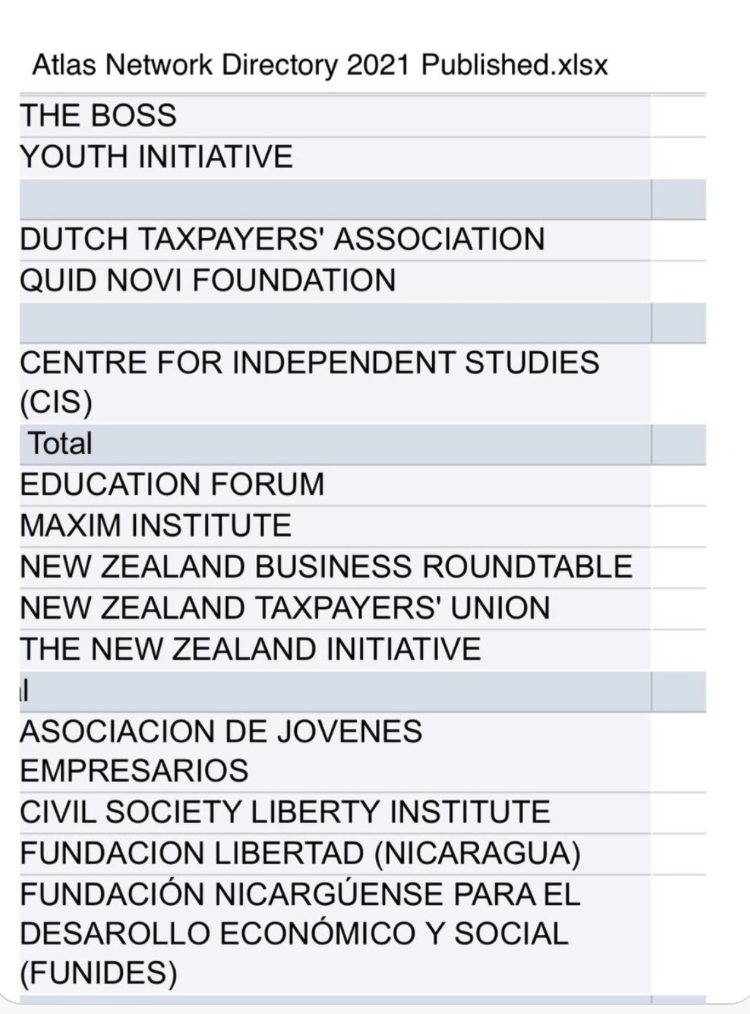
The list of Atlas tentacles:
- ACT
- Groundswell
- Taxpayers’ Union
- Kiwiblog
- Curia Polling
- The Campaign Company
- Free Speech Union
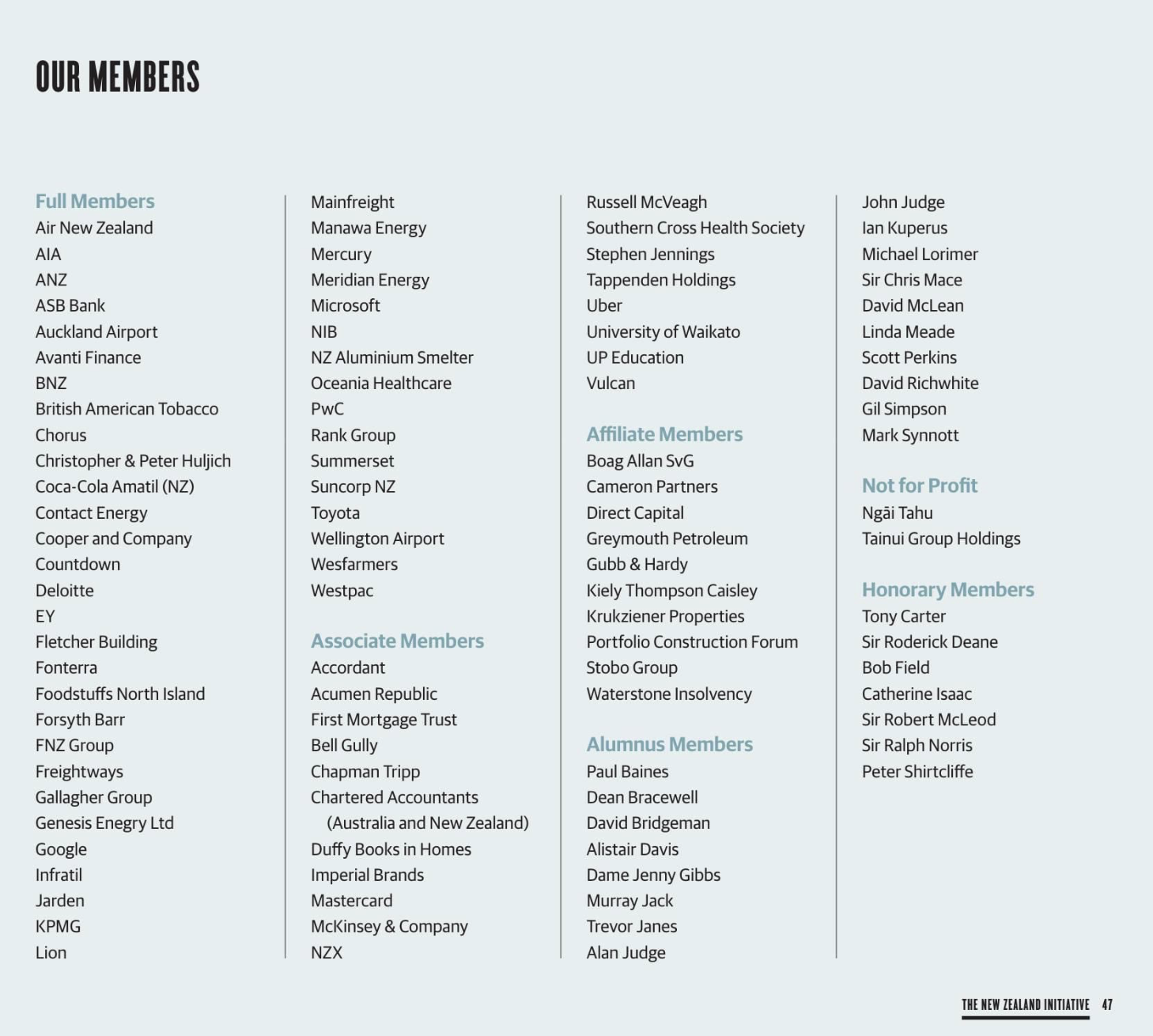
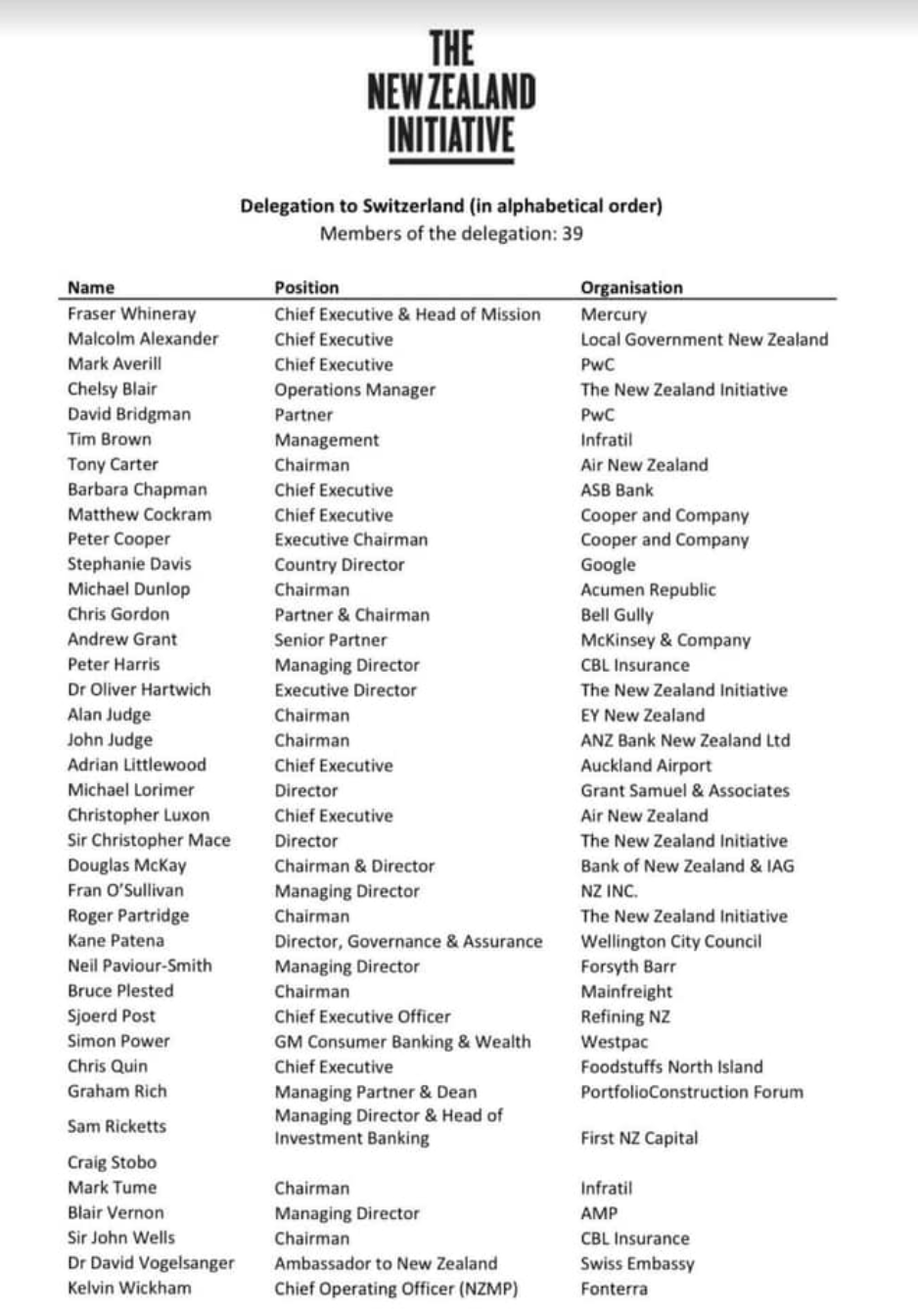
- Plus everyone below via the NZ Initiative…
If we’re going to argue about the future of the country, we should at least be arguing about the real architecture of power — not just the headline distractions.
Increasingly having independent opinion in a mainstream media environment which mostly echo one another has become more important than ever, so if you value having an independent voice – please donate here.





Looking forward to seeing what depth of idiocy Bob the First can achieve this year. I see he’s off to a flying start with his succinct one liners that offer nothing to the debate.
Waikato University, Ngai Tahu and Tainui are on the NZ Initiative list. Are they a sleeper cell?
This began with the development of “think tanks” many decades ago, funded by the wealthy to spread then unpopular views. Focus on the Atlas network is many decades overdue, they have been here that long in various guises.