
Rachel Stewart destroys lying corporate dairy farmer water propaganda
Rachel Stewart is a national treasure. Her fearless writing forces one of the largest and most powerful lobby groups, the corporate dairy industry, to front up to their bullshit.
Her column today destroys the spin ones that the corporate dairy farmer propaganda division, (the National Party), always use when trying to divert attention away from the fact they are polluting, destroying and stealing our water.
“New Zealand farmers feed the world.” No, they don’t. They sell bulk milk powder to the (mostly) lactose-intolerant Chinese. Further, they need to get used to the future of synthetic milk and plant-based meat.
That’s the future, and it’s coming. Ready or not.
“We’ll go broke.” No, you won’t. And if you do, you weren’t sustainable anyway. You took on too much debt, and/or you’re doing something very wrong.
“We are the backbone of the country.” Tourism is the backbone now, so best adjust to the fact the two are incompatible. Clean, green, pure New Zealand? Pull the other one.
“We’ve spent a billion dollars in environmental initiatives.” Prove it. I’ve asked for a breakdown many times and I’ve yet to see this random figure ever quantified. Still waiting.
“Urban waterways are more polluted than rural.” Yes, they are polluted but, considering urban waterways make up less than 1 per cent of all waterways, it’s an oft repeated bit of essentially fake news. Stop insulting our intelligence.
You’ve all heard the corporate dairy farmer lies before, you’ve seen the corporate dairy farmer propaganda on TV and you’ve all seen the extreme lengths they’ll go to shut down Greenpeace’s dissent against them.
National are the political expression of corporate farming and for too long we’ve allowed these thieves to rob us of our water for the benefit of their mates. they sold our bloody state energy assets to create a $400million irrigation slush fund.
How long are NZers going to allow National to keep putting our interests second to their corporate farmer mates when it comes to our water and our environment?





Almost. Every day I pass a small stream that feeds into the Waikato River before it reaches hamilton, and with the rain we’ve hadf later, it is pretty swollen, plus, for the past few days, there has been some foam floating on top of the water in one section of this stream. Now, I don’t claim to know what the foam is, but seeing as it has survived there in the same place for a couple of days, it can’t be good. I have no doubt that some farms are trying to clean up their act, but there is a long way to go. They could start by laying off the Monsanto products . . .
There’s a hole in the biz thinking. And the fable of ‘free enterprise’.
If a farming business is unviable because it has to include the cost of water and cannot compete in its market/s – then, according to the orthodoxy, there are choices to be made. Water is a legitimate cost for the business. There’s probably some useful tax break they can call upon to ease the pain. (Meh.)
They can convert to a less water intensive farming model – e.g. sheep and beef, or forestry, or field crops that aren’t as water-dependent.
They could go out of business and sell to someone else.
They can start innovating to ensure their water use is thrifty without harming their stock.
Among others.
They cannot continue freeloading and still call themselves ‘business people’ Wouldn’t be Right…
Andrea the water massive usage by the rural sector will be used as an excuse to privatise water. Already the discussion is going that way.
They never miss an opportunity.
Regulation and restriction is needed not just levying.
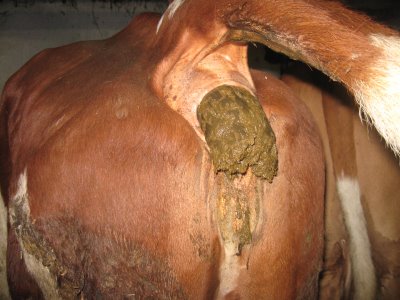
That picture of the cow and shit is the face of the National party.
farming is actually only about 4.35 percent of gdp but that industries actions can affect the wider economy beyond the farm gate
Clean green pure NZ ?
A picture IS often worth a thousand words.
When it comes to our water quality, National ignore the increasing deterioration because they fear the reprise of their farming mates.
It was inexcusable to sell our energy assets to set up a large
irrigation fund to favour/bribe farmers with.
Maori Party have made no gains for the long term asset of clean water
as they are a minor minority party.
Dairy farming (for mass consumption and export) is not sustainable, since it is dependent on HUGE inputs of fossil-fuel energy and HUGE inputs of imported fertilisers (which are ‘progressively’ contaminating the land with toxins such as cadmium).
Tourism is not sustainable, since it is dependent on HUGE inputs of fossil-fuel energy.
Both dairy farming (as practiced in NZ) and tourism are extremely environmentally destructive and have no long term future.
The fact that ALL political parties promote tourism as a ‘sustainable’ component of the NZ economy is scary beyond belief and is a clear demonstration that we are government by liars, thieves and moron, with other morons in the wings waiting for the opportunity to fuck up everything they touch.
AFKTT 100%
NZ is deliberately being saddled with debt yet the import sector is not constrained in any way but encouraged.
Wake up sleepy Kiwis as we just don’t have a future that is more of the same.
Human habitation of this planet is just not sustainable.
Humans are showing that just cannot adapt to preventing a messy collapse of environmental systems and impending food shortage.
Just making money not an answer but large part of the problem.
http://www.whoar.co.nz/2017/cant-defend-animal-rights-dont-deserve-call-progressives-op-ed/
(excerpt..)
(ed:..perhaps one of the most egregious examples of this disconnect most of the left/progressives have with animal-rights/welfare..is yr bog-standard greenpeace/green party bbq….
the sight of earnest young activists emoting all over some animals (whales?) whilst chowing down on other animals (chickens.?) is really quite something to behold..
the arguments for animal-welfare – and against eating them – or their bye-products – are met with blank/uncomprehending stares from most ‘progressives’..
to them the brutalities/exploitation/environmental-damages from the animal-industries are all negated/discounted because they like the ‘taste’ of them..(or some other such utterly facile reason..)
and this has to change..)
Love your blogs, good to hear rational views rather than the media propaganda machine
Great. What percentage goes to China, do you know? We all suck on too much diary anyway, not good for us to over eat it.
The Waikatoa River is New Zealand’s largest river and where you go determines how bad it is. I personally bathed in Lake Taupo and the maintain estuaries that feed it, near its forming point in the mountains. At that point it’s mostly just mountain water than anything else. It stays relatively clean for most of its length as well. It gets really really dirty at Hamilton, and that is where its bad reputation comes from. Because of Hamiltons importance to Farming, The Waikato rivers dirtiness is magnified in the minds of people. It is awful there, way way way to dirty. But Hamilton is surrounded by profitable farmland.
That being said, The Waikato River is in dire needs of cleanup and though I find the exact measure silly, I congratulate all attempts to protect New Zealand’s natural wonders. Because in the end, the great natural landmarks, whether in New Zealand or abroad, are the world’s greatest treasures. Beyond nationality, we should all work towards maintaining the world’s natural beauties.