
NZ Politics is broken – lowering voting age to 16 could be a solution
Mixed reception in Rotorua to debate on lowering voting age to 16
There’s been a mixed reception in Rotorua to a call to have the voting age lowered to 16.
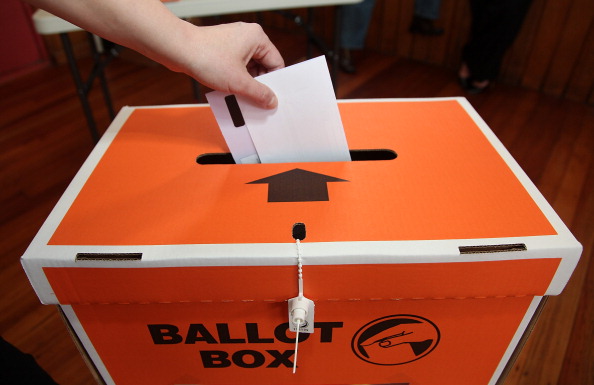
Children’s Commissioner Andrew Becroft said New Zealand should consider changing the voting age to 16, saying it could help with voter engagement and while 16-year-olds could drive, get a job and get married, they could also have a say in their own futures.
While most countries have 18 as the voting age Austria, Scotland, Brazil, Argentina and Ecuador have legislated to allow 16-year-olds to vote.
Rotorua Lakes Council people portfolio leader Tania Tapsell said she would support the move, saying it’s something that should be considered seriously.
“There are a lot of very independent 16-year-olds who work and are active in their community; I think they should be able to have their say.
“Legally, they are allowed to do a lot of other things, so I think they are mature enough.
Let’s be honest, New Zealand’s Political System is broken. The manner in which Political weight is solely targeted on the wealthy who have a vested interest in a no capital gains tax economy, kills off youth participation in politics. The grim reality that policy is built for baby boomers and the rich is blindingly obvious to 18 year olds who have a cynical view of politics. The difficulty in getting them to engage is that they are actually right, the system is built by those who profit from it and numerically that’s baby boomers. The state subsidised universals of education, healthcare, superannuation and housing have been denied younger generations as they also have to deal with climate change which will impact them far more disproportionately than those with a property portfolio.
So how do we change the dynamics in NZ politics? We lower the voting age to 16. The sudden influx of tens of thousands of new voters with their own concerns and their own voice finally being heard could be the very means of not only lifting our participation rates, but reinvigorating the very value of our democracy.
How would we go about this? I think that a compulsory unit of the Social Studies curriculum is a civics course that explains NZer’s rights as citizens and the importance of democracy as our political system, and that part of this is activism by students to lower the voting age to 16 so that their views on the world they are inheriting can be heard.
I don’t see the lowering of the age to 16 as a means of getting the Left elected, that’s not the point of my argument. The current weighting of politics is for baby boomers, if we are to change that, younger voices with their interests need to be included. I’m not suggesting the lowering of the age of voting to 16 so that ‘the left can win’, I’m suggesting the lowering of the voting age to 16 to end the intergenerational theft that has become official party policy under National. Ongoing inequality, renter rights, tertiary education debt and climate change are concerns that 16 and 17 years olds face in a way that boomers don’t, forcing politicians to listen to those voices is the only way to ensure the quality of our democracy isn’t simply tipped in favour of those with the money to play the game.
If we want people to buy into society and the common bond upon us all, then we need to have a universal suffrage that takes into account those younger citizens whose interests are being ignored.
We would be a better democracy for it.


It would appear that TOP have already published on this – the problem, not the lowering voting age solution.
http://www.top.org.nz/top4
Electronic voting should be secure and easy by now and that might get more voters. Shall we vote on it?
Why not entitle every child to a vote, exercised by their parents, as they are the most ‘invested’ in the future of the country.
Trying to fix the political system by adding more voters sounds rather like fixing the economic system by printing more money.
It would allow schools to impart the concept of citizenship while there is still someone around who prizes it. And once the voting habit is established, you’ve got it for life.
I think it is actually a way better idea than compulsory voting. At least there would be a few serious, if slightly under-informed, classroom discussions of the issues, one would hope, and that may beat the outside world.
That said, kids often vote their parent’s views, but that would balance itself out, probably and, with luck, leave a return to higher voting numbers. Certainly worth a try.
Indeed. I recall being incredibly right-wing in my youth. So much so I probably would’ve made a prime candidate for ‘ACT on Campus’. (I still cringe at the memories of my right-wing utterances.)
By all means, give the vote to 16 year olds. They pay tax (http://www.nzherald.co.nz/business/news/article.cfm?c_id=3&objectid=10808314) and taxation without representation is blatantly unjust.
But it may not produce the results we hope for.
” A compulsory unit of the Social Studies curriculum is a civics course that explains NZer’s rights as citizens and the importance of democracy as our political system.”
We want our citizens to learn about democracy by living in one. Having 16 year olds vote could be a logical end product of that.
But ‘teaching’ democracy? You can say what could and should happen and what democracy could and should look like but democracy is not an academic exercise.
A bit like bullying. Hekia Parata reckons schools should be doing all this stuff about bullying, and there are some understandings about what bullying is, but she is one of the worst, most consistent bullies in the country.
And imagine the views of a compulsory curriculum explaining NZer’s rights as citizens and the importance of democracy as our political system being taught by teachers! The “teachers are left-wing socialist scum” brigade who populate places like Kiwiblog would not have that.
(Although maybe to get around that “teachers aren’t to be trusted” fixation some idiot there will come out with some notion of privatising delivery of that curriculum because then all would be well.)