
The National Community: Why Populism in New Zealand is a Right-Wing Thing

BRYCE EDWARDS AND JOHN MOORE have taken the country-and-western melodies of populism and over-dubbed them with their own revolutionary lyrics. But, the resulting songs will never be sung by populists. Revolutionaries, too, are unlikely to find the Edwards/Moore mash-up inspirational. In the final analysis, revolution should be about overturning and replacing the existing order. Populism, in almost every instance, is about restoring the old one.
The article in question, “Could Anti-Establishment Politics Hit New Zealand?” (NZ Herald, 11/11/16) takes as its starting point the Dutch political scientist, Cas Muddle’s, definition of populism as “having the three key features of being anti-Establishment, authoritarian and nativist”. Certainly, these characteristics are present in most populist political movements, but they do not define them.
At its heart, populism is a revolt against the idea of political and cultural diversity. The populist seeks to make real the homogeneous nation of his imagination, and whether or not he’s successful depends upon how closely his imagined national community resembles the idealised nation of his fellow citizens. A populist movement only ever gains significant political momentum when large numbers of citizens discover that they share a common vision of what and who their nation is – and isn’t.
And if you’re not included in the populists’ definition of the nation, then your chances of being invited in are slim. Seriously, they’d rather build a wall.
Radical though the populists’ programme may be, populism itself is not automatically anti-establishment. If the democratic process has placed an individual or a party in power which the populists reject as unrepresentative of the nation as they define it, then, certainly, they will oppose the elected government.
Populist opposition to a specific political establishment should not, however, be construed as confirmation of populism’s hostility to all establishments. The populists’ ideal nation may be ruled by elites of whom they heartily approve. Restoring a deposed establishment – the rightful rulers – is no less a populist objective than deposing the establishment set up by its usurpers.
Ideologically-speaking, nearly all of New Zealand’s populist moments have been driven by this deeply conservative restorative impulse. The National Party, in particular, owes its existence to the determination of rural and provincial New Zealanders to overthrow Labour’s socialist usurpers and restore the nation’s rightful rulers – farmers and businessmen.
National’s choice of name was no accident. The new party was (and still is) perceived as standing for the pioneering virtues of the nation’s early settlers: those enterprising men and women, overwhelmingly of British stock, whose Christian capitalist values gave New Zealand its distinctive cultural signature.
The Labour Party, by contrast, was (and still is) seen as the party of the big cities: those sinkholes of moral corruption, physical squalor and political insubordination, whose representatives are incapable of recognising and protecting the cherished values of “heartland” New Zealand. (An imaginary entity with no purchase on this country’s actual geography or history.)
It is no accident that New Zealand’s two most accomplished populist politicians both emerged from the ranks of the National Party. The national community imagined by Rob Muldoon and Winston Peters has, from the very beginning, been defined by its enemies: immigrants, overly assertive Maori, militant trade unionists, left-wing journalists, effete academic intellectuals and (back in the 1970s) rebellious student protesters propelled into the streets by the universities’ alien and subversive ideas.
Muldoon’s great skill as a populist politician lay in convincing his fellow New Zealanders that their race, class and gender offered no barrier to membership of his national community. The National Party’s 1975 election slogan, “New Zealand the way YOU want it.”, captured perfectly Muldoon’s contention that the nation had fallen into the hands of people determined to transform it into something no genuine New Zealander could possibly want. The only viable option for right-thinking Kiwis was to join Muldoon’s national (and National) community of traditional Kiwi values. “Rob’s Mob” elected him on a landslide.
Peters’ populist appeal – inspired by the events that followed his mentor’s crushing defeat in the snap election of 1984 – is similarly restorative. Its unchanging target: the neoliberal establishment installed by Labour’s Roger Douglas between 1984 and 1990, and then further intensified by National’s Ruth Richardson between 1990 and 1993.
This bi-partisan betrayal of Muldoon’s “New Zealand the way YOU want it” populism lies at the heart of Peters’ party – New Zealand First. The nation’s tragic fall from grace is, according to NZ First’s founding narrative, the result of the corruption of its two “great” parties – National and Labour.
In the post-Cold War political environment in which NZ First was formed, Peters was free to cast the past leaders of both major parties as patriots. While holding very different ideas about how to achieve it, the NZ First leader assured his followers, politicians like Keith Holyoake and Norman Kirk wanted only what was good for New Zealand and New Zealanders.
Since the mid-1980s, however, (Peters’ narrative continues) the neoliberal, free-market virus has infected both Labour and National. Neither party any longer cares a fig for the national community. On the contrary, both have committed themselves to neoliberalism, globalism, multiculturalism and, most perversely, biculturalism – the disintegration of the “one people” brought into existence by Governor Hobson at Waitangi on 6 February 1840.
So potent is this latter grievance to those who inhabit the national (and National) community that Don Brash, an avowed neoliberal, came within an ace of defeating Labour in the 2005 General Election. His in/famous “Orewa Speech” and John Ansell’s “Iwi/Kiwi” billboards were almost as electorally compelling as Muldoon’s populist slogan of 30 years before.
In the final week of the 2005 campaign, Brash attempted to consolidate the populist surge unleashed by his attacks on “Maori privilege” by equating the national community – “Middle New Zealand” – with the National Party itself. That the electorate failed to respond in sufficient numbers was, almost certainly, due to Brash’s flinty-faced neoliberalism. In order to clinch such a crucial identification: the national community with the National Party; New Zealand’s distinctive brand of restorative populism required an altogether brighter and happier countenance.
Which brings us, of course, to New Zealand’s present prime minister, John Key. For Edwards and Moore, Key’s National-led Government is the establishment against which the flaming-torch-bearers and pitchfork-shakers of populism are massing menacingly. But in this they are, I believe, entirely mistaken.
Key and his government remain preternaturally popular because they represent, for a substantial plurality of New Zealanders, the most persuasive attempt, so far, at describing what the national community of twenty-first-century New Zealand looks like.
Key’s version of the national community is animated by the same virtues of resilience, hard work and self-sufficiency that characterised its earlier iterations. Wrapped around these core attributes are the traditional benefits of a happy family life, a “good” education, gainful employment and home ownership. Ethnicity, gender and sexuality only matter on “Planet Key” when they become a barrier to accepting the values and aspirations of the “average New Zealander”.
It was John Key’s promise to make the nation once again recognisable to the average New Zealander that propelled him and his party into office in 2008. Like another extremely wealthy businessman-turned-politician we are all learning to live with, Key’s message was one of restoration.
Helen Clark’s politically-correct, nanny-state establishment would be dismantled and replaced by the old order (tricked out for the punters in the glad rags of “a brighter future”). Busy-body public servants and the undeserving poor would be firmly but fairly put back in their proper places, and New Zealand’s “rightful rulers” would return to MAKE NEW ZEALAND [a] GREAT [place to bring up kids] AGAIN.
This is what Edwards and Moore cannot seem to see. That an “anti-establishment”, “authoritarian” and “nativist” government actually took office more than eight years ago. That the national/National community is an accomplished political fact. That Populism has already won.


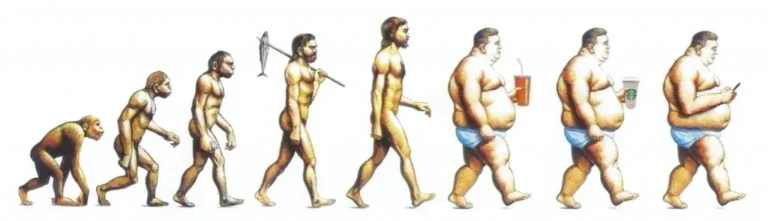


you so funny its gonna happen mate sooner or later it just needs one person to pick up the torch
If this article is tacitly predicated on the idea Trump won the presidency because of his populism, then it sits on shaky ground.
In 2012, Romney got 60,933,504 popular votes.
In 2016, Trump got 62,438,889 popular votes.
That’s a 2.5% increase – hardly earth shattering and somewhat lagging behind Clinton’s 64,641,150.
Populism isn’t the mechanism, a fucked up election system is – and we have one of those delivering 52.9% of the house to the coalition that won 49.3% of the party vote at our last election. Depends how many “wasted votes” we get from parties that fail to reach the threshold.
The one thing you can be sure of is the Report on the Review of the MMP Voting System will be gathering dust in a safely closed bottom drawer.
http://www.elections.org.nz/sites/default/files/bulk-upload/documents/Final_Report_2012_Review_of_MMP.pdf
I wonder how you can blend populism with real estate speculation and consumerist madness, add a sprinkle of sports mania, then you may have the recipe to make it work in New Zealand, otherwise most could not care less.
Would you call Norm Kirk’s government populist? It certainly generated popular excitement, as did the rise of the Alliance in the nineties. In these two cases, the people who were inspired were largely the have-nots, who smelled hope.
The NZ establishment is by and large made up of property-owning settlers and John Key is their man. It was not a populist rebellion against the establishment that elevated John Key, it was an establishment seeing off a contender who they feared might curtail their licence if she was let to stay around. There is no comparison here to the anger of the have-nots that fuelled Trump’s election, or the hope that accompanied the rise of the Alliance – just an establishment that found in Key the right formula for reinforcing its own dominance.
You nailed it Olwyn, and it puts CT in his place imo.
Isn’t it great that the PM is successful internationally and in Kaikoura.
Bob Parker reversed his fortunes as Christchurch mayor after the earthquake. People will forget about John and Max Key’s indiscretions because Key becomes more statesmanlike – like Bob did.
Now, Brand John Key is trending because he (and Gerry and Stephen) are organising the earthquake relief (and the army).
The National way is for kiwis to help out one another, unless they are the lazy or drugged-up poor. John Key will single-handedly fix Kaikoura, Gerry will dredge the harbour so the Whalewatch boats can get out. Stephen will redirect tax cuts and handouts for those that need it in Kaikoura.
What we need now is Paula Bennett to get some street cred back again, by making beneficiaries clear landslips for their benefit cheques.
The Bene Army – it has a good ring to it Paula – and you can be next best woman now that Hekia is going.
I normally hate agreeing with anyone from the left, but I agree that John Key and National will win the next election based on their performance in regard to the earthquake. I was proven right last election by the Rugby World Cup win’s effect on the feel-good factor and as the Wha Left said, Bob Parker is a shining example of why natural disasters help struggling politicians.
It is also likely (and you can record this prediction) that with Colin Craig gone, and United Future pinning its forlorn hopes on legalising medical marijuana, the only viable support party for National will be ACT (after all who would trust Winston).
The only chance NZ First will have of having a coalition with National, is with Shane Jones in charge instead of Ron Marks. And you heard that here first also.
So, the earthquakes might have been bad news in some sectors, but for John Key and National and ACT, the story is more rosie.
I’m still tossing up whether to ROFLMAO, or rush for a bucket.
I don’t think Ann Tolley could manage such a feat as you suggest. And the minister with the affliction for leopard print failed when she tried to lure homeless people into the provinces a few months ago.
But – you’ve sown the seeds. When the minister’s found a few typically hopeless managers with advanced skills in ripping off the system for their own advancement I’m sure they’ll be there, displacing genuine tourists and whingeing.
As for the Bene Army, it’s a great idea.
Get the lazy beneficiaries off the couch, out of bed before 2pm and on the end of a shovel. Drug test them before doing any skilled work on the end of the shovel and if they won’t work to earn taxpayer money helping fellow kiwis out during this disaster, then cut the benefit.
Disaster conditions in Kaikoura call for forward-looking policies such as this. I doubt if anyone in the left-wing of the National Party will countenance such radical disaster politics solution, but the centre and right are sure to consider it seriously.
Certainly some ethnic groups in Auckland from countries with fewer social safety nets, look at our namby-pamby, nanny-state handouts for layabouts and shake their heads in dismay.
Time for a shake-up in the welfare system, especially during disasters such as Kaikoura. I might flick Paula an email, because she assures me she never reads TDB like I do.
Gerry would dredge the harbour – must be a kickback involved somewhere.
Elsewhere folk would put the big boats on a mooring and ferry passengers out in small craft.
I’m sure the Gnats are poised to paint it as a ‘short victorious war’ – insurance and EQC experiences will likely tell a very different story.
New Zealand is not a nation. It is a business. It is a business that occupies a largely-corporation-owned portion of the Earth’s surface where consumers of the products and services of corporations live.
NZ is concurrently a debt-slavery concentration camp, one of over a hundred such debt-slavery concentration camps around the world run by international banking cartels. Movement from one the concentration camp to another is strictly controlled, and is usually accomplished via payments to banks and corporations.
The great trick played for many decades -largely on the basis of neuro-linguistic programming perfected and promulgated by Edward Bernays in the 1920s- has been to con the general public into thinking they have some say in the way NZ Inc. is operated. The general public have no say. It’s all a rigged game.
The other great trick, played in more recent times, has been to persuade the general populace that the present system is leading to a ‘better, brighter future’, when is fact it is leading to absolute catastrophe in the short term and will lead to extinction of the human species (along with most other life on Earth) in the medium term.
Guy McPherson is currently touring NZ and has been forecasting extinction of the human species ‘within a decade’ [as a consequence of the stranglehold banks and corporations have on most societies and the industrial way of life they promote] but that forecast is incorrect for technical reasons I won’t go into here: however, extinction of the human species is very likely to occur in the period 2030 to 2050. Needless to say, the time preceding extinction will be increasingly hostile to life -both human and non-human. Which is basically what we are now witnessing.
Almost nobody gets it; despite the abundant irrefutable evidence:
https://scripps.ucsd.edu/programs/keelingcurve/wp-content/plugins/sio-bluemoon/graphs/co2_800k.png
That state if ‘nobody getting it’ suits the banks, corporations and politicians just fine in the rather short time frame we have before the system starts to seriously implode (very likely around 2020).
http://nsidc.org/arcticseaicenews/charctic-interactive-sea-ice-graph/
Indeed @AFKTT, expect a few more of these “surprises”
http://www.abc.net.au/news/2016-11-27/sixth-person-dies-from-thunderstorm-asthma-emergency/8061380
“New Zealand is not a nation. It is a business. It is a business that occupies a largely-corporation-owned portion of the Earth’s surface where consumers of the products and services of corporations live.”
Never a truer sentence spoken!