
MEDIAWATCH: Why Damien Grant is a wimp in today’s MUST READ Oranga Tamariki Stuff Column
Baby Horse killer, fireworks aficionado, devoted father & husband, fanatical libertarian, redemption champion, cthulla of capitalism, liquidator, ACT & Taxpayers Union cheerleader, right ring columnist and my weekly sparring partner on MagicTalk Radio’s Friday night political wrap, Damien Grant, is a wimp for pulling his punches in today’s must read column by him on the appalling Oranga Tamariki case.
He is to be applauded first for even daring to bring this outrageous behaviour by Oranga Tamariki to light via an opinion column. The lack of coverage over this abomination of social policy practice has been driven by Delta lockdown eclipsing all else alongside an insipid mainstream media whose coverage has been appallingly cowardly.
Take this terrible example from last weeks Stuff on whether or not Maori children can ever be raised by Pakeha…
Can Pākehā caregivers provide adequate cultural support for Māori children in care?
…the rage this cowardly journalism inspired made me swear out loud!
What each of the Maori commentators failed to acknowledge in their universal claims of ‘no’ was that the Maori children in question had been with the white step-families for years and the Maori children had been told they would be remaining with the families!
The psychologists reports warned that if the children were taken now it would be damaging!
At the point of uplift Maori children should be handed over to Iwi with the appropriate funding but that’s not what has happened here meaning the default setting of woke critical race theory kicks in with Orwellian efficiency!
As I applaud Damien for having the courage to highlight this, I damn him for pulling his punches because he refuses to name what Oranga Tamariki is doing here – naked racism by a State Agency!!!
The entire Labour Party Cabinet should be on their knees thanking God that the current Covid lockdown is distracting the attention of almost every Kiwi because if we weren’t so distracted, the genuine anger at what is happening inside Oranga Tamariki would be an all encompassing furnace of outrage.
The enormity of Sir Wira Gardiner’s extraordinary overreach by contacting two judges and attempting to intervene in an ongoing trial, ostensibly for grilling a Social Worker too harshly, is just so gasp inducing in its audacity that it borders on corrupt.
I have called for a very long time for Maori providers to take over Oranga Tamariki because I believe Tikanga values are far more healing and beneficial to all vulnerable children than the hollow costed values of our neoliberal welfare system that sees clients of their services as opposed to children in need.
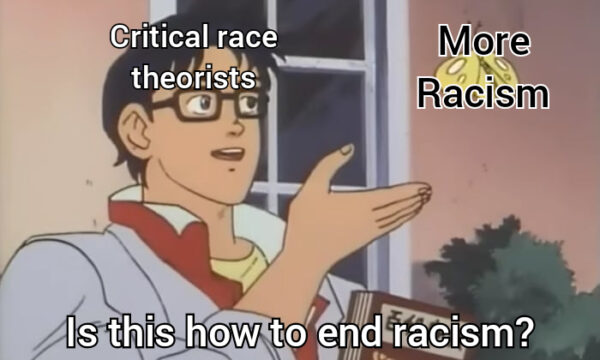
What is happening here in Oranga Tamariki IS NOT tikanga, it is woke critical race theory the dogma of which declares no white family can give a brown child a good life.
By attempting to disrupt and influence an ongoing investigation into Oranga Tamariki taking back Maori children from a white family when that testimony is so egregiously damming of Oranga Tamariki is an attempt to not only corrupt independent justice, but also hiding the appallingly racist behaviour of a State agency using the most extreme powers a State has, that of uplifting children from parents and step-parents.
I mean, sure Sir Wira Gardiner can claim the Judge bullied the social worker, but sweet Jesus look at what was revealed!
If your position is attempting to shut down a trial because too many truths and facts are coming out, isn’t that a tad on you?
Let’s remind ourselves of the lies, so many lies that the Social Worker used to justify psychologically harming a young Maori girl because you know, the heteronormative white cis male patriarchy…
There were some early signs, however, that the social worker might be out of her depth. The review filed in November 2018 said Moana had a close relationship with her grandfather. It transpired her grandfather had died five months earlier.
And while Social Worker 1 was filing these glowing reports, she was telling others in her office that the Smiths were stripping Moana of her Māori identity. She said she felt “incessantly undermined” by the Smiths and said the couple “attempted to sabotage whānau access” for Moana.
She pointed to the Smith’s “disregard for Te Ao Māori” (the Māori world view), and said they were incapable of providing Moana with the “cultural aspects” she needed.
The Smiths had no idea these conversations were taking place.
When she was asked in court why she didn’t include these concerns in her reviews, Social Worker 1 said she did but was told to remove them by her supervisor. (The supervisor would later deny this under oath, and said any changes he made were only grammatical).
Among the social worker’s concerns was an allegation that the Smiths had asked Moana’s daycare centre to refer to her by her nickname (an abbreviation of her name). This was “an attempt to remove her from her identity”, she said.
Social Worker 1 said the Smiths raised issues about Moana’s behaviour following access visits with her birth mother, and she saw this as the Smiths “making up issues to try and get reasons to have no contact”.
Another allegation concerned an access visit with Moana’s birth mother. Social Worker 1 claimed Mrs Smith pulled Moana away from hugging her birth mother and “proceeded to wipe her down with a cloth in what looked like an attempt to remove any germs”. She did not ask Mrs Smith what she was doing, but passed her concerns on to other Oranga Tamariki staff.
(Mrs Smith would later say Moana and her birth mother were not embracing each other, and she had used a wet wipe to clean Vegemite from Moana’s hands).
Separately, the Smiths held their own concerns about the social worker, and in May 2019 they complained to her supervisor.
A few weeks later the Smiths were informed that there were concerns around their attendance at access visits and the couple would need to undergo a cultural assessment. The couple were surprised about this and asked why it was required and what it involved.
Oranga Tamariki staff told the Smiths it was very rare – some had never been involved in one – and they were unable to provide any detail on the process or guidelines of such an assessment.
A meeting was held in late June 2019 in which the Smiths were told that Oranga Tamariki was concerned about their ability to provide for Moana’s cultural needs. The supervisor told the Smiths the cultural assessment would acknowledge “the good work you are already doing to promote [Moana’s] cultural identity”, and would hopefully provide some detail around Moana’s whakapapa.
When the Smiths asked why other Pākehā caregivers with Māori children were not subject to the same assessments, the supervisor responded that it was a good question, and all he could say was that there had been issues around access.
The supervisor couldn’t provide any brochures or pamphlets for the Smiths to inform them of what a cultural assessment involved. (The supervisor would later give evidence saying he felt the Smiths may have been directing “unconscious racism” towards Social Worker 1).
The Smiths believed the assessment was a ruse being used by the Ministry as a way to find them unsuitable and to have Moana removed from their care. They refused to take part.
…deceitful tricks and race accusations with no resources provided to enable the white step-family to help the little girls cultural growth…
The assessment was conducted by an independent cultural expert. His original task had been to assess the Smiths’ understanding of Te Ao Maori and their ability to provide Moana’s cultural needs, but that changed when the Smiths said they would not take part in the assessment, and he ended up looking solely at Moana.
His report was provided to Oranga Tamariki on September 11, 2019. It included scant information on Moana’s whakapapa, other than noting she had a distant relation in Taranaki.
The assessor, later giving evidence in court, would say a Māori child growing up in a non-Maori family would “not have the same opportunity in terms of inculcation of values,” he said.
He said it would be “extremely challenging” for a non-Māori family to raise a Māori child in the correct cultural manner, and failing to provide for cultural needs could result in a child’s health being compromised later in life. He said the decision on where Moana should be placed should lie with Ngāti Kahungunu.
…The ‘assessor’ uses critical race theory to deduce that this child will do worse with white parents, which seems an extremely limited view to judge this case on!
Look, if Oranga Tamariki can find whanau to place a Maori child with at the point of uplifting a child – all fine and dandy.
The recent involvement of Iwi stepping in to be that whanau resource at the point of uplift is a great development but that’s not what’s happened here.
In this case, as with many others, the Maori child has been placed with a white family for years and told they are staying with that white family permanently, to rip a child from the bandages of emotional healing and sense of security for some dogmatic implementation of woke critical race theory is the kind of zealotry that burns books!
The Judge didn’t bully this testimony out of Oranga Tamariki, and even if he did, what has been exposed is so damning that it justified bullying.
To attempt to intervene in the sacrosanctness of our independent judiciary so racist practices by Oranga Tamariki can be hidden is so disbelievingly outside the norms of our system it’s almost a Donald Trump level molestation of due process.
It is insulting to our collective intelligence that a story of two toffs running off to Queenstown has had more air time than this woke tyranny at work on vulnerable children!
This case mattered because it’s a test case for a whole bunch of these reverse uplifts by Oranga Tamariki. In another case, Oranga Tamariki have gagged Newsroom and other media covering the case of 4 Maori children who were placed with a white step-family for 4 years and told it was a ‘forever home’. The white step parents sold their home and bought a bigger house so the kids could have their own rooms only to have the exact same woke critical race theory ban them from having the 4 children despite being told they were.
If dogma is trumping the actual welfare of children, we have entered a quasi religious belief system as social policy stage and the Identity Politics Left have to be taken harshly to task for such egregious conclusions!
I note Damien’s column isn’t being promoted on their front page which highlights the nervousness Stuff has about remaining a critical voice when it comes to challenging woke dogma.
Increasingly having independent opinion in a mainstream media environment which mostly echo one another has become more important than ever, so if you value having an independent voice – please donate here.
If you can’t contribute but want to help, please always feel free to share our blogs on social media


Dear Marty Sharpe, I am disturbed by your recent article in Stuff (15 Sep), ‘Can Pākehā caregivers provide adequate cultural support for Māori children in care?’, the latest in a series on the treatment by Oranga Tamariki of the child ‘Moana’.
My attention was drawn to your report by a blog by the socialist commentator Martyn Bradbury, ‘Why Damien Grant is a wimp’.
He was responding to Damien Grant’s column in Stuff (19 Sep), ‘What happened to ‘Moana’ was abuse at the hands of Oranga Tamariki’.
In that column Grant, supporting Judge Peter Callinicos’s dismissal of Oranga Tamariki’s application to have the girl removed and placed with a Māori family, says Oranga Tamariki was placing adherence to a cultural belief, a policy, a dogma, ahead of the interests of a 6-year-old girl who had suffered grievously in her first three years and was thriving in her new home.
“From the very moment Moana went into the care of (the caregivers) she found; love, stability, devotion, nutrition, freedom from family violence and substance abuse.”
Marty, your coverage of the case, which I read in Stuff of 14 August and 9 September, was sympathetic, impartial, and comprehensive. What disturbs me about your article of 15 September is that four leaders of the Māori community all line up against little Moana, and agree that she must be removed from the foster parents who for three years have been caring for her, and handed to others, because her need for appropriate enculturation must take precedence over her need for love in the secure environment she knows. This expands on similar statements by an iwi leader in your report ‘Oranga Tamariki decision to be appealed by birth mother’ (Stuff, 10 Sep).
Could you not find even just one leader of the Māori community to wholeheartedly support the judge, and speak up for Moana’s right to stay and be loved in the environment she has lived in these past three years?
Marty, I really am hoping that your lineup of four Māori leaders all insisting that enculturation must be paramount is simply a reflection of the pressure you are under to embrace Stuff’s new-found party line on ameliorating the effects of colonisation. Because otherwise, if you really could find no one to speak up for Moana, it is a terrible indictment of the powerful voices who direct the thinking of Te Ao Māori today.
John Trezise
Dear John — Thank you for writing.
As you note, Marty Sharpe has reported extensively on this matter, covering a complicated case with wider implications. As part of this, we have tried to explore relevant angles, and this question was central to the case so therefore required further exploration.
We expect everyone can understand the need for a child to have love and stability etc., but very few of us laypeople had contemplated the idea that a child’s culture could be considered as important as those things. Not more important, AS important.
I would also say that the article was helpful in providing a sense of balance too, in that the prevailing view of the matter was that of course Moana should stay with the Pākehā foster parents. Marty’s reason for writing it was to let readers see what the opposing point of view was (especially given that OT had failed to explain it in a sensible manner).
Best, Anna Fifield, Editor
People from the childrens’ Iwi can’t put up their hands if they don’t know anything cause OT/CYFS hasn’t bothered to do their jobs. I have experienced this with OT and caught them out telling lies and got an apology. They OT/CYFS rush to get the kids of their books to make themselves look good. Culture and whakapapa is important to many of our people and we have a right to be Maori in our own country. We are not one people we are two peoples who signed the TOW and one people got everything and the other got fuck all.
This is clearly a fundamental issue regarding the choice between harmony and discord, future and past. Somehow you’d think the priority of consideration would be obvious at this time. It’s a shame that covid derangement clouds the picture and distracts from what is needed.
jkau. “ The choice between harmony and discord, future and past.” An elegant comment, you have lightened the start of my week, thank you.
This is clearly a fundamental issue regarding the choice between harmony and discord, future and past. Somehow you’d think the priority would be obvious at this time. It’s a shame that covid derangement clouds the picture and distracts from what is needed.
Māori*
Lucy’s statement:The problem with placing children with people outside their culture is that you end up with stolen generations. Children who know they do not look like the people who bought them up but who have no connection to the people they look like.
This doesn’t fit with the first comment. The step-foster parents made sure that the child was involved in their own culture. There is much emotional talk and jumping to conclusions in this item. One example in the article was about seeing the child being wiped clean off messy vegemite but the onlooker came up with some fanciful fiction to explain it.
Maori try to wrap around their young people with good values and measures, and when successful there won’t be any need for Oranga Tamariki. The Maori at the head of these groups have often become so middle-class that they have lost touch with the need of the strugglers for assistance, training, guidance, firmness, respect and love.
Sir Wira Gardiner can claim the Judge bullied the social worker. Has anyone claimed Sir Wira Gardiner tried to bully the Judge?
The problem with placing children with people outside their culture is that you end up with stolen generations. Children who know they do not look like the people who bought them up but who have no connection to the people they look like.
For sure, at the point of uplift children should be placed with their Iwi but if that is not possible then why not placement to a Pakeha family if they can provide a stable loving home. With cultural support this does not need to be a mutually exclusive situation, (see Stevie’s comment). What someone looks like should have nothing to do with it.
If possible of course Maori children should be placed with their IWI. Pakeha with any extended family. But that is if people from the IWi or extended family put up their hands.
The bond isn’t due to looking like ones family. Its far more primitive than that.
These kids aren’t being stolen. They are being removed from parents who are damaging them. Seriously damaging them.
Yes what a hero Damien Grant is…..OBE to hom and the Judge.
The scandal that is this case defies belief…..
And now the biological mother of Moana is appealing the judgement, likely encouraged by ideologically motivated lawyers. I don’t want to be down on this woman, but where is her insight into her own actions that have lead her to have five children removed? Likely she was a victim of a similarly abusive background, but some people who have been victims of such abused become determined not to repeat it.
Btw what crap the legal person talked in the article where she says providing for someone’s cultural needs is as important as health and safety.
Ffs.
Surely unconditional love, care and stability are far more important than so called Tikanga values or principles? Also, if these values are so great and effective the. Why the appalling child abuse stats amongst Maori?
Does love not transcend all? To accept the premise that Tikanga or the like is somehow more important for a child than unconditional love is racist, anachronistic and damaging to our society.
I thought it was a well written piece, and likely the strongest wording that would get past a Stuff editor.
My neighbour for around twenty years is fluent in Te Reo and a kaumatua in for our local Bay of Plenty hapu. His children went to Kohanga Reo with my children and are now adults. Some take a keen interest in their Maori heritage, some less so.
We talked about this over beer on the veranda a few years ago. My friend and neighbour pointed out that some people take an immediate interest in Maoritanga, some develop it over time.
He then opened up and revealed that while still a toddler he was removed from his birth whanau. He grew up in Southland as the fostered child of pakeha parents( actually Scottish immigrants).
He was raised in a healthy, happy home and it was his foster parents who encouraged him to not be a ‘brown pakeha”. ”They helped me be a Maori” said Reg.
When he later had contact with his whanau he realised that alcoholism had blighted their lives and he was removed from their care because of injuries they had inflicted on him.
I do not offer this as a solution to the complex situations that arise from children’s safety, cultural identity and all the other factors involved.
I simply offer it as an example of a Maori New Zealander who was not prevented from identifying with his culture because of happy, healthy childhood with Pakeha parents.
STOP SMOKING. NOW!