
High Time the Government Announced its Public Media Blueprint – Better Public Media
This week’s report from RNZ suggests that Cabinet is rightly concerned to ensure that public service principles are not overshadowed by commercial imperatives, and this is crucial if the new entity is to combine RNZ’s public service with the commercial operations of TVNZ.
However, the continuing lack of transparency over the precise shape and structure of the proposed new entity remains a concern, as does the question over how any public funding arrangements can be structured to ensure that public service principles are insulated from commercial pressure.
Once a media operator starts factoring ratings and revenue into every commissioning and scheduling decision, the incentive to provide programming that appeals primarily to minorities or takes a commercial risk is inevitably diluted. RNZ therefore needs to remain non-commercial.
The key questions here are whether, and how far TVNZ’s operations might be de-commercialised. Removing the advertising from TV One would cost at least $150m annually. It is more likely that the government envisages some sort of partial de-commercialisation of one or both channels. This raises other complexities.
New Zealand’s previous experiment with a hybrid funding model was the much-maligned TVNZ Charter. Between 2003-2008, the Charter funding provided $15m per year. But at less than 5% of TVNZ’s operational revenues (before dividends) this was never going to be sufficient to off-set the commercial pressures.
The lesson that must be taken from this is that while a Charter can provide an important statement of direction, public funding needs to be proportional to public service expectations. Exactly how much is needed to deliver the intended outcomes, and the possible mechanisms for sourcing and delivering the funding, need to be considered when Cabinet review the business plan.
Moreover, if there is to be hybrid funding of the new entity, the commercial broadcasting sector will raise questions over whether publicly-funded programming is competing unfairly for audiences and ad-revenue, thus distorting the market. There are different ways of mitigating against this which need to be debated, for example;
- Making any directly-funded public channel ineligible for NZ On Air’s contestable funding (this was the arrangement for the ill-fated TVNZ6 and TVNZ7).
- Restricting advertising during the schedule when any directly-funded programme is broadcast.
- Making publicly-funded content available to other media (as with RNZ’s current content-sharing model).
It is positive that the government has recognised that public service media remains a vital component of the digital media ecology, but it is high time the government announced its blueprint for the new public media entity, and sought public feedback to ensure the best outcome and informed debate before the 2020 election.


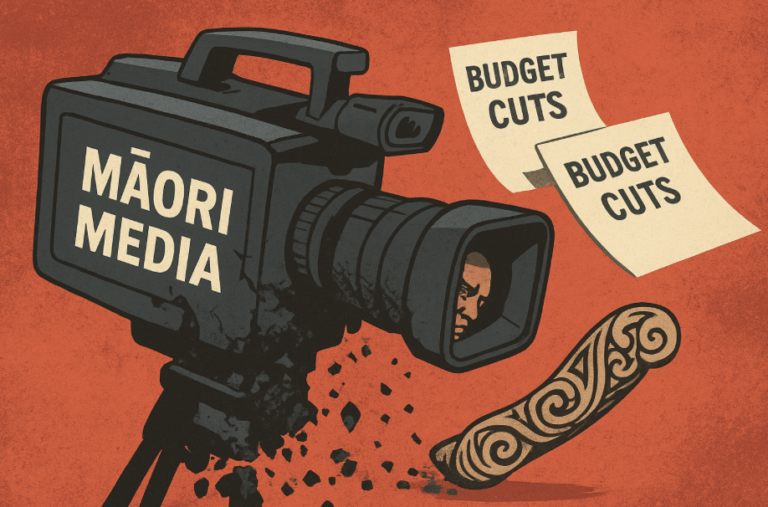


Once again, the Government is stalling, unable to implement bold policy to serve the NZ public with quality, non manure media. Throughout history Labour have failed in at least two previous attempts to provide a non commercial public broadcaster. Public money going to private companies should cease. Increasingly, RNZ is outsourcing content production. It’s becoming like another PPP, like the RONS.
Don’t throw out the baby with the bathwater. Since radio got started at about the same time as other bigger countries we have been up there. We actually aren’t a bunch of dummies, the farmers have held us back not the other way round.
Media Watch did a celebratory piece for a century of radio, started in 1920 in Detroit. The BBC was up in 1922, and in 1921 NZ was right there broadcasting.
History from Te Ara – https://teara.govt.nz/en/radio/print
Origins of radio in New Zealand
New Zealand’s first identified broadcast of a radio programme was on 17 November 1921. It was made from the University of Otago by physics professor Robert Jack. The broadcast included music, such as the popular song ‘Hello my dearie.’ Radio Dunedin (4XD) began transmitting in 1922 and is the longest continuously broadcasting station in the Commonwealth. By the end of 1923 stations were broadcasting from Dunedin, Christchurch, Wellington, Auckland, Nelson, Whanganui and Gisborne.
https://www.ngataonga.org.nz/blog/wp-content/uploads/2016/03/transcript-of-Peters-talk.pdf
…the 17th of November 1921. On that day the first organised radio programme was broadcast in New Zealand. I’m not going to go into how it all happened but I’ll just say that Professor Robert Jack, of Otago University, was a keen radio-telegraph enthusiast and had formed the opinion that formalised programmes of music and speech could become part of the radio, perspective. Already it was happening in the USA and he introduced it to New Zealand, from Dunedin
Crystal sets etc. https://en.wikipedia.org/wiki/Crystal_radio
Indian physicist Jagadish Chandra Bose was first to use a crystal as a radio wave detector, using galena detectors to receive microwaves starting around 1894.[26] In 1901, Bose filed for a U.S. patent for “A Device for Detecting Electrical Disturbances” that mentioned the use of a galena crystal; this was granted in 1904, #755840. On August 30, 1906, Greenleaf Whittier Pickard filed a patent for a silicon crystal detector, which was granted on November 20, 1906.
http://www.radiodx.com/history/nz-dx-history/origins-of-dxing-in-new-zealand/
https://www.rnz.co.nz/collections/resounding-radio/audio/2593906/a-stirring-thrills-the-air-the-broad-picture-1921-1935
We quickly embrace the first electronic mass-medium. A few hundred wire-fiddling enthusiasts in the early 1920s grow, even through the depression years, to 152,000 licence holders by 1935.
“but it is high time the government announced its blueprint for the new public media entity, and sought public feedback to ensure the best outcome and informed debate before the 2020 election.”
Agree Better Public Media trust;
Government must be more open and actively communicate with the public,
Public aree the ones who will be funding the future of public media without privateising influence to water it down again as they do all the time.