
GUEST BLOG: Willie Jackson – Anzac Day is a time to remember the ongoing impact of war on Maori
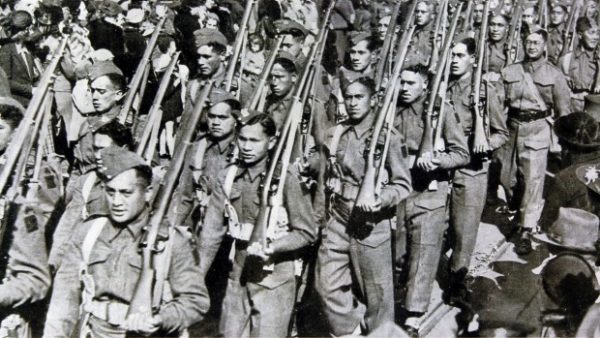
I find it difficult to not be frustrated, disappointed and a little angry every year when ANZAC Day comes along.
It’s not just the anguish of losing tens of thousands of our best and brightest in historic conflicts or the pain of the families they left behind or the damage these wars caused our communities and wider society.
It’s the way our Government treated so many Maori when they returned from war that still makes me angry all these many years later.
Part of the history we never hear is how Maori who joined the call to war in an attempt to find acceptance and mana in the eyes of a government and nation that still saw them as conquered second class citizens in their own country.
These Maori men who were prepared to pay the ultimate sacrifice to just gain equality, were treated with contempt by a government that refused to acknowledge or show gratitude to that sacrifice.
The benefits of parcels of land that were handed out to Pakeha soldiers when they returned from the Great Wars were not available to Maori.
Maori who couldn’t pay the rates on their land while they were overseas fighting had that land seized and taken from them so that when they returned from war they found their whanau kicked out of their homes.
Our great politician Sir Apirana Ngata said the contribution from Maori was the price of citizenship and being accepted in New Zealand society. Whilst there’s no doubt that it improved the relationship between Pakeha and Maori I wonder if our men would have been so forthcoming if they had of known they were not going to get land, houses and in many instances were not even allowed to have a drink at their local pub when they returned from war.
At the time we had little idea of the psychological impact of war on human beings and never provided the support all our men needed when they returned. The social damage of their lashing out violence still haunts many families generations later.
The impact in terms of Maori leadership was huge, the casualty rate within the Maori Battalion was almost fifty percent higher than the New Zealand Infantry Battalions. The relationship though between Maori and Pakeha soldiers is strong and a bond that can never be broken and a great example for New Zealand society. Sadly though future Maori leaders were wiped out by the war and this left a hole in Maori society that took generations to fill.
After the war in the 1950s Maori moved to the cities and as we all know the urban migration came with some devastating affects. Maori have led the worst statistics in all socio-economic areas since the second world war and I can’t help but think how things may have been different if not for the big losses that we suffered.
Lest we forget.
First published in the Manukau Courier


i am not maori – but i got angry when i first learnt of this some years back..it is a fucken obscenity how returned maori soldiers were (mis)treated..their sacrifices ignored..
it is/was a screaming injustice..
Maoridom suffered extremely badly especially from the losses of their leaders in WW2, there was no thanks given by the NZ Government for Maori Returned Seviceman and the on going effects of this are evident in certain Maori families to this day.
I went to a lecture recently by a European Historian who believes there is ongoing inter generational trauma which is carried over into future generations, I personally believe this is so within our family due to close family losses in WW1 and WW2. These losses and fighting were never discussed in detail within however in hindsight I have witnessed the effects that these close losses had on individual family members behaviour.
New Zealand has experienced a very violent history, starting with the Musket Wars 1820-1835, the New Zealand Land Wars, The Boer War, WW1 & WW2, the Korean War and the Vietnam War where we were actively involved and some other skirmishes were we have provided personnel such as Bosnia, Afghanistan & Iraq.
Maoridom suffered extremely badly especially from the losses of their leaders in WW2, there was no thanks given by the NZ Government for Maori Returned Seviceman and the on going effects of this are evident in certain Maori families to this day.
I went to a lecture recently by a European Historian who believes there is ongoing inter generational trauma which is carried over into future generations, I personally believe this is so within our family due to close family losses in WW1 and WW2. These losses and fighting were never discussed in detail within however in hindsight I have witnessed the effects that these close losses had on individual family members behaviour.
New Zealand has experienced a very violent history, starting with the Musket Wars 1820-1835, the New Zealand Land Wars, The Boer War, WW1 & WW2, the Korean War and the Vietnam War where we were actively involved and some other skirmishes were we have provided personnel such as Bosnia, Afghanistan & Iraq.
True, Maori were treated like second class citizens despite volunteering for war, suffering huge losses and facing tough times upon return.
But more significant was the resistance to war by the Waikato people, and others, under the leadership of Princess Te Puea.
“Kīngitanga leader Te Puea Hērangi maintained that her grandfather, King Tāwhiao, had forbidden Waikato from taking up arms again when he made peace with the Crown in 1881. She was determined to uphold his call to Waikato to ‘lie down’ and ‘not allow blood to flow from this time on’. Te Puea maintained that Waikato had ‘its own King’ and had no need to ‘fight for the British King’. If the confiscated land was returned, Waikato might reconsider its position.”
https://nzhistory.govt.nz/war/first-world-war/conscientious-objection/maori-objection
When conscription was imposed on Waikato-Maniapoto in 1917, many Maori were forced into hiding, tracked down and thrown in military detention or jail, in disproportionately larger numbers than Pakeha conscientious objectors.
Standing up to the British Empire while other iwi provided cannon fodder for its wars was the measure of the real heroism of Kingitanga in the Land wars and the two Imperialist wars.
YES WILLIE,
THEY TREATED ALL RETURNED SOLDERS BADLY!!!
JUST LOOK AT THE WAY THE VIETNAM SOLDERS WERE TREATED WHEN THEY CAME BACK AND WORSE WHEN THEIR HEALTH FAILED BECAUSE THEY WERE PIOSONED WITH “AGENT ORANGE” A VERY TOXIC DE-FOLIANT.
BLOODLY DISGUSTING GOVERNMENT WAS THEN AND NOW.