
GUEST BLOG: Joe Trinder – The lies of Hobsons Pledge
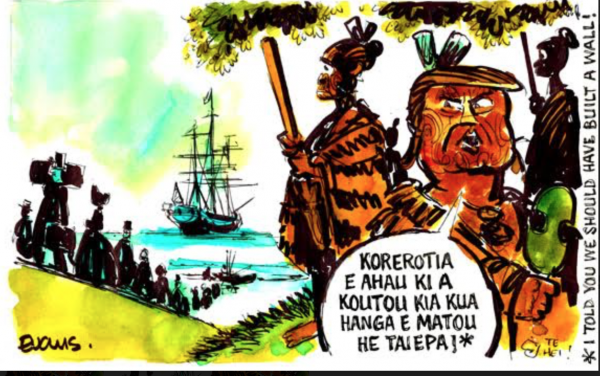
Just to clear up the racist lies and propaganda that Hobsons Pledge are spreading about our founding national document the Treaty of Waitangi.
Article three is not protecting the rights and privileges of British colonists or their descendants in the 21st century it was based on the protecting the rights of only Māori people no one else.
Article 3 of the Treaty specifically mentions the word “Māori” and the English version of the Treaty of Manukau/Kawhia specifically refers to the “Natives”
The definition of Native -“Your native country or area is the country or area where you were born and brought up.” -This would exclude all of the British population here in 1840 they are not Native because they were born in Great Britain.
When Hobsons Pledge deliberately misconstrues the Treaty and say “All the people of New Zealand” they are trying to adjust the definition of Te reo Māori to suit their agenda. The genuine translation is “to the natives of New Zealand”
Don Brash, Andy Oakley, Marton Doutre and Mike Butler are responsible for spreading these racist lies to undermine the authentic translation by Sir Ian Hugh Kāwharu. But when you point this out they resort to a conspiracy theory that Sir Ian Hugh Kāwharu invented the definition for political gain.
This is followed up with conspiracy after conspiracy that the word “Māori” means anyone who arrives here on a plane at Manukau airport or simply the Māori people don’t exist because we don’t meet their expectations of blood quantum.
Joe Trinder is a MANA Movement activist.


Just to clear up some of Joe Trinder’s misconceptions about New Zealand history and to respond to his false allegations that I am a liar and a racist.
1) Joe states: “Article three is not protecting the rights and privileges of British colonists or their descendants in the 21st century it was based on the protecting the rights of only Māori people no one else”
Joe is using the term ‘Maori’ with a capital ‘M’ which today relates to a collective of people known as “Maori”. This term was not in use in New Zealand in 1840 and neither does the word ‘Maori’ with a capital ‘M’ appear in any of the 8 copies if Te Tiriti in te reo that the chiefs signed in 1840.
Anyone can check that here:
http://archives.govt.nz/provenance-of-power/te-tiriti-o-waitangi/view-te-tiriti-o-waitangi-online
The word ‘maori’ with a small m was used as an adjective in 1840 and meant ‘ordinary’. There was no collective known as Maori people in 1840, just 600 or so separate tribes, most with absolutely no political association with each other. Te Tiriti is addressed to all the people of New Zealand in the Preamble, Article Two and Article Three because those are the words used in Te Tiriti, “ki nga tangata katoa o Nu Tirani” Joe is incorrect.
2) Joe states; “The definition of Native -“Your native country or area is the country or area where you were born and brought up.” -This would exclude all of the British population here in 1840 they are not Native because they were born in Great Britain.”
In 1840 there were more than 2000 people with European ancestry living in New Zealand. Many had been here more than one generation and were married with mixed ancestry children, as Joe is. Anyone born in New Zealand was native to New Zealand as is the case today. The words “ki nga tangata katoa o Nu Tirani” used in the treaty translate as “to all the people of New Zealand” these words are inclusive not exclusive. Joe is changing the inclusive words that are used in Te Tiriti to exclusive words which are NOT used in Te Tiriti, it Joe who is manipulating words.
If Joe Trinder or anyone else believes that either of my two points are incorrect let them respond with the conclusive evidence.
[Declined for publication. Offensive and trolling. – Scarletmod]
If we scrap the treaty can we scrap English common law to Mike and why we are at it let scraps all our legislation and start again cause it seems to favour some over many others.
The Treaty is being twisted / re-interpreted y all interested parties – better to scrap it.
pro fer rentum (latin) means the indigenous version of the TOW should take precedent over the English version as it is the native language of those who signed it and therefore more likely to be the correct version or interpretations.
Michelle “pro fer rentum (latin) means the indigenous version of the TOW should take precedent over the English version as it is the native language of those who signed it and therefore more likely to be the correct version or interpretations.”
That’s not correct. What you’re reaching for is this: “Contra Proferentem. A Latin term used in contract law referring to the principle that a judge will construe an ambiguous term against the party that imposed the inclusion of the term in the contract during negotiation or drafting.”
You need to point to which parts of the Treaty are ambiguous.
the whole English version is ambiguous D’esterre because it was misinterpreted by Henry Williams and his son who had a vested interest.
Michelle: “the whole English version is ambiguous….”
You need to be more specific as to the ambiguity.
Tell this to the creditors when they knock on the door:
https://www.nationaldebtclocks.org/debtclock/newzealand