
GUEST BLOG: Ian Powell – If you don’t take the temperature you can’t find a fever
Heather Roy and I are an ‘odd couple’. Her intellectual roots are on the libertarian right and mine are on the collectivist left. She was ACT’s health spokesperson in Parliament until 2011 (for a time its deputy leader) and I was a health union leader (Executive Director of the Association of Salaried Medical Specialists).
However, we had many informal discussions during this time and found that when it came to the health system, these differences narrowed considerably.
If one used a continuum from individual responsibility (right) to collective responsibility (left) we would be well apart although not at the extremes of the respective ends (Roy would prefer to use a quadrant to describe this).

Heather Roy, half an odd couple
But when this continuum is applied to the importance of Aotearoa New Zealand needing an accessible and comprehensive quality universal health system, the gap narrows considerably.
The major difference between us is the role of the private health system; she would like to see it used more than now; I acknowledge its importance but see its role as much more limited, particularly in hospital care.
Putting our heads together; thesis and antithesis equals synthesis
Since my departure from my union leadership role in December 2019 for something quaintly known as ‘retirement’, we have resumed our informal discussions initially largely over New Zealand’s pandemic response (both largely supportive) and the Heather Simpson led review of the health and disability system.
This led on to the Government’s dramatic decision, without prior consultation, to abolish district health boards (DHBs) and replace them a new more centralised vertical structure, Te Whatu Ora (Health New Zealand).
With the restructuring came in force on 1 July 2022 under the Pae Ora Act, we got our heads together to develop a joint paper for consideration by Te Whatu Ora. Despite us coming from different and often conflicting places on the political spectrum, this is not a compromise paper.
Instead it reflects our pragmatic shared understanding of the best way forward for Te Whatu Ora given the nature of the health system New Zealand now has.
After much redrafting the paper was sent to Te Whatu Ora (and others including the Minister of Health) in mid-January: Taking the temperature to find the fever. The paper was also published by Newsroom in three consecutive instalments commencing 17 January.

Advice for Te Whatu Ora from an odd couple
We would not have put in place this new health system. But it is what it is and we want to promote discussion on how to make it work best for patients. This begins by recognises an important success of DHBs.
This was DHBs’ ability to understand and, subject to funding and other central government constraints, address the needs of their defined local populations. A centralised healthcare system is most unlikely to consider nuanced local populations’ needs. Unless resolved this will negatively affect patient care.
Taking the temperature: patient-centred care, subsidiarity and integrated care
So how can Te Whatu Ora do the best for both patients and the health of populations? We lever off a famous turn of phrase from an eminent American psychiatrist who used the pseudonym Samuel Shen for some of his literary work – if you don’t take the temperature, you can’t find a fever.
We begin with patient-centred care. This means that Te Whatu Ora should ensure that there are the right capacities and capabilities to treat patients with dignity and respect and involves them in all decisions about their health. It is linked to the right of patients to timely access to quality healthcare.
Patient-centred care leads logically into adapting the principle of subsidiarity to the new system. Subsidiarity has underpinned our universal public health system since it was created by legislation in 1938 but abolished with the passing of the Pae Ora Act .
The basic premise of subsidiarity is that decisions should be made locally unless it makes better sense to make them nationally (or regionally).
Next, we discuss integrating care between communities and hospitals which was a major requirement for DHBs but regrettably is omitted from the Pae Ora Act.
By focussing horizontally between care in communities and care in hospitals, the health and well-being of the public is significantly improved. Its healthcare and fiscal benefits were most acutely demonstrated by the health pathways pioneered by Canterbury DHB.
The omission of integrated care in the new act is a major deficit because horizontal integration is where the most significant healthcare improvements can be made from within the health system.
Taking the temperature: culture and workforce
We advocate a culture based on high engagement through distributed leadership. The intellectual capital in the delivery of healthcare in health systems predominantly resides with those different but integrated highly skilled and well-trained professional occupations who are responsible for the diagnosis and treatment of patients.
Health systems by their very nature are labour intensive. Aotearoa’s health system is being savaged by the extent of the severe shortages among all health professionals. It is beyond being in a state of crisis, including widespread workforce burnout, leading to many patients unfairly and unnecessarily being denied access to the healthcare that they need.
Those who are fortunate to access healthcare often receive it in sub-optimal conditions which increases the risk of errors leading to adverse patient outcomes.
Taking the temperature: social determinants and localities
Te Whatu Ora must also be population focussed. This includes recognising and acting on the importance of both mitigating and eradicating external social determinants of health being at the forefront of the health system.
These determinants include low incomes (the most important), poor housing, limited educational opportunities, and social and community contexts. They can only be overcome by government legislative and policy measures.
Until this happens social determinants will remain the biggest driver of increasing chronic illnesses and acute hospital demand. Te Whatu Ora can’t solve this but needs to advocate to government the measures that would.
Geographically based localities are a feature of the restructured health system. Potentially they are a positive system but, in a much more centralised and vertical structure than previously, the risk of impotence through strangulation is high. Further, implementation is much delayed because of insufficient planning prior to the Pae Ora Act.
We recommend that Te Whatu Ora to proactively engage with local government to help fill the vacuum where localities are not established and fully operational. This engagement should continue following their establishment and becoming operational.
Taking the temperature: Major capital works, medicines and generalism
Te Whatu Ora has inherited the legacy of a seriously deficient approach to major capital works with specific reference to public hospitals. The net effect is fiscal irresponsibility due to hospital rebuilds struggling with the capacity to meet existing healthcare demand and ill-equipped to cope with future demand.
While it was appropriate to have both local (DHB) and central government involvement in the decision-making process, the former reduced too quickly and the latter needed to be streamlined. Public hospitals require a significant change to the culture and practice of handling major capital works.
Strong clinical, demographic and environmental local engagement should become the basis for decision-making. Rebuilds should meet not just current but also estimated future healthcare needs.
Medicines are vital in the healthcare of New Zealanders. They can cure, halt, manage, or prevent disease and are also critical to diagnosis of illnesses and easing symptoms. The more this is able to be done the more cost-effective the health system becomes.
Te Whatu Ora is not responsible for the procurement of medicines and nor should it be. However, it needs to take a strong advocacy role for increasing procurement in order to achieve the optimal outcome for a quality and cost-effective healthcare system.
There is an argument that the medical workforce has become too sub-specialised relative to the needs of patients and New Zealand’s health system despite our training being more generalist than many universal health systems in economically developed countries.
Te Whatu Ora should work with the professional colleges, who are acutely aware of this, in discussing the benefits of a gradual clinically led shift of emphasis back towards more generalism.
Te Whatu Ora and health minister – an enabler or hinderer?
Heather Roy and I conclude our joint paper by affirming that:
Depending on the approach it takes, Te Whatu Ora can enable or hinder. It must take all reasonable steps to understand and address the needs of the population, especially the needs of defined local populations. Achieving healthcare that is equitable, comprehensive, available, accessible and cost effective depends on it.
To address this we have first taken the temperature in order to identify much of the fever that infects the effectiveness of Aotearoa New Zealand’s health system.
Then we have elaborated on approaches to addressing them. These are largely by policy initiatives which, while often not enabled by it, are not necessarily inconsistent with the Pae Ora Act.
There are informal signals that Te Whatu Ora is sympathetic to our concerns but is presently overwhelmed by the problems it has inherited which have much to do with longstanding central government neglect, practices and behaviour.
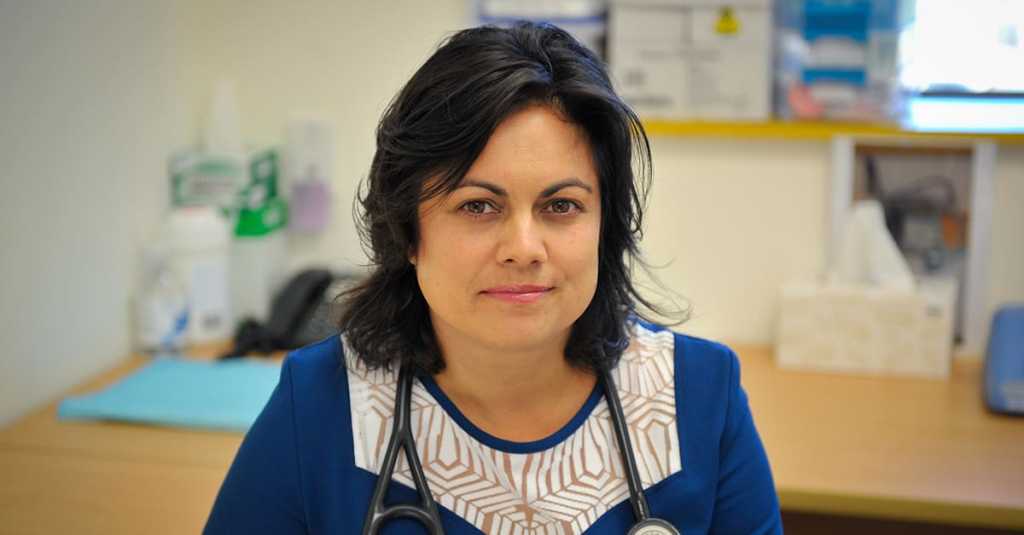
No pressure Dr Verrall!
This will require political leadership to address. The timing could not be better with a new health minister appointed today. An infectious diseases medical specialist, Dr Ayesha Verrall brings with her strong intellect and understanding on how the health system works.
Providing she is allowed, no one has the political leadership to make the change in direction we advocate happen. Verrall has made impressive gains as associate health minister and does not have the closed mind rigidity of her immediate predecessor.
At the very least she will go some way to reduce the toxic anger among many health professionals to the government over its protracted neglect of the pressures on the health system.
In contrast to Andrew Little, Ayesha Verrall, would not purport to know more about intensive care pandemic capacity and capabilities than intensive care specialists or nurses.
Ian Powell was Executive Director of the Association of Salaried Medical Specialists, the professional union representing senior doctors and dentists in New Zealand, for over 30 years, until December 2019. He is now a health systems, labour market, and political commentator living in the small river estuary community of Otaihanga (the place by the tide). First published at Otaihanga Second Opinion


Doctor,doctor,grasp,care.
We advocate a culture based on high engagement through distributed leadership.Is that what David Meates was trying to do? It sounds good so I hope it can be advanced further.
Have passed this past the ‘DHB’ analyst – they agreed with what you’ve sent, Dr Powell. Hopefully this will be read thoughtfully by the respective powers. I would say it would worth checking the longterm forecast produced by members of the Midcentral DHB analytics department to get real support for your ideas.
Thanks Ian and Heather. Really trust your take on this.
Little was the worst ever health minister. Anyone at all would be an improvement
No, Coleman was the worst bar none. He then did a runner when things got a little hard.
There should be a union campaign to ‘Save Our Hospital Boards’. It is bad enough that the Labour Party would abolish elections without a referendum, but there is now a real risk of the new National Public Health Service being sold off under a future government.
We already have Sir Keir Starmer promoting further privatisation of parts of the NHS. If you take that idea to its logical conclusion, it ends with everything being sold off, and the government instead handing money directly to health insurance companies.
The 1935 reforms delivered free primary care clinics, free hospital visits, free medications and hospitals in every regional area. All political parties are now intent on ensuring this never happens again.
The multinational healthcare companies are circling, clutching their bags full of political donations. Be warned.
No-one would buy the national health system. Maybe some of the better buildings and equipment would be snapped-up, but if the private sector had to buy the massive problems and the responsibility they wouldn’t touch it with a barge pole.
And they don’t need to. Health care is already private in NZ. The money-making parts along with those who can afford to buy them are already privatised. Only those who can’t afford timely, orderly, well-staffed private care are forced to rely on the public system (outside of expensive emergency\icu services).
Successive governments have turned the public health into training centres. Once fully trained and accredited, health professionals have the chance to go overseas or to join the private sector. There is a degree of dedication amongst some exceptional workers who choose to stay where they are most needed that is truly inspiring.
The frustration, stress, complexity and hellishly-overstretched nature of these training centres, along with the degree of suffering and need in those who are forced to depend on them, would drive a lot of staff burn-out.
I wish it didn’t take personal tragedy for some to see just how terrible we have allowed this situation to become. The under-resourcing is a major cause of needless death and disability and has been for a long time.
@what-now:
Presumably the goal is to force everybody to receive healthcare via a private insurance company, which would then book everything at private hospitals and clinics.
The insurance companies might lobby the government to introduce a sort of ‘universal Medicaid’, where public hospitals would be replaced by a shoddy private insurance plan — paid for with a means-tested government grant.
The C.E.O. of N.I.B. has already called for this to happen.
The neoliberals would then simply sell off the public hospital buildings and everything inside them.
The transnational healthcare companies would make a killing: every citizen would be forced to be their customer, and they would own everything.
“Health systems by their very nature are labour intensive. Aotearoa’s health system is being savaged by the extent of the severe shortages among all health professionals. It is beyond being in a state of crisis, including widespread workforce burnout, leading to many patients unfairly and unnecessarily being denied access to the healthcare that they need.”
Indeed true, and is the result of utterly ineffectual work done by Mr Powell’s leadership ASMS, the world’s most useless union.
And what causes those staff shortages? Rampant immigration without investment in increasing staff numbers. The result of Nationals 9 years immigration ponzi scheme.
Interesting Cuba one of the poorest countries produces Doctor’s like they are going out of fashion.
They even supply Doctor’s to Third World Countries on a humanitarian basis.
The Medical Council in NZ do not want too maany Doctor’s as their fees will drop.
Yes. One would hope that an actual medical professional made Minister will be a positive thing. My criticism of Ian Powell is his general unwillingness to address the dialectic of public and private health care–Doctors at the DHB in the AM for a few consults, off to private in the old Porsche Cayenne in the PM for some cake walk surgery. Jingle tills.
My partner battled for several years to get a hip replacement, not helped by being in the midst of COVID of course, finally by changing GP she got heard and scheduled. Lovely Canadian surgeon, got the drift immediately that this woman needed to keep working. 3 months. Within a day a booking clerk intervened and said 12 months. Partner leveraged the Surgeon against the Admins and op was indeed done in 3 months!
The interesting thing was the procedure was done in a private hospital, the Whangārei DHB had contracted out a “job lot” of a 100 plus “hips” to Kensington.
Across the political spectrum in NZ we want the best health system that we can afford. But in order to afford this health system we need the revenue to pay for it. This implies encouraging economic growth and successful entrepreneurialism. All those “rich pricks” owning businesses and running private enterprises pay the lion’s share of the taxes. Accept that fact Ian, and you’re eligible to join ACT with me. 😉
Andrew, I believe it is the wage and salary earners who pay the most tax, and they definitely don’t get tax write-offs like your ‘rich pricks’ (your words, not mine). Maybe someone who knows the ‘facts’ could verify where most of the tax revenue comes from, and who pays the biggest portion of their ‘real’ income.
spot on.
GST ?
Yes Ngungukai. A very interesting appraisal of the effects of gst by Stephen Minto today (16 Feb). All designed to take a greatsr % of income from the lower payed.