
GUEST BLOG: Ian Powell – ‘If you don’t have hope, you can’t have a strategy’
16 September was a particularly enjoyable day for me, including cognitively. I visited Palmerston North Hospital.
My visit included two separate catch-ups (and good coffee). Both were informative and insightful.
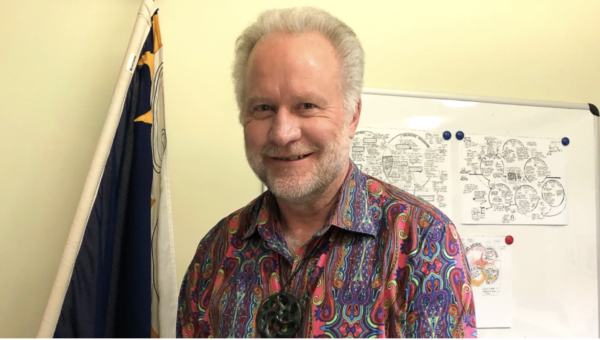
The first was with a senior paediatrician and former long-serving President of the Association of Salaried Medical Specialists (ASMS). Few doctors have fought as hard as him to protect and promote Aotearoa New Zealand’s public health system.
The second was with Dr Curtis Walker, a renal physician and a former Chair of the Medical Council (as well as a sacked member of the Health New Zealand board, arguably a badge of honour, and former President of the Resident Doctors Association).
Taking the temperature and passing wind
However, the prime purpose of my visit was to give a presentation to the Palmerston North Post-Graduate Society on New Zealand’s health system.
The title could not have been blunter (at least without an expletive deletive): How did we get into this crap and can we get out of it? What follows is an outline, and expansion on, rather than verbatim report of my presentation.
I began by asking the audience to hold on to two initial observations. The first was “If you don’t take the temperature, you won’t find the fever” by Samuel Sheen (a pen name for an eminent American psychiatrist).
The second was a description a few years ago by an anaesthetist (not in Palmerston North) who graphically describer her then chief executive as “All fart and no shit.”
Historical structural changes
I then briefly outlined the structural changes that had occurred since New Zealand first legislated for its universal public health system in 1938.
It began with hospital boards running public hospitals leaving the then Department of Health responsible for primary care.
This structure lasted for 45 years until 1983 when, over the following six years and with bipartisan parliamentary support, area health boards were gradually introduced to replace hospital boards and also assume the population health responsibilities of the then health department.
Over time area health boards were also to become more involved in primary care; in effect, a precursor of district health boards (DHBs).

Profiteering out of health part of an ideological agenda in 1990s
However, area health boards proved to be short-lived. In a major ideological shift towards health becoming a commodity rather than public good, they were replaced by crown health enterprises (CHEs).
Established in 1993, these were state-owned companies running public hospitals who were required to compete with each other and also the private sector.
This was a major departure from the universal health system first introduced in 1938; it was a shift from being underpinned by cooperation to instead by market competition.
However, this retrogressive restructuring was too internally contradictory at its core and too unpopular with both health professionals and the public to survive. In 2001 cooperation as the driver returned with the formation of district health boards.
DHBs picked up from where area health boards left off. The legislative structural divide between community and hospital was removed as DHBs became responsible for ensuring the provision of healthcare for their geographically defined populations.
Further, DHBs were required to enhance the integration of care provided in their communities and that was provided in their public hospitals.
This structure continued for over two decades although increasing central government control of DHBs accentuated during the second with a changing leadership culture reinforced by relative underfunding.
In July 2022 the health system was turned on its head with DHBs replaced by a new national bureaucracy, Health New Zealand (Te Whatu Ora). This new body also assumed the health service funding and planning functions of the Ministry of Health.
Bye, bye subsidiarity
From 1938 to 2022 Aotearoa’s health system had been underpinned by a basic but profound principle called subsidiarity. Reduced to its critical essence it means that things should be done locally except when they are best done centrally.
It is the same principle that underpins the relationship between central and local government in many countries, including New Zealand. It also underpins the relationship between the European Union and its member nations.
What it means for our health system is that because healthcare is overwhelmingly provided locally largely through general practices and district hospitals, a significant level of decision-making should reside at this level. This was the case from hospital boards to DHBs.
This did not mean that New Zealand had a decentralised health system. With the both overt and covert powers of health ministers and central government, it was one of the more centralised universal health systems internationally, including the National Health Service in the United Kingdom.
However, this reality did not prevent subsidiarity from being abandoned. The abolition of DHBs and the formation of the vertically centralist Health New Zealand meant the removal of the level of decision-making where it was most needed (locally) and its transfer ‘upstairs’.
In my view there have been two situations when the principles behind the establishment of New Zealand’s universal public health system were abandoned.
The first was the then National government’s undemocratic failed attempt to replace cooperation as the driver of the health system with competition.
The second was the previous Labour’s undemocratic decision to replace the wisdom of subsidiarity with the arbitrary bureaucratism of vertical centralism.
Getting into the crap
When Labour became the government in 2017 (in coalition with New Zealand First and the Greens) it inherited a health system in crisis.
It was characterised by rising acute patient demand, some public hospitals reporting 100% occupancy leading to bed blocking, and over-stretched busy emergency departments dealing with more higher complexity patients.
Both compounding and contributing to this crisis were severe workforce shortages that had begun with hospital specialists but extended across all the health professional groups.
Among the most critical factors behind this inherited crisis were the following:
- overall health demand was rising from the early to mid-2010s;
- acute (should not be deferred) patient demand was increasing at a higher rate than population growth (this was behind hospitals reporting 100% occupancy and bed blocking as well as the prime common factor behind rising DHB deficits from the mid-2000s);
- the combination of increasing population, ageing, and increasing poverty-related illness; and
- an absence of specific workforce recruitment and retention strategies.
Enter David Clark
David Clark was Prime Minister Jacinda Ardern’s first health minister. Likeable, genuine and intelligent, he also did not have a political bone in his body. To begin with, however, he was like a welcome breath of fresh air.

David Clark: from a breath of fresh air to Pontius Pilate
Addressing the inherited crisis required his leadership in order to respond to the pressures on the health system. Unfortunately Clark preferred the dismissive advice of his Director-General of Health, Ashley Bloomfield.
This led him to ignore the need to both address workforce shortages and improve the health system’s leadership culture (that is, transition from managerialism to distributed clinical leadership).
In my final year of representing ASMS (2019), frustration over this critical neglect led me to publicly observe that the minister was looking to Pontius Pilate as his role model.
Heather Simpson review
In what was potentially a good initiative David Clark did establish a review of the health and disability system led by Heather Simpson.
While there was a good argument for his decision unfortunately it became a pretext for not addressing Clark’s inherited crisis.

Heather Simpson chaired the review of the health and disability system
Her review in summary affirmed that:
- Although reduced in number, DHBs would remain critical statutory bodies.
- There was a serious lack of national cohesion in the health system.
- The Health Ministry’s funding and planning responsibilities should be transferred to a new national bureaucracy, Health New Zealand.
- Instead of the Health Ministry, Health New Zealand would sit directly above the DHBs.
- New smaller population-based localities should be established that would eventually replace the Primary Health Organisations.
I had some serious concerns over the review’s final report published in mid-2020 although I was more positive about its interim report the previous year which canvassed the pressures on the health system.
On 23 February 2021 the Democracy Project published my article expressing concerns that the Simpson review put structural change before cultural change when it should be the other way round: Rescuing Simpson from Simpson.
Subsequently, on 4 March 2021, in Otaihanga Second Opinion, I further discussed my reservations: Reservations about Simpson review.
Enter Andrew Little
The Labour Party went into the 2020 general election committed, if re-elected, to implementing the principles of the Simpson review which included continuing with DHBs. After the election its former leader Andrew Little was appointed health minister.
Little can best be described as a linear thinker who distrusted those with practical health system experience, particularly in leadership positions.
Instead he preferred the advice of business consultants. Making things worse, he would only listen to those who told him what he wanted to hear.
As Minister of Justice (2017-20) he had accepted the advice of his officials to fragment the small but effective national forensic pathology service believing that he knew more about the service than the forensic pathologists working within it.
He continued this trait as health minister. During the height of the pandemic response he believed he knew more about intensive care capacity and capability than specialist intensivists.
Consequently it was consistent for him to believe that he knew more about health systems than those who knew about health systems and that was okay to restructure the funding and provision of healthcare in the midst of a pandemic.
Bye, bye Simpson review
While Labour had promised in the 2020 election campaign to implement the principles of the Simpson review, as part of Prime Minister Jacinda Ardern’s ‘kitchen cabinet’, Andrew Little abandoned it as a consequence of the restructure he announced in April 2021.

Andrew Little: the damage a linear thinking health minister can do
In particular he:
- Abandoned the principle of subsidiarity that had underpinned our health system since 1938 with the disestablishment of the DHBs. There had been no public discussion of this prior to his announcement.
- Radically changed the role of the recommended Health New Zealand by requiring it to also assume operational responsibility for local healthcare delivery. This was despite the fact that there is no universal health system, at least in countries the size of or bigger than New Zealand, of a single national statutory body being solely responsible for all of healthcare provision.
- Replaced the Simpson review emphasis on cohesion with a de facto ‘control and command culture’ by means of structural change.
- Reduced the influence of the proposed localities to little more than centrally controlled geographic maps.
Thickening the crap: from 2017 to 2023
Beginning with Helen Clark, there have been 15 health ministers (excluding the incumbent) since I became involved in the health system in 1989. Of these two have had a destructive influence that left the health system in a much worse position than they inherited.

Simon Upton: one of the two most destructive health ministers since 1989
The first was National’s Simon Upton who was responsible for the destructive endeavour to run the health system on market forces.
Although intelligent and genial, this was driven by an ideological belief in abstract theory rather than operational pragmatism.
The second was Andrew Little. But there was no ideology or abstract theory involved. Instead it was the consequence of a limiting linear approach to a highly complex system.
By 2023 the net effect was that the crap the health system now found itself in was much deeper and thicker than in 2017. In particular:
- many more hospitals were reporting 100% occupancy. In 2022 this occurred more than 600 times (a rough daily average of two hospitals);
- severe workforce shortages continued and became entrenched;
- overcrowding in emergency departments had worsened;
- a command-and-control culture (vertical managerialism} prevailed;
- there was a significant loss of operational experience in how the health system works, particularly public hospitals which, because of the extra complexity and acuity they have to deal with, is where most things can go wrong and cost more; and
- Health New Zealand was operationally dysfunctional with continuing internal restructuring, disempowerment at the workplace level, and confused accountabilities.
Upton and Little shared another commonality. Both had the health portfolio taken off them after only around two years by their respective prime ministers.
The unpopularity of the ‘reforms’ both advocated and unsuccessfully endeavoured to implement had become too much of a political liability.
Enter Shane Reti
Northland GP and former DHB board member (ironically appointed by former Labour health ministers) Dr Shane Reti in different circumstances might have shaped up as a good health minister. Unfortunately that opportunity has been denied.

Health Minister Dr Shane Reti: different circumstances but similarities with David Clark
However, as with David Clark, he was likeable, genuine and intelligent. Both also lacked the necessary political antenna required for the position.
Also, unlike Clark and for reasons beyond his control, Reti did not have the opportunity to be a welcome breath of fresh air, even briefly.
The huge ‘dead rat’ he was forced to swallow over the reprehensible decision to repeal the country’s world-leading tobacco control legislation quickly put pay to that.
Again, unlike Clark, and also previous health ministers in the same situation, he was not in a new incoming government that had the traditional post-election ‘political honeymoon’ with the electorate.
A further difficulty is that the health minister is not in his prime minister’s inner circle. This was also the case with David Clark but for Reti it is more difficult. To begin with, unlike Clark, Reti’s personality is starkly opposite to that of his prime minister.
This is what makes the appointment of Lester Levy first as Chair of the Te Whatu Ora board and then subsequently Commissioner so revealing.
The appointment process for the previous Chairs (Rob Campbell and Karen Poutasi) had been the responsibility of the health minister’s office.

Then health minister Dr Ayesha Verrall’s instincts and insights told her not to appoint Lester Levy as HNZ Chair in 2023
Levy had been a contender for Poutasi’s position in 2023 but the combination of health minister Dr Ayesha Verrall’s political antenna and deep concern from within the health system meant that did not eventuate.
On this occasion, however, the health minister was marginalised with the appointment process being handed by the Prime Minister’s department. Levy is in Chris Luxon’s ‘inner circle’ and there is strong personality compatibility.
In anticipation of Levy’s appointment as the Chair I canvassed the implications and context in a 14 May Newsroom opinion piece: The politics behind pending HNZ Chair position.
I also posted on the issues in Otaihanga Second Opinion (26 May): Health boss appointment could define leadership credibility and direction. This post also included links to my published writings on Levy’s earlier controversial health system involvement.
Shane Reti did, however, know enough about the health system to realise how destructive vertically centralising an already highly centralised system would be.
Constantly, when in opposition he correctly concluded that a level of devolved decision-making was required.
His approach was to devolve to a regional rather than a district level which, of itself, would be an improvement. Over time the former might sensibly evolve from the former to the latter.
However, this would only work if the prevailing leadership culture was in tune with how health systems best work.
To date, there has been no evidence that there is awareness within the government of this. All the evidence is that the culture is going in the opposite direction.
Enter Lester Levy
The Government has blamed the increased centralisation of the health system by the former Labour government for Health New Zealand’s financial performance.
There is some truth in this claim but underfunding by the current government has also contributed.

Prime Minister Chris Luxon attributes Messiah-like qualities to Commissioner
Its solution is the appointment of Lester Levy as Commissioner to replace the Board. Prime Minister Chris Luxon in particular has attributed Messiah-like qualities to him; he has not sought to disabuse this attribution.

Kathryn Ryan interview on Commissioner appointment
I have discussed this appointment in an interview with Kathryn Ryan on Radio New Zealand’s Nine to Noon programme (23 July): One man now in charge.
Three days later Newsroom published my opinion piece on the subject, including Levy’s background: All powerful feudal baron of $28b fiefdom.
Lester Levy highlights the fact that he is a medical doctor in terms of his skillset for the Commissioner position. However, his medical career is limited.
He achieved his medical degree in South Africa before coming to New Zealand in 1978 where, after some further medical training, he soon migrated into health management.
He is vocationally registered with the Medical Council but not in a branch of medicine involving treatment, diagnosis or population health. Instead his registration is medical administration and somewhat unusually, as late as 2021.

Lester Levy: a controversial health system past
In my Palmerston North presentation I focussed on his impact as the Chair of the Waitemata, Auckland and Counties Manukau DHBs.
He asserted that all three were a mess and that he was the solution. Of one thing we can all be certain, he does not suffer from a self-confidence deficit.
I also discussed his position as Deputy Chair of Health Benefits Ltd (HBL) which was established in 2010 and tasked with achieving $700 million in administrative savings for reinvestment in health.
However, by mid-2014 only $71 million savings were achieved. HBL’s performance was also severely criticised in an Auditor-General report. It was disestablished in late 2015.
His appointment as crown monitor at the former Canterbury DHB. He played an important role, along with the Ministry of Health leadership and EY business consultants, in destroying the pro-active engagement culture of what had been a well-performing and world-leading DHB.
This included an incredulous and false claim that the DHB was financially mismanaged because it employed too many nurses!
Wrong diagnosis
The diagnosis of the health system, according to the two ‘soulmates’ Prime Minister Luxon and Commissioner Levy is that:
- the biggest crisis is Health New Zealand not keeping to budget;
- the cause of this crisis is bloated bureaucracy (so-called back office functions); and
- the Commissioner will find the solutions.
Over the 12 months the Commissioner will both reduce hospital waiting times and make $1.4 billion savings. All this will be done without any negative effect on both the clinical frontline and patient care.
As I advised the Palmerston North meeting, words like ‘flying’ and ‘pigs’ come to mind.
Crux of the problem
This led me to observe that with two different incoming governments in 2017 and 2023, was history repeating itself or just rhyming a lot (both observations have a lot going for them in my view.
From 2017 Labour focussed on restructuring rather than addressing the pressures on health system (widespread workforce shortages, rising acute demand and poor leadership culture)
Since 2023 the National led government has focussed on keeping spending within government set budget and replacing the Health New Zealand board with a Commissioner rather than addressing the above continuing pressures on the health system.
Spot the difference?
The crux of the problem confronting Aotearoa’s health system is the failure to recognise the need to reconciling two health system complexities – the complexity of healthcare provision and the complexity of healthcare structures.
The more these complexities are aligned, the better the health system performs and the better for patients and the health workforce. The less they are aligned, the more the counterfactual.
Going back to my two initial observations, this misalignment failure is due to:
- The inability to find the fever because of the failure to take the temperature.
- Far too much fart.
Getting out of the crap
In discussing how to getting the health system out of the crap, I commended a joint paper from my political opposite Heather Roy and I to Te Whatu Ora in January 2023.

My political opposite Heather Roy and I propose how to get out of the crap
I discussed this in Otaihanga Second Opinion at the time (31 January 2023) which included a link to the paper: If you don’t take the temperature you can’t find a fever.
In summary we advocated:
- As a starting point adapting patient-centred care to a systems approach.
- Incorporating the subsidiarity principle into the structures [this is much more than creating four regional deputy chief executive positions; see my Newstalk ZBMike Hoskings interview on 1 August: Culture changes are what are needed.]
- Strengthening the integration of healthcare, including health pathways between communities and hospitals.
- Culture change through distributed clinical leadership.
- Specific occupational group strategies to address workforce shortages.
- Addressing, including mitigating, the external social determinants of health through legislation and government policies.
- Ensuring that major capital works are both clinically and environmentally led as well as future proofed.
The way forward I proposed in Palmerston North involved:
- empowering regions and districts;
- empowering the workforce;
- giving clinical networks oxygen rather than bureaucratically constrained;
- enhancing the role of local government in healthcare access;
- developing local integrated care systems, including polyclinics providing community and non-acute hospital care; and
- recognising that Primary Care Organisations are the glue that holds primary care together.
Hope and strategy

Wise words from Noam Chomsky
Famous American linguist and public intellectual Noam Chomsky once said that if you don’t have hope, you can’t have a strategy. Our health system needs a strategy to get out of the crap for which hope is the prerequisite.
My father once said to me that if you want to impress people say something and attribute it to Mark Twain because no one will ever know. So I say that Twain would say that Chomsky is right.

Helping hope and strategy a little
Dad also said that the cup is almost always half full rather than it is half empty. But when it isn’t just add a drop of whiskey in it; just a drop mind you.
Ian Powell was Executive Director of the Association of Salaried Medical Specialists, the professional union representing senior doctors and dentists in New Zealand, for over 30 years, until December 2019. He is now a health systems, labour market, and political commentator living in the small river estuary community of Otaihanga (the place by the tide). First published at Otaihanga Second Opinion


Interesting and detailed article on NZ’s public health system but it is missing a big piece of the picture. NZ has a strong and profitable private health sector and NZ governments walk a careful line on funding and public health provision to ensure they do not have a detrimental effect on profitability. In this scenario artificial scarcity is a necessity – much as we saw with the NZ’s power generation companies recently – profits require that the real world capacity a sector must be avoided. Artificially created scarcity prevails and is essential to a free market model.
It would be easy to argue – by looking at NZ health system as a whole – that since the 90’s NZ governments have deliberately and consciously placed the private sector at the center of health policy. Though this is never stated explicitly the evidence is there to see but discussing the private health sector is off limits in NZ.
I asked Chat GPT this question: “Will current government funding levels of the public health system help to drive uptake of private health insurance and private medical procedures?”
Answer: Current government funding levels in New Zealand’s public health system are likely to influence the uptake of private health insurance and private medical procedures. Here’s how:
1. Strains on Public Healthcare
The public health system in New Zealand is under pressure due to limited funding, staffing shortages, and growing demand, particularly as the population ages. This has led to longer waiting times for elective surgeries and non-urgent care, making private healthcare an attractive alternative for those who can afford it
FSC NEWS
IBISWORLD
2. Impact on Private Health Insurance
Limited public funding and stretched resources tend to drive more people towards private health insurance to gain quicker access to healthcare services. Insurers have reported steady growth in policy uptake, as individuals seek to bypass public system delays. This trend is fueled by middle- to high-income earners looking for more immediate treatment options
DISFOLD
FSC NEWS
3. Private Medical Procedures
With ongoing budget constraints and challenges in expanding public healthcare capacity, private hospitals and clinics continue to play a crucial role in filling the gap. This is especially true for elective surgeries and specialized treatments that are less accessible through the public system due to prioritization of urgent cases. As public system funding struggles to keep pace with healthcare demands, private providers benefit from increased patient volumes
IBISWORLD
4. Policy Influence
Any future changes in government policy that increase public health spending could potentially moderate this trend by improving public sector capacity. Conversely, if funding remains constrained, reliance on private insurance and procedures is likely to grow further.
In summary, current levels of public health system funding, combined with rising demand and resource challenges, are pushing more people towards private healthcare options to secure faster and more comprehensive services. This trend supports continued growth in private health insurance and private medical services.
Thanks Chat.
To assume that the current government is pursuing policies to improve the public health system is wrong. I believe the intention of this government is to constrain and reduce public health provision in order to grow the private health sector. I think that’s very obvious if you’re willing to look and follow the money.
Great piece, thank you.
Very interesting commentary.
I believe though Ian that you were very kind to Tony Ryall and Jonathan Coleman by not mentioning their undoubted contribution to this mess.
As a former “Manager” in the senior echelon of a large corporate I know the danger of those who know better than the ones who do the work.
A simile would be the local councillors who develop a building code. Cost overtakes sense and resilience.
Sadly we are in a race to the bottom which is way deeper down than we think .Our best days of universal health are a distant memory as we have not kept up with population growth .Levy will not fix the situation as he is to focused on cost not actually making the massive investment we now need to deal with the looming 6 million population which will be here sooner than we think.