
GUEST BLOG: Ian Powell – DHBs: “Nice little earners” for EY
On 5 May Newsroom published a revealing article by investigative journalist David Williams on the rapid increase of income earned by EY business consultants (formerly known as Ernst & Young) from Aotearoa New Zealand’s district health boards: Rise and rise of EY in DHBs.
This conjured up for me an image of the British comedy-drama Minder (11 series from 1979 to 1994) set in the London criminal underworld. It was a send-up of the ‘get rich quick’ culture of Margaret Thatcher’s 1980s. At its peak Minder was one of ITV’s most watched shows.
The quality co-stars were George Cole playing the role of con artist Arthur Daley and the recently deceased Dennis Waterman playing Daley’s minder, Terry McCann. Daley, in particular, had several memorable lines such as “my life is a lobster”.
But arguably his most memorable was “nice little earners” which he spent his ‘career’ chasing.

Arthur Daley’s working life involved chasing “nice little earners”
EY’s accelerating DHB earnings
Williams’ article was based on Official Information Act enquiries covering the financial years ended 30 June 2014 to 2021. In 2014 EY received $329,000 for consultancy services. Over the full eight years it received $13,813,193.
Over this period, particularly since August 2015, EY moved from being a relatively small-bit player in DHBs to becoming their ‘business consultants of choice’. One can, however, argue the toss about the extent of choice.

Newsroom investigation journalist David Williams reveals EY’s evolution to becoming the DHBs’ business consultants of ‘choice’
EY’s breakthrough began in the 2015-16 financial year when it earned $843,863 (a 191% increase on the previous financial year). This was followed by a huge acceleration in 2017 when EY’s earnings rocketed up to $2,194,970. Its biggest annual earnings from DHBs over the eight years was $3,124,000 in 2019.
Other “nice little earners”
Williams’ data excludes EY’s income from DHBs for its work calculating the remediation of the misapplication of the Holidays to DHB employees working after-hours and on public holidays. This was an economy-wide issue but more pronounced in DHBs because of their need to operate 24/7 for acute and emergency care and they were big employers.
This work began in 2019 and is ongoing. EY’s earnings to date from remediation is unknown but certain to be very lucrative. Engaging external help did make sense. For understandable reasons DHBs lacked the internal capacity to undertake such a massive undertaking as this unprecedented highly technical work.
But it does raise the question why choose EY when there were other alternatives? This work began in the three Auckland DHBs where EY’s influence was greatest and quickly spread nationally.
Did EY senior partner Stephen McKernan’s previous profile or appointment as acting director-general of health from late December 2017 until Ashley Bloomfield assume the role in June 2018 give EY an unconsciousness or conscious advantage? Whether it did or not, remediation is another nice little earner.
But this is not the end of the “nice little earners”. In 2020 the Government established within the Prime Minister’s department a special unit whose purpose was to manage the transition to its new restructured health system on 1 July.
There was desperation to appoint McKernan to lead the unit leading to two direct informal approaches from Jacinda Ardern to him. Consequently he had leverage to require some conditions to be met before accepting the position; they were met.
One was that he report directly to the Prime Minister rather than to Heather Simpson who had chaired the earlier review of the health and disability system. This helps clarify the secretive decision to abolish DHBs announced in April 2021 (Simpson had recommended DHBs continue but reduced numbers).
Another was that he would not be required to temporarily relinquish his position as EY senior partner (he had done this when appointed acting director-general in December 2017). This suggests a surprisingly brazen approach to even the perception of conflict of interest.
Probing parliamentary questions from National Party health spokesperson Dr Shane Reti have revealed that EY was paid or owed $5.7 million by McKernan’s influential transition unit for work to the end of August 2021. It is likely that this amount excluded McKernan’s salary as the unit’s director).
I have critically discussed the performance of McKernan’s unit in my previous Otaihanga Second Opinion post: I’m sorry I haven’t got a clue.
Relationships and connections
Health systems are highly labour intensive which contributes to the importance of relationships and connections. External business consultants depend on them in order to do well in the system. This is more so in a small country like New Zealand.
In understanding EY’s expanding penetration into the health system, including DHBs, one has to go back to its absorption of Health Partners Consulting Ltd (HPC) in August 2015. This proved to be critical for EY’s rapid penetration into consulting for DHBs.
HPC’s managing partner was Stephen McKernan who, until 2009, had been Director-General of Health. Before this he had been chief executive of two DHBs (first Hutt Valley and then Counties Manukau). It is generally recognised that he performed all these roles well.
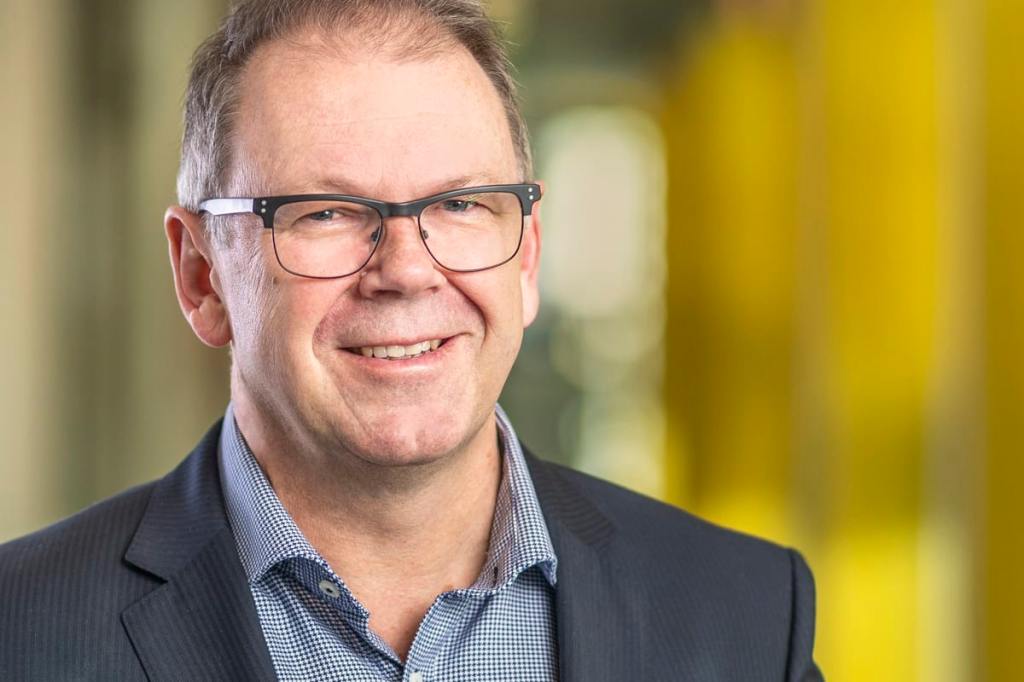
Stephen McKernan: from DHB chief executive to Director-General to Health Partners managing director to EY senior partner (plus now director of Government’s health restructuring transition unit)
But HPC was not just McKernan. Also central to it was his longstanding side-kick Chris Mules. In the mid-1990s, when public hospitals were required to operate as competing businesses, Mules was the chief executive of what was then known as the Midland Regional Health Authority straddling the middle North Island including Waikato and Bay of Plenty.
Midland was one of four regional authorities set up in 1993 to competitively purchase health services from the public and private sector. They lasted little over three years before being merged into a new national authority. But Mules’ position helped ensure that he was well connected, including with one Lester Levy who was strongly promoting running hospitals as competing businesses.
Subsequently Mules followed McKernan to Counties Manukau DHB to become an influential second tier senior manager and then into the Health Ministry into another influential role. He then followed McKernan with a lead role in the newly established HPC. HPC was not a big player in Aotearoa’s health system because of its relative small size but, with two well-connected leaders, it still did well financially.

Chris Mules: McKernan’s influential sidekick
Much of HPC’s work was understood to be in Waitemata and Auckland where Lester Levy was now chair of both DHBs. While McKernan was well-known to be dismissive of Levy, Mules’ previous connection with the latter would have been helpful.
Interestingly Counties Manukau DHB resolved not to engage HPC because of perceived conflict of interest given McKernan and Mules’ previous leadership involvement (this about optics rather than a reflection on the individuals).
EY itself was not a big player in DHBs prior to its takeover of HPC in August 2015. In the financial year ended 30 June 2015, EY earned $290,106. But this increased to $843,863 in 2016 with 2017 the first of the bumper years.
Identifying patterns
Williams identifies a pattern when he states that those “…now steering the revamped health system hail from some of the DHBs that used EY the most.’ Specifically he identifies former Counties Manukau chief executive Fepulea’l Margie Apa (HNZ chief executive), outgoing Counties Manukau chair Vui Mark Gosche (HNZ interim board), and former Bay of Plenty chair Sharon Shea (interim co-chair of the Māori Health Authority.
There are other interesting patterns that can also be identified from the data he collected beginning in the three Auckland DHBs – Waitemata, Auckland and Counties Manukau.
Significantly Lester Levy was Chair of all three DHBs at different but overlapping times, beginning with Waitemata. Being deputy chair of the then powerful Health Benefits Ltd responsible for rationalising so-called back office functions reinforced his influence.
In each of the DHBs, within the first year of Levy’s appointment as Chair, the incumbent chief executives departed. As Chair Levy was instrumental in both the departures and selecting their replacements.
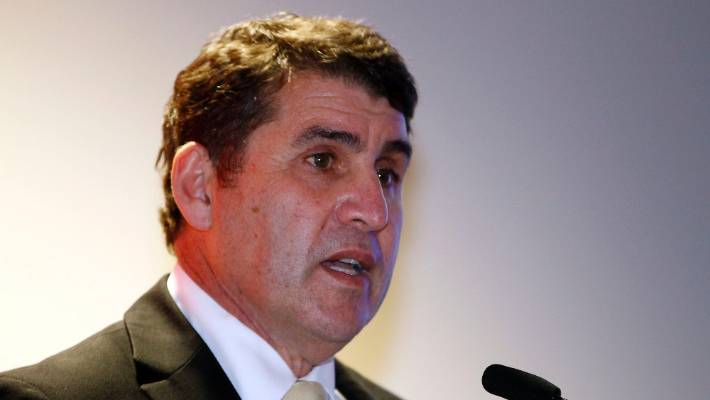
Lester Levy: powerful figure in the three Auckland DHBs where EY’s penetration was the greatest and subsequently crown monitor at Canterbury DHB aligning with EY
Under Levy as the DHB’s Chair, and following its absorption of HPC in 2015, EY’s penetration into Waitemata began. For the years 2015 and 2016 EY earned a total of $56,000 from Waitemata. This may have been a carry-over of work by HPC. In 2017 EY received no income. But the cash register really got into overdrive in 2018 with earnings of $319,000. By 30 June 2021 Waitemata had spent a total of $1,041,000 on EY.
Auckland DHB, again with Levy as Chair, was the next to follow earning EY $118,517 in 2017 (compared with zero the previous year) followed by escalating amounts (2019 was the best year for EY earning $425,578). By 30 June 2021 Auckland had spent a total of $978,886 on EY.
Levy was appointed Counties Manukau Chair in November 2016. He vacated the role in early 2018 but his impact continued. EY broke the Counties Manukau drought in the financial year ended 30 June 2017 earning $448,000 followed by $499,000 the following financial year ($53,000 short of a remarkable million dollars in the first two years).
In the following three years EY earned nearly three quarters of a million dollars in each of the first two and over quarter of a million in the third. From 2017 to 2021 the DHB had paid $2,684,000 to EY (averaging over half a million dollars a year); the highest of all the 20 DHBs.
David Williams has highlighted EY’s large earnings in Counties Manukau and the appointment of its chief executive Margie Apa as the new HNZ chief executive. Apa became the DHB’s chief executive in July 2018 so her responsibility would have only impacted on the last three years. Although EY’s earnings were very high during these years, some of these decisions are likely to have been made before she became chief executive.
Nevertheless the correlation is uncomfortable. Apa also has a long respectful professional association with McKernan from when she previously worked for at Counties Manukau in the early 2000s to when she became one of his deputy directors-general leading the health ministry.
On the other hand, I have known her for many years. She has impressed me with both her integrity and capabilities. Had I been making the HNZ chief executive appointment I would have definitely had her on the final shortlist and may well have appointed her.
Further, since becoming HNZ chief executive she has been quite prepared to firmly disagree with McKernan on important matters. To the extent there may be a linkage to her and EY’s later earnings at her DHB, it is more likely to be unconscious familiarity. Nevertheless I retain some discomfort.
Other patterns
Waikato DHB is an interesting revenue stream. Commencing earlier than the other highlighted DHBs in 2015 when EY earned $149,900, by 30 June 2020 $1,056,954 had been paid by the DHB. The peak earning year was 2018 with $375,594, dramatically falling in the subsequent two years and zero in 2021.
Primarily these earnings occurring during the time Nigel Murray was chief executive. He was a controversial appointment in 2014. He also resigned in controversy over his claiming of expenses in October 2017. EY expenditure quickly reduced and then ended following his departure.
There is nothing to suggest a connection between Murray and EY other than he and McKernan (and Mules) would have known each other reasonably well when both worked in the Auckland region. Further, he was Southland DHB chief executive when McKernan was director-general (and Mules in the ministry).
To the extent there was a connection it was more likely the opportunity provided by Murray, who was prone to using business consultants, knowing McKernan’s capabilities. Nevertheless, given the controversy over Murray’s departure, perhaps not the best look. Murray’s successors wound down the revenue stream until it disappeared.
But Waikato has a relevance to another “nice little earner” – Bay of Plenty DHB – where EY, in 2017 had a breakthrough earning $345,541. In 2021 it earned $511,964, the highest in all of the five years (over the five years EY was paid $1,520,819 per year; an annual average of just over $300,000).
Per capita Bay of Plenty was the highest paying DHB. Some of this lucrative engagement levered off earlier EY work done in neighbouring Waikato. McKernan’s profile and Mules’ local connections would have also helped.
Canterbury DHB was also financially beneficial for EY, but in murky circumstances. EY was, in effect, imposed on the DHB by the Health Ministry (but still requiring the DHB to pay the bill).
The Ministry was seeking to bring Canterbury into line because its senior management’ higher level of engagement with its health professional staff was bringing the DHB into increasing conflict with the Ministry’s top-down leadership culture.
EY’s earnings began in 2017 at $332,336. In 2021 it earned its highest amount ($361,377). Over these five years EY earned $1,096,033 (nearly $220,000 per annum). The turning point was the appointment of Lester Levy as then health minister David Clark’s crown monitor at Canterbury in 2019.
Levy’s appointment was recommended by Director-General Ashley Bloomfield. But McKernan also played an informal key (perhaps dominant) role. At this time Bloomfield and McKernan were close. The former had worked at a senior level in the health ministry when the latter was director-general. Arguably McKernan was a mentor.
In recent times they have fallen out because of McKernan’s involvement in the downsizing of the Ministry by transferring critical functions to the new HNZ (in 2009 McKernan as director-general had successfully opposed a similar initiative).
Levy’s crown monitor appointment was followed by a new EY report that did a ‘hatchet job’ on the senior management team primarily through the misuse of staffing data, to falsely accuse Canterbury of employing too many nurses. This is discussed further in my article published by the Democracy Project (February 2021): Business consultants commissioned for hatchet jobs.
Correlation or causation
So what does this mean? There is no doubt that since the 2016-17 financial year EY has done extremely well in the health system. The combination of DHBs and the government’s health restructuring have not been “nice little earners”. There has been nothing “little” about them.
In DHBs the Waikato and Bay of Plenty experience is interesting but more due to opportunities and familiarity than anything else. McKernan had been deservedly known as a competent and respected DHB chief executive and director-general.
But connections involving the three Auckland DHBs and subsequently Canterbury raise serious concerns and arguably further investigation.

Correlation and causation
The patterns that emerge from the data collected by David Williams raise the interesting relationship between correlation and causation. Correlation describes an association between variables: when one variable changes, so does the other. It is an indicator.
Causation means that changes in one variable brings about changes in the other; there is a cause-and-effect relationship between variables. The two variables are correlated with each other, and there’s also a causal link between them. Correlation does not necessarily involve causation but the latter includes the former.
Has EY’s huge expansion in New Zealand’s health system been a correlation or causation? Probably a bit of both. Has it been lawful? Yes. Is it a good thing or wise? No. Is it uncomfortable? Yes. Further conclusions are left to the reader.
Ian Powell was Executive Director of the Association of Salaried Medical Specialists, the professional union representing senior doctors and dentists in New Zealand, for over 30 years, until December 2019. He is now a health systems, labour market, and political commentator living in the small river estuary community of Otaihanga (the place by the tide). First published at Otaihanga Second Opinion


Omg I just read the article and followed some of the links in the comments section, back to TDB Home page and I got an advert for these guys: https://www.nzcr.co.nz/about-us/meet-the-team/ ..how much research and consultancy does the health budget actually pay for? are business consultants joining recipients and ‘donors’ as per researchers recommendations? ’tis a pretty gruesome scenario which my paranoia extrapolates but going along the lines of the @countryboy comments I’m not so sure…
nice little earner – nz is a cesspit of incestuous nepotism and cronyism, we let them do it and call it success. a corrupt little shithole at the bottom of the Pacific.
Geoff and Gagarin I would think the management or these DHBs suffer from the same affliction as many so called strategic leaders in the private sector. They basically put themselves out there as the right people to lead an organisation but then abdicate that responsibility to a third party. They basically become glorified procurement officers, its just not consumables they procure it’s brains ( perhaps) and ideas. Maybe that’s harsh but it’s not so off the mark. You know those same consultants who come in and say get rid of these partitions, open plan increases productivity and saves space, and then about five years later say that open plan can be unproductive!
I think this article sums up the whole problem. A significant number of 20 separate boards engaging the services of the same vendor for possibly the same answers. Ok that’s an assumption but I would bet there is significant overlap.
So if EY have been engaged in various forms for a number of DHBs since 2014 what do you do if you are PM or Little? I am not up with the governments tender process but there is an argument if you are looking at reforming the governance of healthcare do you use EY who various DHBs (not the government) management teams have spent a lot of money with already or start from scratch? What would that cost?
It’s the neo-liberal consensus, socialise the losses, privatise the profit.
There are no checks & balances, they pop up as consultants/mangers knowing their way around the Wellington movers & shakers greasing the palms of sympathetic public servants.
It’s how it works dear boy!
Whatever you think of Danyl Mclauchlan or The Spinoff, he sums it up nicely:
“And the modern day public sector is very far from the one Michael Joseph Savage built, or even the walk-shorts and glide time stereotypes of the 1970s. It’s an amalgam of public and private entities: departments and ministries and commissions co-existing with law firms, consultancies, public relations companies, NGOs, corporations and other private sector providers. It’s carefully optimised to redirect vast amounts of public spending into private hands, AND THIS IS A PROBLEM THIS GOVERNMENT STRUGGLES TO CONFRONT.”
In fact it’s now bloody clear Labour in its current form do not WANT to confront it, and haven’t for decades.
Watching Australia’s election coverage, one of the outgoing? Liberal politicians said it was obvious people were now utterly sick iof what he called “the scripted politician” – with the scripts written by consultants and media/PR spin meisters.
I’m not sure where I stand on the reforms. I’ve met medical practioners for and against but I suspect those that are against simply want better management processes and things like standardisation and easier access to IT systems. And of course proper staffing and pay and less burnout. They could probably have it too if less was spent on the bullshit artists.
Same shit across the state sector, just various different stinks.
* oops, I might have meant those that a for the reforms. (Long night)
Guess what, you don’t need 3 task forces to work out why the health waiting list is getting longer.
Add more doctors and nurses (not consultants and ‘medical workers’).
Retain existing doctors and nurses not waste money on international recruitment.
Train record amounts of NZ students into the field by giving them a free education in return they work in NZ hospitals for 10 years.
Yep, it’s not about money, Cuba which is one of the poorest countries trains some of the largest amounts of doctors in the world and has some of the best health care in the world.
100% Save NZ
I agree 100% too.
But that’s too easy for any of the mp’s in any party but then Greens to get their head around.
Just like the Pharmac funding every $ not spent on meds costs the tax payer and the patient in up to $30 in additional costs (Taxpayer health costs $10 and or Patient and welfare social costs $20.
Go figure Kiwi’s just don’t get it.
Like Anderson Consulting auditing Enron
“The failure of Enron in the early 2000’s is one of the largest bankruptcies in US history (with Lehman Brothers in 2008 as the largest). Its accounting scandal led to Enron’s bankruptcy as well as the dissolution of Arthur Andersen, one of the big five accounting firms. Shareholders were wiped out, and tens of thousands of employees left with worthless retirement accounts.
Arthur Andersen’s consulting had Enron as one of their biggest customers (paying $52MM in 2000). Enron kept competitors closeby to threaten Arthur Andersen into validating their deals.
AA staff who grew Enron fees were promoted. Further, Enron hired dozens of Andersen accountants, giving individuals pressure to be seen by Enron as a team player.”
https://www.shortform.com/blog/arthur-andersen-enron/
The DHB’s are now being set up to fail and collapse and the consultants will make even more money!
The DHB’ are being disestablished, not being set up for anything.