
GUEST BLOG: Ian Powell – Class political warfare via employment law

In 1894 the new reforming Liberal government passed the Industrial Conciliation and Arbitration Act.
It was recognised as landmark legislation and contributed to Aotearoa New Zealand’s reputation at the time as a progressive social laboratory. This laboratory also included women’s suffrage and old age pensions.
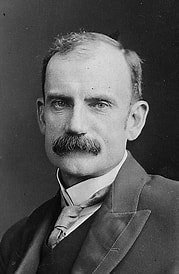
William Pember Reeves: architect of landmark 1894 legislation
The Act recognised that unions and employers were responsible parties in the negotiation of wages and other employment conditions and that there was a power imbalance favouring employers that required a more level playing field.
These principles continued until the National government’s Employment Contracts Act was adopted in 1991. Prior to this these principles of the 1894 act were revised over time, generally for the better.
Prior to 1991 the most radical change came in 1987 with the Labour government’s Labour Relations Act. This legislation replaced the state provided conciliation and arbitration system with stronger support for collective bargaining. As a consequence of the State Sector Act 1988, the scope of the Labour Relations was extended to cover the state sector as well as the private sector.

Bill Birch: National cabinet minister responsible for Employment Contracts Act
The Employment Contracts Act, which replaced it, was influenced by neoliberal ideology. It was based on the assumption that there was no need for a level playing field because there was no power imbalance. Further, there was no recognition of unions in the act.
Understanding the Employment Relations Act
In 2000 the Labour-Alliance government successfully repealed the Employment Contracts Act thereby rejecting its underlying ‘free market’ principles.
This involved returning to the above-mentioned principles of the 1894 Act by replacing the repealed legislation with the Employment Relations Act (ERA). The new act built on but took further the principles of the Labour Relations Act 1987.

Margaret Wilson: Labour cabinet minister responsible for ERA
The express object of the ERA is to:
…build productive employment relationships through the promotion of good faith in all aspects of the employment environment and of the employment relationship.
It does this, again expressly, beginning by introducing for the first time the European based principle of good faith between parties.
Further, in the words of the Act, it is necessary to both acknowledge and address “…the inherent inequality of power in employment relationships”.
Other provisions required to achieve the above-mentioned object include:
- promoting collective bargaining;
- protecting individual choice; and
- promoting mediation as the primary problem-solving mechanism and reducing the need for judicial intervention.
The ERA also requires observance in New Zealand of the principles underlying International Labour Organisation Convention 87 on Freedom of Association and Convention 98 on the Right to Organise and Bargain Collectively.
Hard rightwing-led class warfare
The ERA has remained substantively unchanged since, at least until February 2026, despite some limited undermining by the subsequent National-led government (2008-17).
However, this has radically changed with the Government’s ERA Amendment Bill becoming law in February: 2026 amendment to ERA Act.
The amendment to the ERA is not as extensive as the 1991 Employment Contracts Act which was influenced by neoliberalism.
Employment Relations Amendment Act 2026 based on hard rightwing politics
However, it is shaped by hard rightwing thinking that seeks to increase the vulnerability of workers (employees) including those employed in professional roles such as nurses and senior doctors.
Although different drivers (ideology and blatant undisguised power) the 1991 and 2026 acts do share one common feature.
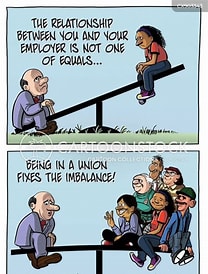
Employer-worker power imbalance inherent in employment relationship
Both pieces of legislation are based on the false premise that there is no inherent power imbalance in the employer-employee relationship. This is oppositional to the principles of employment legislation since 1894, excluding the 1993-2000 interruption.
The main features of the hard right 2026 Act are:
- Creating a new statutory test that enables employers to determine when a worker is a contractor thereby excluding them from employee rights and entitlements. Previously the courts could be determined by what the position looked like through tests such as ‘control’ and integration. Effectively this overrides Court decisions such as the recent Uber drivers case where Uber had refused to call them employees but the level of control and integration were such that in reality they were employees; but denied the rights they should have been receiving under this status.
- Introducing a high income threshold for access to taking a personal grievance action for unjustifiable dismissal. It removes unjustified dismissal rights for workers whose total remuneration is $200,000 or higher. In doing so, it creates a ‘fire at will’ situation. Senior doctors and dentists employed by Health New Zealand are one of the occupations severely disadvantaged by this removal of rights.
- Ending reinstatement and compensation remedies in personal grievance cases where it is found that a worker may have contributed to the circumstances that led to the grievance. Both the Employment Relations Authority and Employment Court were able to make reductions in these situations. However, the new act strengthens the power of a harsh or poor employer in this respect. This is reinforced by ambiguity over the definition of serious misconduct in particular.
- The ERA provided that new employees when they were most vulnerable to be employed under an existing collective agreement for the first 30 days. Thereafter they could agree to be covered by different terms and conditions of employment. The amendment to the ERA removes that protection.
False justification narrative
The official Government justification for its amendment act begins with increasing ‘labour market flexibility; that is, to bend or change easily.
However, this is misleading. Yes, the amendment does increase flexibility but the real question is flexibility for whom.
Unfortunately it is only one-way flexibility in which in the employer-employee relationship, the power of the former is strengthened at the expense of the latter.

Justifications based on soundbites
The other two main justifications are reducing compliance costs for employers, and rebalancing the personal grievance system to better support business growth and hiring confidence.
However, there is an absence of empirical evidence to support these supposed benefits. In reality the justifications go little behind employer organisation and government cherry-picked soundbites.
In fact, it is also arguable that the 2026 amendments are in conflict with the above-mentioned object of the ERA. What is not arguable, however, is that at the very least they are inconsistent with it.
Ideal cabinet minister for class political warfare
Brooke van Velden, ACT deputy leader, is the Minister of Workplace Relations and Safety. As such she is the prime driver of the ERA amendment.
Despite having no prior relevant experience in the areas covered by her portfolio, she is an ideal choice for this role.

Brooke van Velden fit-for-purpose for class warfare legislation
Her justifications barely go beyond soundbites of those whose vested interests she supports. This approach makes it easy to dismiss outright concerns that are raised about the detrimental effects of her amendment on workers
She is driven by rightwing ideology of a misleading extreme libertarian bent which allows her to even contemplate a power imbalance in the employer-employee relationship.
She is single-mindedly indifferent to complexity and nuance which allows her to not consider or recognise harmful consequences.
She is devoid of empathy for those negatively affected by her actions whether it be by increasing the power imbalance of workers under her legislation or her move to constraint WorkSafe New Zealand’s functions to advisory only.
In other words, she is a resolute class warrior at peace with herself over the use of her recently acquired political power in the pursuit of class political warfare via employment law.
Ian Powell was Executive Director of the Association of Salaried Medical Specialists, the professional union representing senior doctors and dentists in New Zealand, for over 30 years, until December 2019. He is now a health systems, labour market, and political commentator living in the small river estuary community of Otaihanga (the place by the tide). First published at Political Bytes


“Pay equity” is a crock and has nothing to do with “class warfare”. Pay equity: pack a committee with feminists and wokesters, and hey presto, a librarian is equivalent to an air traffic controller!
I understand why you call yourself “Pope”.
Like a lot of Pope’s, you’ve never been intimate with a woman.
Strange thing to broadcast…
Brilliant and the Pope clearly has shown it knows nothing of pay equity judging by its comment.