
Green Climate Change Launch
The problem for the Greens, as the horizon poll pointed out, wasn’t Metiria or their policy, it was just Jacinda. She has done to the opposition what National did under Don Brash, consolidate their entire political spectrum. National cannibalised ACT, United and the conservative wing of NZ First just as Jacinda is doing to NZ First and the Greens.
So this is the Green’s last roll of the dice for policy difference (even though their poverty issues are far greater policy differences to Labour) and it’s all pretty stock standard wonk…
Key changes to the Greens’ policy include replacing the Emissions Trading Scheme (ETS) with a Kiwi Climate Fund that will charge polluters more.
That money will provide a guaranteed payment to people who plant trees and recycle remaining revenue to an annual dividend to all Kiwis aged 18 and older, expected to be about $250 per person in 2020.
The Greens want to pass a Zero Carbon Act in its first 100 days in government to bind all future governments to the goal of net zero emissions by 2050.
An Independent Climate Commission would be established to advise on climate targets as well as emissions prices.
The Greens said initial charges in the Kiwi Climate Fund by 2020 are expected to be:
• $40 per tonne of carbon dioxide emissions.• $6 per tonne of nitrous oxide emissions from agriculture.
• $3 per tonne of methane emissions from agriculture.
• $40 guaranteed payment for each tonne of carbon sequestered by planting trees.
The previous climate change policy had only included the dairying sector, and now captures all agriculture sectors. The party said it expected charges on dairy pollution to be about the same under the new policy, after a nitrogen levy is factored in.
Previously the Greens had called for an initial price on carbon of $25 per tonne on CO2 equivalent emissions for all sectors except agriculture, which would pay $12.50.
Shaw said a proper price on pollution will raise the living expenses of an average household by about $90-100 a year. That would be more than offset by a reduction to the bottom tax rate and the annual dividend, he said.
…now this will make the base leap with joy at the policy wonkness of it all, but it doesn’t capture the imagination of the average voter.
The grim truth is also that this doesn’t really do a hell of a lot to prepare NZ for the catastrophic climate change realities we face. Sure, making the market more responsive to the cost of pollution into the product is great, but we are past market solutions for climate change, it’s so 1990s.
This is climate change here and now…
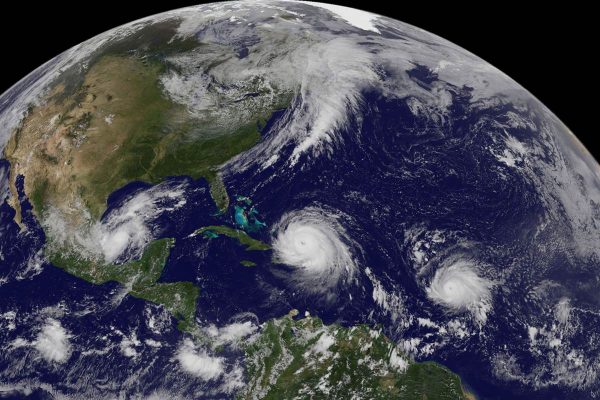
…The truth about the speed and enormity of the environmental challenges we are facing demands the ability to start radical adaptation, not getting correct price signals for the market.
To capture that imagination and to leverage the real threat level of climate change at the ballot box, the Greens should have…
- Been offering heavily discounted emergency packs for families that include everything a family would need in a natural disaster.
- Removing GST from fresh fruit and vegetables to promote less meat eating (which is very damaging to the environment and public health).
- Free public transport to get people out of their cars.
- Climate Change become a compulsory part of the school curriculum.
- A maximum number placed upon cows with a fixed reduction percentage each year.
…what the Greens have offered will keep the cycling activist policy wonks happy and the $180 extra for beneficiaries will pull them to the polls so I think the Greens have a good shot at 8%.
Once the election is over, the Greens need a serious look at their behind the scenes strategists and tacticians who saw their poll numbers collapse and bring in people from outside the Wellington beltway.


Having more people just makes any shift harder. Stuff the TNC investors in consumerism.
Moving people out of town closer to food sources makes sense. Have them employed in food production instead of importing food. Cooperatives work well for all in local food production and supply.
Horticulture is generally on gently rolling or flat land so cycling within small food producing communities would be a viable aim when small rural towns are designed.
Rail is the best transport back bone for connecting communities.
Education is the key, but much abused.
In the early 1970s when the future of the planet and humanity was mapped out by MIT, attention to change became awakened and material was produced for primary education about what was needed for change.
Business NZ were not happy and political suppression of informational resources to school saw censorship of school resources and deviation of focus to just pollution by way of local rubbish.
The real message was quashed.
If our education has perused the initial course of arming young minds to what was inevitable on the course present at the time, then change would have happened in human behavior and understanding decades ago, when it could have been very effective.
Business and investment had the power to stop that happening, and they did.
A different system is needed where profit makers have no power to over rule common good.
Climate change is not the problem but a symptom.
I agree, tipping points have been exceeded but try telling that to our NZ public, many who are still in denial and others, who for totally a number of reasons, are uninformed/ignorant of the enormity bearing down on humanity.
Time for Greens to be a single issue party.
Don’t get climate change sorted then the rest is waste of time.
* Start planning to move the capital to Taupo.
* Start moving people out of towns accessible only by roads that are exposed to rising sea levels.
* Start moving people out of towns, settlements that are going to be non viable in 20 years time e.g. West Coast already
* Force power companies to buy home generated solar/wind power at 2 cents more per unit than the average wholesale rate.
* Require all councils to be carbon zero by 2030.
Sound a bit severe?
That’s what it takes to get moderate accommodations.
The Greens will always be accused of being nutters so why aim low?
told ya so )
Good grief, I cannot see any such academic and bureaucratic measures get any Kiwis out of their beloved cars, that is petrol or even diesel powered combustion ones.
Maybe free public transport for more would have been good policy, maybe more disincentives to drive private motor-vehicles full stop. But then that will scare off too many, who just love driving everywhere.
Then again, it is not that much better in other places, humanity continues to drive towards a high cliff at record speed, too afraid to push the breaks.
Greens seem to want to play it safe, but its base is diminishing, shrinking at present, not good.
Some say it’s easier to colonise the solar system than it is to cure the melting pot. Even if we did cure New Zealand’s melting pot. New Zealand will always be surrounded by a constellation of climate refuges/immigrants in desperate need of resources.
Still smart thinking though.
Sure beats gareths ubi and simulates alaskas oil revenue cheque alaskans get every year .