
Generating Our Own Momentum?
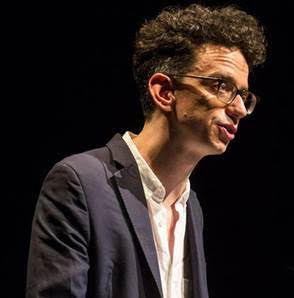
CAN A “MOMENTUM” be built in New Zealand? This, in essence, was the question posed by millennial political scholar extraordinaire, Max Harris, to the sixty-or-so leftists who showed up at the Kai Pasifika restaurant on Wednesday night (30/5/18) for the welcome return of Laila Harré’s political “salon”.
The question is important because, as Harris made clear, it is the 30,000-strong Momentum movement which can claim most of the credit for propelling Jeremy Corbyn to the leadership of the British Labour Party, and most certainly it is Momentum which is keeping him there. Harris, himself, seemed less than optimistic that such a movement could get off the ground in this country, citing the profound depoliticization wrought by 30 years of extreme neoliberalism. Not helped, he might have added, by the New Zealand Labour Party (NZLP) hierarchy’s ingrained hostility to “Corbynism” and all forms of “bottom-up” organisation.
The reason for that hostility may be traced back directly to the 1989 split in the NZLP, when hundreds of left-wing activists followed the late Jim Anderton out of the organisation to form the NewLabour Party (NLP) – later to become a dominant force in the Alliance. The centrists who remained in the NZLP never forgave their erstwhile left-wing comrades for leaving them alone with the Rogernomes (who themselves decamped to form the Act Party in 1994). The key consequence of these centrists’ political traumas was that, throughout the 1990s and well into the 2000s, the NZLP’s default ideological setting was a rather bloodless version of Tony Blair’s “Third Way-ism”.
It is interesting to speculate what might have happened had the NZLP not split. Would the enormous energy and imagination that went into the formation of the NLP, and then the Alliance, have been devoted instead to hurling the neoliberal cuckoos out of Labour’s nest? Could New Zealand have given birth to its own intra-party generator of left-wing organisation and power a good twenty years before the British Labour Party generated its own Momentum?
The answer is – probably not. The extraordinary fact remains that it was the NZLP which accepted the task of introducing neoliberalism to New Zealand. In so doing it denied itself the historic role of leading the fight against it. The contrast with the British Labour Party, whose members waged a long and bitter struggle against Thatcherism, is a stark one. After eighteen years in the wilderness, Tony Blair may have been able to overlay his Third Way message on the British Labour Party, but its deep-in-the-bone hatred of the Thatcherite project was ineradicable. Had it not been, Momentum and Corbyn (who, almost alone, kept the flame of Labour’s core values burning for more than thirty years) would have had nothing to work with.
Notwithstanding British Labour’s proud history of resisting Thatcherism, Blair’s capture of the party’s “commanding heights” in the mid-1990s allowed him to populate Labour’s parliamentary contingent with careerist clones of their master and his minions. Corbyn undoubtedly faces powerful opponents in the all the usual bastions of the British establishment, but his bitterest enemies continue to be seated behind him on the Opposition benches.
Had Anderton and the Labour Left stayed put in 1989, and then flexed their muscles in the aftermath of the fourth Labour government’s inevitable defeat in 1990, the party would still have split. A good proportion of the caucus and much of the organisational hierarchy would have refused to accept a left-dominated NZLP. The legal battle over who had the right to call themselves the Labour Party would have raged on for months – possibly years. There would have been no winners.
The depoliticization of New Zealand society which Harris noted in his address was inescapable either way. It is simply not possible for a party of the Left to oversee the imposition of policies which the Right could only have introduced with the assistance of policemen’s truncheons without fundamentally deranging the entire political system for at least a generation.
As one of the most articulate and progressive representatives of “Roger’s Children” – those young New Zealanders who have grown up knowing nothing but neoliberalism –– Harris is constantly searching for the raw materials with which to launch in his own homeland the same sort of fightback made possible by Corbyn and Momentum. With the Alliance dead by its own hand, however, and with the NZLP allergic to “Corbynism” in all its forms (who was the one person Jacinda didn’t exchange public kisses with on her triumphant European tour?) the chances of building a Kiwi Momentum here are heartbreakingly slim.
Harris’s “politics of love” will require a very different vector. One which, given the history of Aotearoa-New Zealand, is most unlikely to have anything British about it at all.


Build a “Momentuim” here in NZ? Sure. It’s possible. I then give it a year before it is torn apart by factionalism. As Martyn has said on so many occassions that I can recall it by rote, “The Right is good at looking for recruits. The Left looks for traitors”. We are our own worst enemy, the neo-liberal, neo-con Right come a distant second.
Max Harris is a pontificating idiot.
NZ’s Malcolm Gladwell.
How could Momentum have possibly been responsible for making Jeremy Corbyn leader of the British Labour Party when it was formed four weeks AFTER Corbyn won the party election??!!
Hate makes you underestimate what it takes to be a real thug and shit you ain’t made of. Cry me a leader never wins when you’re plotting on a friend. When you lose you never even see it coming.
This article is full of errors.
The UK Labour Party did not fight neo-liberalism it started austerity well before Thatcher. Blair did not stop Thatcherism he continued it under the pretense of being “Third Way”.
‘Momentum’ is not the way to radicalise UK Labour, let alone something tio be emulated in NZ, it is a bureaucratic barrier to rank and file control of the party behind Corbyn.
Not least, in NZ, the Lange Labour did what it had to, as a capitalist party committed to stabilising the weak semi-colonial economy.
Finally, the split in the Labour Party in 1989 was not justified and split the whole labour movement right through the 90s allowing National to embed neo-liberalism as the ‘new normal’ which still constrains this Labour-led government.
https://situationsvacant.wordpress.com/2008/05/20/how-the-labour-left-sold-out-nz-workers-in-the-1990s/
Counter-factuals are hard. We don’t really know what would have happened if Anderton and a significant chunk of Labour’s grassroots membership hadn’t left Labour and formed the NLP. But there’s a good chance the Alliance wouldn’t have happened, and NZ First wouldn’t have happened, and MMP and CIR wouldn’t have happened. Which would mean third parties would not have had the platform to expose information and provoke public debate about all the issues on which the unofficial post-1984 Grand Coalition of National and Labour agree. Not to mention all those policy concessions third parties have managed to extract from the blue/red parties wouldn’t have happened. No KiwiBank, no free doctors visits for under 5s, no Gold Card, no housing insulation subsidy, no Whānau Ora, no medical cannabis, and that’s just a handful of things off the top of my head.
You have to remember that all the elections the NLP ran in were FPP ones. Labour didn’t lose in 1990 because of competition from NLP, who made no impact outside of Sydenham, Labour lost because they had utterly betrayed their base. Anyone who voted NLP in 1990 would simply have not voted if NLP wasn’t an option (or protest voted Social Credit, or McGSP). Many of their Labour’s voters were lured by Bolger’s promises of a return to a “decent society”, leading to one of the biggest landslide losses for a sitting government in NZ history. Anderton certainly had his faults, but blaming the 1990 result on NLP is the most ridiculous revisionism. As for claiming this forced Clark’s government into their “third way” platform, let’s not forget Clark was a cabinet minister through the 1980s Labour government. ‘Nuff Said.
Anderton found himself completely isolated and alone within the labour political wing. The grass roots may have been with him but the government was with Douglas. Perhaps some had misgivings but solidarity with the party completely trumped ideology just as David Brown advocates above.
Much of the electorate correctly recognised that labour had become far more right wing than national had ever been , or could have gotten away with and voted accordingly. The extreem right wing capitalist voters all voted for labour and the Act.
Unfortunately with Ruth Richardson in ascendance national carried on with Rogernomics instead of going back to the managed economy they had run throughout their previous history.
One of the great failings of democracy is that many voters are loyal to a party whatever it does rather than voting for what they believe .
D J S
Strypey you should have read the linked article.
I will help you out. Why was the split premature and stupid?
“The second question that Trotter does not ask is this: did those who switched from Labour to vote New Labour or Green split the Labour vote and lose Labour seats?
In 1990 National won by a massive 38 seats. How many of those were lost because of the split? In a number of core working class electorates the Labour, Green, New Labour and Democratic vote combined was more than that of the National winner. In a few of these the New Labour vote alone exceeded National’s majority and was likely to have lost the seat for Labour; [in Gisborne (Labour missed by 618; NL vote was 804); Horowhenua (Labour lost by 413 votes; NL got 744 votes); Miramar (Labour lost by 178; NL got 996); Onehunga (Labour lost by 679; NL got 880 votes); Onslow (Labour lost by 396; NL got 687); Roskill (Labour lost by 722, NL got 876); Te Atatu (Labour lost by 587, NL got 1086); Titirangi (Labour lost by 116, NL got 1160); Western Hutt (Labour lost by 532, NL got 645).]
So the New Labour vote alone cost Labour 9 seats. If we include Anderton’s own seat of Sydenham, NL cost Labour 10 seats! The total switch [of disaffected Labour voters] to New Labour, Greens and Democrats (the future Alliance) accounted for at least another 11 Labour losses. [Birkenhead, East Coast Bays, Eden, Glenfield, Hastings, Heretaunga, Manawatu, New Plymouth, Timaru, Waitakere, and Wanganui.]
So Labour lost 21 seats to voters who switched to the parties that would soon become the Alliance. A loss that would have been around 40 to 46 became as a result 29 to 67!
Thus when we look at the received wisdom as to why Labour was soundly defeated in 1990 we find that it was not only due to National winning support, but Labour losing it to abstentions and defections to the ‘left’ i.e. New Labour and the Greens. For the majority of defectors it was a protest non-vote or vote to the ‘left’ to punish Labour for its betrayals. But what a way to punish Labour, to leave it with only 29 seats in parliament facing an more draconian Rogernomics attack, Ruthonomics, that saw benefits slashed by 10% and the imposition of the ECA to smash the unions.” [Source Vowles and Aimer, Voters’ Vengeance, 1993]
So I don’t claim that Labour could have won the 1990 election on the numbers. But it could have been a much stronger opposition.
You could also look at my argument that Anderton’s 1 seat inflated ego stopped a Labour-led coalition becoming government in 2003, introducing MMP earlier than happened and increasing the quantity and quality of trickledown reforms you cite as a justification for the 1989 split.
So I argue that the split of NLP weakened the Labour movement as a whole (which is why I say Anderton ‘betrayed’ the labour movement), and allowed the new right to consolidate in the 1990s embedding the neo-liberalism that we still have today.
Of course, all of this is only of interest from my Marxist standpoint if the results speed the exposure of parliament as a talk shop and spur the creation of an independent workers party that mobilizes workers to take power and establish a workers government. Sooner or later Labour will split but let us hope it is sooner and on the basis of a strong labour ‘momentum’ to the left in the unions and not another bureaucratic split.
In a universal funding arrangement you need a systematic approach to identifying opportunities from the bottom up and the top down approaches. With out fully organising the economy around concrete issues like health, education and defence, you only end up being able to attack the wings using the side that Jona Lomus on. So you need to be able to do both sides, up and down, you can’t have one organisational structure with out the other. Ultimately the aim of the game is for uni professors to say to there students that we don’t need cogs in a system any more, if you’re an unthinking, uncaring automaton an AI can do that job and excel at a far cheaper cost than human ever could. The question is how will we deal with the digital economy. True entrepreneurs will tell you you’ve got to just throw students out there and let them deal with the hard knocks and give them some support to come back and start again. We brought in Kip McGrath and other private tuition to help younger students develop but to be honest we probably could of gotten the same results from the public education system so there’s not much to be gained from a top down approach where the principle sets the agenda.
So we must help young students find there passion and begin mastery in a particular field before they decide to go to university, because the digital economy bit has come into play more significantly this year than it did at the end of last year. The new digital economy message has to help with career planning from primary school onwards, in away that allows students to play with things, learn coding and learn about jobs beyond the standard jobs there parents would have told them about like a Dr or a Laywer. We don’t want to give them the message that all you have to do is just show up to class and everything will show up, and the house and car and family and everything will just show up one day.
I think creativity has to be created from an early age that allows for the arts and allows for untidiness and parents these days are just, claiming the idea of cleanliness and highly noodle morals, with out actually doing any of the work. We try our best with in a school setting but with a lot of limitations. We suffer from a lack of trained arts and music teachers, outside of the private sector it all seems like an after thought. And we’re just trying to higher a lot of teachers to just get them trained and not specialised in certain areas that New Zealand lacks in. Most people know enough to know that change can’t just be an ideal, we have to manage parents expectations as well and a university that takes in a student wants to see more than just average grades.
When you put communities first then the idea of nation building becomes different from nation building British style.
Max Harris is half-right, before any ‘momentum’ can remove the neoliberals from the NZLP, the history of Labour’s betrayal of the 1980s needs further examination.
Do workers need a ‘Momentum’ type organisation that is undemocratic and run by a clique of middle class labourites masquerading as leftists? No!
Was the split of NLP a real ‘momentum’ or a bureaucratic split that betrayed workers in the labour movement?
The formation of the NLP was tactically stupid when Anderton still had a third of the delegates votes in Labour’s conference and support of the Labour Council. It was largely a ego driven project of Anderton that betrayed Labour’s worker supporters who opposed Rogernomics but did not agree with the split. Had this split not happened, far from merely delaying another damaging split, the evidence shows that the NLP split contributed to the Labour Party defeat in 1990 and actually stopped the defeat of National in 1993.
https://situationsvacant.wordpress.com/2008/05/20/how-the-labour-left-sold-out-nz-workers-in-the-1990s/
Well you have painted a very doom and gloom yet realistic analysis , Mr Trotter.
With good historical background coverage as to how we arrived at the point we are today. However , I cant help feeling that there must be a way forward. One would be a personality that relentlessly and tirelessly is outspoken against neo liberalism , citing both modern and historic cases of that ideologies failures and abuses.
That part wouldn’t be hard.
It would have to be a central theme of this persons, – and , like Corbyn , also offering a viable way out. Is it really that hard to adopt the groundwork already laid by Corbyn and friends and adapt them to New Zealand ?
I would think not.
So now we are back to square one and your analyzing of the NZ situation. We have no party big enough to do the job who’s consensus is united enough , a small population easily manipulated by media , – one in which a large number of people who weren’t even born around the time that the neo liberal destruction was unleashed on us, … yet we have many voices in the public arena who do release reports , commentary’s on its failures and the like…
Yet no response from a silent Labour in a meaningful way so far…
There definitely is something fishy going on about the NZ political landscape ,… a veritable wall of silence . Almost a generally accepted taboo among both Labour and National to even broach the subject… which would lead one on to ask why ?
Money.
Money and position.
That’s really why if we were to be quite bluntly honest. And a nice comfortable Wellington career in politics. Whereby even if your party loses the election you still stand a chance of having a comfortable salary if your party crosses the mandatory 5%.
Even 0.1% if you coattail in like ACT does.
You know , if Corbyn does win the next general election , I think you might find the rumblings of discontent start getting louder here. It would be hard to imagine people just rolling over and accepting this substandard status quo we have while watching the English start to have again the things they once had – as we once did pre 1984.
It might be then that we have someone emerge with the same sorts of quality’s that Corbyn does. That same sort of courage, integrity and sheer gutsy bullheadedness in not just capitulating and selling out.
We might just stand a chance then.
I read this article with interest! I have often wondered if we could develop a Momentum in this country and how? Suggestions?
Sometimes your prose is so good Chris, it is like riding with Odin through stormclouds. Thankyou for your excellent work
Yes he is good isn’t he !
🙂
thats a hard one because there is more at stake now than mere acquisitive materialism.
‘CAN A “MOMENTUM” be built in New Zealand?’
It is always interesting to thing about such ideas but the answer is always no.
The financial-military-industrial empire it too strong, Chris. It can still successfully churn out propaganda and pabulum for mass consumption, and it can still jump -like a ton of bricks- on anyone or anything that threatens it.
Additionally, the masses are ignorant and apathetic and don’t want to know about anything that would burst the bubble of denial that currently protects them from reality.
Only when energetic-economic-financial-environmental failure cannot be concealed any longer will any kind of revolution occur. It will be far too late, of course.
Well Chris , Jim went back to labour , and the “fish and chip club” decamped into Act. So the arch neoliberals took themselves out of our labour party and the hard left leader went back in. Didn’t make much difference to the policies did it !
In effect Jim tossed it in. Gave up the unequal struggle and settled for peace. Fair enough , he gave it a good shot. But the labour party lost it’s soul and it hasn’t found it yet.
D J S