
Galipolli or Mangatawhiri? – selective memory of war
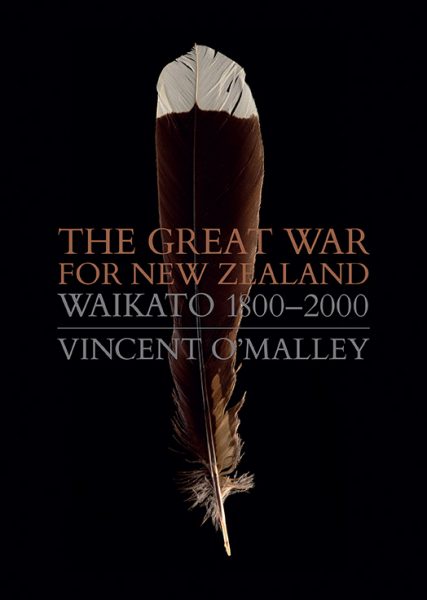
I’ve spent much of the last week reading Vincent O’Malley’s recently published book “The Great War for New Zealand” which tells the story of Imperial Britain’s 1863 invasion of the Waikato and its aftermath.
Unlike other histories which deal more narrowly with the conflict itself, this book puts the invasion in a 200 year context – from the early 1800s when Waikato was a highly productive market garden for the settlement of Auckland through to the 1995 signing of the Waikato-Tainui treaty settlement agreement.
Through this broad sweep of history we see the events unfold in the context of the motivations of the main protagonists – motivations revealed and exposed in greater detail than before.
The lies and propaganda of war, so familiar to those who follow international conflicts, are all there.
In the case of the Waikato Governor George Grey hyped up a fictitious threat of imminent attack on Auckland by supporters of the Kingitanga. The most recent parallel example might be the 2003 invasion of Iraq orchestrated by the US, UK and Australia based on fictitious missile threats and “weapons of mass destruction” to justify war.
Before the invasion and at each stage of the conflict Maori sought peace but the colonial government wanted land, not peace – not dissimilar to Israeli motivations today as they steal land by waging endless war on Palestinians. The invasion of Waikato was prosecuted till the imperial army had extended its reach to the Puniu river and subsequently confiscated 1.2 million acres of New Zealand’s most valuable farmland in the Waikato region.
So what have we learnt? We all know that the history books we grew up with and which described the “Maori wars” were a lie but we don’t see this conflict as the “great war for New Zealand” which it was. Neither is it acknowledged for the devastating impact it had on Maori.
We are currently riding a wave of centenary events from the First World War. We have reached Passchendaele with plenty more to come. Millions have been spent by the government to remember what is described as “heroic sacrifice” by New Zealand soldiers in a war on the other side of the world on behalf of the British empire. As a proportion of our population we sent more troops a greater distance to fight a war than any human society in the history of the planet.
1.7% of the New Zealand population were killed in WWI – a devastating number recalled on memorials in every small town and city through the country. Waikato Maori lost 4% of their population killed in the invasion of Waikato – a far greater level of sacrifice and suffering by a people fighting a defensive war against an invading army and yet this is largely unknown and unrecognised.
It would be much more appropriate for New Zealand to scrap ANZAC DAY (25 April – dated for the landing at Gallipoli in World War I) and shift our national remembrance of war to 12 July – the day in 1863 that imperial troops crossed the Mangatawhiri River and the great war for New Zealand began.


‘Before the invasion and at each stage of the conflict Maori sought peace but the colonial government wanted land, not peace’
Much the same story in Canada, Australia, South Africa etc.
Ownership/occupation of land was (is) the key to wealth. Genocide was (is) the normal approach to removing the occupants.
“Yeh thats why the Raiders invoked a war conflict as the key to open their campaign and evict the Maori Land occupiers’..AE and Oh yes Genocide was Pakeha’s Cruel and decisive tool to crush these friendly Maoris..The Black Plague at the beginning of the 19th Century case in point..It almost wiped out our Maori Race…INFLUENZA PAKEHA MURDER’ TOOL’..
In Todays termonology its called Ethnic Cleansing’..Genocide’..
Good on you Minty. I agree we need to acknowledge the war that really shaped our present social relations. A group of us from Mangere began the 12th of July commemoration tradition this year with a 4 day hikoi down Great South Rd to Mangatawhiri in the footsteps of the invading British Army. Another group of descendants of those evicted from Ihumatao in 1863 did the 4 day hikoi from Makaurau Marae to Mangatawhiri connecting with whanau and memories . A powerful and moving experience . Join us next year brother.
Interesting to know if you would consider the pakeha colonists of the time ‘British” (ancestors of many living New Zealanders) or ‘New Zealanders”. Perhaps the former if they were doing bad things – but the latter if good qualities are invoked. Imperial troops were there on behalf of the colonial New Zealanders – not simply war of conquest by remote Britain.
Face up to your own history!
John I agree with you. NZ needs to reflect a lot more on the effects that the 1860’s Maori wars has had on the country.
I believe it led to an overly centralised country which is prone periodic reforming ‘ruptures’.
Read about it here.
https://medium.com/land-buildings-identity-and-values/rupture-2e7f66e20789
An interesting proposition. Most accounts I have read of the waikato wars refer to an invasion and for the most part the facts are well documented so no cover up. The waikato wars involved a real mix of personas and different parties. The colonial troops, made up of new zealanders,and yes Australians, Imperial troops from britain, kaupapa maori, against those tribes and iwi fighting for kingitanga and those who fought for prowess. Add in the ambushes by maori on settlers and on the great south road and there is a real whirlpool of motivations.
The Boer war saw our first expeditionary forces sent overseas, yet WW1 brought home the true cost of war for the entire nation, for the first time cantabrians, aucklanders, westcoasters, Wellingtonians, and every province was united on an unprecedented scale as ‘New Zealanders’. No community or social strata was left untouched by WW1. That’s why WW1 still carries such importance, not just here but internationally.
I agree it would be good to have awareness raising events on the anniversaries of major events in the British invasion of Aotearoa, particularly Parihaka Day on 5 Nov. This also happens to be the anniversary of the Battle of Featherston St during the Great Strike of 1913:
https://nzhistory.govt.nz/page/battle-featherston-street
I presume the George Grey who initiated the invasion of Waikato was the same one who later became Governor of the colony of NZ, and oversaw the sacking of Parihaka in 1881? It disturbs me how little most kiwis know about the colonization of this country, even after decades of education about Te Tiriti o Waitangi. To be honest, I only know the broad strokes myself, much of it sourced from the excellent 1998 documentary series ‘The New Zealand Wars’ by James Belich.
https://www.nzonscreen.com/title/the-new-zealand-wars-1998/series
This is nonsense. Trying to place auckland and waikato at the centre of the universe is nonsensical piffle. Pandering to one faction of new zealand society in a manner no better than a sideshow barker is demeaning to all concerned and minto should know better. grow up.
I think it would be good to have both. If you have one at the expense of the other it just riles people and increases opposition against remembering the New Zealand Wars.
An impressive book, exhaustively researched and analysed at the same time readable and engaging. A must-read for anyone seriously concerned about the exercise of special interest political power, and ongoing tangata whenua/tauiwi relations. Be prepared to get angry.
Kiaora John,
Well said. I have been struggling to read my way through the book.
It does not make for comfortable reading for pakeha well, not for me, anyway. Celebrating our involvement in someone elses colonial expeditions is bloody stupid and maintains the lie that this is somehow OK. Yes we should wipe ANZAC day and replace it with events in this country however uncomfortable this may be for some.
Kia kaha John
Keep up the good work
Pete Wilson
The annual – and sometimes monthly – glorification of war is a real worry. Kids coming to dawn services with their ggrandfather’s medals pinned to their chest. They need to be learning the horrors of war where innocent men, often young, are sent to shoot and kill other innocent men. These men did not want to be heroes they went on a boys own adventure to see the world.