
Famine, War + Plague – the 3 Horseman of the Globalised Apocalypse are upon us
There is an amalgamation of crises that are rushing together pushing the planet into a steep economic recession. Since 2008 the central banks have printed 25 Trillion to keep the Ponzi scheme from collapsing and that has artificially created the lowest interest rate in 5000 years.
The unwinding of that kind of pressure surely is going to be the event horizon of a Debt Black Hole?
I’ve been arguing that our inflation will hit double digits by December because we are grossly underestimating the Apocalyptic impact of global War, Famine and Pestilence caused by Covid, the climate crisis, conflict and neoliberal capitalism.
FAMINE:
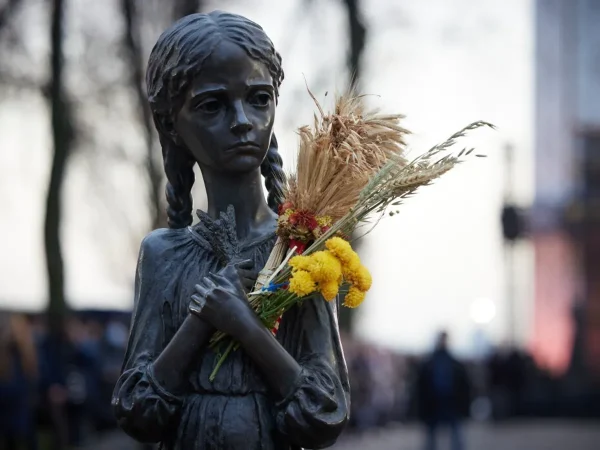
Apocalypse now? The alarming effects of the global food crisis
The Bank of England governor warned last week of ‘apocalyptic’ food price rises. Yet war in Ukraine, climate change and inflation are already taking their toll all over the world
Apocalypse is an alarming idea, commonly taken to denote catastrophic destruction foreshadowing the end of the world. But in the original Greek, apokálypsis means a revelation or an uncovering. One vernacular definition is “to take the lid off something”.
That latter feat is exactly what Andrew Bailey, governor of the Bank of England, achieved last week, possibly inadvertently, when he suggested Britain was facing “apocalyptic” levels of food price inflation. Tory ministers fumed over what they saw as implied criticism of the government’s masterly economic management.
In fact, Bailey was talking as much about the drastic impact of Ukraine-war-related rises in food costs and food shortages on people in poorer countries. “There’s a major worry for the developing world as well … Sorry for being apocalyptic for a moment, but that is a major concern,” he said.
With most political and media attention narrowly focused on the emerging UK “cost of living crisis”, Bailey’s high-profile comments were timely – and revelatory. Months of warnings about a global tidal wave of hunger, rendered more urgent by Ukraine, have been largely ignored, not least by Boris Johnson’s aid-cutting government.
The cost of living is a problem in Britain. For UN agencies and humanitarian relief workers around the world, the bigger worry is the cost of dying.
…Russia & Ukraine produce 12% of all globally traded calories and the shut down of exports and war damage to farms has devastated food and fertilizer production which will trigger food riots throughout the Middle East and South America. The commodification of food is a major problem…
The banks collapsed in 2008 – and our food system is about to do the same
or the past few years, scientists have been frantically sounding an alarm that governments refuse to hear: the global food system is beginning to look like the global financial system in the run-up to 2008.
While financial collapse would have been devastating to human welfare, food system collapse doesn’t bear thinking about. Yet the evidence that something is going badly wrong has been escalating rapidly. The current surge in food prices looks like the latest sign of systemic instability.
Many people assume that the food crisis was caused by a combination of the pandemic and the invasion of Ukraine. While these are important factors, they aggravate an underlying problem. For years, it looked as if hunger was heading for extinction. The number of undernourished people fell from 811 million in 2005 to 607 million in 2014. But in 2015, the trend began to turn. Hunger has been rising ever since: to 650 million in 2019, and back to 811 million in 2020. This year is likely to be much worse.
Now brace yourself for the really bad news: this has happened at a time of great abundance. Global food production has been rising steadily for more than half a century, comfortably beating population growth. Last year, the global wheat harvest was bigger than ever. Astoundingly, the number of undernourished people began to rise just as world food prices began to fall. In 2014, when fewer people were hungry than at any time since, the global food price index stood at 115 points. In 2015, it fell to 93, and remained below 100 until 2021.
…these impacts are being felt now.
PLAGUE:
There is no way Covid is over and the impacts will only grow. The large global pool of unvaccinated make the perfect brew for a new variant to come through and the existing flare ups will continue to require restrictions for the foreseeable future. Covid is here to stay and it won’t simply fizzle away. It will continue to disrupt developing nations and the first world and will continue to shut down China, while long Covid will be a public health nightmare.
WAR:
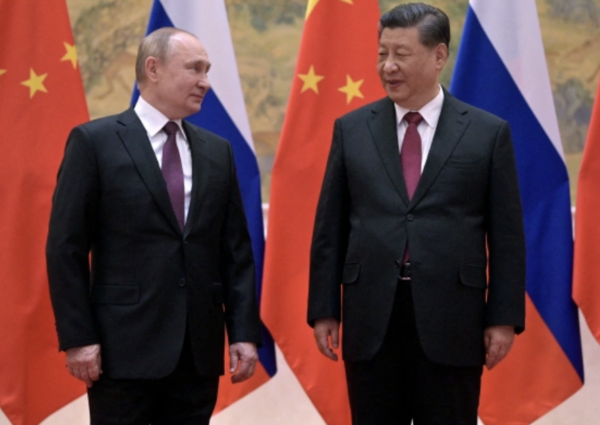
Exacerbating this is the war in Ukraine the the building conflict in the Pacific…
China ‘risks new Cold War’ as it pursues strategic alliances in Pacific
Beijing has been accused of risking a new “Cold War” with the West after it emerged that China’s foreign minister is pursuing a regional deal with almost a dozen Pacific islands including heightened security co-operation.
The five-year plan signals Beijing’s intent to significantly expand its footprint in the Indo-Pacific region. It is set to be discussed by Wang Yi and his Pacific counterparts in Fiji on May 30, as China’s foreign minister embarks on a tour of the region starting on Thursday.
But in a letter sent to 21 Pacific leaders, David Panuelo, the president of the Federated States of Micronesia, said his nation would argue the “pre-determined joint communique” should be rejected because it could prompt a new “Cold War” between China and the West, according to Reuters.
The plan would shift Pacific Islands that hold diplomatic relations with China “very close into Beijing’s orbit, intrinsically tying the whole of our economies and societies to them”, he added.
…Putin is playing a long game and the real pain of his Ukrainian adventure won’t be felt by the West until the later half of this year. This is a cascade into entropy and the dogs of war hunger for conflict.
Soros is not optimistic…
Ukraine invasion may be start of ‘third world war’, says George Soros
Veteran philanthropist tells World Economic Forum civilisation ‘may not survive’ what is coming
…a climate crisis that exacerbates an economic crisis that exacerbates a war crisis that exacerbates a pandemic crisis.
That’s a lot of Black Swans all ubering home.
In the light of the threats to us in the here and now, this budget trying to determine the future seems hopelessly compromised.
Increasingly having independent opinion in a mainstream media environment which mostly echo one another has become more important than ever, so if you value having an independent voice – please donate here.
If you can’t contribute but want to help, please always feel free to share our blogs on social media


“ The large global pool of unvaccinated make the perfect brew for a new variant to come through and the existing flare ups will continue to require restrictions for the foreseeable future. ”
But the double vaccinated and boosted are safe right?
The 4th horseman refers to the inevitability of death – for it comes for those who survive war, famine and disease all the same.
As for famine, sanctions and blockades are part of war. Of course people become more vulnerable to disease when in poverty and poor nutritional health.
We can expect buying up of food stocks for famine relief – this will place cost pressure on those who use such feed for their livestock. Initially this will suppress meat prices, then meat prices will rise.
If this circumstance continues (and because of global warming it might) it benefits those who use grass to feed stock – provided there are no border barriers/rising tariffs protectionist developments.
This from Australia might fit in here, where a small group of people may attempt to pull the fraying edges of our culture, values, possibilities and practicalities together while others are planning something else.
https://www.scoop.co.nz/stories/HL2205/S00051/the-economy-of-tolerable-massacres-the-uvalde-shootings.htm
Dr. Binoy Kampmark was a Commonwealth Scholar at Selwyn College, Cambridge. He currently lectures at RMIT University.
(Sorry I can’t find what RMIT means – apparently they are too modern to use old words to tie them down in any of their international campuses though they can still spell out the names of the countries and places they are in. They have a campus in Melbrourne, Austraia. I think they are a bit like the Unseen University in Terry Pratchett’s Disc World which is there but changes in various ways, a concept. However I think Dr Kampmark is a real person and competent.)
Societies generate their own economies of tolerable cruelties and injustices. Poverty, for instance, will be allowed, as long a sufficient number of individuals are profiting. To an extent, crime and violence can be allowed to thrive. In the United States, the economy of tolerable massacres, executed by military grade weapons, is considerable and seemingly resilient. Its participants all partake in administering it, playing their bleak roles under the sacred banner of constitutional freedom and psychobabble.
Just as prison reform tends to keep pace with the expansion of the bloated system, the gun argument in the US keeps pace, barely, with each massacre. With each round of killings, a script is activated: initial horror, hot tears of indignation of never again, and then, the stalemate on reform till the next round of killings can be duly accommodated. “It isn’t enough to reiterate the plain truth that the assault weapons used in mass shootings must be banned and confiscated,” observes Benjamin Kunkel. “Instead, every fresh atrocity must be recruited into everyone’s preferred single-factor sociological narrative.”…
Your analysis is right I have often pondered about where we make changes for a better outcome that is not painful to someone
If we consume less it is good for the plant but bad for the makers and sellers who need to be supported to transition. The money spent on the transition comes from taxes earnt form profit so less profit less tax.
If we take sport as an example its has a huge carbon footprint as people travel to take part but it is good to have a healthy pleasurable outlet . How do you draw a balance between the good and bad effect.
Food is another area of conflict .We do not need tomatoes all year round but we can produce them at a cost to both the plant and the pocket. This applies to most food and once again where do you draw the line .
Travel and tourism generally is a nice to have but we could lead a boring life and stay at home .
So many questions and just as many answers based on your outlook..
We need a modern defense force to protect our interests, anti air and anti ship missiles, drones, small fast long range navy, a squadron or 2 of f35s.
We are going to have to deter and defend our fisheries.
At home, energy security is number one: explore and use our own natural gas while building the extra hydro power we need to further electrify.
No sale of land, forestry or water overseas.
Much of the virtue signaling climate change legislation works directly against our own national interests.
We are food rich but have stupidly sold off or banned our energy security and our defense forces have been criminally neglected.
War and the struggle for resources is what will kill you, not a two degree ruse in temperature.
I don’t disagree that NZ needs the means to defend itself.. but to suggest F35s is laughable.
F35s cost $400 million USD each, and that doesn’t include maintenance or the infrastructure and skilled people nor the fact they’re simply a rubbish aircraft in comparison to others in its class, great information system integration and mediocre everything else. A much better idea would be a battalion or two of S400 and a dozen or so Saab Gripen’s or Sukhoi Su35’s. Stealth is totally overrated, although F22s are very capable but cannot be acquired due to export ban + same maintenance and cost issues as F35s. For the s400 complex, 4-6 radars, 2 command units, and 6 TELs would cover the whole country. For naval assets, 6 Steregushchiy-class corvettes equipped with VLTs, which are very capable and totally outclass anything the USA can offer at a much cheaper price tag.
Too bad NZ is wedded to imperial USA and has joined the proxy war effort in Europe … cementing our status as an American vassal state. Russia will never sell us anything and our imperial master is on the brink of collapse.
For sure choose different strike power if more appropriate, but don’t go Russian, keep interoperability with our allies.
There is no independent foreign policy, it’s America or China.
There is such a thing as independent foreign policy … should we choose it. I understand the nature of this choice, but it is a road we’ve traveled before. Clark did not take NZ to war in Iraq 2003, and prior to that we said no to nuclear armed / powered vessels in our waters / territory.
As for our ‘allies’, two quotes from Henry Kissinger comes to mind:
a) “To be an enemy of America can be dangerous, but to be a friend is fatal.”
b) “America has no permanent friends or enemies, only interests.”
We need a planned withdrawal from consumption.
It’s not going to happen because no one willingly wants a deliberate decline in their standard of living.
Especially those who have further to fall.
No politician will support it – look at the lukewarm climate strategy we have – doing what needs to be done is political suicide and meaningless in the face of other big countries and corporations doing nothing.
It’s not going to happen.
We are hurtling towards a cliff and human nature will keep us hurtling.
Your analysis is right I have often pondered about where we make changes for a better outcome that is not painful to someone
If we consume less it is good for the plant but bad for the makers and sellers who need to be supported to transition. The money spent on the transition comes from taxes earnt form profit so less profit less tax.
If we take sport as an example its has a huge carbon footprint as people travel to take part but it is good to have a healthy pleasurable outlet . How do you draw a balance between the good and bad effect.
Food is another area of conflict .We do not need tomatoes all year round but we can produce them at a cost to both the plant and the pocket. This applies to most food and once again where do you draw the line .
Travel and tourism generally is a nice to have but we could lead a boring life and stay at home .
So many questions and just as many answers based on your outlook..