
Dr Liz Gordon: The alcohol industry and the law
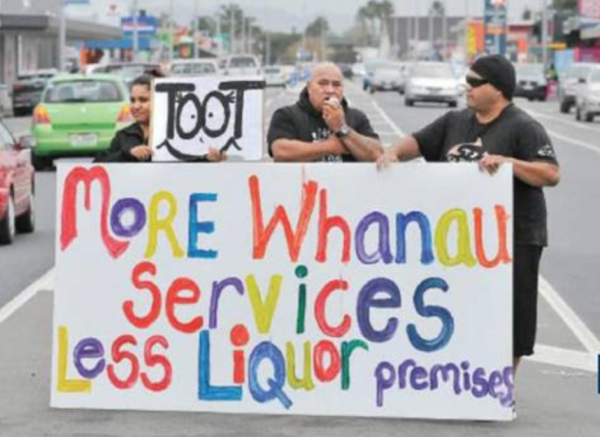
Very interesting research out of Massey University this week to show that the 2012 Sale and Supply of Alcohol Act has barely reduced trading hours, led to huge legal challenges to local alcohol policies and has not apparently done much to reduce alcohol-related harm (which is the object of the Act).
This is a pretty accurate summary of the effects of the legislation. Despite the growing evidence that the number of outlets affects the number and severity of alcohol-related events in an area, there is little evidence that the numbers are falling.
And don’t get me started on Local Alcohol Policies. Led by the supermarkets and the millions they make on selling alcohol, the liquor industry has spent up large on lawyers to ensure that local policies are no more restrictive than the very broad limits outlined in the Act. In short, local authorities have had little luck in shaping a policy that meets their local needs.
Take Christchurch, for example. It has abandoned attempts to put an alcohol policy in place after years of challenge from the industry and a huge bill for ratepayers. Like many cities, Christchurch is a sort of Wild West which has failed to curb maximum opening hours and where a large number of outlets have been established. And, of course, the city has huge alcohol-related violence and harm.
Over the past couple of years, Christchurch communities, like many others around the country, have ramped up opposition to what seems like an almost unlimited expansion of alcohol outlets throughout the country. I particularly like this protest (see picture) that took place in Gisborne recently, which very succinctly conveyed its message.
Christchurch communities have recently had a string of successes in opposing the establishment of new off-licences in the city. The focus on off-licences is important because much of the alcohol harm – youth drinking, binge drinking, drinking in parks – stems from the purchase of cheap liquor from these outlets. In one local case the local park was called the ‘lounge bar’ of the off-licence. There is plenty of research evidence that the more outlets there are, the more harm is caused, other things being equal.
The latest application was heard a couple of months ago. Essentially, a couple of guys who successfully run a long-established Liquorland in Christchurch decided to open up a branch over the other side of town. Their idea was to catch commuters in the wealthy hill suburbs on their way home from work with almost a drive-through service (if drive-through was allowed, I am sure it would have happened by now).
Unfortunately, they failed to take into account that the actual location was not just on a busy street, but also within a suburb of significant deprivation. Poor Philipstown, whose school was stolen by the Ministry of Education, whose community was damaged by earthquakes so many times, and rocked by social deprivation. Oh yes, and with a large secondary school within 500 metres of the proposed site.
So, they took their proposal to a District Licensing Committee, apparently without an inkling of what they were doing, and were confronted by an angry and determined community. The experts drew maps to show the harm, the community drew word-pictures of the problems it faced. The Committee sided with the community and the application was declined.
But this is not the end of it. Led by their Auckland-based lawyer, the applicants are now appealing the decision, basically saying everything about the hearing – rules broken, rubbish decision-making, biased Committee, rampant community – was unlawful or irrational (using the words of judicial review), and that they are appealing the whole thing.
And that is how such groups maintain the power imbalance in the industry. For who can spare the $10,000 or $20,000 to take the community’s case to the appeal process? Even most individual ‘small-store’ applicants balk at the cost, which is why there are so few big appeals.
Fortunately (cut to white charger running into battle with sturdy knight or knightess on back in shining armour), in this particular case the community will be properly represented and they will not have to pay a cent. The wonderful lawyers from Community Law Canterbury advised the Philipstown community through the hearing and will support them through the appeal.
There is much wrong with the law in this country. Too often the winners are those with the deepest pockets, not the best case. Access to justice is very poor, leaving communities fighting a rearguard action against the encroachment of poor practices. I am not just thinking of alcohol here, but also building standards, shonky earthquake issues and so many service reductions that threaten the lives of so many.
But perhaps a tiny light will shine on this one issue in the months to come. I will keep you updated.
Dr Liz Gordon began her working life as a university lecturer at Massey and the Canterbury universities. She spent six years as an Alliance MP, before starting her own research company, Pukeko Research. Her work is in the fields of justice, law, education and sociology (poverty and inequality). She is the president of Pillars, a charity that works for the children of prisoners, a prison volunteer, and is on the board of several other organisations. Her mission is to see New Zealand freed from the shackles of neo-liberalism before she dies (hopefully well before!).



What do our other social measurement statistics look like ?
Drinking piss is part of the NZ Culture, Rugby, Racing & Beer ?
We do not have a mature drinking culture here in New Zealand.
Quote:
“Christchurch communities have recently had a string of successes in opposing the establishment of new off-licences in the city. The focus on off-licences is important because much of the alcohol harm – youth drinking, binge drinking, drinking in parks – stems from the purchase of cheap liquor from these outlets. In one local case the local park was called the ‘lounge bar’ of the off-licence. There is plenty of research evidence that the more outlets there are, the more harm is caused, other things being equal.”
And:
“There is much wrong with the law in this country. Too often the winners are those with the deepest pockets, not the best case. Access to justice is very poor, leaving communities fighting a rearguard action against the encroachment of poor practices. I am not just thinking of alcohol here, but also building standards, shonky earthquake issues and so many service reductions that threaten the lives of so many.”
The claim that alcoholic beverages in NZ are cheap is just a myth.
This country may have much more to worry about, but it may look worse, given the much larger population it has:
https://www.thelocal.de/20150630/germany-land-of-cheap-beer-and-drunkards
They pay more for their booze in the UK, and certainly in Scandinavian countries, but have as bad a problem with people abusing alcohol as in many other countries.
https://www.mirror.co.uk/money/britain-pays-second-highest-tax-9666480
And in consumption, NZ Inc citizens’ rate about the average, going by Wikipedia info from 2014 (32 out of 58 nations for beer):
https://en.wikipedia.org/wiki/List_of_countries_by_beer_consumption_per_capita
https://en.wikipedia.org/wiki/List_of_countries_by_alcohol_consumption_per_capita
(31 out of 191 nations for alcohol altogether, while many of those countries have very low rates, as they are predominantly Muslim or have other cultural differences towards alcohol consumption)
NZ ranks 11 out of 33 OECD countries for per capita total alcohol consumption, which is not the highest, but at the upper middle range.
Of course alcohol causes health issues, impacts on people’s abilities to assess risks, and contributes to road deaths, crime and so forth, but other contributing factors must be considered.
WHY do people drink, drug and so forth, which is nothing but escapism from something? Sitting in front of screens most of the day, at work or at home or at study, and living more and more robot like lives, where we are controllers or extensions of modern tech machines and gadgets, and being mere controlled numbers and little wheels in an ever less humane ‘system’ reduces humans to being lacking something.
Hence the urge to escape, to seek quick relief in drugs or other potentially addictive behaviour, as a perceived ‘balance’ back to ‘normal’.
We have to change the way we live and interact socially, change the whole society so to say, to return to more natural living, in order to solve these problems.
Beer prices in Europe and elsewhere:
https://www.goeuro.com/travel/beer-price-index-2016
(compare Auckland and Sydney prices with such in Europe and elsewhere)
Hardly that ‘cheap’ in Down Under.
It is MYTH that alcohol is cheap in NZ Inc. Prices are cheaper in supermarkets and in pubs and so in most of Continental Europe, but somehow here this keeps being repeated like a mantra by some critics of alcoholic beverages and those abusing it.
Perhaps it is the childish mentality of many NZers that contributes to or causes the issues we have, not learning to conduct themselves more responsibly.
Also why do people tank and top up, and use drugs?
Maybe the society we have encourages such escapism?
I do not want to protect the alcohol industry, they run a bit of a cartel here, but the usual blame game is just idiotic in my view.
Would you blame a stoned driver crashing her or his car for the person’s conduct consuming and driving while intoxicated, or would you blame the drug?
Even Alcoholics Anonymous tell new members as a first thing, that it is not the alcohol that is the problem, it is their own situation, their inability to drink normally, that needs to be addressed, i.e. responsibility taken for.
+1000
The council process are broken. Not sure if this comes under RMA law but if it does, the RMA is determined to make sure that the applicant will win. 99% of RMA cases win.
RMA run by “environmental” lawyers, by some person who loved a joke, are some of the most greedy and most expensive lawyers in town and have almost certainly will win or get a major concession unless in a fit of “democracy’ the judge allows a 1% to get through.
The system is completely broken and needs to be more like a criminal court rather than an administration court that helps the incompetent, rich, greedy and liars.
Everything is set up to help polluters and create social damage and make the challengers fear the process and be liable for damages.
Like tobacco it is all about litigation,if they fail, they will then put in another application (often worse, amending the points they failed on last time) and more litigation so that eventually they will break the community against them and get their own way.
Knowing this, most judges just give in and let them and let them get whatever they want.
If the government wants to stop 24hour drinking then they need to have a shut off point of alcohol sale in government law, not rely on the councils to do their job for them, with a process not fit for purpose.
If they want councils to function better they need to have a ‘social good’ and ‘fairness’ component put into the legal policy, because at present the applicant is presumed successful and it is up to the public on very limited ability within the law and using their own time and money, to try to strike bad planning out. Council’s rarely bother and in many cases are so incompetent/neoliberal/incentivised to support it.
There are countries in Eastern Europe where alcohol availability is rife: spirits in supermarkets, cafes serve alcohol, magazine stands/booths sell beer and spirits,every deli(dairy) sells beer/wine/spirits.
And yet, you walk through a park at night with groups of youths present and no-one is drinking and there is no public drunkenness.
Is availability really the issue?
It is not a social norm to be drunk or to be seen drunk. What I didn’t see was RTDs – lolly water plus alcohol.
The legal drinking age needs to go back to 20. Lowering the age was a travesty and in subsequent moves to raise it again it was very disappointing to see the Greens not support that.