
Don’t Riot For A Better Society: Vote For One!
IT WAS THE LARGEST STUDENT DEMONSTRATION Dunedin had ever seen. Close to 10,000 students had marched the length of George Street and half of Princes Street to completely fill the Exchange. I was just one of many speakers on that overcast day in the winter of 1989. Most of these chose to declare their opposition to the fourth Labour Government’s imposition of student fees in as few words as possible – but not me.
Speaking on behalf of the NewLabour Party, I felt obliged to spell out the realities of tertiary education funding. I told them that they could have free education or low taxes – but they could not have both. If the wealthy refused to pay higher taxes, then students would have to pay higher fees. If the middle class (i.e. their family) was serious about keeping young people (i.e. themselves) out of debt, then they would have to vote for a party that was willing to restore a genuinely progressive taxation system.
They booed.
My party comrades were less than impressed. But, the experience taught me something even more important than “never try to reason with a crowd”, I learned that Rogernomics had unlocked something ugly and selfish in older and younger middle class New Zealanders alike. In the minds of those 10,000 students – the people we would come to know as “Generation X” – a free tertiary education was simply their entitlement. The notion that, by accepting this entitlement, they had enmeshed themselves in a complex system of reciprocal rights and obligations made them very angry indeed.
For the fifty years that followed the Great Depression and World War II the idea that older New Zealanders could somehow be absolved of their responsibilities toward younger New Zealanders, and vice versa, would have been regarded as absurd. People simply accepted that living through periods of paying taxes to support others, as well as periods when the taxes of others would support them, was what made a fair and decent society possible. Society benefited enormously from a well-educated and culturally enlivened citizenry. It also benefited enormously by making sure that every older citizen could live in security and dignity.
Through a process of trial and error, spanning many decades, New Zealand discovered that the best way to preserve the security and dignity of its older citizens was to pay them what amounted to a universal basic income. Regardless of gender, ethnicity, sexuality or social class, every New Zealander over the age of 65 is guaranteed a modest income from the state. NZ Superannuation has played a huge role in reducing the incidence of poverty among elderly New Zealanders. Its universality makes it both cost effective and sustainable. Providing the progressivity of this country’s tax system is restored, it is also entirely affordable.
Not surprisingly, those already in receipt of, or about to receive, NZ Superannuation are determined to preserve it. Politicians have been taught, over successive elections, that messing around (or even threatening to mess around) with “Super” is a sure-fire way to lose, or be kept out of, office. Elderly New Zealanders have used their votes to great effect in this regard. Rather than castigating them for doing so, young New Zealanders should learn from their example.
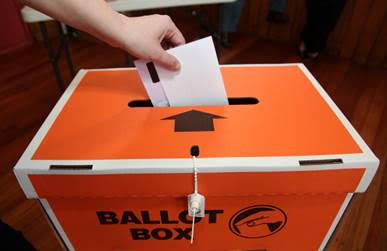
Because it’s simply not the case that older New Zealanders have devised something special for their own benefit at the expense of younger, more deserving, Kiwis. On the contrary, NZ Superannuation is the sole surviving significant remnant of the universal social welfare system that successive New Zealand governments have been attempting to destroy ever since Roger Douglas kicked off the neoliberal “revolution” in 1984. The only reason “Super” has survived is because , election after election, hundreds-of-thousands of its supporters have made their way to the ballot-box and voted to keep it.
Rather than urging young people to riot against the cost of the NZ Superannuation system (and thereby achieve the neoliberals’ objectives for them) those in search of a more just society should be spelling out to their contemporaries the clearest political lesson of the past 30 years: that if you want a fair and decent society, then don’t boo those who advocate for a system of reciprocal rights and obligations – vote for them.


I was doing my taxes recently and I pondered a top tax rate of 33%. This is ridiculous and pathetic and over time represents a collective decision by middle class Kiwis to under invest in their own society and future. With our current acceptance of being a low tax economy how many potential new hospitals won’t get built, how much will education be reduced by and most important of all what impact on welfare and wealth redistribution?
Chris is article gets straight to the heart of the problem for the left and that is a middle class that do not want to shoulder responsibility for collective access to public services. Without this we will continue to drift right wards where we live in a society that is happy to observe poverty and sympathize from afar while deliberately eroding the capacity to do anything about it. This was no more perfectly highlighted in the NZ Heralds ‘let them eat cake’ photo op with a homeless man and wedding couple.
The massive uptake in private health in NZ insurance is the classic middle class response to the erosion of public services. Hey I’ve got a $50 a month tax break now I can afford paying $500 a month for private health insurance premiums.
It’s like watching Turkeys fatten themselves for Christmas when the middle class buys into the myth that they will benefit from less government.
Chris I always read your articles and they always contain deep truths that are ignored by a left wing commentariat obsessed with personality politics and the avoidance of suggesting policies that might upset their wealthy mates.
Where is the NZ Labour Party on tax? Why aren’t they arguing now for more revenue and more investment in public services? Why? I don’t understand.
Nailed it Chris
Rioting and voting need not be mutually exclusive.
” If the wealthy refused to pay higher taxes, then students would have to pay higher fees.”…sorry Chris, but how does that work??
If the rich and powerful decide they don’t like higher tax, Labour would just turn around and take money from the students and middle classes??
Stop being such a door mat to neoliberalism and the Free Market and you might might actually get somewhere.
Yes, it is not helpful to attack the older generation for the “cost” they represent to all tax payers by claiming their retirement income from the state. Next we have David See No More pipe up and call for asset testing and the likes.
Tax higher incomes, bring back more equality across the population, and actually empower people to earn enough to live off, and things will look better.
We live in an insane society, where the richest two New Zealanders own and earn more than 30 percent at the bottom, we have the top one percent own a massive share of wealth, while many at the bottom are highly indebted even to WINZ, the department that is supposed to help them live a somewhat “decent” life when without work, when sick, disabled or caring for kids.
And believe me, NOT all those from the Babyboomer generation are rich and wealthy, there are also many living very humble lives in their old days.
Also remember, most NZers are not able to save enough to live a secure, decent life in retirement. That calls for a government that creates more social and economic fairness again.
This is why I always, always read anything Chris Trotter has to say. This article nails it.
Further. Thats why the Queen has to constantly go back and apologise for all the mismanaged treaties
Lawdy gawdy!
You can still inflame that inherent mean-spirited parsimoniousness on a (supposed) left wing blog and find supporters.
I always get suspicious when I hear duplicitous lefties (like Trotter et al) talk about financial responsibility and fiscal caution.
They are essentially handing power over to the banking elite and the corrupt politicians in their thrall.
Read some Marx for fuck’s sake you snivelling backsliding pukes! The capitalists can manage perfectly well without your Dickensian support…
This is one of your better columns Chris.
The current Tax System is not working, it is to heavily slanted towards the already wealthy voters and there is nothing fair about that.
Now J Key has gone it is going to be interesting to see what the combination of English and Joyce will bring forward in the way of Tax.
The only thing they will mention about tax b4 the election is “tax cuts” after all they want to get re-elected. Mentioning tax before an election is the surest way to lose votes ask David Cunliffe.
John Key was smart promised tax cuts then smacked everyone with a GST increase of 2.5% to help pay for them.
The only thing they will mention about tax b4 the election is “tax cuts” after all they want to get re-elected. Mentioning tax before an election is the surest way to lose votes ask David Cunliffe.
John Key was smart promised tax cuts then smacked everyone with a GST increase of 2.5% to help pay for them.
Every consumer choice you make over a lifetime matters less than one vote.
some would still appear to be booing…..30 years appears of experience appears to have altered little…are we surprised?
It’s that modest it should be wearing a burqa.
Eight thousand less than the adult minumum – so it’s either go without services now regarded as basic, or food now regarded as optional.
Vote? You recommend ‘vote’?! For what?! A flock of foie gras geese honking and squabbling in Parliament?
The option has to be on the form – ‘None of the above’. I suspect it would win by a landslide.
Nothing in the present system is sustainable, Chris. Everything in the current economic-financial system is predicated on the continued burning of fossil fuels and the expansion of banking Ponzi schemes, neither of which is by any stretch of the imagination sustainable. And the effect of burning fossil fuels and expanding banking Ponzi schemes is to bugger the environment at an ever faster rate, which is clearly not sustainable.
You are right about one thing, though: don’t try to tell people what they don’t want to hear.