
Dave Macpherson: What’s the Red/Black/Green Government up to on mental health?
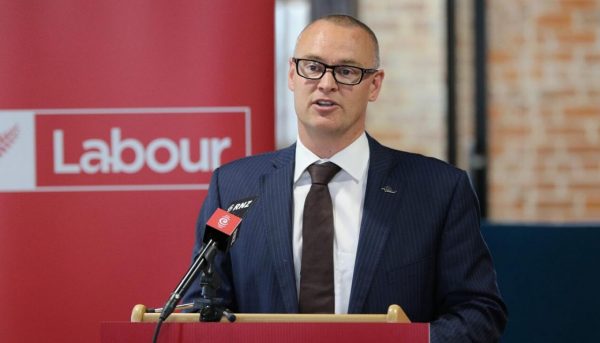
Fresh from getting rid of Chai Chuah, the bean-counter appointed to ‘lead’ the Ministry of Health under the National Government, Health Minister David Clark has little over a month to announce and appoint the Ministerial Review group to investigate the state of this country’s mental health system [“Set up a Ministerial Inquiry in order to fix our mental health crisis” – from Labour’s 100-day promises].
Although this is the key promise by the incoming Government, it is nowhere near all that needs to be done in the mental health space, with a raft of urgent improvements needed prior to the Inquiry’s completion in time for the 2019-20 Budget round. Some of the matters that won’t wait are:
- Attention to the far too low staffing levels across community and inpatient mental health services
- Provision of trained mental health staff in high schools and primary schools
- Full regional access to acute mental health services – not just in the main cities and not just 9-5, seven days a week!
Clark is expected to announce the membership of a five-person Inquiry Panel in January, with the group set to start work in February 2018. It is likely that it would include some ‘big names’ and noticeable Maori representation (our ‘picks’ include John Kirwan and Mason Durie – a Maori psychiatrist and professor of Maori Studies at Massey Uni), and we understand it will be ‘independent’, in the sense that – while it will report to the Minister – he won’t be running it, and the Panel will be free to make the recommendations to Government it believes are needed.
One of the sticking points we see is the current reliance by the Minister’s office on ‘advice’ from John Crawshaw, the National Government’s Director of Mental Health – a man who steadfastly promoted and institutionalised the previous Government’s failure to ensure resources and capability in the mental health sector kept up with community needs and community thinking. If the Minister is ever to break out of the ‘Yes Minister’ straightjacket in mental health, he must turn to the community, to service users and to coalface mental health workers for his advice (and by that we don’t mean a raft of self-interested psychiatrists currently employed by DHBs around the country).
In a recent meeting with suicide-bereaved whanau, Clark emphasised that the new Government was committed to a zero suicide target, not easy to achieve but – like the zero road deaths target – more than worthwhile aiming for. He also described current resourcing levels in the mental health sector as ‘putting people at risk’, something we could strongly agree with.
The suicide-bereaved network also asked the Minister to ensure that the voices of service users and family/whanau had the support to be heard clearly by the Inquiry – something we believe is essential for the truth to come out.
Overall, our year-end report card on the Government’s progress on mental health is “Progressing OK, but could do better, and could do it faster. Wee David needs to do his own homework, and must not plagiarise the notes he found left in his desk by the previous student who sat there.”
David Macpherson is TDB’s mental health blogger. He became involved in mental health rights after the mental health system allowed his son to die. He is now a Waikato DHB Member.


Mental health is an unknown area for most people because it is the pariah, the leper, untouchable. The less you know about it the better. Hence it has been easy for the medical profession over two or three centuries to claim it as their own because there must be a cause and it must be biological if we are to claim it since that is what we know about. (Compare the medicalisation of birth over the last 100 years.) But what if “mental health” were mainly a social problem. A failure of society to care enough for the damaged child, the traumatised adult. Who then are the professions to deal with this? And if not professionals who? In simpler, poorer societies mental health is less of a problem. Crazy people, unhappy people are included. If people are shunned they deteriorate or buy a gun. Having been diagnosed with several mental health “diagnoses” and having practised as a qualified social worker and counsellor, retired now, I have come to understand that the system is a revolving door whose main beneficaries are the professionals who work in it. Many people have a job caring for the broken hearted and crazed who have not coped with life’s pressures. Sometimes they help: often they don’t. Far too often. Might I suggest keeping the doctors on for emergencies and their know how about drugs that subdue; but provide support for the patients, those who suffer, through programmes that include those who have been there and done that as well as those who actually care despite their training.
I would hope consultation would also include consumer and family advisors nationwide.
Yes ^^ this to all in the above article. thanks for posting this.
Mental health was never going to be a quick fix – hence why Natiobnal turned a blind eye.
At least the New coalition government are listening to people involved in mental health fields, have set some goals and seem on the right track to try and meet them. Its a good start…
someone who is a strategic thinker, has lived ecperiemce and is not a pushover like Mary O’Hagan would be an excellent choice for the review committee. As you allude to many psychiatrists are part of the broken status quo and more of the same ( with perhaps a little more money) is not what we need
Recent reports have suggested as many as 90% of the people in NZ prisons are dealing with mental health challenges:
https://www.stuff.co.nz/national/politics/84031898/more-than-90pc-of-prisoners-have-suffered-mental-health-or-substance-use-issues
Some may have ended up in prison because of those challenges. Others may have had their mental health damaged by their experiences in prison, making them more likely, under the current system, to end up back there. Either way, this is a clear sign that existing mental health services are failing our people. Surely it’s far less expensive – not to mention more ethical – to fund the wrap-around mental health support services we need to keep our people well, than to fund the massive costs of incarcerating people for being unwell?
NZ is now such a broken society it has one of the highest suicide rates in the ‘developed world’.
Only a fundamental change in the nature of NZ society will stop the rot that is induced by the rampant commercialism and individualism fostered since the time of the so-called Labour government of the 1980s.
Correct, the masses in NZ Inc now worship Mammon, that is consumerism gone wild on steroids. They have been sucked into commercially promoted hunter and gatherer behaviour, thinking that buying things is ‘fulfilling’ and feeds their souls.
But a society as we have it, hell bent on consuming, on competing for everything at every level, where there is NO healthy, sustainable and safety offering social fabric anymore, that leaves those not able to ‘keep up’ with this game feel extra empty, as total failures, they may only find consolation in drugs and alcohol.
That though starts another vicious cycle, and drags many into totally dark places, and some opt out, or try it.
Once upon a time there were social organisations that offered some sense of belonging and so, we now ridicule many of them, they may have been churches, unions, clubs and societies. Nowadays few belong to such, and family has also changed its form, it is a highly individualised society now.
And as many are opportunity seekers, also going as far as betraying friends and family to ‘get ahead’, nobody really trusts anyone anymore.
I am not at all surprised at what we have, with such dismal social statistics.
We need a society that is ONE again, where people are humans, treat each others as humans, and where anything material comes second, not first. It will be a damned long and hard journey to get there though, as most are ‘addicted’ to the status quo, not at all willing to change much.