
Dave Macpherson – Cops the de facto mental health crisis go-to agency
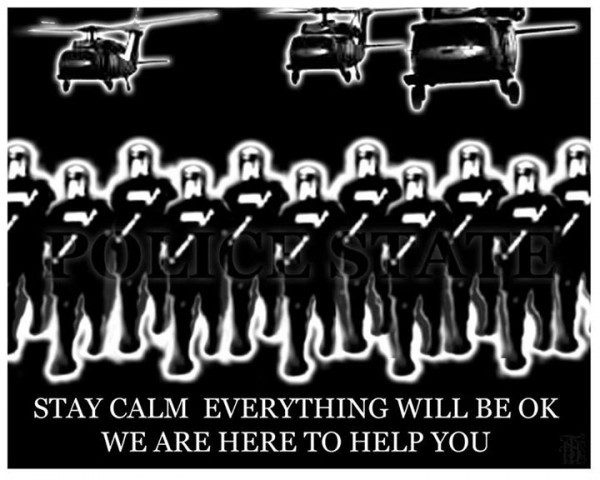
A mainstream news story last week highlighted the abject failure of this country’s mental health services to be available when they are desperately needed.
A young Greymouth man attempted suicide while in the midst of a possible cannabis-induced psychotic episode; but rather than a mental health crisis team arriving, Caleb – fighting for his life at that point – is attended by Police, who help resuscitate him and then find two cannabis plants in his back yard.
The cops do take Caleb to the acute psychiatric ward at Greymouth Hospital, but not before they charge him with three charges relating to the cannabis plants. He gets out after 5 days, but gets no ongoing support from the DHB’s mental health services for another nine months, despite a treatment plan calling for community mental health support for Caleb from the time he leaves Hospital.
He does however, end up with three convictions, three months’ community detention and nine months’ probation. While he’s off the cannabis, he’s yet – after 10 months – to hear what has happened with the court-ordered drug and alcohol counselling that he was supposed to attend after his sentencing.
In 2015 Vaughan Te Moananui, was shot and killed by Police in front of his family home in Thames. Vaughan was a community mental health patient of Waikato DHB at the time, and clearly going through a psychotic episode. The mental health crisis team took some hours to travel up to Thames from Hamilton, and the police had the responsibility of dealing with the immediate situation.
A former Police ‘crisis negotiator’ said Police often look for a convenient charge to lay against someone in Caleb’s situation, so they can get them into the cells where they can be restrained and assessed once mental health services become available.
Police are called out to ‘mental health’ situations around 60,000 times a year – about once every 5 minutes somewhere around the country – but to date are not trained to recognise or deal with mental illness. Nearly 20,000 of these are ‘suicide callouts’.
Every cop who has discussed this issue in the last several years has pointed to the health authorities’ failure to provide mental health crisis services to any realistic extent.
Shortly after the terrible Bremner murder/suicide deaths in late 2015 in Otorohanga and Kawhia, I attended a ‘community health forum’ in Otorohanga. A community health worker described a recent case where she had been asked to help a potential suicide victim late on a Fridayafternoon. After calling the Hamilton-based mental health services number, she was advised to ‘keep an eye on the person in trouble over the weekend and call again on Monday if he wasn’t any better’!!!
Waikato region, with a population of around 400,000 and driving times of up to 3 hours from Hamilton, has two mental health crisis teams. Sadly, it won’t be different from other regions.
The previous Government, continuing their pathetically inadequate response to the need, finally approved to start next year three (yes three) ‘pilot’ mental health crisis units for the whole country, comprising a paramedic, a cop and a mental health worker.
The new Government has identified a large range of urgent measures needed in the mental health space – we are unsure if this initiative will be urgently expanded, or even kept, but it is as sure as hell needed!
David Macpherson is TDB’s mental health blogger. He became involved in mental health rights after the mental health system allowed his son to die. He is now a Waikato DHB Member.


As you’re telling this I’m wondering who will be doing the training for police, teachers, and for the providers? How often will there be in-service refreshers?
Are the trainers actually there? Are the buildings there, including residential places for indepth training? Is it all going to be Auckland-based, as is becoming far too common?
And, when those people have completed their training, will they end up as stretched, isolated, and unsupported as the social workers? Will there be a sound requirement for senior staff to give them heed and support? Will the cultures be required to be accepting of ‘touchy-feely’ stuff?
Or will this be like the radiologists shortage we had a few years back – and probably still have?
Totally agree with Danyl – and would add in social contact to ensure that the person is actually eating properly (though that can be darned hard on the pittance).
I once spent an entire day at A&E in Wellington, trying to keep a friend from wandering away before he was seen by the mental health crisis team. This was a person who had been hospitalized for diagnosed bipolar at least once by this point. In the end, I had to convince the crisis team that my friend needed inpatient care, despite the fact he was quite clearly having a psychotic episode. Had I not been available to spend my day caring for this person, it’s likely the police would have ended up dealing with them.
This was in 2007, so much as I’d like to blame the Key/ English government, I can’t. While the NatACTs have done bugger all for mental health, so did the Clark/ Cullen government before them, and the Bolger/ Birch government before them. This is a problem that transcends party politics.
Speaking as a person who has struggled with chronic depression all my life, the most important thing a person struggling with mental health needs is a stable home, and a nutritionally complete diet, available on a regular basis. Without these things it’s impossible to stay well enough to do any of the others things that might help like attend counselling or psychotherapy, keep up with their meds, and so on. The current mental illness epidemic is a direct consequence of decades of failure to ensure everyone has a stable home, and can afford healthy food, resulting in successive governments spending more on crisis intervention, avoidable inpatient care, policing, and so on, than it would cost to fix the problem at its root. I live in hope that this government will be more radical, and get to the root of these problems.