
System Change not Climate Change
Unite is supporting the international climate strikes in New Zealand by scheduling legal stop-work meetings on Friday, September 27 in the main centres.
We are encouraging our members to start a discussion around the need for a transformation of economic and social life to stop the trajectory of the current system of constant warming to the point that life on the planet is threatened.
The basic science around climate change is clear. The earth is warming. It is the consequence of the industrial revolution associated with the capitalist form of production conquering the globe over the last 150 years.
Inaction will see the temperatures increase by 2 degrees on average by 2035 and possibly set off feedback loops that accelerate the warming process even more.
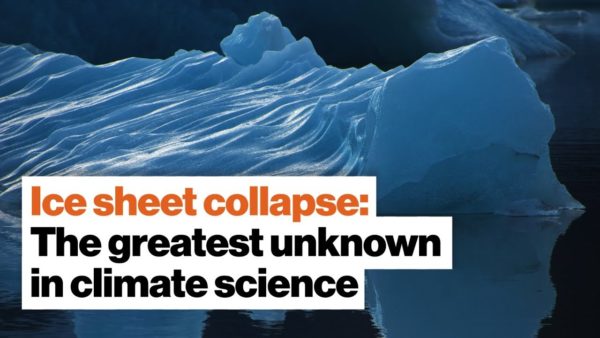
Already we are seeing the consequences of warming in the form of extreme weather events, spreading droughts, species extinctions, death of coral reefs, sea level rise, glacier retreat and ice sheet collapse.
The global community has committed into a non-binding agreement (with the US walking away), to try and limit warming to 1.5%. To achieve that goal individual countries are adopting their own targets and strategies for reducing greenhouse gas emissions.
New Zealand has three current greenhouse gas emissions reductions targets:
- a 2020 target to reduce emissions to 5 percent below 1990 levels
- a 2030 target to reduce emissions to 30 percent below 2005 levels
- a 2050 target to reduce emissions to 50 percent below 1990 levels.
The 2050 target is based on gross emissions but can take into account of removals of carbon from forestry expansion – hence the billion tree programme promoted by the government.
This 2050 target is dubbed a “net-zero” emissions level. Net-zero emission “means that all man-made greenhouse gas emissions have been removed from the atmosphere through reduction measures, thus reducing the Earth’s net climate balance, after removal via natural and artificial sink, to zero.”
New Zealand is using a system of trading carbon credits to achieve that goal known as the Emissions Trading Scheme.
This system was adopted in 2008 by the last Labour government and has been spectacularly unsuccessful so far. NZ’s net emissions increased by 65 percent from 1990 to 2017. New Zealand’s first plan to deal with climate change was adopted in 1988.
Emissions have at best flatlined since 2008 rather than decrease as promised. The world recession that started that year helped in that outcome. The scheme has already been amended twice to try and get it to work without success. The current proposals to bring agriculture partially into the system won’t change matters fundamentally.
The problem with a “Net” Zero target is that it can be used as an excuse to do nothing about actually reducing the emissions we currently emit while waiting for the ability to “offset” the emissions by planting trees, buying carbon credits from overseas, or promising to implement some means of carbon capture, without the technology existing to make that happen. The facts are: “So far, neither economically viable nor ecologically sustainable techniques have been found, although these would be essential in order to meet the 1.5 °C target.”
The international carbon market, including in New Zealand, has been riddled with fraud and deception with subsistence farmers being evicted from their lands in poor countries in favour of growing forests to earn carbon credits. “New Zealand has been a willing participant in a wholesale climate fraud,” reports the Spinoff.
Relying on “the market” to fix climate change is to rely on the very system that has produced the crisis.
The capitalist market does not have a conscience. It only has winners and losers. Winners are those who more successfully cheat their workers and plunder the natural environment more successfully than others. They are then able to produce their commodities more cheaply than their competitor and win a greater market share and eventually drive the competitor out of business. This is capitalism’s creative destruction.
The constant concentration and centralisation of capital, as a result, leads to the growth of powerful multinational firms run by billionaire families for their own enrichment. “Since 1988, a mere 100 companies have been responsible for 71 percent of the entire world’s industrial greenhouse gas emissions.” They are part of a system of 1500 Transnational Corporations controlling 80% of global revenue and production decisions. In New Zealand “10 companies produced 54.5 million tonnes of CO2 – more than two thirds of NZ’s total emissions.”
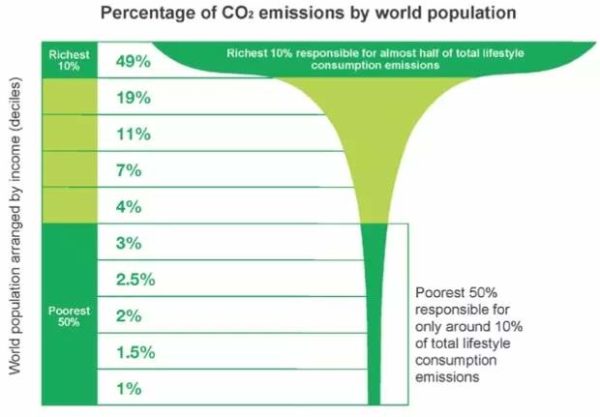
It is a system of tremendous inequality where the rich and powerful call all the shots. The rich and powerful are also the emitters of most greenhouse gases. An Oxfam study found: “The poorest half of the global population are responsible for only around 10% of global emissions yet live overwhelmingly in the countries most vulnerable to climate change – while the richest 10% of people in the world are responsible for around 50% of global emissions.”
So when it comes to finding “solutions” to climate change they are happy to impose regressive taxes on the poor to change our bad behaviour (remember the petrol tax) rather than attack the power of the energy barons or promote cheap public transport as an alternative.
It is also a system of endless growth. It has averaged about 3% a year for 150 years. That means the global economy doubles every 25 years. A capitalist economy of commodity production for profit is an ever-expanding rapacious beast that will also double the exhaustion of the world’s natural resources and the exploitation of human labour power.
The brutal truth is that 2018 was another record year for Greenhouse gas emissions despite decades of pretending to do something about the issue.
This reality is dawning on some climate scientists. For example, New Zealand’s award-winning climate scientist James Renwick made a speech that addressed some of these issues. As Newsroom reported September 16:
Moving towards a more sustainable way of living would require significant action, Renwick said. We would need to decarbonise New Zealand’s and the world’s economy, with our transport fleet a major offender – “it’s not just about plenty of wind turbines, we need to be powering everything renewably”.
The intensification of dairy farming was also not sustainable, with true sustainability requiring an eventual end to all forms of growth.
“On a finite planet, you cannot have growth of anything. Eventually you will use up either space or resources or whatever it is you’re talking about – we have to learn to live in a more static kind of way.”
He spoke of mātauranga Māori, the sense that people were “of the land, not on the land, it’s about decolonisation, not dominion”.
But what could any individual do, one audience member asked, when major offenders like corporations did not appear to suffer from the consequences of their environmentally unsustainable actions?
When people raised that with him, Renwick said, he thought of Greta Thunberg, the young Swedish activist who has become the face of climate activism to many.
“Her action has not caused corporations to stop doing what they’re doing, but she’s raised awareness and mobilised a whole lot of people, and that’s ultimately what I think needs to happen.
“Capitalist enterprises are designed to make a profit and not much else, and if we’re going to change that, then people are going to have to stand up and make that happen.”
It was that rise in citizen activism which had given Renwick heart, even if he remained sceptical about whether politicians would respond in the way they needed to.
“If we can’t get change we need fast enough through the processes that exist now, do we need to take some kind of action? I’m not advocating that and I don’t know what that would look like, but I do wonder…I still feel as if our elected representatives don’t quite grasp the gravity of all this.”
The Intergovernmental Panel on Climate Change (IPCC) has been producing reports warning of the dangers and what needs to be done since 1990. The problem has been that they presumed that we had the means to achieve their optimistic goals of climate change mitigation with massive use of offsetting and also being able to achieve the technological breakthroughs for carbon capture some decades into the future. This is actually passing the problem onto the heads of the next generation. James Hansen, US Climate scientist and former director of NASA’s Goddard Institute for Space Studies, says that “By continuing to delay significant reductions in greenhouse gas emissions, we risk handing young people alive today a bill of up to US$535 trillion. This would be the cost of the “negative emissions” technologies required to remove CO₂ from the air in order to avoid dangerous climate change.”
The awful truth is that since 1990, the world has burned approximately half of all the fossil fuels ever consumed.
Put another way, since the world decided action was needed to limit emissions causing global warming and eventual ecocide just over three decades ago, consumption has doubled.
However, the IPCC report from October last year had a sense of urgency and scale that had been missing previously. Maybe the scientists got tired of being ignored
What is needed now, the report’s summary states in its first sentence is “rapid, far-reaching, and unprecedented changes in all aspects of society.”
It said we needed to keep warming below 1.5% Celcius to avoid catastrophic degradation of all life on planet earth. Business as usual will see a 3-5%C warming world by the end of the century. To stop that scenario unfolding and achieve a 1.5% limit, now requires cutting global emissions in half in just 12 years and getting to net-zero carbon emissions by 2050. Because there is already too much carbon in the atmosphere we also need to draw down carbon through planting carbon-sequestering vegetation and trying to achieve breakthroughs with expensive and unproven technologies for carbon capture and storage.
As Naomi Klein explains in her new book On Fire: the Burning Case for a Green New Deal “Pulling off this high-speed pollution phaseout, the report establishes, is not possible with singular technocratic approaches like carbon taxes, though those tools must play a part. Rather, it requires deliberately and immediately changing how our societies produce energy, how we grow our food, how we move around, and how our buildings are constructed.”
Naomi Klein, some unions, and the new young Democratic Party politicians in the US like Alexandria Ocasio-Cortez have dubbed this the Green New Deal. As Naomi Klein explains: “The idea is a simple one: in the process of transforming the infrastructure of our societies at the speed and scale that scientists have called for, humanity has a once-in-a-century chance to fix an economic model that is failing the majority of people on multiple fronts. In tackling the climate crisis, we can create hundreds of millions of good jobs around the world, invest in the most systematically excluded communities and nations, guarantee health care and childcare, and much more: a Green New Deal could instill a sense of collective, higher purpose—a set of concrete goals that we are all working toward together.”
A similar proposal has been launched in the UK Labour Party.
The problem with the US Green New Deal is that like the IPCC reports themselves it lacks specifics as to how this can be achieved.
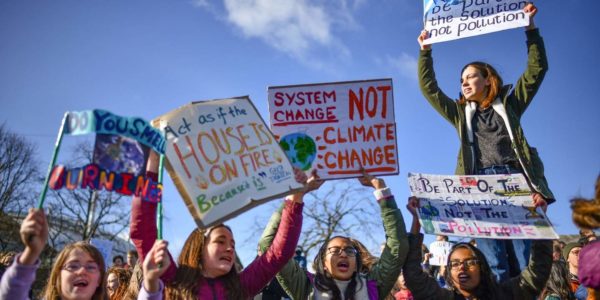
This is where the working class needs to step in and take a lead for proposing solutions that don’t just try and tinker with an existing broken system but points towards the need for system change to achieve climate change. Who else will fight to save the planet if not the working class along with its allies and potential allies among other social classes?
Otherwise, planting trees to offset current emissions is simply a form of public subsidy for emitting industries. The billion tree project in New Zealand then becomes a giant welfare scheme for the worst polluters paid for by our tax money to allow the emitters to keep emitting.
To achieve the goals we want the system of production has to radically change. Major industries and finance must be socialised and put under democratic control. The pursuit of profit as the sole determinant of success must be replaced by production that meets the needs of humanity. Then economic plans can be developed to decarbonise the economy whilst protecting the interests of the big majority of workers and farmers who are the real wealth producers.
For a start, the entire energy sector should be brought completely into public ownership and fossil fuel production radically reduced in favor of renewables.
All public transport should be in public hands and provided free or very cheap. This demand is growing in popularity. Petrol and diesel vehicles should be progressively eliminated in favour of public transport, railways for freight and electric cars.
Farming should be transformed to be first of all for local consumption rather than specialised export crops. Currently 95% of dairy production is exported. New Zealand should grow its own vegetables, fruits, grains wherever possible rather than importing these goods.
Finance should be centralised in a single publicly-owned bank that can lead the process of disinvesting from carbon and providing the necessary finance to priority projects needed today. That would include for starters: renewable energy systems to replace carbon, free and frequent forms of public transport, a warm, safe, accessible, and affordable home as a fundamental right. This would begin with the building of 100,000 public homes over ten years. Rent controls imposed on all private accommodation. Tens of thousands of new jobs would be created in the process and all guaranteed a living wage to ensure the just transition from those sectors of agriculture and industry that need to be transitioned away from with urgency. A shorter workweek with no loss of pay could be introduced to ensure everyone had time and leisure to access education and culture as of right.
Capitalism is also a system of empire and permanent war that drives climate change in its own right. Big business has shifted the worst aspects of modern industrial production into some of the poorest nations on earth to exploit the natural resources and labor-power that exists there. Commodities are then shipped back to the wealthy countries of North America, Europe, Japan and Australasia, who between them have produced the big majority of the accumulated carbon dioxide emissions in the atmosphere. The emissions for these commodities are then made the liability of the poor country rather than the rich one whilst shipping costs are ignored.
A just transition to a green economy would also be one that did not need to be focussed on endless growth. We have enough wealth in New Zealand and the world that can ensure everyone had a decent life if that wealth was owned collectively and shared equally.
Only working people across the globe have an interest in that sort of outcome.
In the words of one of my favourite writers on climate change: “The poor shall inherit the earth or there will be no earth left to inherit.”


Our entire survival is predicated on being able to drill a hole in the ground and have high density energy bubble out. We are living off our inheritance, not our income. Everything that keeps us alive, clean water, high intensity food production, heating, construction, refrigeration, etc relies on this cheap energy. It, and by extension our continuing existence, is unsustainable.
Fossil fuels are finite, a time will come when it takes more than a barrel of oil to extract a barrel of oil and by then it will be too late to invest in alternatives.
Kia ora Mike – great blog!
Not a silly idea….from RNZ website.
“Basically a dammed lake is like a giant battery, storing water to use when electricity is needed. So the government (via Meridian Energy, if it cut Comalco loose the next time its power contract came up) could release the supply from Manapouri at a set low price by only opening the floodgates at night.
That would mean electric vehicles, including big commercial vehicles, could be recharged overnight at preferential low rates, all without crashing the daytime electricity market by flooding it with cheap power.
Five years ago, when electric vehicles were a novelty, this would have a been a crazy idea. But it seems a lot more sane now, given that – for example – companies like Daimler are ploughing $US3.2 billion ($NZ5.5b) into developing e-trucks over the next two years. Could the government throw the logistics industry a bone by subsiding e-truck imports (as they are with private vehicles), while guaranteeing them cheap energy courtesy of the Manapouri dam?”
https://www.rnz.co.nz/news/on-the-inside/399142/counting-the-ways-climate-change-will-affect-us-and-how-we-will-affect-the-climate
” The best we can now do is prepare for the upcoming effects of a climate disaster. ”
So… let’s start preparing.
Wealth = Power = Climate Resilience?
Good positioning, transformational, highly relevant. Would be interesting having more of this perspective in the TDB.
The chart in the middle of the text (Source: Carnegie Science, Published by CargegieEnergyInnovation.org, Retrieved online August 27, 2018 from http://carnegieenergyinnovation.org/index.php/home/edc2018/) is very strong and allows multiple interpretation.
For the sake of further illustration. What, if we equal ‘rich’ with ‘power/influence’, and translate it into ‘capacity for adaptation’? Climate resilience would easily become a matter of wealth, economic and social stratification, class-structure.
Important for unions, too, is to strive for a mechanism that allows workers to effect the actual products produced, the design and the materials used, the harmlessness of the production process, adequate waste management and recycling, avoidance of externalization of environmental damages.
System Change. Now.
New publication:
https://www.undp.org/content/dam/undp/library/planet/climate-change/NDC_Outlook_Report_2019.pdf
The political and public will is not there. You can talk as much as you want about climate uprising etc, but it’ll never be to the extent we need it to be to garner immediate action. The best we can now do is prepare for the upcoming effects of a climate disaster. It may not be what you want to hear and you may still have hope in humanity that crucial societal changes will be made. But frankly that’s delusional, climate change effects will not be stopped.
“climate change effects will not be stopped.”
But they can be prepared for and adapted to.
“The best we can now do is prepare ”
So let’s start seriously preparing.
“New Zealand should grow its own vegetables, fruits, grains wherever possible rather than importing these goods.”
To facilitate this, the GST should be removed immediately from all locally grown fruit and vegetables, if not all NZ grown food produce.
This would benefit our growers as well as the health of our own people. Why are kiwi kids still going hungry, still missing out on the absolute basics of food requirements, when we live in a land that produces so much? Why is locally harvested honey, which is healthy, so much more expensive than imported sugar, which contributes to many illnesses.
Any temporary depletion in govt taxes would be more than compensated by the longer term significant health improvement of the population, of less drain on the Health System further down the line.
“fossil fuel production radically reduced in favor of renewables.”
Legislation to require that all new buildings, residential in particular, include solar panels.
Mini household windmills as well. Surely someone has invented a design that could be installed on household roofs.. Our wind is just wasted and it’s always blowing.
Well solar is already here, easy to install, easy to use, saves a heap, – ultimately everyone benefits. Why is it not yet a requirement for new homes?
call bullshit on the climate hustle