

MUST READ: Yes it could happen here. Facebook, Cambridge Analytica & the poisoning of electoral democracy
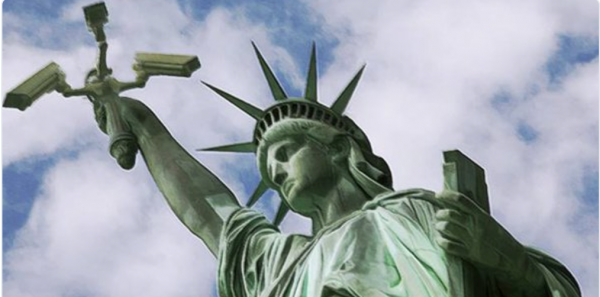
In the digital world one central paradox prevails – communication and surveillance are inseparable.
Pervasive, interactive networks enhance and extend monitoring processes because they gather information about user activity. Whenever we use electronic infrastructures such as wireless internet, smart card readers, credit card systems, ATMs and mobile phone networks private information is instantly collected.
Those who fully use the internet, social media, iPhone devices and multiple apps can expect to be fully surveilled.
Facebook best exemplifies the communication- surveillance paradox.
Over two billion users worldwide are prey to a business model which monetises their online activity.
The functionalities developed by Facebook`s managers and technical consultants encourage us to divulge ever more personal information about ourselves and others. The underlying purpose is to dissolve the distinction between the public and private spheres.
Facebook uses third party proprietary software to on- sell our demographics, consumer preferences, geographic location and conversational activity to major corporates, advertising agencies and market researchers.
Sometimes, individual Facebook users are secretly paid by commercial interests to promote products and elicit information from others.
With the demographic and psychographic information they have gained, corporates and advertisers pay Facebook for the right to micro-target users with ads, offers and enticements.
Mark Zuckerberg and Facebook`s institutional investors rort megaprofits from the free labour of Facebook users who are themselves the objects of unprecedented commercial surveillance.
Furthermore, as Edward Snowden`s revelations demonstrate, government surveillance carried out by the US National Security Agency and its `five-eyes` counterparts relies upon data mined from Facebook (as well as America–On–Line, Apple, Google, Microsoft, Pal Talk, Skype and Yahoo). This so called Prism programme collects, identifies and stores chatroom posts, emails, file transfers, internet telephone calls, log -in IDs, photos,videos and video conferencing footage. In short, online communication magnifies commercial and state-security surveillance.
The story begins with the Remain vs Brexit referendum of June 2016. In March and May last year Guardian journalist Carole Cadwalladr revealed that Nigel Farage`s Leave EU and Boris Johnson`s Vote Leave were supported by SCL elections/Cambridge Analytica and Aggregate IQ respectively.
Despite outward appearances these data-analytic companies and the two Brexit campaigns were working together on a daily basis. They shared the same database even though different strategies were employed.
Leave EU targeted disaffected, working class Labour voters with images of refugee queues. Vote Leave spooked middle England by claiming that EU bureacrats were receiving 350, 000 pounds per week from the British taxpayer and assuming control of the National Health Service.
Behind the scenes stood SCL/Cambridge Analytica owner Robert Mercer – American hedge fund billionaire, bankroller of Donald Trump`s election campaign, colleague of his chief strategist Steve Bannon and Leave EU`s Nigel Farage.
Mercer funded research undertaken by the two data analytics companies for the two main Brexit campaign groups. Electoral law in the UK implicitly opposes co-ordination between disparate campaigns and expressly forbids campaign funding from foreign donors. However, the actual strategies of digital/social media election campaigns are beyond legal scrutiny. Thus, Cambridge Analytica advanced Leave EU`s social media campaign by attracting supporters to its Facebook page and interviewing almost 500,000 Britons online.
From the demographic and psychographic information gleaned, different messages could be tailored to different voters. Such techniques were refined for Donald Trump`s 2016 election campaign, a process exposed by recent investigations from the Observer, the Guardian , Channel 4 and by the damning testimonies of former Cambridge Analytica insiders – Christopher Wylie and Brittany Kaiser.
It is now evident that Cambridge Analytica harvested the Facebook profiles of US voters in order to predict and influence their choices.
To this end Cambridge University academic Aleksandr Kogan built a data collecting app called thisisyourdigitallife through his private company Global Science research and in collaboration with Cambridge Analytica.
Approximately 320,000 US voters were paid $2-5 dollars to take a personality test that required them to log in with their Facebook account.
Individuated test results were paired with Facebook data such as likes ,dislikes and other personal information. Crucially, Kogan`s app based questionnaire also collected information about the test takers` network of friends.
Altogether, Facebook data was obtained from more than 50 million users. Algorithims combined the individuated Facebook data with other sources such as voter records to construct demographic/psychographic profiles. Individuals in the key swing states of Wisconsin, Michigan, Pennysylvania and Florida could then be sent customised campaign ads and messages.
Potential Trump supporters were encouraged to vote Republican while potential Clinton supporters were dissuaded from voting at all.
This micro-targetting of voters was not new; President Obama`s 2012 re-election campaign pioneered the process. By 2016 ,however, the scale and precision of data-analytics had advanced considerably, especially after the June Brexit referendum. Zuckerberg`s claim that the Trump campaign controversy was merely a one-off breach of third party data protocols should fool nobody.
In 2003 he built a website that allowed Harvard undergraduates to compare and rate the attractiveness of their fellow students and rank them accordingly. Student ID photos were harvested without permission and Zuckerberg was accused by the University authorities of breaching security, copyrights and individual privacy. Overall, the Cambridge Analytica/Facebook imbroglio is not just a matter of voter manipulation or `dirty politics`.
What we have here is the poisoning of electoral democracy on an industrial scale.
So, could this happen here? Absolutely it could. Facebook is our most popular online destination after Google Search. Over two million New Zealanders check Facebook daily and its attractiveness for advertisers is growing rapidly.
Under MMP our small voting public effectively constitutes a single manipulable seat. The psychographic dispositions of swing voters could be identified , targeted and manipulated without difficulty. Certain offshore and resident billionaires could easily meet campaign research expenses and hide their contributions behind blind trusts. In place of Cambridge Analytica would be another similar organisation with a friendlier sounding name. Election campaigns centred around the issues of tax, national sovereignty and/or oil, gas and coal exploration would certainly draw the attention of the one-percenters .
In such circumstances if Facebook allowed user data to be harvested it could simply ignore New Zealand privacy law because the Privacy Commissioner has no prosecuting authority. Facebook`s recent refusal to allow a complainant access to personal information held on the accounts of several users illustrates this. The social media behemoth is a law unto itself and a fundamental threat to the democratic process everywhere.


I disagree, actually. I don’t think that kind of thing would happen in New Zealand now at all.
You have to remember that the preparation for the CA scam occurred in 2014 using a data harvesting system that was shut down quickly afterwards. It might have been kinda useful back in 2016 for Brexit and the US elections, but that data is now four years old.
If there even was information collected from New Zealanders in that way (which I doubt).
That period will probably be looked back on as the peak of the data problem era and after that, companies had been at least recognising that they need to be more careful.
If you are not familiar with the problem: Facebook allowed web developers to make ‘apps’ or applications that used user information to provide services. This isn’t using data to sell you things, it was using data to provide genuinely helpful connections, for instance, one app was described as a employee head-hunt app that indicted to you all of your friends who had suitable experience or qualifications. There were probably others that linked us all up over cars, or other interests. In order for this to work, however, the app needed access to all of your friends, for instance, work history and/or qualifications. There were a whole bunch of things that were made available as people started making these, as I said, genuinely helpful apps. And it wasn’t secret information. The app was only gathering information from your friends you could see anyway and developers weren’t really meant to see it,(although they invariable would require access as part of the app) but in case they did, they were obviously made to sign confidentiality documents.
Unfortunately, others were not so scrupulous. Cambridge Analytica’s app ‘this is your digital life’ (or something) was designed simply to do one thing, access and download the information of the person providing the permissions, then access and download all of the information of their friends that it had access to. Then, I suppose, the site would spit out some random thing like ‘yes, you’re smart’ to keep the ruse going.
Once FB figured people had figured this out, they quickly moved to shut it down. It was a moment in time where they were too lax and too trusting of developers and things are very different now.
And there are umpteen things Facebook are changing that nobody here (or anywhere, really) are discussing that have way more import than what happened to some data 4 years ago. Things like closing custom audiences and the reach guess system which, when combined, allowed (through painstaking effort, but doable none-the-less) malicious actors to build up a database of all users and the each of the behavioural characteristics that defined them as advertising targets, complete with direct reference to their email addresses and phone numbers. That was way more of a problem than CA ever was.
I think this episode has been a turning point in privacy online with the EU regulations. I think we have seen the first speed brakes put on the data rentiers. I think social media is going to change after this. The only way social media revenue can grow (other than brute screen hours) is by innovation in data use. Fortunately, I think we have seen the end of ‘innovative data use’. Perhaps we have got to the ‘seat-belt’ phase, or the point in the development/maturity of social media where we may have put the equivalent of speed limits in that still allows social media to function effectively, and even sell us things from time to time, but not at the same high-value but highly-intrusive way it used to.
The spotlight has been shone and the area disinfected as we speak
I agree the focus on CA and the potential use of FarceBook to manipulate voters in a couple of key election is far too narrow. It’s like someone with a massive stomach cancer complaining getting upset about a pimple on their belly. Like cancer, the problems with FB are terminal, and didn’t start or end with CA:
http://www.salimvirani.com/facebook/
“In the digital world one central paradox prevails – communication and surveillance are inseparable.”
At the risk of sounding a bit paranoid, this is what FarceBook et al want you to think; “you have two choices folks, be used by FB, or live in a log cabin with a typewriter like the UnaBomber”. It’s a false choice.
As Richard Stallman and the rest of the software freedom movement have been saying for decades, you can use computers and networks *and* have your rights and freedoms respected. But you can’t do it if the tech you use consists of mysterious black boxes, which users don’t have the Right to Repair, manufactured and controlled by corporations. The structural and cultural reasons for this are explained in a very accessible style by Doug Rushkoff in ‘Life Inc.’ and ‘Throwing Rocks as the Google Bus’. One of the key problems is that the operators of corporations believe in “The Divine Right of Capital” (to quote the title of Marjorie Kelly’s book), and ignore the interests of everyone who isn’t a shareholder, including the users of digital devices and internet services.
Remember the old Indymedia saying, “don’t have the media, become the media”? It applies to corporate “social media” for all the same reasons it applies to corporate broadcast media, and setting up community-controlled social networks on the net is much easier than setting up your own television or radio station, or even your own newspaper or magazine. For tips, see:
https://www.coactivate.org/projects/disintermedia/blog/2017/04/01/a-brief-history-of-the-gnu-social-fediverse-and-the-federation/
I remember a time before smart phones when cell phones where dumb, calls and text only. We’d just ring to organise, it made our lives a heck of a lot more efficient and profitable. Being late to work was nothing because you could ring in peak hour tragic. Now people are late to work because they’re distracted on there phones with alerts or getting run over by a train. Smart phones is the new sugar crack every one craves but think it’s not harmful. That’s why you have to not pick up a smart phone before you’re 18 so you can get some perspective. Once you have a perspective it’s easier to dismiss unsolicited charlatan educators selling learning platforms that only make them money.
Or something like that.
I’ve never had a facebook account. I’m pro-Leave and Tony Benn influenced my view on Brexit a damn sight more than Cambridge Analytica could have.
Lots of people new the EU would brake up, except for the people running the EU. Brussels is so tone deaf.
One should read what Glenn Greenwald has to say about Facebook…
and also what I have written as a Guest Blog.
Google too is denying readers, searching for information, access to ‘left-wing sites’ unless they are specifically asked for.
If any person believes in ‘peaceful resistance’ and ‘education’ and the likes, go and bury yourselves, you are obsolete as advisors.
That is a very good point, Lois. Many progressives applauded this at first because they thought it was just a clampdown on the ‘alt right’ or whatever other deluded strawman they wish to make of commentators whose influence and opinion they find inconvenient. But now an increasing number on the left are having the same treatment. First they came for…
Totally agree. Inevitably the people who ban hammer are the people you don’t want as political leaders.
You must be wrong, Wayne, this is the ‘purest’ and ‘greenest’ country on earth, all so ‘honest’ people, all doing ‘no harm’ to each other, all so ‘trusting’, and good sorts.
And all the well off immigrants, we ‘need them’, we offer them ‘opportunity’, you cannot suggest they come to manipulate us, can you seriously?
This is NZ Inc the ‘purest of the pure’, where fairies dance in light air, and all join into the dance, so do not suggest such dark and sinister thoughts, to such an ‘innocent’ people of purest of minds and souls.