

National, ACT and NZF represent the Privatisation of Democracy
Let’s be very clear over what is happening under this hard right Government, they represent the Privatisation of Democracy where the common good is strangled for their donors interests…
Ministers Shane Jones and Chris Bishop continued to make decisions about several fast-track projects despite their respective parties receiving donations linked to the applicants.
One political scientist says such donations could be perceived as a conflict of interest and erode public trust in government.
…20 of the Richlisters donated millions to the right while David Seymour goes on an Atlas Network speaking tour…
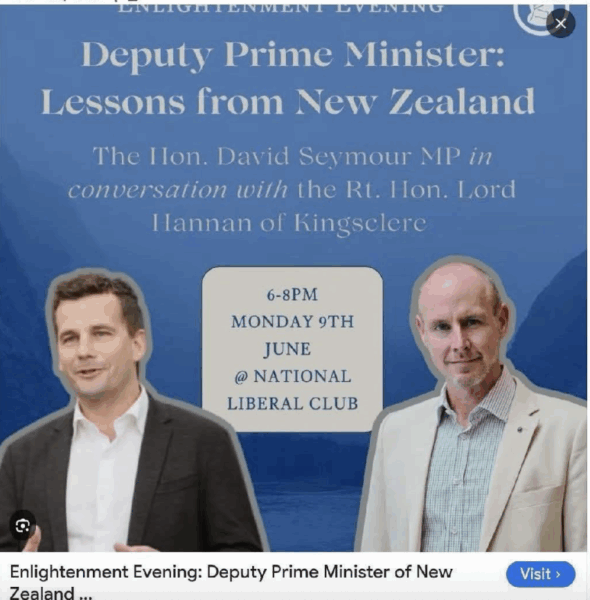
…the last election as a bitter post-covid grudge fuck against Labour with voters electing a hard right Government they didn’t fully comprehend and this malaise of crony capitalism is everywhere…
Wayne’s mate’s rates – $300k a year contract
…the corrosion is everywhere
Alcohol lobbyists given input on health policies, documents reveal
Booze industry lobbyists have been granted input into the development of alcohol policies, including how to deal with Fetal Alcohol Spectrum Disorder.
Documents obtained by RNZ also show that references to a review of safe drinking guidelines were removed from an Health New Zealand website after an alcohol lobbyist complained to Ross Bell, a manager with the Ministry of Health’s Public Health Agency.
The papers, released under the Official Information Act and sent anonymously to RNZ, show the booze industry has been given input into several government initiatives to tackle alcohol harm.
An October 2024 email from New Zealand Winegrowers to Bell, which copies in a lobbyist with the spirits industry, shows the extent to which alcohol lobbyists are involved in the Fetal Alcohol Spectrum Disorder (FASD) strategy.
…Labour is starting to fight back…
Labour proposes law to restrict big tobacco lobbyists influence on government
Labour has taken aim at big tobacco lobbyists with a proposal designed to severely restrict their influence on government.
The opposition party has repeatedly accused the coalition of being in thrall to the tobacco industry after it rolled back Smokefree laws early this term.
…but look at what National did last week when no one was looming, appoint a Dairy Polluter as the Chief Science advisor…
Greenpeace slams PM’s science pick: “Polluters are running the show”
Greenpeace says the appointment of a former DairyNZ scientist as Prime Minister Christopher Luxon’s Chief Science Advisor shows the Government is handing power to polluters.
“For years, DairyNZ has ignored science and lobbied to weaken protections for rivers, drinking water, and the climate,” says Greenpeace campaigner Amanda Larsson.
“We’re facing a climate and nature crisis. The dairy industry is New Zealand’s worst environmental polluter, and science shows we need strong limits on it to protect the environment and our future. But instead of taking action to restrict intensive dairy’s pollution, Luxon is allowing industry lobbyists to sit at key decision-making tables.”
Larsson warns that the appointment could further undermine action on climate change. She says DairyNZ has led efforts to promote misleading methods for measuring methane emissions from livestock – methods that downplay the need for real cuts to climate pollution from intensive dairy.
…appointing a climate denier for the Dairy Industry to be the Chief Science Advisor is like appointing a pedophile to run a kindergarten FFS!
It’s not just the Left who are criticising this, watching the political right eat one of their own helps illuminate their true intentions and real values…
Integrity Briefing: NZ’s “Chumocracy” and the suppression of Prof Robert MacCulloch
New Zealand’s “soft corruption” has been called out this week by leading economics professor Robert MacCulloch of the University of Auckland. He’s launched some heavy broadsides at the way that political and business elites in this country are ruining the economy and the political process by their dysfunctional hold on power in which dissent and debate are suppressed using patronage and threats.
MacCulloch’s criticisms come about in the announced closure of his website, which he says is due to pressure from Cabinet Ministers and others. His main complaint seems to be that New Zealand is run by a “chumocracy” of mates whose “cosyism” is leading to national decline.
Cabinet cancel culture?
MacCulloch announced this week that he is closing his long-running blog, explaining that “National, Labour and Big Business NZ have begun to complain & threaten me at the highest levels about my writings. The game has become clear. Continue doing so and it will mean the end of your career” – see: DownToEarth.Kiwi Closing Due to Threats from National & Labour Parties & Big Business NZ Incorporated
MacCulloch, possibly New Zealand’s leading academic economist, has been fearless in combating oligopolies in the economy and exposing the “cosyism” in our political system. As his last blog post says, he’s “exposed the links between the Big Banks, Supermarkets & Building Firms with our Minister of Finance and PM. It has all been too much for the establishment to bear.”
In interviews and writings this week, MacCulloch has outlined how the attempts of himself and others to hold powerful interests to account have been met, not with reasoned rebuttal, but with threats, blacklisting, and institutional pressure designed to silence dissent. His experience provides a rare insider’s account of how New Zealand’s political and business elite police the boundaries of acceptable debate. MacCulloch explicitly claims to be closing his website after receiving “threats from current and former cabinet ministers.”
He has also recounted specific threats and institutional pushback, such as the supermarket chain Foodstuffs attempting to silence critiques of the duopoly by contacting Auckland University over a colleague’s writing. He also revealed that a director of a major New Zealand corporation had recently complained to his employer about his writing. The impact is chilling.
MacCulloch also highlighted the danger of defamation lawsuits and the real risk of being labelled a troublemaker: “You get excommunicated from the little cosy group of inbred Wellington officials and high-ranking boards.” He says he has become “persona non grata”.
…welcome to my world!
Look at his criticisms of what the Rights values truly are…
Political appointments as patronage
MacCulloch’s core accusation is that New Zealand operates on a system of “soft corruption.” This week, he has explained what this means: “there is a high level of soft corruption going on in the country, and I’ve learned about corruption in New Zealand. It usually is not money under the table like it is in most countries and suitcases of cash. Corruption in New Zealand takes the form of you scratch my back, I scratch yours.”
The message conveyed to him, particularly from figures associated with the current National-led Government, was that positive political commentary would be rewarded with political appointments. He relayed the type of messages he receives from politicians: “You write lovely articles about us, and you tell everyone how wonderful we are, and there’s more likely to be… something in it for you. Oh gosh, you know, maybe you’ll be put on a board or something.”
MacCulloch argues that this patronage system is how the “inbred club” maintains control over appointments to high public and private offices. It’s about ensuring that only those who toe the line and don’t rock the boat are considered for positions of influence, be they directorships or advisory roles. This creates a powerful incentive for self-censorship among academics and commentators who might otherwise offer robust critiques.
In an interview on The Platform with Michael Laws this week, MacCulloch said he was essentially excommunicated by New Zealand’s political establishment for criticising government economic policy and elite appointments. The final straw for him, he said, was the accumulation of pressure from current and former Cabinet Ministers, who made it clear that his public commentary had made him unwelcome in influential circles, including appointments to public boards and advisory roles.
MacCulloch has tenure at the University of Auckland and says he has no ambition for public roles. However, his case illustrates how dissent is discouraged not by direct censorship but through reputational smears, legal intimidation, and the closure of career pathways. He simply asked: what’s the upside of dissent when the costs are so high and the returns nil?
A central theme in MacCulloch’s recent and past analysis is the existence of a “cosy inbred club” running New Zealand. This cosiness, he argues, comprises interconnected individuals across politics, the corporate sector, and the civil service, who are often “promoted way beyond their abilities.”
Of this widespread cronyism (or “corrupt inner circle”), MacCulloch observes: “Every high-status job in the country is just a job for mates”, and appointments are “so corrupt it’s beyond belief – now it’s just a group of people going from one big job to the next even when they’re not qualified and don’t deserve the job.” He argues that the last Labour Government entrenched a culture of ideological appointments, and the National-led Government is continuing the same pattern — just swapping in their own preferred cronies.
…the Right implement donors interests at the cost of the common good because that’s all the values National have, donor interests.
Look at the manner in which the 4 Aussie Banks can rob us of monopoly profits while running policy…
MacCulloch’s allegations about the influence of big banks
Probably the blog post that got MacCulloch into the most trouble was his recent argument that Finance Minister Nicola Willis forced out Reserve Bank Governor Orr on behalf of the big banks – see: Incriminating evidence now points to Finance Minister Willis forcing out Governor Orr to take over the Reserve Bank of NZ on behalf of the Big Banks. In this, he alleged that Willis, acting on the advice of lobbyists and corporate lawyers, pushed for looser capital requirements at the behest of big banks and circumvented the Bank’s statutory independence.
His account catalogued a series of interactions: meetings between Willis and lawyers with lucrative public contracts, secret consultations with the New Zealand Initiative (where she previously sat on the board), and the elevation of insiders to oversight roles in the banking sector. He also noted the sudden shift in the Reserve Bank’s policy after Orr’s resignation as further evidence of political pressure. His most damning allegation is that these moves were orchestrated to serve the interests of monopolies (especially the big banks) and that Willis is now acting on behalf of those oligopolies rather than the public.
MacCulloch alleges that Willis is “doing the bidding of the big banks” and questions her motivations, suggesting a link to her former boss, John Key, who chaired ANZ Bank, a job she “also covets when she retires from politics.” He highlights that while Willis orders the RBNZ to potentially cut capital requirements, Australian regulators are ordering ANZ to increase theirs.
This has been a recurring theme in MacCulloch’s recent work – about the influence of corporate interests on the National-led Coalition Government as a whole. He claims Willis takes advice from lobbyists and “people you just wouldn’t believe”, including lawyers with questionable histories.
More broadly, MacCulloch decries the National-led coalition’s reliance on “ghosts exhumed from the past,” pointing to a string of appointments of figures from the John Key era to significant review and governance roles: Bill English, Murray McCully, Paula Bennett, Simon Bridges, Steven Joyce, Lester Levy, Peter Gluckman, and Neil Quigley. This, he argues, shows a lack of new thinking and ensures “we ain’t no meritocracy anymore.”
…and of course the Free Market NZ Initiative is behind it all…
MacCulloch highlights the oversized influence of The New Zealand Initiative
MacCulloch’s ire frequently targets the New Zealand Initiative, a think tank he repeatedly labels as the “National Party’s Adviser / Think Tank” and a lobbying group for corporate monopolies.
He highlights the connections:
-
- Finance Minister Willis was a Director of the NZ Initiative.
- The Prime Minister’s Chief Economic Adviser, Matt Burgess, was a Senior Economist at the Initiative and previously advised Bill English. Chris Luxon, as CEO of Air New Zealand, also used to attend Initiative meetings.
- The Initiative’s board includes figures like Scott Perkins (Non-Executive Director of Woolworths), Chris Quinn (Chief Executive of Foodstuffs North Island), and Barbara Chapman (former Chair of a Big Bank).
- The Chair of the NZ Initiative, Roger Partridge, is also the former Chair of Bell Gully, where Willis’ father was a partner.
MacCulloch accuses the Initiative of being “Pro-Monopoly, Anti-Consumer.” He cites their support for the Foodstuffs North and South Island supermarket merger, their push for lower bank capital requirements (which he argues would shift risk to taxpayers), and their opposition to requiring internet giants to pay for local news content (Google is a member of the Initiative).
He argues that the National Party hasn’t done the necessary work on economic policy, which means that the NZ Initiative can step in with some ready-made answers, which the Government essentially adopts as its policy. In this sense, MacCulloch accuses the Initiative of being a cypher for what the oligopolies want implemented by the Coalition Government.
The big banks, electricity companies, supermarkets, property developers, and petrol companies tell the NZ Initiative what policies would suit their businesses the best, and this is passed onto the Beehive, which loyally seems to implement them. According to MacCulloch, this has resulted in the Coalition Government becoming pro-monopoly.
This type of influence, together with donations and corporate lobbying, means that New Zealand’s political parties have been brought off. MacCulloch says such politicians should be forced to declare these connections: “It’d be good for them to be required to wear their gang patches announcing to Kiwis who and what they truly represent, rather than hiding in shadows.”
…you will remember Damien Grant ended the sponsorship of The Working Group because I was critical of the NZ Initiative.
The NZ Right use political leverage to implement their interests and pretend that’s social and economic policy.
This Privatisation of Democracy has turned Kiwis into simpering slaves to corporations and it’s sickening!
Look at how National, ACT and NZF ram through deregulation policy for their donors interests.
Look at how the Agricultural Industry bought and paid for the environmental policy under this government!
Look at how ACT destroyed 2000 local jobs for school lunches so they could give the multi hundred million dollar contract to a large international transnational.
Look at how the NZ Initiative plus the Atlas Network are pushing the deregulation agenda for National, ACT and NZFs donors interests!
Kiwis have accepted all of that because they have allowed their anger and hatred at culture war issues to be manipulated by the Right to legislate for their donors!
The Right have gotten you so twisted by the trans debate, by Māori road signs and orange road cones that you have dropped to your knees to kiss corporate arse!
You are willingly being slaves to corporations because fuck that Trans kid right?
You are handing over your personal sovereignty to corporations because Māori is spoken during the weather!
You are agreeing to be a prostitute for corporate profit margins because a vaccine against a once in a century pandemic somehow doesn’t meet you standards?
Comrades, your enemy isn’t some kid transitioning, it’s not a Māori woman in politics, Māori women in media, Māori women outside walking (we really do have a problem with giving our Māori women comrades crap)
Your enemy isn’t drag queen story time, it’s not environmentalists, it’s not beneficiaries, it’s not state tenants, it’s not renters, it’s not the Treaty.
Your enemy is who it’s always been, the banks, the billionaires, the corporations, the powerful who use social media hate algorithms to warp you into believing their interests are your interests when nothing can be further from the truth!
How have you allowed you post-covid bitterness, hatred of trans, fury at vaccines and rage at Māori to blind you all to being whores for corporations?
We are having the common good strangled for corporate power manifested most venally in the Regulatory Standards Bill that will allow Corporations to vet all legislation to ensure property rights trump human rights.
TDB has been making these points for the last few years, watching those exact same criticisms from someone on the Right who has been blacklisted for coming to the same conclusions should be awake up call to just how welded the interests of the far right and corporate greed have become in NZ Politics.
We have allowed our post-covid bitterness to blind us to what National, ACT and NZF have become.
We must resist this, we must push back and stand against these cruel and selfish interests.
We need to be kinder to individuals and crueller to corporations!
Increasingly having independent opinion in a mainstream media environment which mostly echo one another has become more important than ever, so if you value having an independent voice – please donate here.


NZ is for sale to any off shore rich corporation that has a lobbyist in NZ .They will be able to buy roads ,water and the ferries on day one .
When Labour gets in, I dare them to get Russell Norman or James Shaw appointed as the Chair of Fonterra or Beef&Lamb NZ.
Mmm kiwiana. Here is a saying that comes to mind. And more to read if you wish. “Politics is the art of the possible,” a quote from Otto von Bismarck, of Germany.
You setting up challenging ideas as the necessary and right way to go for Labour would be of value I’m sure if they did it. But you can never be sure actually, as reading about Otto von Bismarck in Germany shows. It could be instructive to read some of his thoughts and actions which seemed good to him, but Germany went soon into WW1 and later WW2. How to achieve rational, fair economic stability and conditions?
Reading about Bismarck and the principles and practicalities that he adopted, it all sounds reasonable and yet Germany committed itself to war twice soon after his time.
https://en.wikiquote.org/wiki/Otto_von_Bismarck
* The social insecurity of the worker is the real cause of their being a peril to the state. Speech to the Landtag (18 October 1849)
* Hit the Poles so hard that they despair of their life; I have full sympathy with their condition, but if we want to survive, we can only exterminate them; the wolf, too, cannot help having been created by God as he is, but people shoot him for it if they can. Letter to his sister Malwine (26/14 March 1861),
* I shall soon be compelled to undertake the conduct of the Prussian Government. My first care will be to reorganise the army, with or without the help of the Landtag. … As soon as the army shall have been brought into such a condition as to inspire respect, I shall seize the first best pretext to declare war against Austria, dissolve the German Diet, subdue the minor States, and give national unity to Germany under Prussian leadership. I have come here to say this to the Queen’s Ministers.
Remarks to Benjamin Disraeli (1862),
* It is not by speeches and majority vote that the great questions of our time will be decided — as that was error of 1848 and 1849 — but rather by iron and blood.
Speech to the Budget Commission of the Prussian Diet (30 September 1862)
* Only a country’s most vital interests justify its embarking on war. … Aye, I made the war of 1866, fulfilling my harsh duty with a heavy heart, because without it the nation would have bogged down politically, soon to fall prey to avaricious neighbors; and if we stood in the same place where then we stood, I should resolutely make war again. Never, you may be sure, shall I counsel His Majesty to wage war unless the innermost interests of the fatherland request it.
Speech during the Luxembourg Crisis (1867),
* The era of Bismarck (1861-90) saw the Concert of Europe at its best. In two decades immediately following Germany’s rise to the status of a Great Power, she was the chief beneficiary of the peace interest. She had forced her way into the front ranks at the cost of Austria and France; it was to her advantage to maintain the status quo and to prevent a war which could be only a war of revenge against herself. Bismarck deliberately fostered the notion of peace as a common venture of the Powers, and avoided commitments which might force Germany out of the position of a peace Power. He opposed expansionist ambitions in the Balkans or overseas; he used the free trade weapon consistently against Austria, and even against France; he thwarted Russia’s and Austria’s Balkan ambitions with the help of the balance-of-power game, thus keeping in with potential allies and averting situations which might involve Germany in war. The scheming aggressor of 1863-70 turned into the honest broker of 1878, and the deprecator of colonial adventures. He consciously took the lead in what he felt to be the peaceful trend of the time in order to serve Germany’s national interests.
Karl Polanyi, The Great Transformation (1944)
* According…to our Individualist and Free Trade friends, Prince Bismarck ought to have come to the conclusion that German industries were from “natural causes” unfit as compared to their British rivals; that they could never hope to hold their own in the struggle for existence, and that it would be cheaper to buy in the British market. That great statesman, who was never deceived either by the ideologues of Individualism or the ideologues of Socialism, saw very clearly that though this might be the case for the moment it need not be the case in all perpetuity, but that to give way for the moment was to give way for ever. English goods might beat German goods for the given year, but granted a tariff and the encouragement of State-aid, German goods might be beating British in under a quarter of a century. The static comparison was against the German Empire, but the dynamic impulse given to German industry by the tariff of 1878 has carried her right to the front, and the result of the policy has been of enormous profit to the German exchequer.
F. E. Smith, “State Toryism and Social Reform”, Unionist Policy and Other Essays (1913), p. 38
* … He answered by calling himself a Socialist, indeed a more practical Socialist than the Social Democrats… The system of Social Insurance which Bismarck inaugurated in 1881 and completed in 1889 just before his fall would be enough to establish his reputation as a constructive statesman even if he had done nothing else… German social insurance was the first in the world, and has served as a model for every other civilised country.
A. J. P. Taylor, Bismarck: The Man and the Statesman (1955), pp. 202-203