

How Ben Thomas saved Waitangi Day 2023
Politicians who exploit “fear” resulting from a lack of clarity in the co-governance debate need to reflect on their actions, Prime Minister Chris Hipkins says.
He said he “loves the phrase mahi tahi”, meaning to work together as one, and admits the Government’s large work programme has caused confusion.
“I think [the term co-governance] has been misunderstood. Those who seek to use misunderstanding around it for political advantage need to reflect on their own behaviour.”
The level of racism that ACT and National have fostered to attract the feral new redneck has pushed the debate into dangerous territory with a level of conspiracy that makes Qanon look rational.
As far as some of the Right Wing Trolls are concerned co-governance is a secret Māori Coup to steal democracy and reverse the one-white-man-one-white-man-vote rule of democracy which boils down to the status quo that benefits them most thanks.
That’s why Ben Thomas, one of the architects inside the National Party who created co-governance is this Waitangi Day’s must read…
Ben Thomas: Dump the ‘co-governance’ name, it’s too tainted by confusion
Ben Thomas is a commentator and public relations consultant who has worked on both government and private sector projects, and for a minister in a National government. He is a regular contributor to Stuff.
OPINION: In the first days of Chris Hipkins’ prime ministership a historical consensus was reached by the leaders of our two major political parties about the vexed issue of co-governance: no-one, Chris Hipkins and Christopher Luxon each volunteered, really knew what it was.
It might have been sensible in that case for the protagonists to define the term, or even better drop it all together, at least as far as references to a supposed “co-governance agenda” centred on the He Puapua report prepared for Nanaia Mahuta in the last term of government are concerned.
Alas, it was not to be. The politicians instead doubled down on arguing about whether co-governance was good or bad, whatever in fact it was.
With Waitangi Day looming, and an apparent reset of the Government’s position on co-governance signalled under Hipkins, let’s take a breath to set out what some of these ideas mean.
First, my qualifications and conflicts on the subject: I was around for the genesis of the policy of using “co-governance” as a mechanism in historical Treaty claims in the last National government. I was the press secretary for the Treaty Minister, Chris Finlayson, and I really wish I had spent a few hours then whiteboarding some suggestions for a better name.
I have since worked for iwi who all have interests in co-governance mechanisms. Neither of these experiences at all resemble the fevered public discourse about what has somehow become known even in non-conspiratorial media as the current Government’s “co-governance agenda”.
The real mystery is that there is no evidence there is one. It may be a final testament to the scattershot political mismanagement of the Ardern Beehive’s last year or so that it managed to turn a non-existent “agenda” into an ongoing political catastrophe.
The history of co-governance is as follows.
It was a practical solution to certain historical Treaty grievances relating to iwi disconnection from especially significant natural resources, that could not be easily redressed with money or the transfer of public land: for example, being alienated from a river that had previously been the key to food, community, transport and spiritual life. On the understanding that a river was a natural resource that could not be turned over into private ownership, even its traditional owners, the solution was to share the governance and direction setting for the management of the river and its environment between, say, local council and iwi.
This allowed for the exercise of tino rangatiratanga, guaranteed in article two of Te Tiriti, and variously translated as chieftainship or an authority with corresponding responsibilities, over the Treaty partner’s lands, people and taonga.
So, for example, recognising the historical, cultural and spiritual importance of Auckland’s volcanic cones (maunga) to the tribes of the region, property title to the mountains was transferred to the Tāmaki Collective of 12 iwi, and governed by an authority whose members were half appointed by the council and half from the Tāmaki Collective. A statutory regime outlined the values under which the maunga would be governed, including continued public access.
ACT leader David Seymour has suggested, from a property rights perspective, the outright transfer of public land without encumbrances would have been a perhaps more just outcome for claimants in some cases. As with much in the Treaty space, it is a compromise agreement: allowing for the exercise of rangatiratanga while also recognising the Crown’s kawanatanga (its right to govern) and the public good of these precious natural resources. By necessity, the exercise of rangatiratanga is incorporated into the formal language and instruments of government – that is, legislation enacted by Parliament.
At base, all parties in Parliament agree that co-governance as a principle describes this mechanism: an oversight body with a particular purpose, with representatives appointed by the Crown (or council) and by the Treaty partner.
The key feature in practice of a co-governance arrangement is that some of the governance body are appointed by the Crown or its representatives, and some are appointed by Māori through their traditional authority such as iwi. The split will often be 50/50.
This model could be more widely used, but it starts to lose coherence outside the context of traditional geographical boundaries.
That is why the new Māori Health Authority is not a co-governance arrangement. Iwi do not appoint their representatives. The MHA is a Crown agency, with a board appointed by and answerable to the Crown, and with responsibilities to try to address the dire state of Māori health outcomes across the country compared with most other ethnic groups. The argument is not about ‘co-governance’ but whether or not this extra piece of bureaucracy will achieve anything. That is a question of bureaucratic design, not race.
The general proposition that Māori should be involved in decision-making affecting Māori is beyond doubt. Farmers should be involved in decisions affecting farmers. Government does not have a monopoly on wisdom or knowledge, and by definition will lack much of the practical knowledge itself to make good policy and effectively deliver services.
The problem is that the word co-governance is now tainted by confusion and misuse. It’s probably time to abandon it. Agreements over natural resources can go back to being called co-management agreements, and the rest can be called what it really is: new Wellington-based bureaucracies to co-ordinate services iwi should just be empowered to provide on the ground themselves.
…in one column, Ben actually states and names what Co-Governance is, and as one of the creators of that process, you clearly see it is no Māori coup at all!
Settlers ultimately fear that they will be treated as badly as their forebears treated the indigenous people they stole from when the issue of historic injustice is raised, and that’s why so many Settlers flinch when reminded of this historic injustice in NZ.
When Elizabeth Rata coined the phrase ‘Ethno-Nationalist State‘ to describe attempts to share power with Māori as promised by the Treaty, every right winger wanting to be racist found glee in the shielding of their bigotry by the pretence of intellectualism.
What is most hilarious about Rata’s claims of Ethno-Nationalist State is that she is 100% right, it’s just that she’s right in a way she doesn’t want to admit to, which is NZ is an Ethno-Nationalist State, it’s just a White Ethno-Nationalist State.
Our systems of power and control are all white, our dominant culture is white, our benefitting from colonialism is white, our purposeful laws aimed at taking more Māori land were white, our confiscations are white, our dominant narrative is white.
So sure, NZ is an Ethno-Nationalist State, but for white people.
Any attempt to rebalance the damage caused by taking 90% of Māori land in less than a century and any attempt to live up to the promise of the Treaty must be denigrated and appallingly decried as apartheid.
The backbone of the economic success story that is NZ, is in stealing Māori land and NEVER paying the full price back alongside a low wage economy that exploits migrant workers.
Forget the Māori’s, what about NZs co-governance with the Greedy Banks, Greedy property speculators and Greedy low wage exploiters?
Māori Co-Governance is a symbolic gesture where as NZs co-governance with the Greedy Banks, Greedy property speculators and Greedy low wage exploiters is literal!
Why is it that Māori co-governance is supposedly so much more dangerous than the current co-governance with Greedy Banks, Greedy property speculators and Greedy low wage exploiters?
Why is it that the co-governance of NZ by the Greedy Banks, Greedy property speculators and Greedy low wage exploiters is somehow invisible and never debated while it’s attack Māori co-governance every single day of the week?
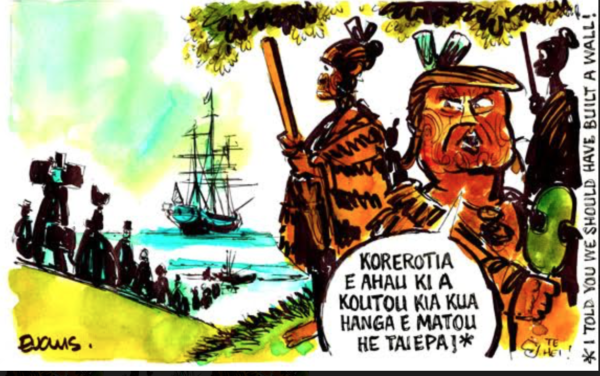
There are two wars going on right now over water, and because this country is dumb as fuck thanks to a steady diet of intellectual mediocrity via Seven Sharp and The Project, you have no idea what they are.
The first war over Water is being conducted as a culture war. “Da Bloody Maaaaaaaris is stealing da water”! is the battle cry of these slack jowled redneck crackers. They never acknowledge that it was John Key selling 49% of the Hydro Assets that triggered Māori going to the Waitangi Tribunal and the Waitangi Tribunal agreed with Māori that they do have an interest in water and that it was the State’s responsibility to negotiate that interest with Māori. 3 Waters is the culmination of that interpretation of the Tribunals legal ruling, trying to concoct a Qanon conspiracy that the Māori elite are taking over is as stupid as it is stupid.
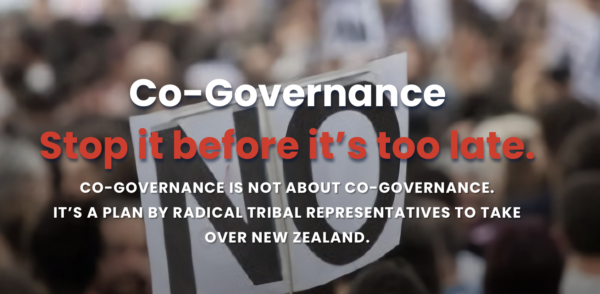
The culture war is where Groundswell and the new Stop Co-Governance racist redneck crackers are crucial, they are the foot soldiers who ring Talkback, write letters and refer to Cindy a lot on Social Media.
The second war over water is the economic political one. This is where the actual battle over water access, pricing and regulation is being fought. This is where Federated Farmers and Fonteera are fighting.
The dark money to fund the first fight is coming from wealthy cliques and individuals within the Agribusiness elites because they know if they win the culture war on this, they can continue polluting and making money.
There is no Māori conspiracy, just corporate interests manipulating your petty bigotry.
You don’t realise this because we have Seven Sharp and The Project keeping you dumb.
I turned 49 years old last week, and not once in my life have I been negatively impacted as a pakeha by any programme or policy aimed at helping Māori.
I laugh at people who scream about Māori representation on their local Council yet can’t name 3 of their own councillors.
I’m not saying there aren’t problems with Co-Governance or 3 Waters, but pretending those small issues are the same as Apartheid, separatism or racism mocks the true harm of those words.
We are all alone together on these lonely Isles on the far side of the Great Southern Ocean, and yet all we manage to do is squabble and defend exploitative Capitalist systems that rob us while empowering Plutocrats, Duopolies and Oligopolies.
After 183 years, we have to start respecting each other and working together because no one else is going to help us.
Part of this is on Labour, they never explained what co-governance was and wasn’t! Chippy must now articulate what co-governance is and I believe move it towards co-operation instead.
If Labour can’t tell Kiwis what co-governance is and isn’t, then the Right will continue to whip up claims of a secret Māori coup to take over NZ.
National and ACT however are being disingenuous in the extreme when they whip up the worst angels of our nature over co-governance because once you coax that anger out, you can’t ever stuff it back into the bottle.
We need leadership from Chippy or else the debate will remain cursed by the reactionary right.
Ben’s simple explanation of what co-governance actually is as someone who created it helps slap some sense beak into the debate.
Ben Thomas saved Waitangi Day 2023
Increasingly having independent opinion in a mainstream media environment which mostly echo one another has become more important than ever, so if you value having an independent voice – please donate here.
If you can’t contribute but want to help, please always feel free to share our blogs on social media


People can read “co-governance” into the Treaty of Waitangi all they like, but they won’t find it because it isn’t in there. The ToW consists of three short articles, non of which establishes or envisages a power-sharing arrangement between the Crown and iwi. If it’s provided for by the wording of the Treaty, you’d think that it wouldn’t have taken nearly 200 years for anyone to notice it.
While there shouldn’t be any serious contention as to what the Treaty says, given its brevity and its clarity, even if there was some legitimate contention, the best way to ascertain what the parties to a treaty intended is to assess their actions. This is how courts determine the meaning of any document that is considered ambiguous. For the 150 odd years after 1840, both the Crown and Maori acted and behaved and interacted as if sovereignty was ceded to the Crown; on this basis (in addition to the clear text) sovereignty was ceded in 1840. To later regret this fact, or to pretend in the last 20 years or so that this was not the case is disingenuous to say the very least.
Thomas and Luxury Luxon?, two more crazy Bal’heads in my opinion.
Why is it that the co-governance of NZ by the Greedy Banks, Greedy property speculators and Greedy low wage exploiters is somehow invisible and never debated while it’s attack Māori co-governance every single day of the week?
Because capitalism is an economic dictatorship, while we have a democratic system of governing capitalism, one thing our liberal capitalist government cannot do is challenge the economic dictatorship of capital.
Even the mildest attempts of government to regulate capital are overturned.
https://thedailyblog.co.nz/2022/09/01/guest-blog-pat-odea-hooray-an-ftt/
our agrement ,those’ others agree,our agree as them also the no agree, yes them also.FIRST TREATY RULE.
Snark,what a find.
The problem is that the government has used the term ‘Co Governance’ as a euphemism for something different entirely. It was deliberate because it was already in use and seems reasonable. But Co Governance is exactly that Maori having a reasonable say in areas and issues within their own rohe. Co Governance means mixed governance and doesnt imply equal representation or otherwise. Just mixed governance. Ardern tried to use it as a foil for other plans.
Oh come. on there is misunderstanding about co governance because the Govt has been so dam sneaky about it. Trying to say things like we already have it whilst hiding the radical Hepuapua report that outlines and explicitly states it will involve radical constitutional change. Then sneakily bringing in the Rotorua Admin Bill that only got stopped when the Auditor General deemd it was against the Bill of Rights.
So Labour hasn’t been transparent and David Seymour has been the only one calling for public debate and a referendum.
BTW I am not a red neck racist.
Any and all water infrastructure issues will be solved by the inclusion of a koha line on every households water bill.
Well they certainly won’t be solved by the self interested councillors who collectively have f’d things up in the first place.
His explanation actually reveals how just how treacherous this agenda is.
He puts forth a view of the world based on racial chauvanism — promoting the idea that the races should form separate sections of the government, a sort of ‘Lebanonisation’.
He claims that ancient tribes should somehow be the basis of segmenting local government, totally ignoring the fact that all the tribes and races now form one united nation, with one national culture.
He then outrageously claims that having a segregated health agency is “a question of bureaucratic design, not race” — as if it was impossible for a non-segregated health agency to provide proper care to all!
This ruse aims to cover up the reality: the native peoples are more likely to be in the lowest ranks of the working class, making them more impoverished — which means the natural allies of the black masses are white workers and all other working people, not a clique of black businessmen.
As Chris Trotter has pointed out, this is all about ensuring rising discontent does not result in a unified movement against neoliberalism. The great unifier Martin Luther King had to be ‘dealt with’ for much the same reason.
I do not think Maori are any more united than pakeha. Aucklanders general speaking dislike South Islanders just because Maori of one tribe dislike or do not trust other tribes due to past grievances. They may be sort of united against colonization but some suffered far more than others so even there the complaints are not united. Even among the same tribe when dealing with them setting up Maree kitchens different families would argue the point . Just the same as pakeha family units .
Surely this is why settlements are so hard to complete . Listening to the Maori commentators speaking on Waitangi day radio it is obvious that Luxon’s world of business deals will not fit with the Maori world take on how to do deals where the talking is part of the game and is as important the outcome..