

Q+A review: Agriculture, Farming and Northcote

Agriculture and environment up for debate with Damien O’Connor and James Shaw…
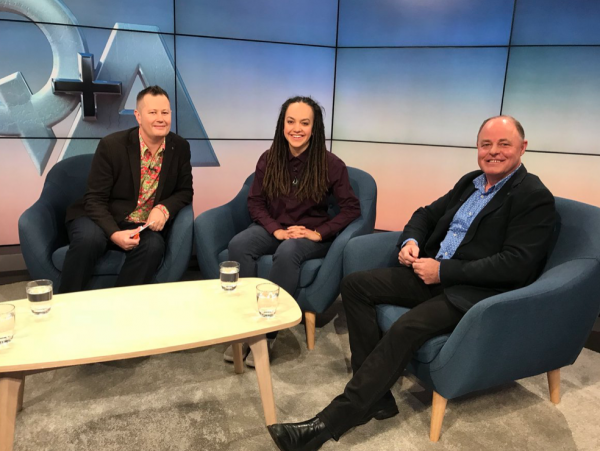
…the panel is Bryce, Laura from Action Station and ex National Party hack Craig Foss.
First up it’s this bloody M.bovis fiasco. Damien is a class act. Compassionate towards a farming culture who are hyper sensitive over any criticism but firm enough in terms of requiring a change of direction.
This entire m.bovis scam truly gives insight into who has political, cultural and economic power in this country. Farmers wanting to escape the taxman by not recording herd numbers when moving cows around the country combined with an MPI who were more concerned with not annoying the Government’s voting base than keeping bio-security secure have exacerbated this problem immensely and all of a sudden we have to bail them out because a couple of farmers appeared on our current affairs shows with tears in their eyes.
Come on!
I’m not for one second saying we shouldn’t give our farming brothers and sisters our sympathy, or our support but why the Christ can’t the kindness and immediate Government support being offered farmers for a problem they helped induce ever be applied to any other vulnerable group in society?
Culling 150 000 cows in a country that slaughters over 4.5m annually is not a tragedy.
Blowing $100million on a meth hysteria fed by the last Government while they were trying to privatise state housing IS a tragedy.
The fact this farming story blotted out beneficiaries kicked out of state houses falsely is in of itself insult to injury and a reminder where our sympathies are told they should go to, crying farmers.
Damien mouths all the solid lines about refocusing dairy and agriculture to the top end so that we move away from intensification. Doesn’t acknowledge that synthetic meat and milk could disrupt the industry so violently that it snaps the spine of the NZ agricultural industry permanently and that moving urgently now to look for alternatives for dairy should be the main priority.
Luckily for the Government, Damien is also their spokesperson on cannabis reform and will know full well that dairy farmers could move to growing vast fields of hemp instead and could make far more money.
I think we all look forward to the day when Damien tells the dairy farmers of NZ that synthetic milk has ended their industry and the only way towards financial security will be for them to plant hemp.
Oh happy day.
James Shaw is on, he has an existential crisis. If the Greens actually believed in climate change, then why would they be so tepid when it comes to the radical economic reform we require to adapt to that climate change? The truth is that that Greens are economically free market folk at heart and believe all that is required is the price of the pollution cost be added to the end consumer so that the market can do the rest.
The problem with that economic model is that it thinks capitalism can survive climate change.
There’s no point in being carbon neutral by 2030 if the ice caps have melted and most coastline under a meter of water.
James is there to coo and sooth Industry so that there are no freak outs, but at some point there is going to have to be a decision made to start leading, because the speed of climate change will demand it.
The panel is on.
Bryce is calling it like it is – it’s funny that he’s the most radical opinion on it. Points out how slowly all the policy is.
Laura calls out call out culture as a representative of a generation who live and die by call outs.
I start to have a mini micro-aggression panic attack at the irony.
The National Party hack stands up for farmers.
Northcote by-election is on.
I think the most interesting part of this by-election has been the spite and venom coughed up by National Party supporters during the by-election debate when National voters were screaming, “Communist” and “Go back to Russia” at the Labour candidate.
The separation of the National Party voter from up-tight civility to feral foamer explains why National are polling at 45%. Resentment culture is the ingredient now, not rational citizen.
National in power were the ultimate ‘pump and dump’ Government led by a Merchant Banker who took mercenary corporate culture and used it to form social policy. Short term gains and low horizons built on greed are their legacy.
Let’s see if that delusion is strong enough to keep Northcote in their grip.





How many organic farms have M.bovis?
https://mpi.govt.nz/dmsdocument/28785/loggedIn
REDUCE THE RISK OF M. BOVIS –
MANAGING DAIRY FARM CHANGEOVERS IN MAY/JUNE 2018
Changing farms this coming May/June requires extra special precautions because of Mycoplasma bovis (M. bovis). M. bovis is spread by the movement of infected animals and incoming infected cows (including calves, heifers, bulls, beef cattle as well as milking cows) can bring the disease onto the farm, even if they show no signs of having it. Once in a herd the disease is spread by close animal to animal contact.
While M. bovis is a new disease in New Zealand, if it becomes endemic, it can be managed, much like TB, leptospirosis, BVD and Johne’s disease.
Dairy farms all over the country are being tested via bulk milk testing of individual herds and cows from the sick mob for the presence of the organism. Individual farmers should know the results two weeks after the final milk sample has been collected.
A ‘not detected’ result can give farmers an indication that the herd is free of disease and help with farm management
decisions. This result is not, however, an absolute guarantee that a property is free from the disease. The tests will pick up if any cows were shedding Mycoplasma bovis at the time of sampling, but it is possible for infected cows to be present in a herd but not shedding at the time of sample collection.
Those who use the sharemilking and contract milking business model are particularly vulnerable to financial shocks should
a disease like M. bovis come onto the farm. If at all possible, stay on the current farm, with the same herd.
Or, if you are a farmowner, keep the current sharemilker, with the current herd. However, this may not be possible or desired.
There are some simple precautions sharemilkers, contract milkers and farm owners can take to minimise the risk of bringing it on farm. If everyone is clear about the level of risk being faced, decisions can be made – it’s all about communication.
YOU ARE A FARM OWNER, LOOKING TO BRING ON A NEW CONTRACT MILKER OR SHAREMILKER YOU ARE A SHAREMILKER OR CONTRACT MILKER, SHIFTING ONTO A NEW FARM
1. Ask where any incoming stock are coming from.
2. Ask for bulk milk M. bovis test results of the source herd(s) if available.
3. Ask if the stock have been mingling with other cattle – can you get any information about these other herds, such as bulk milk testing results?
4. Ask about the health of the incoming stock – including calf health, mastitis, pneumonia, ear infections, swollen joints.
5. Ask if the NAIT recordings have been completed for all cow, calf, cattle movements.
6. Set aside land where new animals can be kept, separate to stock already on farm, for seven days for quarantine purposes.
7. Check to see that all equipment coming on farm is clean and dry.
8. Inform the incoming sharemilker or contract milker about any M. bovis tracing by MPI that has been carried out on the farm, and any instructions given by MPI that may affect how the herd is managed.
1. Buy animals from as few different farms as possible. Ask for the bulk milk M. bovis test results of the
2017/18 herd if available.
2. Supply the farm owner with any M. bovis test results you may have.
3. Ask if the herd has been mixed with any other animals in the past 12 months, including at wintering. Ask if it is possible to get the bulk milk M. bovis test results of that herd.
4. Ask about the health of the cows and calves on the far during the 2017/18 season – including calf health, mastitis, pneumonia, ear infections, swollen joints.
5. Complete all NAIT movement recordings.
6. When bringing new animals onto the farm, keep them separate from others for seven days and check them for signs of ill health.
7. Clean and dry all incoming machinery and equipment.
8. Ask if the farm has been subject to any tracing from MPI for M. bovis.
Reduce the risk of M. bovis – managing dairy farm changeovers in May/June 2018.
Changing farms this coming May/June requires extra special precautions because of Mycoplasma bovis (M. bovis). M. bovis is spread by the movement of infected animals and incoming infected cows (including calves, heifers, bulls, beef cattle as well as milking cows) can bring the disease onto the farm, even if they show no signs of having it. Once in a herd the disease is spread by close animal to animal contact.
While M. bovis is a new disease in New Zealand, if it becomes endemic, it can be managed, much like TB, leptospirosis, BVD and Johne’s disease.
Dairy farms all over the country are being tested via bulk milk testing of individual herds and cows from the sick mob for the presence of the organism. Individual farmers should know the results two weeks after the final milk sample has been collected. A ‘not detected’ result can give farmers a degree of confidence that the herd is free of the disease, however, the tests are not 100% accurate, due to the difficult nature of the organism.
Those who use the sharemilking and contract milking business model are particularly vulnerable to financial shocks should a disease like M. bovis come onto the farm. If at all possible, stay on the current farm, with the same herd. Or, if you are a farmowner, keep the current sharemilker, with the current herd. However, this may not be possible or desired.
There are some simple precautions sharemilkers, contract milkers and farm owners can take to minimise the risk of bringing it on farm. If everyone is clear about the level of risk being faced, decisions can be made – it’s all about communication.
You are a farm owner, looking to bring on a new contract milker or sharemilker
You are a sharemilker or contract milker, shifting onto a new farm;
1. Ask where any incoming stock are coming from.
2. Ask for bulk milk M. bovis test results of the source herd(s)
if available.
3. Ask if the stock have been mingling with other cattle – can
you get any information about these other herds, such as
bulk milk testing results?
4. Ask about the health of the incoming stock – including calf
health, mastitis, pneumonia, ear infections, swollen joints.
5. Ask if the NAIT recordings have been completed for all
cow, calf, cattle movements.
6. Set aside land where new animals can be kept, separate
to stock already on farm, for seven days for quarantine
purposes.
7. Check to see that all equipment coming on farm is clean
and dry.
8. Inform the incoming sharemilker or contract milker about
any M. bovis tracing by MPI that has been carried out on
the farm, and any instructions given by MPI that may affect
how the herd is managed.
1. Buy animals from as few different farms as possible.
Ask for the bulk milk M. bovis test results of the 2017/18
herd if available
2. Supply the farm owner with any M. bovis test results
you may have.
3. Ask if the herd has been mixed with any other animals in
the past 12 months, including at wintering. Ask if it is
possible to get the bulk milk M. bovis test results of that
herd.
4. Ask about the health of the cows and calves on the farm
during the 2017/18 season – including calf health, mastitis,
pneumonia, ear infections, swollen joints.
5. Complete all NAIT movement recordings.
6. When bringing new animals onto the farm, keep them
separate from others for seven days and check them for
signs of ill health.
7. Clean and dry all incoming machinery
“The problem with that economic model is that it thinks capitalism can survive climate change.”
This is correct, Martyn the right wimgers dont care one way or the other as they think that “nessesity is the mother of invention” but Climate change does not work that way, so they will be punished by their arrogance here.
The micoplasma bovis disease will never be stopped now, as it has already been spead therough the transportyation by trucks and since Labour failed to stop the movement of trucking stock, as they should havre bought feed to their exsistingpaddocks and not moved the stock, sillly pricks!!!! now we are all stuffed now.
This; below is what it says on the farmer federation website (posted by MPI site also) so they all knew trucking stock would spread the disease.
https://mpi.govt.nz/dmsdocument/28785/loggedIn
So we called MPI and they sent me to the liason@mpi.govt.nz and we talked a man named ‘ED’ who said they were doing everything right, but when we pointed out what the Farmers Federation website said below (that they recommended we go to) it said; REDUCE THE RISK OF M. BOVIS –
MANAGING DAIRY FARM CHANGEOVERS IN MAY/JUNE 2018.
Changing farms this coming May/June requires extra special precautions because of Mycoplasma bovis (M. bovis). M. bovis is spread by the movement of infected animals and incoming infected cows (including calves, heifers, bulls, beef cattle as well as milking cows) can bring the disease onto the farm, even if they show no signs of having it. Once in a herd the disease is spread by close animal to animal contact.
Those who use the sharemilking and contract milking business model are particularly vulnerable to financial shocks should
a disease like M. bovis come onto the farm. If at all possible, stay on the current farm, with the same herd.
I asked ED if MPI had a ‘hotline’ to advise them if we see large suspected movements of cows into our region from outside and he said no, “Have you ever heard of The Privacy Act”? QUOTED; so we were stunned at this.
“Resentment culture is the ingredient now, not rational citizen”
Andrew Little is now the man best placed in government to fuel the flames of resentment with his justice reforms aimed at lowering the prison population. What he is about to embark on is heaven sent for the National Party and Labour will burn for it and take NZ First with it.
His suggested efforts are the cheapest nastiest method of addressing the symptom of full jails. Symptoms. They won’t address the cause which will continue as never before.
Changing the Bail Act will not make the meth problem go away and it is getting worse. It will not make poverty go away either. But meth, on its own, is probably the number one cause of our prison population exploding.
Doing away with the 3 strikes law is a gift to National. It is a useless bit of legislation, a gimmick as Little rightly says, but at this time its repeal is screaming going soft on crime to the resentful and achieve next to nothing but bad news. And no you don’t go to jail for stealing pizza in NZ, Greg Presland, this act is a lot more neutered (if that is the right term) than the classic US version.
Similarly proposing a near-arbitrary use of non-jail for any offence carrying two years or less is as insane as the 3 strikes arbitrary maximums.
And looming later this year, the adult offender age will rise to 18 years of age.
Andrew Little strikes me as a decent man, a humanitarian man but he horribly is out of his depth as Justice Minister. He is a lawyer and at heart a social worker and wants to release criminals for their second/20th chance. His best fit would be social welfare portfolios.
What Andrew Little certainly is not is a politician because if he were he would be leading this government, not a failed leader, and there is no way he would be approaching the prison issues in this way and threatening to take his government down with him when it goes bad. Why, because the first person to get harmed by the stupidity of these “reforms” (and National will loudly let us know), and it will happen, Labour will be blamed and for their naive weak mushy handling of this touchy subject they deserve it and the fall out that will come with it.
This subject runs deep and requires long term stratergies and a huge amount of money dedicated to it. Fiddling with laws like Little is about to do will not achieve anything positive. And yet he just cannot see it.
Synthetic meat is about as big a threat to actual meat as ethanol was to oil. Remember how “sustainable” ethanol was going to destroy the oil industry? Still waiting for that one. I suspect I’ll be waiting even longer for synthetic meat.
I would agree, the cows, sheep and so forth are here to stay in NZ Inc, as farmers will simply see the opportunity to sell the ‘real stuff’, that is to those willing to pay for it in other countries.
Artificial meat and milk may become the staple food for the poor, who can only afford such more cheaply produced products, in an industrial manner. There will be enough people who want to eat the real meat, and that is what farmers will continue to deliver.
If they would really go upmarket, they would produce all food on an organic basis, for the better paying consumers world wide.
I only saw a bit of Q+A and will make my own judgment of that program once I may have seen the repeat late tonight or tomorrow morning.