
3 Waters with a vengeance – Redneck Cracker gonna Cracker
Redneck Crackers are gonna cracker when they realise after their denigration of 3 Waters has resulted in Māori going to Court to see their water interests protected…
Māori landowners lodge against the Government in the High Court
A collective of around 60 Māori Land Trusts, representing over 150,000 landowners and multiple iwi and hapū across the North Island, have filed legal proceedings in the High Court. They argue that successive governments have failed to uphold their rights under Te Tiriti o Waitangi by continuing to allocate water on a “first‑in, first‑served” basis. They are seeking:
-
- Stronger legal recognition of tikanga Māori and Māori proprietary rights over freshwater and geothermal resources;
- Immediate steps to stop further degradation of waterways;
- A more equitable water allocation system that supports kaitiakitanga (guardianship).
The claim highlights ongoing concerns about the rollback of Te Mana o Te Wai in the Resource Management Act reforms, and stresses the urgency of honouring Treaty obligations before the ecosystems suffer further.
…this is happening as water rates skyrocket because 3 Waters was dumped…
Auckland water charges set to increase 7.2% from July
Bahahahaha – massive water rates rise because rednecks convinced you da Maaaaaaoris was stealing da 3 waters.
SUCK.
IT.
UP.
YOU.
REDNECK.
BUTTERCUPS!
Where’s all your screams about co-governance and Maaaaaaaaaaaaaaaaaaori get too much now you race baiting muppets?
Labour’s 3 Waters was an attempt to insulate users from the massive jump in prices while settling the ownership issues with Māori.
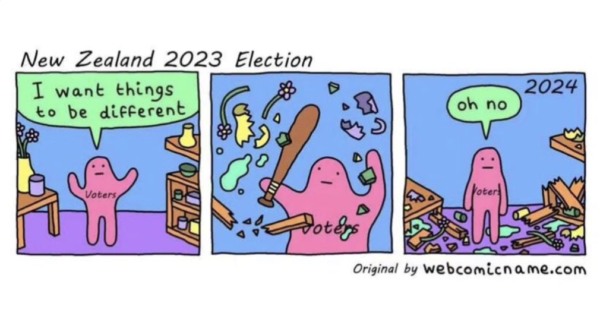
Because voters were easily manipulated by astroturf actors convincing them that ‘da Maaaaaaaaaaaaaaaaaaori is stealing da water’ level baseline racism, 3 Waters was scrapped and the massive prices jumps have occurred!
Our water system is under immense stress from mass immigration policies that no one wants to pay the infrastructure upgrades for and mass dairy intensification no one wants to stop!
But remind me how it’s all about the Māori’s getting too much?
There are two wars going on right now over water, and because this country is dumb as fuck thanks to a steady diet of intellectual mediocrity via Seven Sharp, you have no idea what they are.
The first war over Water is being conducted as a culture war. “Da Bloody Maaaaaaaris is stealing da water”! is the battle cry of these slack jowled redneck crackers. They never acknowledge that it was John Key selling 49% of the Hydro Assets that triggered Māori going to the Waitangi Tribunal and the Waitangi Tribunal agreed with Māori that they do have an interest in water and that it was the State’s responsibility to negotiate that interest with Māori. 3 Waters is the culmination of that interpretation of the Tribunals legal ruling, trying to concoct a Qanon conspiracy that the Māori elite are taking over is as stupid as it is stupid.
The culture war is where Groundswell and the new Stop Co-Governance racist redneck crackers are crucial, they are the foot soldiers who ring Talkback, write letters and refer to ‘Cindy’ a lot on Social Media.
The second war over water is the economic political one. This is where the actual battle over water access, pricing and regulation is being fought. This is where Federated Farmers and Fonteera are fighting.
The dark money to fund the first fight is coming from wealthy cliques and individuals within the Agribusiness elites because they know if they win the culture war on this, they can continue polluting and making money.
There is no Māori conspiracy, just corporate interests manipulating your petty bigotry.
You don’t realise this because the mainstream media are dying keeping you dumb, and thanks to that brain meat mediocrity, the culture war grifters keep winning.
You are so easy to manipulate Nu Zilind, just tell a white bloke that a Māori bloke is getting something they aren’t and they will allow any interest to fuck them over!
Your rates will explode because the new water entities created by National aren’t Government nt backed so all the cost will be borne by you!
Feeling thirsty yet New Zealand?
You dumb rednecks.
Increasingly having independent opinion in a mainstream media environment which mostly echo one another has become more important than ever, so if you value having an independent voice – please donate here


I was against 3 waters because it took away local ownership and local control of local infrastructure.
Once those 3 entities were set up, first of all no one was really going to care about the state of the sewer pipes in Inglewood anymore, and second, there would be nothing to stop some future government from selling parts of our water assets to overseas companies. ( who could complain about the sale of a 20% share in one of the entities to the Scandanavian Mutual fund)
Our once cohesive country is now divided thanks to ACT, National and NZ First racist rhetoric…
https://www.nzherald.co.nz/nz/ngati-tukorehe-to-fly-more-flags-after-racist-attack-on-its-whenua/P72TMN5YKVHHNKNGEQBI5NSVYA/
Pakeha have stolen the water .Next ten years will prove me correct .
Further vid on engineering and water in Netherlands:
https://www.youtube.com/watch?v=xlfn8qoixx0 49m
Looking at the flooding situation – Europe knows and we will experience so must learn
The extensive lowlands across Europe, not just Netherlands but also France but not apparently, England:
https://en.wikipedia.org/wiki/Low_Countries
…Geographically and historically, the area can also include parts of France (such as Nord and Pas-de-Calais) and the German regions of East Frisia, Guelders and Cleves. During the Middle Ages, the Low Countries were divided into numerous semi-independent principalities…
The political grouping lowlands of Benelux:
Low Countries, Coastal region, northwestern Europe, consisting of Belgium, The Netherlands, and Luxembourg. Known as the Low Countries because much of the land along the North Sea is below or at sea level, they are often called the Benelux countries, from the initial letters of their names.
Low Countries summary – Britannica
https://www.britannica.com › summary › Low-Countrie
England – The Fens https://en.wikipedia.org/wiki/The_Fens
…Most of the Fens lie within a few metres of sea level. As with similar areas in the Netherlands, much of the Fenland originally consisted of fresh- or salt-water wetlands. These have been artificially drained and continue to be protected from floods by drainage banks and pumps. With the support of this drainage system, the Fenland has become a major arable agricultural region for grains and vegetables. The Fens are particularly fertile, containing around half of the grade 1 agricultural land in England.[4]
…the area now includes the lowest land in the United Kingdom. Holme Fen in Cambridgeshire, is around 2.75 metres (9 ft 0 in) below sea level.[8] Within the Fens are a few hills, which have historically been called “islands”, as they remained dry when the low-lying fens around them were flooded. The largest of the fen-islands was the 23-square-mile (60 km2) Kimmeridge Clay island,…
…The Fens are very low-lying compared with the chalk and limestone uplands that surround them – in most places no more than 10 metres (33 ft) above sea level. As a result of drainage and the subsequent shrinkage of the peat fens, many parts of the Fens now lie below mean sea level. ..
Without artificial drainage and flood protection, the Fens would be liable to periodic flooding, particularly in winter due to the heavy load of water flowing down from the uplands and overflowing the rivers…
…the more stable silt soils were reclaimed by medieval farmers and embanked against any floods coming down from the peat areas or from the sea. The rest of the Fenland was dedicated to pastoral farming, fishing, fowling, and the harvesting of reeds or sedge for thatch…
Today, arable farming has almost entirely replaced pastoral. The economy of the Fens is heavily invested in the production of crops such as grains, vegetables, and some cash crops such as rapeseed (canola)…
[I think that it could be that the rapeseed called canola is GE modified.]
We are needing to look back at older practical, perhaps simpler, methods of managing food-production land and water. Perhaps we might start right NOW and not put it in the too-hard basket as is usual. Life is showing us that usual is not an option!!
trumpet you should fuck of to kiwiblog with your anti Maori bullshit you would fit in great there its not the iwi that own most of NZ its foreigners you dick head
100% nailed it Bomber. Great article. Culture wars are the classic divide and rule strategy the right turn to again and again with successful electoral outcomes.
“Our water system is under immense stress from mass immigration policies that no one wants to pay the infrastructure upgrades for”
Our water system is under immense stress from mass immigration policies that no one wants to talk about.
People are having their wages suppressed by overmigration and then having to pay for infrastructure upgrades caused by overmigration.
And then the infrastructure upgrade is made more costly by being bank financed rather than directly financed by govt or local body infra bonds.
Joseph you are making so many valid points – everyone should take these on.
I like this one particularly:
People are having their wages suppressed by overmigration and then having to pay for infrastructure upgrades caused by overmigration.
And then the infrastructure upgrade is made more costly by being bank financed rather than directly financed by govt or local body infra bonds.
And eating up housing not just from overmigration but as well from using housing as solid investment for their temporary monetary gains. Money value is temporary in these days, even more than the past. It’s a devilish system, and I would say that most neoliberalists are about as religious as Ayn Rand or the Mafia. Rand I think was contemptuous, while the Mafia in Italy – and possibly parts of USA – and religion have a sort of synergy.
The 11th commandment* which needs to be adopted now is to follow practices of living a simpler life governed by values of Kindness, Practicality and Thoughtfulness. That would help our young ones to rise with the tide and work together in comradeship; the ship least likely to sink!
*The Ten Commandments, or the Decalogue, are religious and ethical directives, structured as a covenant document, that, according to the Hebrew Bible, were given by YHWH to Moses. The text of the Ten Commandments appears in three markedly distinct versions in the Bible: at Exodus 20:1–17, Deuteronomy 5:6–21, and the “Ritual Decalogue” of Exodus 34:11–26. Wikipedia
You and joseph always make sense so thanks, both of you.
Our present govt. cannot think round corners Joseph so hope of them making the connection between the cost of much needed infrastructure and why it’s needed. They think of one thing at a time and don’t want to know what problems that will cause. Inconvenient, you know.
I believe that successful societies all have a few things in common, Grey. Kindness and Fairness are in there. Cruelty and punishment, are not. Our society is under threat from our own, I hesitate to call them leaders, govt.
As the Americans are finding out, it can all turn to custard very quickly when the best people are sidelined.