

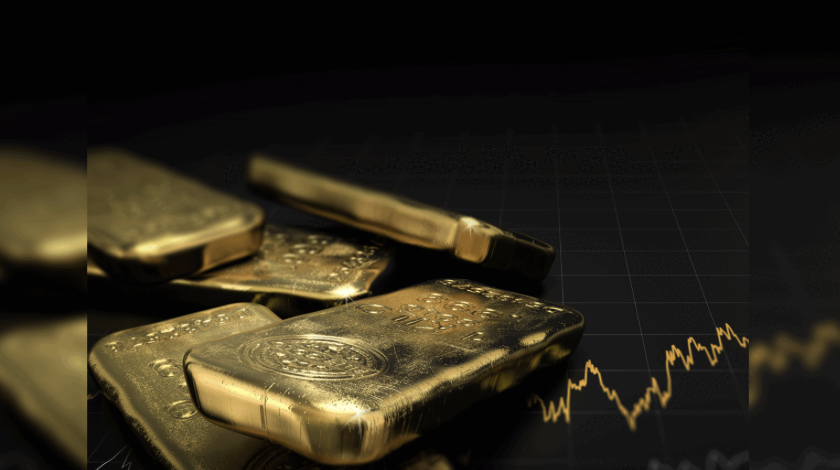
Over the past year, the price of gold has risen by $2,000, moving above $4,600 per ounce. A metal many once viewed as an asset of the past has returned to the center of attention for investors worldwide. With geopolitical tensions rising and confidence in the financial system being tested, gold is increasingly seen as one of the clearest ways to preserve capital.
Gold reaches new highs
Gold’s rise over the past year has been one of the most notable moves in financial markets. The metal gained about $2,000 and has held above $4,600 per ounce, with the $5,000 level now coming into view. This kind of momentum has not been seen for decades, putting gold back on the radar for both retail and institutional investors.
One of the main drivers of the rally has been demand for safe-haven assets. Geopolitical tensions, trade conflicts, wars, and political instability are pushing investors toward instruments that are not directly tied to government decisions or the health of any single economy. In periods like this, gold is traditionally seen as a reliable anchor.
Central banks have also supported the trend. In recent years, they have increased gold reserves, aiming to reduce reliance on the dollar and government bonds. At the same time, expectations of looser monetary policy and potential interest rate cuts tend to make gold more attractive. It does not generate yield, but it is also less exposed to devaluation risks linked to aggressive money printing.
Why gold remains a trusted store of value
Gold was valued long before banks, modern currencies, and financial markets. The reason is straightforward. It is scarce, difficult to extract, and cannot be produced artificially in meaningful volumes. Unlike many physical goods, gold does not spoil, corrode, or degrade over time. It can be stored for decades, even centuries, without losing its properties.
Over time, gold became a universal measure of value. It was accepted across countries and cultures, independent of language, authority, or political system. That is why it served as money and supported coins and reserves long before paper currencies and debt instruments became widespread.
That history still shapes how gold is viewed today. Many investors see it not only as a commodity, but as an asset backed by long-established trust.
Protection against instability
Interest in gold tends to rise when confidence in the financial system weakens. Higher public debt, inflation, political pressure on central banks, and currency volatility can push investors to reassess the reliability of traditional instruments such as bonds, deposits, and even national currencies.
In these conditions, gold is often treated as protection against devaluation. It cannot be printed or diluted through issuance, and its price is not tied to the performance of any single economy. That is why gold often benefits during periods of dollar weakness and when markets expect interest rate cuts.
Gold also remains one of the most liquid assets in the world. It can be sold in most markets globally, and trading effectively runs around the clock. For investors, this matters. Even in crisis conditions, gold tends to retain demand and remains a clear way to preserve capital.
Investing in a physical asset in the digital era
Despite the rise of digital assets and new financial instruments, gold remains a core component of many portfolios. Investors can choose between physical metal, exchange-traded funds (ETFs), and derivatives, while retaining gold’s key advantage: it is not dependent on financial infrastructure or a specific counterparty.
Central banks continue to play a major role in supporting demand as they expand gold reserves. For them, gold is an asset that is not tied to another party’s liabilities and is less exposed to sanctions risk. Their actions also reinforce confidence among private investors, who often watch the behavior of the largest market participants.
Gold remains relevant not because the world is standing still, but because it is changing too quickly. In an environment of high uncertainty, rising debt burdens, and rapid technological shifts, a scarce physical asset is still viewed as a reliable foundation for preserving value, regardless of the format used to gain exposure.