| What will it take for this Labour Government to start paying attention to the worsening state of economic inequality in New Zealand? The evidence is mounting that, under Labour’s watch, the problem of wealth and income inequality is spiralling. But the signs are that Labour ministers have put this crisis into the “too hard basket”.
According to the investment bank Credit Suisse, New Zealand has led the world in a spike in wealth as a result of the housing crisis and inflation of business assets.
The report released this week should be alarming for Labour, as it’s an indictment on a Government that was elected on a campaign to turn around worsening inequality.
New Zealand is leading the world in wealth creation – for those at the top
Credit Suisse’s “Global Wealth Report 2022” says average wealth in New Zealand jumped by 32 per cent, or $193,248 in just one year – and that this is far higher than in anywhere else in the world. About 60 per cent of that increase came from housing and 40 per cent from growing global financial markets. In a nutshell, those who own assets and businesses have done extraordinarily well.
Looking at the Credit Suisse statistics, the Guardian reported that in New Zealand there are now “347,000 people in the country with more than US$1m to their name in 2021” and “About 2.1 million New Zealanders – out of a total population of just over 5 million – are in the top 10% of global wealth holders. About 281,000 of those are in the top 1%.”
The Guardian reported the analysis of economist Shamubeel Eaqub, who commented that obviously “the increasing wealth was very unequally distributed” and reflects the “rise of the landed gentry” in this country, in which wealth is increasingly inherited. He called for a focus on the “growing divide between renters and owners, and the haves and the have-nots in New Zealand”.
The Credit Suisse report says that globally, “The richest 1% of the global population increased their share of all the world’s wealth for a second year running to 46%, up from 44% in 2020.” And although it doesn’t provide figures for New Zealand, something similar is obviously occurring at the moment.
Is Labour focusing on improving things for those at the bottom?
Topping the world for the explosion of wealth amongst the super-rich might be a cause for celebration for some. But it shouldn’t be for the Labour Government. Of course, politicians of the political left used to focus on wealth creation for those at the bottom, not the top. Leftwing ideology – and the whole reason for Labour parties to exist – is to help those at the bottom, and the working class – not to make things worse for them.
So what has the Government been doing about this? The Prime Minister took on the portfolio of Child Poverty Reduction, as a way of signalling her ambitions to fix the problem. But clearly she has had other priorities.
This was exposed in the release of ministerial diaries last month, which give an indication of how much time ministers spend on any particular portfolio. Between October 2020 and June 2022 Ardern was recorded as spending only 14 hours on this portfolio – an average of only 40 minutes per month. One calculation put this at a meagre 0.2 per cent of her working time on what she said was her most important portfolio.
Covid policies made inequality worse
Of course, Labour’s defenders will point to other pressing issues and disasters that the Government has had to deal with. They could also point to some of the improvements that Labour have introduced, such as an increased minimum wage and benefit increases. But these reforms have been rather pitiful in the context of the inequality crisis. In this regard, business journalist Bernard Hickey has labelled the Government’s tiny steps as simply “pathetic, distractional and performative”.
What’s more, many of the Government’s policy responses have made things worse rather than better. In particular, Labour’s monetary and fiscal policies have been calculated to have transferred about $1 trillion to business and property owners at the expense of workers. And there are now signs that the cost-of-living crisis is being most severely borne by wage earners and the poor.
Billions of extra dollars have been spent by the Government to deal with the Covid pandemic – about $74bn in Covid spending at last count – and few would question that this was generally necessary. But the particular focus and recipients of these billions has been clearly skewed towards the wealthy. The design of the Wage Subsidy Scheme is still an important case study in how to enrich employers. The $19bn in handouts was abused, mostly ending up in extra profits for companies.
Vested interests might lead to a revolt by the poor
In the future we are likely to look back on this period as one in which political decisions were made by Labour that have had a tragic impact on worsening inequality. And we will see that it didn’t have to be this way.
Interestingly, former Labour Cabinet Minister Steve Maharey, who was part of the Lange-Douglas Fourth Labour Government, wrote a few weeks ago about the role that decisions made back then played in a legacy of unacceptable inequality. He says contemporary politicians are allowing this to continue: “Choices were made in the 1980s to let the income inequality genie out of the bottle again and it is a choice to let that continue.”
Maharey calls for “a huge and radical agenda” to deal with economic inequality, and points to a number of policies that are necessary to roll back the crisis. But he laments that the current government are not up to that task – although none others are around the world either. A key problem is that there are too many “vested interests” pressuring politicians to preserve the status quo. Hence, he says Ardern’s Government has failed on progressing the core issues they were elected to deal with. The role of Labour politicians now is simply to protect those with wealth.
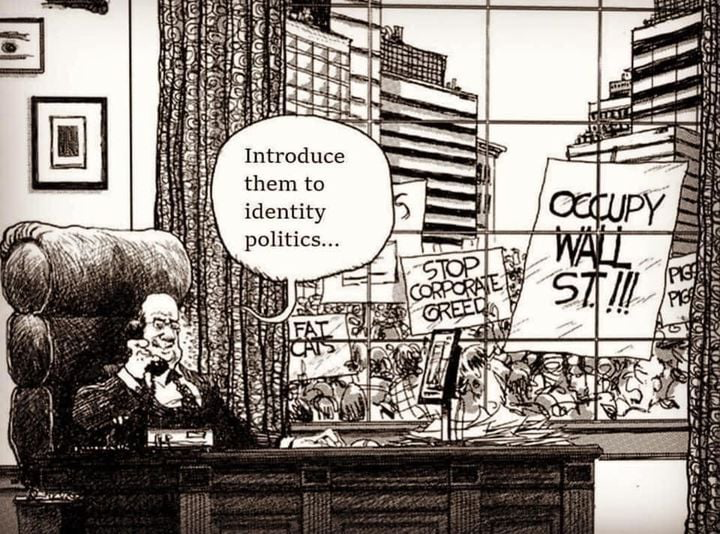
Maharey warns that if contemporary politicians don’t deal with inequality, eventually the poor will deal to them, and to the wealthy. He says revolutions and political activity outside the Parliamentary system will fix the problem instead, as it has in the past: “remember that the shift to equality came about through revolt, revolution and struggle. Not dealing with inequality makes it inevitable upheaval will happen again.” |


“What will it take for this Labour Government to start paying attention to the worsening state of economic inequality in New Zealand?”
They could take Nationals lead on this. They can stop measuring it so then it doesn’t exist.
Oh that’s so wise bert. It is the most pragmatic solution. I noted in the past Canada’s past Prime Minister Harper? throwing out old climate records so no-one could definitely say climate change is affecting the particular area of the country. And something about getting oil out of tar sands and cut budgets .
https://www.theguardian.com/environment/2012/jul/09/canada-stephen-harper-revolt-scientists
Comments are closed.