

THE YEAR OF REVOLUTIONS – that was how the year 1848 came to be known. Clear across Europe: from Hungary in the East to France in the West; massive eruptions of popular discontent, harnessed by mostly young liberal intellectuals, brought the reactionary regimes established following the final defeat of Napoleon, in 1815, very close to collapse.
Weeks went by, idealists gathered, constitutions were proposed and debated, but nothing truly revolutionary happened. Slowly at first, and then with gathering speed, the emperors, kings and aristocrats picked themselves up out of the dust, straightened their tunics, and set about putting their noble houses in order. By 1849 it was all over. As things turned out, 1848 had been a year of revolts – not revolutions.
If the story sounds familiar, it’s because something very similar happened roughly ten years ago. Clear across the Arab World, from Tunisia in the West to Egypt and Syria in the East, mostly young liberal intellectuals, using social media, sparked massive eruptions of popular discontent. Months went by. Idealists gathered. Elections were held. New names had to be learned. New faces won recognition. But, nothing truly revolutionary happened.
As Mao Zedong cynically observed: “All political power grows out of the barrel of a gun.” By 2013, the men with guns were either back in power or applying the lessons of the deposed military leaders they were replacing. The Arab Spring was fast becoming the Arab Winter.
Imagine how they felt: all those young liberal intellectuals; all those angry workers and peasants. Imagine city squares seething with masses of hopeful people. The extraordinary combination of elation and relief when the regime’s soldiers refused to fire on “the people”. Those great arcs of political electricity illuminating the social darkness when word came of similar uprisings taking place in neighbouring states. It must truly have seemed that the “revolutionaries” were witnessing the birth of a new heaven and a new earth.
Now imagine the despair: the sheer, soul-destroying anguish of seeing it all fade and wither and turn to dust on the fickle winds of history. Imagine the dashing of hopes, the detention of friends, the execution of leaders. Imagine the clatter of boot heels on stone, the ringing of sharpened steel, the crackle of rifle fire, the chatter of machine-guns, the roar of artillery. Imagine the death of a million common dreams.
What do people do when their revolution fails? When their Spring turns to Winter? Where do they go?
We know that many refugees from the failed 1848 revolution in Germany made their way to the United States. In the USA, at least, the idea of popular sovereignty had been able to send down roots and acquire a measure of solidity. In American there were no kings and queens, no aristocrats. The Americans, like the French, had made a republic.
But even in Eden, serpents gathered. The German immigrants were shocked to witness black men and women being abducted in broad daylight by the agents of Southern plantation owners – all of them operating perfectly legally under the Fugitive Slave Act. Here was something even more depraved than the dark pretensions of monarchs. Abraham Lincoln warned that an America “half-slave and half-free” could not endure.
Twelve years after the failure of German liberalism, the Union Army was welcoming former Prussian officers into its ranks. Slavery was an evil that simply had to be rooted out. Lustily they sang the new Battle Hymn of the Republic:
In the beauty of the lilies
Christ was born across the sea,
With a glory in His bosom
That transfigures you and me;
As He died to make men holy,
Let us die to make men free;
While God is marching on.
It was splendid, but it was bloody. Could freedom and justice ever be established with the sword? Maybe – maybe not. But nations could. As the American Civil War was raging, so, too, were the wars of German unification. In 1862, the great architect of German unity (but not German democracy) Count Otto von Bismarck, with the feckless example of the failed German revolution set firmly before his eyes, delivered his most memorable speech:
“The position of Prussia in Germany will not be determined by its liberalism but by its power […] Prussia must concentrate its strength and hold it for the favourable moment, which has already come and gone several times. Since the treaties of Vienna, our frontiers have been ill-designed for a healthy body politic. Not through speeches and majority decisions will the great questions of the day be decided—that was the great mistake of 1848 and 1849—but by iron and blood.”
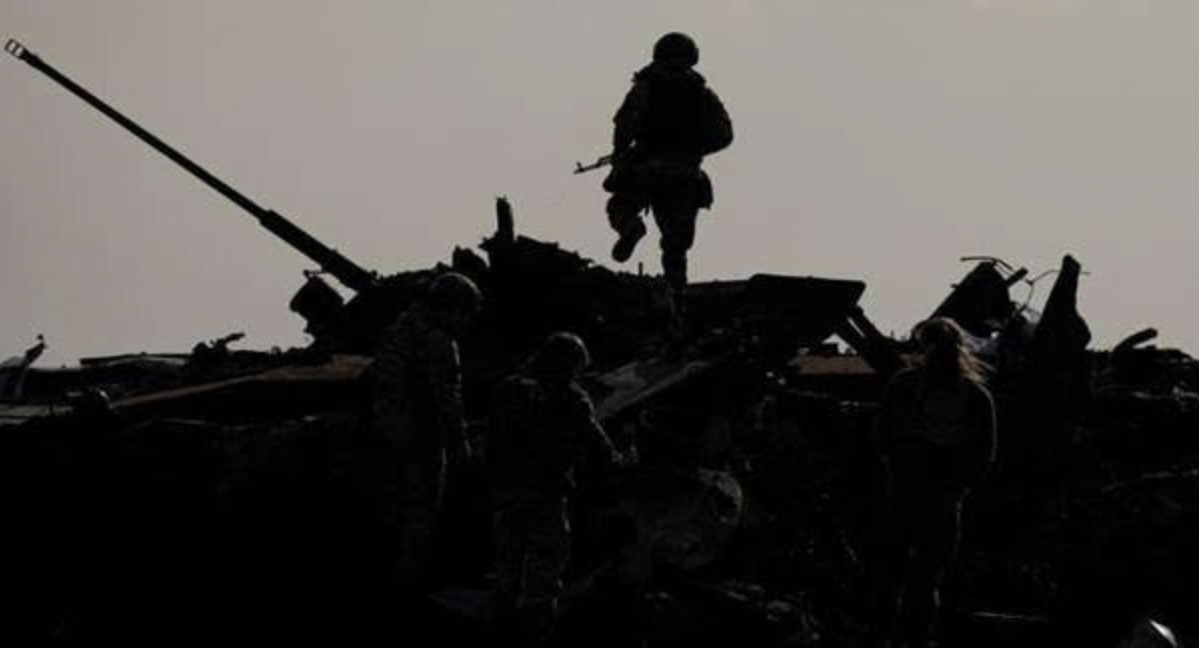
Blood and iron, ah yes, the solution that does not equivocate. The power that is won with bullets – not ballots. The combination that ended the “speeches and majority decisions” of 1848 and the Arab Spring. And even now, on the broad plains of Ukraine, the grim drama of blood and iron is being played out. For what other answer is there to those that speak only the language of blood and iron, but iron and blood in equal measure?
Do not pretend that it does not thrill you – this open recourse to force. Not when all the tweets on Twitter cannot match the effectiveness of a single artillery shell exploding in the right place at the right time. Not when you see how swiftly all the petty squabbles of the identarians disappear in the all-embracing shadow of a nation’s battle flag.
Lord Byron: poet, atheist and republican; quipped that “Europe will never be free until the last king is strangled with the guts of the last priest.”
What, then, should we make of the fact that 174 years after the Year of Revolutions, an astonishing number of human-beings around the planet are mourning the death of a queen and welcoming a king to his throne? Against the pomp of Charles III, and the heroism of Volodymyr Zelensky, where are we to set the “speeches and majority decisions” of democracy?
Who does not welcome the comity of blood? Who does not hunger for the reassurance of iron?
Liberals are incapable of doing anything. The only real revolution in the ‘Arab spring’ was against the filth who run Bahrain, which was crushed with plenty of help from their zionist/American allies. The CIA couldn’t get enough liberal losers out to protest against the democratically elected government of Syria, so they sent takfiri headchoppers instead.
I think 99% of the population would take anyone in the current line of succession over the current crop of politicians in a heartbeat.
That may be true but the people will, if in open rebellion not need leaders. They will be tearing down the old. Once the rage subsides the new leaders will emerge.
It should be commen knowledge that Afghanikraine is a highly orchestrated conflict.
Many young politicians, U.S. Presidents and vice Presidents among them often use their influence over a long list of corporations and bureaucracies.
Democracy is powerful but it is hopelessly bureaucratic and massive in size and so corporations take advantage of this.
And so corporations use their resources to make change in the areas where democracy has the least amount of presence which of course is the third world.
For the longest time a lack of regulation and controll coupled with free trade gives rise to almost unlimited corporate growth in western areas where Apple and even Lockheed Martin have no choice but to use blood diamonds and other trade sanctioned mining operations in the iPhone’s and F35 lighting just to name two. Pump out cheap products and undermine there western competitors.
At the same time corporations have assumed power usually reserved for government. They’ve started building infrastructure and providing basic services and even providing security.
And so we see the rise of corporate, fuedal kingdoms.
Corporations will always fight liberal democracy particularly when taxation plus representation is established in the third world, sowing chaos. While corporations do all the work of building up civilisation in the third world, why democracy traps all the benefits?
Corporations fill some of the largest private militaries and have massive control over what everyone says and does. Plus 99% of the population have a lot of legitimate greivances against the 1%.
The lower classes pay way to much taxes and receive very little in return and lack representation in government. Not so for corporations.
And so there will always be a lot of anti Republicanism or anti monarchy sentiment it’s just there will not be enough industrial might to do anything about it.
Probably out of the chest like the things in the film Alien. The new leaders will be unlikely to be better than the old, just with wilder ideas and determination to stay on top.
Is that the same heroic Zelensky whose troops purposely shelled their own soldiers in a Russian prisoner of war camp so they and every other captive Ukrainian soldier would keep their mouths shut.
“Man will never be free until the last king is strangled with the entrails of the last priest.” Denis Diderot (1713-1784) said it before Byron was born
Thanks RobbieWgtn,
I have always believed the quote was Byron’s – it certainly sounds like him!
But, no, you are quite correct, it was Diderot – who sounds equally roguish.
Beware of the new, if not lucky or extremely careful, it will be as bad or worse than the old.
If one starts off with a desired goal, and it is agreed to by most, then work out the best way to achieve it using methods understood and people-oriented – I think that would cut through a lot of discussion which would not be helpful to that end. It seems that there are too many attempting to get degrees from university who will show us the holy way. I would rather have discussions about Baldrick’s or others’, cunning plans and talk them through as an experiment to see how they would be achieved. Prioritise, get people working a few hours each day.
Otto shon wieder missverstanden.
It’s easy to start revolutions but less easy to stop them.
The French found that with their revolution: Chopping off a few heads seemed a good idea initially, but the chopping didn’t stop and pretty soon someone was denouncing YOU and it was your turn to face Madame la Guillotine. The Russians thought shooting the Czar was a fair plan, but it wasn’t long before the ‘rough men’ took over and the body count started piling up and in the end nobody was safe.
History is littered with such examples. Enthusiastic young men see the unfairness in life and without thinking further, seek to revolt in order to make a better society. Unfortunately, they don’t think through the details of what they intend to replace the existing order with and finish up with something far worse than whatever came before.
Chris, I am not totally sure about your point here. Cant say i have lusted for blood and iron and never will.
What I can say is that most NZers want a government who moves us closer and closer to equality and one that listens to us. Our goal must always be thorough debate, greater understanding resulting in a relatively shared vision.
We dont need a NZ spring or violence, we just need a lot of honest talking and active listening. None of which is occurring at the moment. People have to leave behind their politics, their grievances and bias and sit down and tackle the pressing and practical issues with honesty and focus.
Comments are closed.