

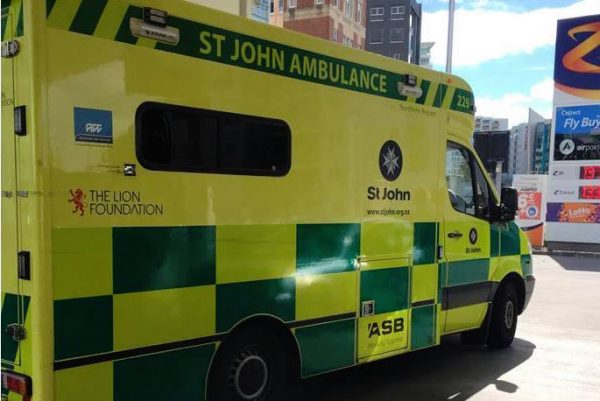
Ambulance Professionals First, the union representing the majority of New Zealand’s ambulance professionals, is calling on the Government to end single-crewing by directing funding to help train and employ more qualified ambulance officers, not assistants.
The call comes after the Minister of Health announced the Government’s plan to inject the ambulance sector with an extra $59.2 million in funding over the next four years. The funding will go towards introducing approximately 300 ‘emergency medical assistants’ to help alleviate single-crewing in rural New Zealand.
But a similar policy introduced in the UK resulted in heavy criticism and was later scrapped.
Ambulance Professionals First spokesperson Lynette Blacklaws said the ambulance sector is in urgent need of a funding boost, but the Government is taking “short cuts.”
“In metropolitan areas ambulances are crewed with two qualified ambulance officers. This means they can care for multiple patients at a single incident, they can consult with each other and they have the benefit of a second opinion when making critical medical decisions in crisis situations,” said Blacklaws.
“We want to see that level of service right across the country, not just in the major population centres.”
“But emergency medical assistants will receive just three weeks training and won’t have the authority to practice without supervision.”
“There are hundreds of students and volunteers with the right qualifications and with the authority to administer medicines and lifesaving treatments to patients. These are the people who are best placed to help end single-crewing, not assistants,” said Blacklaws.
“We were promised the end of single crewing by 2018. Instead what we are getting is ‘assisted single crewing’ by 2022,” said Lynette Blacklaws.
In 2008 the Health Select Committee inquiry into ambulance services (pg. 12) defined double-crewing as “two qualified ambulance professionals working together in an ambulance” and assisted-single crewing as “one qualified ambulance professional working with an unqualified assistant.”
Alex McPherson is a St John Ambulance Officer from Rotorua. He reacted to the news saying “two key reasons for getting double-crewing are to alleviate fatigue and increase safety for patients. Unqualified personnel don’t solve either of those problems.”
Another Ambulance Officer from Christchurch, Dean Brown, agreed: “The clinical officer will have to supervise the emergency medical assistant as well as treat the patient. Having another qualified officer allows for peer review and a higher level of care. Having to supervise can be a distraction.”